Turkey says it consented to Greece-Cyprus cable survey; Athens and Nicosia call its notice void
Ankara's NAVTEX says a French ship may survey "the Turkish continental shelf" with its consent. Greece says no one asked. Critics on both sides want answers.
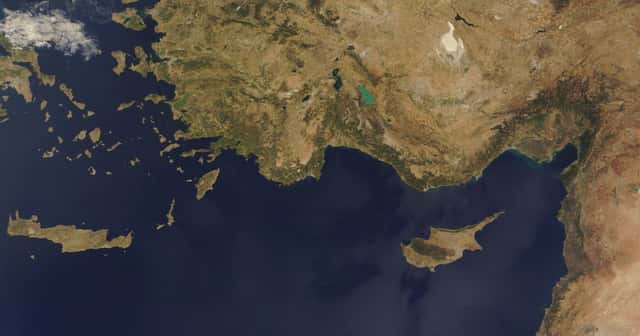
Turkey said on Tuesday night that a French survey ship working on the Greece-Cyprus power cable would operate on "the Turkish continental shelf" with "the consent of the Turkish authorities." Within hours, Greece and Cyprus issued their own notices declaring the Turkish one invalid. All three governments now describe the same voyage in incompatible legal terms. The ship, the Abeille Marengo, sailed from Heraklion, Crete, on Tuesday evening to begin seabed surveys for the Great Sea Interconnector (GSI).
The exchange matters because the surveys can now go ahead. That had not looked certain last week. On November 6, Turkey's Foreign Ministry called the planned work an unauthorized attempt on its continental shelf. Four days later Ankara said its consent had been given. Greece says nobody asked for it. Inside Turkey, retired admirals who back Ankara's maritime claims are asking the Foreign Ministry to say who applied and when. In Greece, the opposition wants the text of a French diplomatic note that appears to have made the arrangement possible.
Quotations from Turkish-language sources are 567politics translations. Navigational notices are quoted from their English-language texts.
What Turkey's notice says#
The notice, NAVTEX 1127/26, was broadcast through Turkey's Antalya station on November 10. The first point reads: "Marine scientific research activities will be conducted along the lines coordinated with the competent Turkish authorities and for which the consent of the Turkish authorities has been obtained, within the Turkish NAVTEX service area and on the Turkish continental shelf in the Eastern Mediterranean." It adds that the outer limits of that shelf were sent to the United Nations in a letter dated March 18, 2020, document A/74/757. The text was published by Proto Thema and logged by the navigational-warning service SeaLagom.
The notice covers two survey lines and runs from November 10, 2026, to March 19, 2027. It asks other vessels to stay two nautical miles from the ship. It expires at 00:01 UTC on March 20.
Turkish state broadcaster TRT World described it as Turkey authorizing the surveys. It recalled that Foreign Minister Hakan Fidan had said Turkey would not object to surveys between Crete and Cyprus if it was informed in advance. The English-language Hürriyet Daily News reported that Turkey and France had held "intense negotiations over the wording and coordinates" of the Turkish notice. Neither government has published the record of those talks.
Four days earlier, Ankara called the same work unauthorized#
The notice reversed the tone of Turkey's last formal statement. On November 6, the Foreign Ministry issued statement No. 214. It said a French-flagged ship intended to carry out "an unlawful marine scientific research activity aimed at laying an unauthorized cable" on Turkey's continental shelf. It said Turkey had "canceled" the "unauthorized" navigational warnings published by Greece and the Greek Cypriot administration. And it said the consent process for the part of the work on Turkey's shelf "has not yet been completed." The ministry ended by saying Turkey would protect its sovereign rights while keeping "an approach based on cooperation, dialog and coordination in the region."
That same day, Greece's Heraklion station issued notice HA15-1411/26 for the surveys, and Turkey answered within minutes. Its counter-notice, TURNHOS 1105/26, said Turkish authorities had not authorized the work, To Vima reported.
The shift between November 6 and November 10 is the core of the dispute. Turkey's position is that consent was required and has now been given. Greece's position is that no Turkish consent was ever sought.
Greece and Cyprus answer with counter-notices#
Greece answered first. Its Heraklion station broadcast NAVWARN 1441/26 at 22:05 UTC on November 10, just after midnight Greek time. The full text says an "unauthorised station" had broadcast the Turkish message. It says "a significant part" of the survey lines, from off Kasos and Karpathos eastward, lies within Greece's exclusive economic zone (EEZ) and continental shelf "as determined by international law and by national law No 4001/2011." It lists three Greek permits for the work, dated June 7, 2024, February 11, 2026, and November 6, 2026. It says the Heraklion station "has exclusive authority" to issue notices in the area. Its conclusion: "NAVTEX message FA76-1127/26 is null and void. NAVWARN HA15-1411/26 is valid and effective."
Cyprus followed on Wednesday. Its notice 352/26 was issued at 06:00 UTC on November 11 by the Joint Rescue Coordination Center in Larnaca, To Vima reported. It says the Turkish notice was not coordinated with the Republic of Cyprus, that work in Cyprus's EEZ and continental shelf has been licensed by Cypriot authorities, and that only the Larnaca station may issue notices in its area. It stays in force until March 20, 2027.
Greek Foreign Ministry sources told To Vima that the Turkish notice had "no substantive significance." They said it came after the ship had begun moving and repeated information already public in the Greek notice.
The project company has taken no side in public. In a press release, Great Sea Interconnector S.A. and Greece's grid operator IPTO said the ship would calibrate its instruments and then survey "as specified in the navigational warnings (NAVTEX) issued by the competent Greek and Cypriot authorities." It did not mention the Turkish notice.
- Greece signs its survey permit and issues notice HA15-1411/26
- Turkey calls the survey unauthorized and issues counter-notice 1105/26
- The Abeille Marengo leaves Heraklion
- Turkey issues NAVTEX 1127/26 saying it has given consent
- Greece issues NAVWARN 1441/26 calling the Turkish notice void
- Cyprus issues anti-NAVTEX 352/26
Source: Turkish Foreign Ministry, Greek NAVWARN 1441/26, To Vima
The French note at the center of the dispute#
The arrangement appears to rest on a French diplomatic note to Turkey, known as a note verbale. Its contents have not been published. Greek Prime Minister Kyriakos Mitsotakis defended it at the Greece Talks conference on Tuesday. "The information provided by the French side to Turkey does not in any way create a legal precedent and cannot under any circumstances be interpreted as a request for authorization," he said, according to To Vima.
Energy Minister Stavros Papastavrou told parliament that Ankara was presenting itself as granting a consent that no one had asked for. "There was no request from the French company," he said, adding that it had applied only to Greece and Cyprus. He urged lawmakers not to fall into what he called Turkey's "trap."
Nikos Androulakis, leader of the opposition PASOK-Movement for Change, demanded the note's text in a speech to parliament. "Why was informing Turkey chosen, and indeed by a note verbale from a third state, an EU member, France?" he asked, according to the speech published by his party. "Did you approve its content? Was it made in our name and on our behalf?" He argued that "what Turkey wanted at Kasos from Greece in 2024, you had France do on our behalf in 2026." He was referring to 2024, when, in his words, Turkey sent ships off the island of Kasos and the government froze the project. He said the project should be completed under EU law and the law of the sea.
The governing New Democracy party's parliamentary spokesman, Dimitris Kairidis, argued that Turkish President Recep Tayyip Erdoğan would already have leaked the note if it hurt Greek interests. Androulakis replied that he wanted answers from Athens, not Ankara.
Other Greek parties also criticized the government. The Greek Left Alliance of Alexis Tsipras said Turkey was exploiting "a notification made under threat," according to To Vima. Nikos Karathanasopoulos, parliamentary spokesman of the Communist Party of Greece (KKE), questioned whether alliances protect Greece's rights, To Vima reported. The full range of Greek party positions is on our Greek political spectrum. The Cypriot parties are on the Cyprus spectrum.
Turkish critics ask who applied#
In Turkey, the strongest questions have come from backers of the "Blue Homeland" doctrine, which claims wide Turkish maritime zones in the Aegean and Eastern Mediterranean. Pro-government outlets presented the notice as approval. A Haber's headline said Turkey had approved the French ship's research.
Retired Adm. Cem Gürdeniz, who developed the Blue Homeland concept, wrote on X that the wording of Turkey's notice was important "state practice" supporting Turkey's legal case. But he noted that Greek officials say Turkey was never asked. "Our Foreign Ministry should therefore explain which authority made the request for permission, and on what date, under what number and with what scope Turkey gave consent," he wrote. He added that, in his view, if the ship enters Turkey's claimed shelf, Turkish warships should keep it under watch "from a certain distance." He also cited ship-tracking (AIS) data. It showed the ship about 3.4 nautical miles off northern Crete, inside Greek territorial waters.
Retired Rear Adm. Yankı Bağcıoğlu made a similar point in his own post. "If the French side duly requested formal permission from Turkey and it was granted, this would be an important gain in terms of the de facto recognition of Turkey's continental shelf rights," he wrote. But if France also got Greek permission for the same work, "this would create a serious contradiction" for Turkey's rights. He said France's official statements would be key. The Greek daily Ethnos describes Bağcıoğlu as a member of Özgür Özel's opposition YENİ Parti. The Turkish government had not answered these questions by Wednesday afternoon.
What the law of the sea says, and who has signed it#
The two sides draw on different readings of the law. The UN Convention on the Law of the Sea (UNCLOS) says in Article 79 that "all States are entitled to lay submarine cables and pipelines on the continental shelf." A coastal state "may not impede" that, subject to reasonable measures. Coastal-state consent is required for the route of pipelines, not cables. Article 246 is different. It says marine scientific research on a coastal state's shelf needs that state's consent.
That helps explain the wording. Turkey's notice calls the work "marine scientific research," the category for which consent is required. Greece's notice relies on Greek permits and Greek law. Greece and Cyprus are parties to UNCLOS. Turkey is not, according to the UN's list of ratifications. Turkey's 2020 filing does not give full effect to Greek islands such as Crete, Kasos and Karpathos. Greece calls that claim illegal and says the islands generate full maritime zones.
The overlap is real on the map. Greece's notice gives coordinates for the two lines from off Kasos and Karpathos to about the 30th meridian east. Turkey's notice describes the same stretch as Turkish shelf.
The project at stake#
The Great Sea Interconnector is a planned 900-kilometer high-voltage cable between Korakia in Crete and Kofinou in Cyprus, according to the project company. It would carry 1,000 megawatts at depths of nearly 3,000 meters. Cyprus is the last EU member state without a link to the European power grid. The project is owned by Meridiam (66%) and IPTO (34%), and the French firm Nexans is supplying the cable. Its approved capital cost is €1.94 billion, of which about €657 million is an EU grant.
Source: Great Sea Interconnector S.A.
Show the numbers
| Part | Amount |
|---|---|
| EU grant (Connecting Europe Facility) | €657m |
| Rest of approved capex | €1,283m |
The EU grant covers about a third of the cost. That is part of why delay is costly for Athens and Nicosia. To Vima reported that the Greek government "had little room for further delays." It also called the outcome a "political arrangement" that both governments must now manage at home.
The survey schedule and open questions#
The ship was due to spend about 24 hours calibrating inside Greek territorial waters north of Heraklion before heading east. Hürriyet reported it was expected to start work off Kasos. Both the Turkish and Greek notices expire at the same moment, 00:01 UTC on March 20, 2027.
Several questions remain open. The French note's text has not been released. Turkey's Foreign Ministry had not issued any statement after November 6, as Gürdeniz noted. France had not publicly described what it told Ankara. It is not known whether Turkish naval ships will shadow the survey when it reaches the disputed zone. The arrangement has eased the immediate standoff. It has not settled the boundary question behind it.
Earlier context on Turkey's diplomacy this week is in our report on the opening of the COP31 climate summit in Antalya. Our approach to contested claims is set out in our methodology.
Differing perspectives
Did Turkey's consent notice give it a say over the Greece-Cyprus cable surveys, or does it have no legal effect?
Each position is summarized as its supporters make it, with equal weight and in alphabetical order. A summary is not an endorsement; the evidence for each is weighed in the story above.
Ankara must document the consent it gave
Who holds it: Turkish 'Blue Homeland' advocates, including retired Adm. Cem Gürdeniz
Gürdeniz argues the notice's reference to Turkish consent is valuable state practice that supports Turkey's continental shelf claims. But because Athens says Turkey was never asked, he says the Foreign Ministry must state which authority applied, on what date, and the number and scope of the consent. He also argues Turkish warships should monitor the ship from a distance if it enters Turkey's claimed shelf.
In their words: Cem Gürdeniz on X ↗
Athens must disclose the French note
Who holds it: PASOK-Movement for Change and its leader Nikos Androulakis
PASOK argues the project concerns Greece alone and needed no notice to Turkey. It asks why a third country, France, informed Ankara by a formal diplomatic note, whether Athens approved the wording and whether it was sent on Greece's behalf. It says this hands Turkey what it sought at Kasos in 2024, and that the cable should be completed under EU rules and the law of the sea.
In their words: PASOK-Movement for Change ↗
Cyprus alone licenses work in its zones
Who holds it: Government of the Republic of Cyprus
Nicosia says survey work inside Cyprus's exclusive economic zone and continental shelf has been licensed by the competent Cypriot authorities and announced in its own navigational warning. The Turkish notice was not coordinated with the Republic of Cyprus. Only the Larnaca rescue coordination center may issue navigational warnings in its area of responsibility, so mariners should rely on Cypriot notices, not the Turkish one.
In their words: To Vima ↗
Only Greek and Cypriot permits apply
Who holds it: Greek government of Kyriakos Mitsotakis (New Democracy)
Athens says the French contractor applied only to Greece and Cyprus, and Greece issued three permits for the work in its EEZ and continental shelf. France's note to Ankara was information for navigational safety, not a request for authorization, and creates no legal precedent. Ministers say Turkey is presenting itself as granting a consent nobody sought, and that its notice, issued by a station with no competence in the area, has no significance.
In their words: To Vima ↗
Turkish consent is required on Turkey's shelf
Who holds it: Turkish government (Foreign Ministry, navy hydrographic office)
Ankara says part of the survey route is on the continental shelf whose outer limits it filed with the UN in March 2020. Marine scientific research there needs Turkey's consent under established rules of the law of the sea. It says it voided the earlier Greek and Cypriot notices as unauthorized, then gave consent once the process was complete. It says it will protect its sovereign rights while pursuing cooperation, talks and coordination in the region.
In their words: Republic of Türkiye Ministry of Foreign Affairs ↗
Cite this article
567 Politics staff. “Turkey says it consented to Greece-Cyprus cable survey; Athens and Nicosia call its notice void.” 567politics. Published 2026-11-11. https://567politics.com/news/turkey-navtex-consent-abeille-marengo-great-sea-interconnector-greece-cyprus-anti-navtex-november-2026
Wikipedia citation
{{cite news |title=Turkey says it consented to Greece-Cyprus cable survey; Athens and Nicosia call its notice void |url=https://567politics.com/news/turkey-navtex-consent-abeille-marengo-great-sea-interconnector-greece-cyprus-anti-navtex-november-2026 |work=567politics |author=567 Politics staff |date=2026-11-11 |language=en}}CSL-JSON for reference managers
{
  "id": "https://567politics.com/news/turkey-navtex-consent-abeille-marengo-great-sea-interconnector-greece-cyprus-anti-navtex-november-2026",
  "type": "article-newspaper",
  "title": "Turkey says it consented to Greece-Cyprus cable survey; Athens and Nicosia call its notice void",
  "URL": "https://567politics.com/news/turkey-navtex-consent-abeille-marengo-great-sea-interconnector-greece-cyprus-anti-navtex-november-2026",
  "container-title": "567politics",
  "language": "en",
  "author": [
    {
      "literal": "567 Politics staff"
    }
  ],
  "issued": {
    "date-parts": [
      [
        2026,
        11,
        11
      ]
    ]
  }
}Citations identify this article and its publication date. Assess the reporting and its linked sources before using it as evidence.
Read this article as Markdown or JSON. Cite the original page and retain its sources, dates and qualifications.
Embed this article summary
Paste this HTML into your page. The summary stays linked to the full story and updates with it. No account required.
<iframe src="https://567politics.com/embed/news/turkey-navtex-consent-abeille-marengo-great-sea-interconnector-greece-cyprus-anti-navtex-november-2026?theme=auto" title="Turkey says it consented to Greece-Cyprus cable survey; Athens and Nicosia call its notice void by 567politics" width="100%" height="440" style="border:0;max-width:100%" loading="lazy"></iframe>
<p style="font-size:14px">Turkey says it consented to Greece-Cyprus cable survey; Athens and Nicosia call its notice void by <a href="https://567politics.com/news/turkey-navtex-consent-abeille-marengo-great-sea-interconnector-greece-cyprus-anti-navtex-november-2026" rel="nofollow">567politics</a></p>
<script async src="https://567politics.com/embed.js"></script>
READ BEYOND 567POLITICS
Alternate sources & perspectives
Independent coverage and primary evidence to help you compare arguments. A link is not an endorsement; perspective labels describe the linked material.
- primary evidence
Turkish NAVTEX 1127/26 (Antalya), Marine scientific survey for submarine cable work ↗
SeaLagom (navigational-warning log)
Logged text of the Turkish notice claiming consent, its validity dates and the 2-mile clearance.
- primary evidence
Greek NAVWARN 1441/26 (Irakleio), declaring the Turkish notice null and void ↗
SeaLagom (navigational-warning log)
Full text of Greece's counter-notice, with the survey coordinates and three Greek permit numbers.
- primary evidence
No: 214, Statement on a French-flagged ship's unauthorized research attempt on Turkey's continental shelf ↗
Republic of Türkiye Ministry of Foreign Affairs
Turkey's Nov. 6 position that consent was required and not yet complete.
- primary evidence
Press release: Great Sea Interconnector seabed survey activities ↗
Great Sea Interconnector S.A.
The project company says the survey follows the Greek and Cypriot notices; it does not mention Turkey's.
- left argument
N. Androulakis: Clear answers on the content of France's note verbale ↗
PASOK-Movement for Change
Greek opposition leader's parliamentary speech demanding the French note's text.
- right argument
Cem Gürdeniz post on the NAVTEX exchange ↗
Cem Gürdeniz on X
Blue Homeland author calls the consent wording useful state practice and asks the Foreign Ministry to document it.
- independent analysis
Greece-Cyprus cable dispute sparks political clash in Athens ↗
To Vima
Mitsotakis's quote on the French note and the exchanges among Papastavrou, Kairidis and Androulakis.
- independent analysis
Cyprus and Greece answer Turkey's cable NAVTEX with anti-NAVTEX ↗
To Vima
Account of Cyprus's notice 352/26 and the survey plan.
- other perspective
Türkiye authorises seabed surveys for French vessel in Turkish continental shelf ↗
TRT World
Turkish state broadcaster's framing of the notice as authorization, recalling Fidan's prior-notice position.
- independent analysis
Türkiye greenlights Greek cable project in east Med ↗
Hürriyet Daily News
Reports Turkish-French negotiations over the notice's wording and coordinates.
- independent analysis
Who asked for permission? Turkish retired admirals press Ankara over the Abeille Marengo ↗
Ethnos
Greek account of the Turkish domestic debate led by Bağcıoğlu and Gürdeniz.
- primary evidence
United Nations Convention on the Law of the Sea (Articles 79 and 246) ↗
United Nations
Treaty rules on submarine cables and on consent for marine scientific research; Turkey is not a party.
Reviewed 2026-11-11. discover_politics_sources returned only generic Turkey reference pages, so these sources were hand-picked from pages opened on Nov. 11, 2026. The text of the French note verbale to Turkey has not been published, and no French government statement on it was found. Turkey's Foreign Ministry had issued nothing after its Nov. 6 statement. The Cypriot anti-NAVTEX 352/26 was read through To Vima's account, not the original Larnaca broadcast. Turkish, Greek and English sources were read in the original.