Turkey's Parliament Heads for Vote on Mecca Defense Pact as Parties Split Over Its Risks
The governing alliance and Kılıçdaroğlu's CHP back the treaty with Saudi Arabia and Pakistan. The DEM Party, YENİ Parti and İYİ say it could draw Turkey into conflicts it did not choose.
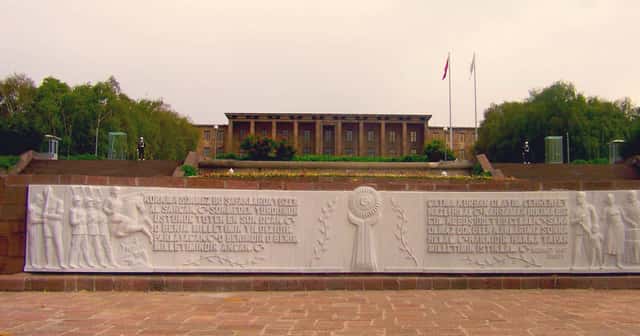
Turkey's parliament is expected to vote as soon as Wednesday on whether to ratify the Mecca Joint Defense Agreement with Saudi Arabia and Pakistan. The pact says an armed attack from outside on any one member will be treated as an attack on all three. On Tuesday, November 3, party leaders used their weekly speeches in parliament to restate how they will vote. Kemal Kılıçdaroğlu, chair of the Republican People's Party (CHP), defended his party's support. Tülay Hatimoğulları of the pro-Kurdish DEM Party said her party would vote no. Özgür Özel, leader of the YENİ Parti, criticized the CHP for backing it.
The governing alliance of the Justice and Development Party (AKP) and the Nationalist Movement Party (MHP) holds a majority, so the bill is expected to pass, DW Türkçe reported. An official told Reuters that, after approval, the government would ask parliament to allow technical staff to be sent to Saudi Arabia for air defense and electronic warfare support, deniz.tv reported. Opposition parties say the pact could draw Turkey into the conflict involving Yemen's Houthis. The government says it is purely defensive and aimed at no country.
This report sets out what the pact says, what officials have told lawmakers, how each party has positioned itself and what is still unclear. 567politics reported separately on Syria's interest in joining the pact.
When the vote is expected
The bill reached the floor after the parliament's Foreign Affairs Committee approved it on October 27. It is planned to be taken up ahead of other items on the agenda, Cumhuriyet reported on November 2, citing AKP sources. Cumhuriyet gave the date as Wednesday, November 5. November 5 falls on a Thursday, so the exact day is unclear. Deniz.tv reported that the debate is set for Wednesday, which is November 4.
AKP officials told Cumhuriyet that Foreign Minister Hakan Fidan was not currently expected to brief the full chamber.
Under Turkey's constitution, the agreement cannot take effect until the General Assembly approves it, deniz.tv noted. Saudi Arabia and Pakistan have already completed their approval processes, DW Türkçe reported.
What the agreement says
The three countries signed the pact in Mecca on August 7, 2026. The ratification bill was submitted to parliament on October 20 and has three articles, according to the parliament's own news service.
The pact says an armed attack from outside on one party will be considered an attack on all, Cumhuriyet reported. The other members will help the country attacked "to the extent of their existing capacities," including with military means. None of the three can leave the agreement during its first 10 years in force.
The bill's official rationale, as published by parliament, makes several further points:
- Collective defense will not be triggered automatically. It will depend on decisions reached by consensus after consultations.
- Each party will support the others within its own constitutional duties, national laws and the decisions of its own authorities. That support may include deploying military assets.
- The pact covers threats and attacks, "including terrorism," that the parties jointly find to affect their defense and security.
- It aims to deepen cooperation in the defense industry.
- It is "entirely defense-focused" and "does not target any country."
- It is open to other countries in the region that respect international law, territorial integrity and non-interference.
- It does not replace Turkey's other alliances. The rationale says Turkey's commitments under the pact do not affect its rights and duties in NATO.
The rationale argues that deterring aggression in the region would bring lasting stability. It says that would have "extremely positive socio-economic effects" on all the countries of the region over the medium and long term.
What officials told the committee
Deputy Foreign Minister Levent Gümrükçü answered lawmakers' questions at the committee meeting, DW Türkçe reported. He said military support for a member would not be automatic. The country concerned would first have to request it, and an objective assessment would follow.
Asked whether troops would be sent to Saudi Arabia, Gümrükçü said no military deployment was currently planned under the pact. Any deployment of Turkish forces abroad would take place under Article 92 of the constitution, he said. That article requires parliament's approval to send armed forces abroad.
Gümrükçü said the pact was not directed at anyone and named no common threat. "Threats have been defined in general terms," he said, adding that Iran had made positive statements about it and that Israel and India had not objected. He said the agreement had no provision on nuclear weapons, a question raised because Pakistan has a nuclear arsenal. He compared its 10-year term to periods found in the Montreux Convention and the NATO treaty. New members would need the consent of all three countries and the approval of Turkey's parliament, he said.
Fuat Oktay, the AKP lawmaker who chairs the Foreign Affairs Committee, said the pact aimed to increase deterrence and strengthen peace. He said it did not form a bloc against third countries.
The day before the committee vote, representatives of the three countries met Iranian officials in Tehran. Turkish intelligence chief İbrahim Kalın took part, DW Türkçe reported. Turkish officials told DW that the meeting was meant to convey that the alliance was not a threat to Iran. According to DW, the delegation also told Iran that Houthi attacks on Saudi Arabia should stop.
The question of personnel
What happens after ratification has become a central point of debate. An official who spoke to Reuters on condition of anonymity said a separate motion would be sent to parliament after approval, deniz.tv reported. That motion would allow military personnel to be deployed to Saudi Arabia. The official said Turkish units would not take part in offensive operations. In a first phase, technical staff and specialists would provide support in air defense and electronic warfare, the official said.
Fidan has said Turkey will not carry out attacks on another country's territory, deniz.tv noted. DW Türkçe noted that the Iran-backed Houthis have attacked Saudi Arabia. See our report on the fighting in Yemen and the strikes on Saudi airports.
Kılıçdaroğlu addressed the issue directly on Tuesday. "Did we send soldiers? No. Are there soldiers in the agreement? No," he said, according to a report by İhlas News Agency carried by Sondakika. The text does not itself order a deployment. Under Article 92, any deployment would need a separate vote, which is the step the Reuters source described.
How the committee voted
The AKP and MHP voted for the bill in committee, and so did the CHP, DW Türkçe reported. Members from the YENİ Parti, the DEM Party, the Yeni Yol group and the İYİ Party voted against.
Two procedural disputes came up. YENİ Parti lawmaker Utku Çakırözer argued that the text is military and bears directly on Turkey's security. He asked that it first go to the National Defense Committee. Oktay said he had also wanted that committee to review it but had received a negative reply. CHP lawmaker Oğuz Kaan Salıcı called the defense committee's silence a "scandal." "What kind of security need makes this agreement necessary?" he asked.
Earlier, the AKP and MHP voted down a CHP motion for a general debate on the pact's security risks in the full chamber, deniz.tv reported.
The case for ratification
The government presents the pact as a step toward regional security run by regional states. When the bill was submitted, Burhanettin Duran, the presidency's communications director, called it "an important stage on the way to institutionalizing strategic cooperation" among "three brotherly countries," Anadolu Agency reported. He said the partnership aims to strengthen collective deterrence, build joint defense capabilities and protect security in the region. He said it rests on the principle that the region's countries should take responsibility for the region's problems.
Kılıçdaroğlu made a different argument for the same vote. He framed it as a question of regional power. "The dominant power in the region will be either Türkiye or another country," he said. He said two "imperial" powers were pulling back from the Middle East and leaving a gap. "Who will fill it?" he asked, pointing to shared culture, faith and family ties in the region. His party's main worry had been Iran, he said, and once there was no problem with Iran, the answer was yes. He said he had told Yemeni officials that if Türkiye goes there under the pact, "it is going to bring peace." He added that his party had recorded objections on some points. "In foreign policy there is no government and opposition," he said.
Kılıçdaroğlu was returned as CHP chair by a court ruling that annulled the congress that had elected Özel. Özel and 91 lawmakers then left to form the YENİ Parti, DW Türkçe reported in July. After the split, the CHP had 44 lawmakers and was the fifth-largest group in parliament, DW Türkçe reported at the time.
The case against
At the DEM Party's group meeting, Hatimoğulları said, "We said 'no' in the committee, and we will say 'no' in the General Assembly," according to T24's transcript. Because an attack on one member counts as an attack on all, she said, "Türkiye could fall into the middle of wars it did not choose." She said the definition of an attack was vague and the financial burden unclear. She said "terrorism" could be read in whatever way suits each country. She also said the limits on intelligence sharing were undefined, so "today a dissenting voice" could become "a 'terror threat' tomorrow." She argued that Turkey would be taking the Saudi side against Yemen. The region needs "pacts of peace and cooperation," not war pacts, she said, and Turkey should act as a mediator.
Özel, speaking to his party's group, aimed at the CHP leadership. He used the term "butlancılar," after the court's "absolute nullity" ruling, to refer to them. "They say they will sign the agreement that all the parties oppose. They say they will send our soldiers to Yemen," he said, according to Medyascope's live blog. Kılıçdaroğlu said the same day that the agreement contains no provision for soldiers.
In committee, Çakırözer said his party did not oppose closer ties with Saudi Arabia and Pakistan. "But what business do we have in the deserts of Yemen?" he asked, DW Türkçe reported. He argued the pact was in reality an American plan. He called it "a Trump plan" and the plan of U.S. Ambassador Tom Barrack, whom he called "tactless." He said it would protect "the Saudi dynasty and oil facilities" in return for Saudi financing for Turkey's economy. The government describes the pact as defensive and aimed at no country.
DEM lawmaker Ceylan Akça Cupolo said in committee that the government's language of "regional ownership" could better be called "regional subcontracting." İYİ Party lawmaker Metin Ergun asked, "Why did we sign this agreement? Which security gap of ours will we close?"
İYİ Party leader Müsavat Dervişoğlu set out his objections at his party's group meeting on October 14, T24 reported. "Whose enemy is Türkiye declaring its own enemy?" he asked. "Against whom is this alliance? Israel? Iran? The U.S.?" He asked why Turkey was taking on "a new military obligation whose limits, threat and final cost are unclear." He said Turkish soldiers were not "the guards of Aramco," Saudi Arabia's state oil company. He also said the government should first protect Turkish-linked ships that have been attacked in the Black Sea since 2022.
Weighing the claims
Some claims on each side can be checked against the text, and some cannot yet. The rationale published by parliament supports the government's point that collective defense is not automatic and needs consensus. It also supports Kılıçdaroğlu's point that the agreement does not itself send troops. Gümrükçü's statement that no deployment is currently planned is the government's own account.
The opposition's concern about a deployment is also grounded in reporting. The official who spoke to Reuters described a follow-up motion to send technical personnel to Saudi Arabia. That would not be an offensive mission, by the official's account, but it would place Turkish staff in a country that has faced Houthi attacks. Whether that counts as joining a war is a matter of judgment, not fact.
Claims about motives, such as the view that the pact is a U.S. plan or a trade for Saudi money, are arguments, and no public evidence settles them. The broad terms Hatimoğulları and Dervişoğlu criticize, such as the undefined common threat, match Gümrükçü's own description that threats are "defined in general terms." The two sides draw opposite conclusions from the same point. Our editorial standards explain how we separate claims from findings.
What comes next
If the General Assembly approves the bill, it would follow Turkey's usual path for ratification laws: promulgation by President Recep Tayyip Erdoğan and publication in the Official Gazette. A motion on sending personnel would be a separate vote. Syria is weighing whether to join, as our earlier report describes. Under the pact, any new member would need the approval of all three countries and, for Turkey, of parliament.
The vote comes during a busy week. In the same speech, Hatimoğulları called the investment fund scandal "the economic Susurluk of this country"; see our report on the arrest request for Borsa İstanbul's former chief. She also noted that budget talks had begun in parliament. New figures showed annual inflation edging up in October; see our report on Turkey's October inflation data.
Differing perspectives
Should Turkey's parliament ratify the Mecca Joint Defense Agreement with Saudi Arabia and Pakistan?
Each position is summarized as its supporters make it, with equal weight and in alphabetical order. A summary is not an endorsement; the evidence for each is weighed in the story above.
Ratify because Turkey must be a regional power
Who holds it: Kemal Kılıçdaroğlu, chair of the Republican People's Party (CHP)
The dominant power in the region will be either Türkiye or another country. Two imperial powers are pulling out of the Middle East and leaving a gap that Türkiye must fill. The main concern was Iran, and once there was no problem with Iran, the answer was yes. The agreement does not send soldiers. In foreign policy there is no government and opposition; Türkiye's interests come first.
In their words: Sondakika, carrying İhlas News Agency's report of Kılıçdaroğlu's speech ↗
Ratify to strengthen collective deterrence
Who holds it: President Erdoğan's government, as set out by communications director Burhanettin Duran
The agreement institutionalizes strategic cooperation among three brotherly countries. The partnership aims to strengthen collective deterrence, increase joint capabilities in defense and protect security and stability in the region. It rests on the principle that the countries of the region should take responsibility for the region's problems, and it reflects a shared will that puts security and solidarity first.
In their words: Anadolu Agency, quoting Burhanettin Duran ↗
Reject because it could pull Turkey into others' wars
Who holds it: Tülay Hatimoğulları, co-chair of the DEM Party
Under the pact, an attack on one country counts as an attack on all and calls for immediate help, so Türkiye could fall into wars it did not choose. The definition of an attack is vague, the financial burden is unclear and terrorism can be read as each country wishes. Yemen and Saudi Arabia are attacking each other, and Türkiye would take the Saudi side. The region needs pacts of peace and cooperation, and Türkiye should mediate.
In their words: T24, transcript of Tülay Hatimoğulları's speech ↗
Reject because it serves U.S. and Saudi interests
Who holds it: Utku Çakırözer, YENİ Parti member of parliament
Closer ties with Saudi Arabia and Pakistan are welcome, but Türkiye has no business in the deserts of Yemen. The agreement is really an American plan, a Trump plan and the plan of Ambassador Tom Barrack. It is an agreement to protect the Saudi dynasty and its oil facilities in return for Saudi financing, and it would please Israel and the U.S. while exposing Türkiye to needless risks.
In their words: DW Türkçe, reporting Utku Çakırözer's committee remarks ↗
Reject until its limits and costs are explained
Who holds it: Müsavat Dervişoğlu, leader of the İYİ Party
The government has not said whose enemy Türkiye is declaring its own, or whether the alliance is aimed at Israel, Iran, the U.S. or another country. Türkiye is being drawn into a new military obligation whose limits, threat and final cost are unclear. Turkish soldiers are not the guards of Aramco. A government that cannot protect Turkish-linked ships in the Black Sea should not offer security guarantees to others.
In their words: T24, reporting Müsavat Dervişoğlu's group speech ↗
READ BEYOND 567POLITICS
Alternate sources & perspectives
Independent coverage and primary evidence to help you compare arguments. A link is not an endorsement; perspective labels describe the linked material.
- primary evidence
Mekke Ortak Savunma Anlaşması'nın onaylanmasına ilişkin kanun teklifi TBMM Başkanlığına sunuldu ↗
Türkiye Büyük Millet Meclisi
Parliament's own summary of the three-article bill and its official rationale, including the NATO compatibility and consensus clauses.
- right argument
İletişim Başkanı Duran: Kanun teklifinin TBMM'ye sunulması önemli bir aşama ↗
Anadolu Ajansı
The government's case for the pact as collective deterrence and regional ownership, in the presidency communications director's words.
- independent analysis
Mekke Anlaşması TBMM komisyonunda kabul edildi, CHP de evet dedi ↗
DW Türkçe
Committee vote by party, the deputy foreign minister's answers, the Tehran meeting and opposition objections.
- independent analysis
Mekke Anlaşması TBMM Genel Kurulu'na geliyor: Tarih belli oldu ↗
Cumhuriyet
AKP sources on the floor schedule and the treaty's attack and 10-year withdrawal clauses.
- independent analysis
Mekke Anlaşması Çarşamba günü TBMM Genel Kurulu'nda ↗
Deniz.tv
Reports an official's account to Reuters of a follow-up motion to send technical personnel to Saudi Arabia.
- other perspective
Kılıçdaroğlu, Mekke Antlaşması'na dış politika çıkarları gerekçesiyle sahip çıktı ↗
Sondakika (İhlas Haber Ajansı)
The CHP chair's case for voting yes on grounds of regional power and national interest.
- left argument
DEM Parti TBMM grup toplantısı: Hatimoğulları'nın konuşması ↗
T24
Transcript of the DEM co-chair's objections: automatic help, vague terms and taking the Saudi side.
- left argument
Grup toplantıları, 3 Kasım 2026: Liderler ne mesaj verdi? ↗
Medyascope
Live blog with YENİ Parti leader Özgür Özel's criticism of the CHP's support and Kılıçdaroğlu's remarks.
- right argument
Dervişoğlu'ndan Mekke Anlaşması tepkisi: Mehmetçik, Aramco'nun koruması değildir ↗
T24
The nationalist İYİ Party leader's objections on undefined threats, limits and costs.
- independent analysis
Yeni Parti kuruldu: Özgür Özel oy birliğiyle genel başkan ↗
DW Türkçe
Background on the court ruling that split the CHP and the founding of YENİ Parti.
Reviewed 2026-11-03. Sources were hand-picked because the discovery tool returned only pages about the city of Mecca and unrelated results. Every source was opened in full on November 3, 2026. The parliament's news release is the primary record of the bill and its rationale; the full treaty text was not opened directly, so its attack and withdrawal clauses rest on Cumhuriyet's report. The planned personnel deployment rests on an anonymous official quoted by Reuters, as reported by deniz.tv; the Reuters report itself was not opened. Cumhuriyet dated the floor debate 'Wednesday, November 5,' but November 5 is a Thursday; deniz.tv says Wednesday. No MHP statement and no representative poll on public views of the pact were found by publication.