UK and EU settle text of deal to scrap most Brexit food checks, with changes now expected in 2028
The draft SPS deal would end most food and plant certificates if Britain follows EU rules. Unionists, Tories and Reform object; leaders meet November 20.
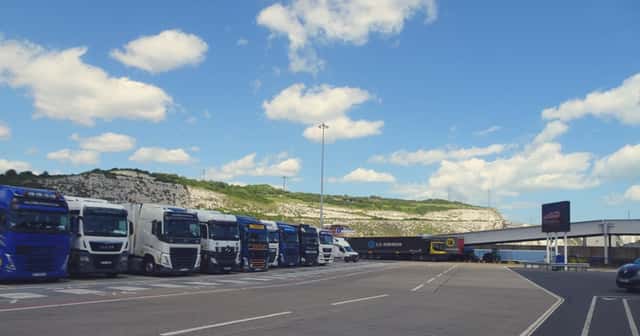
Britain and the European Union have settled the text of a deal to remove most post-Brexit checks and certificates on food, plants and animal products, but the changes are now unlikely to take effect before early 2028, according to reports on November 3. The roughly 200-page draft agreement on sanitary and phytosanitary (SPS) rules has been circulated to the EU's 27 member governments ahead of a meeting of their ambassadors in Brussels on Wednesday, November 4, the BBC reported. Leaders are expected to announce it at a UK-EU summit on November 20.
In return for dropping the checks, the UK would commit to follow EU rules on food, plant and animal standards as they change over time, a process known as "dynamic alignment." That trade-off sits at the center of the political argument. Supporters, including the government and the main business groups, say it will cut costs for exporters and largely remove the so-called Irish Sea border for food. The Conservatives and Reform UK say it hands control of British rules to Brussels. Unionist parties in Northern Ireland say it does not go far enough to end the region's separate treatment.
Neither the UK government nor the European Commission had published the text by early afternoon UK time on November 3, and the Cabinet Office told the trade magazine The Grocer that it does not comment on speculation. This article draws on detailed reporting by the BBC, the Guardian and others, government guidance published earlier this year and the parties' public statements. Details could still change before the summit.
What the draft deal would do
The draft would allow "the vast majority of movements of animals, animal products, plants and plant products between Great Britain and the crown dependencies and the EU to take place without the certificates or controls that are currently required," according to a draft joint statement for the summit quoted by the Guardian.
The BBC listed several practical effects:
- Exports to the EU of fresh sausages, burgers, shellfish from British waters and seed potatoes, which have been barred since Brexit, could resume.
- Exporters would no longer need export health certificates, which cost about £200 each, or phytosanitary certificates for plants, which cost about £25.
- Inspection fees, organic certificates and some port charges could be removed for trade in both directions.
- Pet passports would return for British pets traveling to the EU.
Government guidance for businesses, last updated before today's reports, says dairy, fish, eggs, meat, plants and plant products would no longer need routine border checks when entering Great Britain from the EU or Northern Ireland from Great Britain. It says some processes to monitor biosecurity would remain and that the EU has accepted the UK will keep its own rules in some limited areas.
Government officials think the deal could add up to £5.1 billion a year to the economy, ITV News reported. ITV said British dairy, fish, eggs and red meat now face 100% documentary checks and up to 30% physical checks at EU borders, and that sampling checks can add about £1,200 to a load of cheese or beef, £1,400 to a salmon shipment and £440 to a load of apples. A government spokesperson said the UK is "building an ambitious, close relationship with the EU that will strengthen our economy, protect British industry, and create more opportunities for young people across the UK."
The BBC also reported the £5.1 billion figure as the government's own estimate. We have not seen an independent assessment of the final text, which has not been published.
The draft joint statement also says British goods would be exempt from the EU's carbon border adjustment mechanism, a levy on carbon-intensive imports, because the two sides are already aligned on emissions, according to the Guardian. The BBC linked the exemption to plans to connect the UK and EU emissions trading systems. Separate draft texts on linking emissions trading and on a youth experience scheme were circulated at the same time, the BBC reported.
The new timetable
When the outline deal was agreed in May, the Department for Environment, Food and Rural Affairs (Defra) said it expected it to take effect in 2027. The government's business guidance still says "it is our intent that the agreement will take effect in mid-2027."
The Guardian, citing unnamed sources, reported that the deal will not now be implemented until the first quarter of 2028 and that Defra has briefed industry leaders accordingly. It said a further six-month transition is planned for a small number of products, such as grain grown this year with fungicides not yet approved in the EU. The Guardian said the main cause is the work needed to align British food standards law with EU law, and that the change of prime minister also pushed back the second UK-EU summit by about six months. Andy Burnham replaced Keir Starmer as Labour leader and prime minister in July.
The government has announced a European Partnerships Bill that would give it a legal mechanism to apply new EU rules in the areas covered, the BBC reported. That bill is likely to be where Parliament fights over dynamic alignment.
Why exporters have pushed for a deal
The deal is aimed at a sector that has seen some of the sharpest falls in trade since the UK left the EU's single market. In October, the National Farmers' Union (NFU) published an analysis of HMRC data showing UK food and drink exports to the EU down by more than a third compared with 2019, the Guardian reported. The EU took 68% of UK agri-food exports last year, according to NFU president Tom Bradshaw.
Source: NFU analysis of HMRC data, reported by the Guardian
Show the numbers
| Product | Decline since 2019 |
|---|---|
| Sugar | 70% |
| Eggs and egg products | 65% |
| Poultry | 53% |
Brexit is not the only factor behind these falls; prices, exchange rates and supply problems also shape trade. But exporters consistently cite certification and border checks as a central cost. Jon Walsh, chief executive of the food company Bio&Me, told BBC Radio 5 Live that his firm stopped exporting yogurt because every pallet needed a vet's inspection costing £140. "You just kind of give up because you're losing money," he said.
William Bain, head of trade policy at the British Chambers of Commerce (BCC), told BBC Radio 4 that businesses overall thought following common rules was a price worth paying for "lower costs, reduced delays [and] increased market access." The BCC published a survey of more than 1,000 firms this week finding that 56% of exporters want EU customs paperwork and delays removed, and it urged the government to study nine possible models for the wider UK-EU relationship.
Rod Addy, director general of the Provision Trade Federation, called the deal "the best news the food industry has had in the past 10 years," The Grocer reported. He cautioned that it "will not, of course, address all trading issues," since the UK remains outside the EU customs union and will face customs paperwork.
Concerns from importers
Not every part of the food trade expects to gain. Nigel Jenney, chief executive of the Fresh Produce Consortium, told The Grocer the agreement would add more than £300 million a year in costs for businesses bringing in fresh produce from outside the EU, because those goods would have to meet EU inspection rules. "If we adopt the EU's inspection approach, checks will increase substantially for goods sourced from countries outside the EU," he said. He said the UK imports about 65% of its fresh produce, with 54% coming from non-EU countries.
Marco Forgione, director general of the Chartered Institute of Export and International Trade, told The Independent that "agreeing dynamic alignment will help some UK businesses, but others will now face increased costs and friction." He called for "an honest appraisal of costs and benefits, especially as it will affect our existing free trade agreements."
What it means for Northern Ireland
The deal would have its biggest effect in Northern Ireland. Under the post-Brexit arrangements now known as the Windsor Framework, Northern Ireland follows EU rules for goods to keep its land border with the Republic of Ireland open. That means food and plants moving from Great Britain to Northern Ireland face paperwork and some physical checks at its ports.
If Great Britain also follows EU food rules, most of those checks would no longer be needed, and retailers would no longer have to label products "not for EU," the BBC reported. Border control posts at Northern Ireland's ports would become largely redundant. But the customs border would stay. Northern Ireland would remain the only part of the UK that follows EU customs rules, so businesses would still make customs declarations for many goods moving from Great Britain.
The BBC compared the model to Switzerland's agreement with the EU, which removes border controls on agri-food trade because Switzerland follows EU rules with little say over how they are set. New Zealand's agreement is looser: it keeps its own standards and still faces some checks.
Reactions in Northern Ireland split along familiar lines.
- DUP: Gavin Robinson, the party's leader, said the deal showed a "lack of ambition." He told BBC Radio Ulster that if the government is "willing to ignore 2016, ignore the referendum and agree alignment in so many areas of life," it should not keep Northern Ireland "in a separate and distinct structure," according to the Standard. He called that separation "a constitutional affront." The party is also dealing with the resignation of Upper Bann MP Carla Lockhart on November 2.
- TUV: Jim Allister, the Traditional Unionist Voice leader, said the government had "chosen to leave us under the sovereignty of the EU and instead to align the rest of the United Kingdom with EU rules – as a rule taker," the BBC reported. He noted the deal "does not take us out of the Customs Union."
- UUP: Steve Aiken told the Northern Ireland Assembly that the reports should be "broadly, albeit cautiously, welcomed," but warned the deal could be "just tinkering around the margins" because Northern Ireland remains in the EU customs union.
- Alliance: Agriculture Minister Andrew Muir called it a positive first step: "I'm confident this will be good for consumers, good for businesses and good for our farmers."
- Sinn Féin: Economy Minister Caoimhe Archibald said Northern Ireland's existing arrangements already give it "a unique competitive advantage, being able to sell into both the British and EU markets," but said her party welcomed anything that reduces friction for business.
- Farmers: Ulster Farmers' Union president John McClenaghan said "broadly speaking it sounds very positive" but that the union needs to see more detail.
The Westminster argument
At Westminster, the deal has revived the core Brexit argument over whether Britain should be a "rule taker." Conservative leader Kemi Badenoch told the BBC that the UK should "work closely" with the EU but that dynamic alignment would be a red line and would "actually take us backwards."
Reform UK's business spokesman Richard Tice said: "One of the key benefits of Brexit was that Britain no longer had to adhere to ridiculous EU rules. Returning to any form of alignment with Europe would crush Britain's competitiveness and force us to surrender sovereignty over trade policy, putting trade deals worth hundreds of billions of pounds at risk." Reform is led by Nigel Farage.
The Liberal Democrats, led by Ed Davey, welcomed the move but said it does not go far enough. Their Europe spokesperson, Al Pinkerton, said scrapping the red tape was "long overdue" but called the deal "a patch, not a fix," adding: "The real solution is to rejoin the single market and to establish a customs union with the EU."
Prime Minister Andy Burnham told ITV that "public opinion has changed nationally" since 2016 but that he would "not run ahead of public opinion." He said he had not proposed a return of free movement. Labour's manifesto rules out rejoining the customs union or single market, or restoring free movement, in this Parliament, and Burnham has said he will keep those limits, according to The Independent. His predecessor, Starmer, and former chancellor Rachel Reeves have also made the case for closer EU ties ahead of the summit.
Money and the wider summit package
The deal on food is one part of a wider package expected on November 20. The draft joint statement says "the UK's participation in parts of the EU's internal market requires an appropriate level of financial contribution" toward reducing economic gaps between EU regions, according to the Guardian. The Guardian linked that payment to the UK rejoining the EU's single electricity market. The BBC reported that a plan to reconnect electricity markets, along with a discount on tuition fees for EU students, is likely to be pushed to next year. The size of any UK contribution has not been reported.
The BBC said the draft texts also refer to UK involvement in defense cooperation schemes, access to law enforcement databases and reassurances about the EU's "Made in Europe" industrial plans. Numbers for the youth experience scheme are still being settled at a political level. For how this fits the government's wider economic plans, see our coverage of the autumn budget.
What to watch
EU ambassadors meet in Brussels on November 4 to discuss the SPS text and the draft joint statement. The summit is set for November 20. After that, Parliament would need to pass the European Partnerships Bill, and both sides would need to complete legal steps before the deal can apply.
Several questions remain open. The final text has not been published, so the scope of the UK's exceptions, the role of the Court of Justice of the European Union in disputes and the size of any financial contribution are not yet confirmed. Importers outside the EU are waiting to see how inspections will change. In Northern Ireland, the customs border and the Assembly's role in scrutinizing EU rules will remain live issues.
Our United Kingdom issues guide tracks where the parties stand on Europe and trade. For how we handle unpublished texts and anonymous sourcing, see our methodology.
Differing perspectives
Should the UK follow EU food, plant and animal rules in return for removing most border checks on that trade?
Each position is summarized as its supporters make it, with equal weight and in alphabetical order. A summary is not an endorsement; the evidence for each is weighed in the story above.
No, dynamic alignment gives away control
Who holds it: The Conservative Party under Kemi Badenoch and Reform UK
Badenoch says the UK should work closely with the EU but that dynamic alignment is a red line that would take the country backwards. Reform UK's Richard Tice says a key benefit of Brexit was that Britain no longer had to follow EU rules, and that returning to any form of alignment would crush competitiveness, force the country to surrender sovereignty over trade policy and put trade deals worth hundreds of billions of pounds at risk.
In their words: BBC News ↗
The deal leaves Northern Ireland treated separately
Who holds it: The Democratic Unionist Party and Traditional Unionist Voice
DUP leader Gavin Robinson says the deal shows a lack of ambition. If the government is willing to align with the EU across so many areas, he argues, there is no justification for keeping Northern Ireland in a separate structure, which he calls a constitutional affront. TUV leader Jim Allister says the UK chose to leave Northern Ireland under EU sovereignty and make the rest of the country a rule taker, while customs paperwork between Great Britain and Northern Ireland remains.
In their words: The Standard ↗
Welcome, but go further and rejoin the single market
Who holds it: The Liberal Democrats
Liberal Democrat Europe spokesperson Al Pinkerton says scrapping the red tape on food exports is long overdue, because trade barriers have held back farmers and businesses while families faced higher food prices and less choice. But he calls the deal a patch rather than a fix. The party argues the real solution is to rejoin the EU single market and form a customs union, and says ministers should drop their self-imposed red lines on the future relationship.
In their words: The Mirror ↗
Yes, the trade-off is worth it
Who holds it: The UK government and ministers backing the deal
The government says the deal could add up to £5.1 billion a year to the economy, support British jobs and cut red tape for farmers and businesses. It points to the 100% documentary checks and up to 30% physical checks that British dairy, fish, eggs and red meat now face at EU borders, and to sampling checks that can add more than £1,000 to a load of cheese or beef. It says the deal would reopen EU markets to fresh sausages, burgers and seed potatoes and strengthen the economy.
In their words: ITV News ↗
READ BEYOND 567POLITICS
Alternate sources & perspectives
Independent coverage and primary evidence to help you compare arguments. A link is not an endorsement; perspective labels describe the linked material.
- primary evidence
SPS agreement: preparing your business ↗
GOV.UK
Government guidance on what the agreement would change for importers, exporters and Great Britain to Northern Ireland trade, with its earlier mid-2027 target.
- independent analysis
UK and EU agree draft deal to scrap Brexit red tape over food exports ↗
BBC News
Main report on the draft text, its practical effects and reactions from the Conservatives, Reform UK, Liberal Democrats and the British Chambers of Commerce.
- independent analysis
UK and EU agree deal to remove Brexit checks on food and animal products ↗
The Guardian
Reports the 2028 implementation date, the draft joint statement's wording and the planned financial contribution.
- primary evidence
EU food and drink deal could bring £5bn a year to economy, ITV News understands ↗
ITV News
The government's estimate of the deal's value, a government spokesperson's statement and figures on current border checks.
- independent analysis
UK-EU deal could see NI suppliers import products 'without all the red tape' ↗
BBC News NI
What the deal means for the Irish Sea border, with reactions from the DUP, TUV, Alliance, Sinn Féin and the Ulster Farmers' Union.
- right argument
UK-EU agri-deal demonstrates 'lack of ambition' from Government, DUP claims ↗
The Standard (PA)
DUP leader Gavin Robinson's case that Northern Ireland should not be kept separate, plus the UUP's cautious response.
- left argument
UK and EU draw up deal to make it easier to sell sausages after Brexit chaos ↗
The Mirror
Carries the Liberal Democrats' full statement calling for rejoining the single market and a customs union.
- independent analysis
Andy Burnham to make major Brexit concession on border checks ↗
The Independent
Burnham's comments on public opinion and free movement, Labour's manifesto red lines, and a trade body's warning about costs for non-EU trade.
- other perspective
Food and drink deal with EU 'agreed' ahead of key 20 November summit ↗
The Grocer
Food industry views, including the Fresh Produce Consortium's estimate of extra import costs and the Provision Trade Federation's support.
- other perspective
UK - EU Trade Relationship Needs To Change ↗
British Chambers of Commerce
Survey of more than 1,000 firms on post-Brexit trade barriers and a call to study nine options for the wider relationship.
- independent analysis
British food and drink exports to EU collapse by more than a third since Brexit ↗
The Guardian
Reports the NFU's analysis of HMRC export data used in our chart.
Reviewed 2026-11-03. The discovery search returned only generic UK pages, so 567 Politics staff found and opened these sources directly. The draft SPS text and joint statement had not been published; their contents come from news reports citing officials and leaked drafts. We did not find a statement on the Conservative or Reform UK websites, so their positions are cited through BBC reporting of their remarks. Perspective labels describe the argument in each linked item, not the outlets' overall politics.