UK and Germany add AI to defense pact as Kallas urges a 'step by step' path to closer EU ties
Streeting and Pistorius named no systems or budgets for the AI plan. In Brussels, Kallas said many there are still 'traumatized' by Brexit.
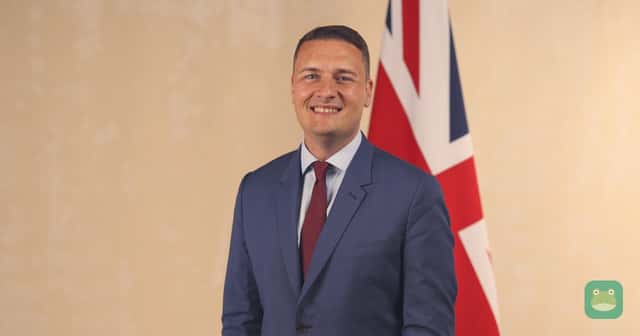
Britain and Germany agreed on Monday to work together on military uses of artificial intelligence. Defence Secretary Wes Streeting and German Defense Minister Boris Pistorius signed off on the plan in Berlin. They said they would add AI to a joint cybersecurity project set up under a 2024 defense pact. Earlier in the day, Streeting held talks in Brussels with the European Union's foreign policy chief, Kaja Kallas. She urged Britain to deepen its ties with the bloc "step by step."
The two meetings came 18 days before a summit between the UK and the EU on November 20. Prime Minister Andy Burnham has promised to rebuild relations with the bloc. He has not ruled out talks on rejoining it.
No AI systems, programs or budgets have been named. Government and industry figures from both countries will meet in spring 2027 to work out how the plan will be carried out.
What the ministers agreed in Berlin
The meeting was the second Defence Ministerial Council under the Trinity House Agreement, which the two countries signed in October 2024. The ministers set out the results in a joint statement published by the UK Ministry of Defence.
"We will expand the Trinity House Agreement's Cyber Lighthouse Project to incorporate Artificial Intelligence," the statement said. "Through collaboration on a small number of shared military use cases, we will deepen bilateral cooperation in capability development, experimentation and adoption."
The statement listed several other areas of work:
- Long-range missiles. The two countries reported "significant progress" on a Deep Precision Strike weapon with a range of more than 2,000 kilometers, due "within the decade."
- Torpedoes. Their national armaments directors signed an arrangement on buying Sting Ray torpedoes.
- Patrol aircraft. German P-8A Poseidon maritime patrol planes flew from RAF Lossiemouth in Scotland for the first time this year. That included the NATO exercise Dynamic Mongoose in May and Exercise Strike Warrior, which ended in early October.
- Space. Defense ministries will start work on satellite communications, Earth observation and space domain awareness. Chancellor Friedrich Merz and Burnham set that goal last month.
- Ukraine. Britain and Germany co-chair the Ukraine Defense Contact Group, which coordinates military aid to Kyiv. The statement said they would keep developing it.
"The security of the United Kingdom and Germany is inseparable from the security of Europe," the ministers wrote. They said they had told their teams "to maintain this momentum through 2027, with a continued focus on delivery and tangible outcomes."
Streeting's case in a German newspaper
Streeting set out his argument on Monday morning in a guest article for the Frankfurter Allgemeine Zeitung, a leading German daily. He wrote in German. The translations here are ours.
He said threats to Europe are growing. He pointed to "state-sponsored terrorism, acts of sabotage and hostile acts," much of it coming from Russia. "Our adversaries' willingness to harm us is not new," he wrote. "What is new is their capability to do so." He added: "Europe must lead its own defense."
On AI, he wrote that through "joint testing, development and ultimately introduction of AI in our armed forces, we will deepen our cooperation and keep pace with those who seek to harm us." He said a German-British round table of government and industry would meet in spring 2027 "to shape the practical implementation."
Euronews reported that no specific systems, programs or budgets have been announced.
German money in British defense plants
Streeting wrote that German companies have pledged £800 million of investment in the British defense industry since the Trinity House Agreement was signed. He named four companies. Three came with figures.
Source: Wes Streeting in the Frankfurter Allgemeine Zeitung
Show the numbers
| Company | Pledge |
|---|---|
| Rheinmetall (gun barrel plant, Telford) | £400m |
| Helsing (drone plant, Plymouth) | £350m |
| ARX Robotics (drone development) | £45m |
He said Helsing had announced a new drone factory in Plymouth, backed by £350 million of investment in AI-driven small submarines. Euronews described the Helsing site as a factory that opened last year to build AI-powered underwater gliders that track submarines. Rheinmetall is investing £400 million, including in a gun barrel plant in Telford, he wrote. Stark Defence has confirmed plans for a large drone factory in Wiltshire, its first site outside Germany.
We have not checked each pledge against the companies' own announcements. The figures in the chart are the defense secretary's.
Kallas: "Let's move step by step"
Before Berlin, Streeting was in Brussels. He met Kallas and the EU's defense commissioner, Andrius Kubilius. Euronews reported that Kallas said Britain should focus on taking part in the EU's existing defense frameworks for now, rather than opening talks on rejoining.
She said some in Brussels still bear scars from the Brexit talks. "It's up to what UK people and a negotiated agreement – there's a lot of traumatized people in Brussels over Brexit," she said. "These negotiations will be difficult, and we are not there yet."
She added: "What I think is important is we want to have deeper relationship because you are very close, and we are stronger together but let's move step by step."
Streeting cautioned against getting ahead of the debate on rejoining. But he praised Burnham's "courageous conversation with the European Commission, member states as well as the British people," Euronews reported. "There's no doubt leaving the EU hit our economy and we're not as strong as we might have been," Streeting said.
The fight over "Made in Europe"
Britain is outside one of the EU's main defense funding tools. Last year it opted out of the €150 billion Security Action for Europe (SAFE) loan program. Euronews reported that talks failed over an entry fee estimated at €4 billion to €6 billion, which the British government said was not good value for money.
The UK is also outside the EU's proposed "Made in Europe" drive. That plan would favor European manufacturers in key sectors, including defense. Britain is excluded because it is no longer part of the single market.
Streeting warned the EU against shutting British firms out. "We need to be careful" that the push "doesn't spread into self-defeating protectionism," he said in Brussels, according to Euronews.
There may be a price for access. Politico Europe's Brussels Playbook cited a Guardian report on a possible trade. It said the British government is prepared to pay up to £450 million a year for discounted tuition fees for EU students. In return, Brussels would give Britain access to the Made in Europe scheme. Ministers hope a deal can be reached at this month's summit, Politico reported. We have not seen the government confirm that figure.
The Russia backdrop
The talks in both capitals focused on Russia's war in Ukraine and on hybrid attacks across Europe, Euronews reported. On the same day, the Royal Navy said it had intercepted a Russian intelligence ship off Scotland that had been "closely monitoring" a NATO exercise, according to Politico.
Streeting tied the AI plan directly to that threat. He wrote that "this new era of threats demands a new era of defense, and our strength rests on partnerships."
The debate over military AI
The new plan comes as states argue over how far AI should be allowed to go in weapons.
The International Committee of the Red Cross wants new treaty rules. In an October 14 statement to the UN General Assembly's First Committee, the ICRC set out its demands. It said states "must prohibit unpredictable autonomous weapons and those designed or used to target persons, and impose strict international legal limits on all other autonomous weapons." It said more than 70 states have called for negotiations on a new protocol under the Convention on Certain Conventional Weapons. It wants those talks launched at the convention's review conference this month. "States must move decisively to ensure that the future of warfare is governed by humans, not machines," the ICRC said.
Britain has favored a different route. In its 2022 defense AI policy, published under a Conservative government, the Ministry of Defence said the UK "does not possess fully autonomous weapon systems and has no intention of developing them." It said there must be "context-appropriate human involvement" in weapons that pick and attack targets. But it argued that the best approach is to build "norms of use and positive obligations" under existing humanitarian law rather than set early limits. It said rigid limits risk being "arbitrary, constraining and habitually out-dated."
Monday's joint statement did not say whether the shared AI work will include weapons. It spoke only of "a small number of shared military use cases." Neither ministry has published further details.
What comes next
The UK-EU summit on November 20 is the next big date. Burnham has pledged closer cooperation with the bloc on trade, education, energy and defense, Euronews reported. Our earlier report covers the case for closer EU ties that Keir Starmer and Rachel Reeves made in Dublin. Germany's own AI targets are set out in our story on Berlin's Digital Summit.
The British-German round table on military AI is due in spring 2027. For background on the parties and issues in British politics, see our United Kingdom issues guide.
This story is based on the joint statement, Streeting's newspaper article, an ICRC statement, a UK defense policy paper, and reporting by Euronews and Politico Europe. Read how we handle sources in our methodology.
Differing perspectives
How should European militaries bring artificial intelligence into weapons and defense systems?
Each position is summarized as its supporters make it, with equal weight and in alphabetical order. A summary is not an endorsement; the evidence for each is weighed in the story above.
Adopt AI with allies under existing law
Who holds it: The UK government, as set out in the Ministry of Defence's published AI policy, and Defence Secretary Wes Streeting on adopting AI with allies
Adversaries such as Russia are gaining new capabilities, so allies must test, develop and adopt AI together to keep pace. Weapons can use AI lawfully if humans stay responsibly involved and every system passes legal review under existing humanitarian law. Early, rigid limits would quickly fall out of date, so the better path is shared norms of use and positive obligations.
In their words: UK Ministry of Defence ↗
Negotiate binding treaty limits now
Who holds it: The International Committee of the Red Cross, the UN Secretary-General and more than 70 states calling for negotiations
Military AI creates new dangers for civilians and can multiply the speed and scale of violations of humanitarian law. States should open talks this month on a new treaty protocol that bans unpredictable autonomous weapons and those designed to target people, with strict legal limits on all others, so that humans rather than machines govern warfare.
In their words: International Committee of the Red Cross ↗
READ BEYOND 567POLITICS
Alternate sources & perspectives
Independent coverage and primary evidence to help you compare arguments. A link is not an endorsement; perspective labels describe the linked material.
- primary evidence
UK Germany Defence Ministerial Council Joint Statement ↗
UK Ministry of Defence (GOV.UK)
Full text of the Nov. 2 joint statement by Wes Streeting and Boris Pistorius.
- primary evidence
Unsere Partnerschaft wächst weiter (guest article by Wes Streeting) ↗
Frankfurter Allgemeine Zeitung
Streeting's German-language op-ed with the AI plan and German investment figures.
- independent analysis
UK and Germany to jointly develop military AI in 2027 ↗
Euronews
Independent report noting that no systems or budgets have been named.
- independent analysis
Brussels still 'traumatised' by Brexit, EU foreign policy chief warns ↗
Euronews
Kallas and Streeting remarks in Brussels, SAFE and Made in Europe background.
- independent analysis
Big wobble in Warsaw (Brussels Playbook) ↗
Politico Europe
Reports the possible tuition-fee offer for Made in Europe access and the Royal Navy intercept.
- other perspective
Statement to the UN General Assembly's First Committee ↗
International Committee of the Red Cross
The ICRC's call for a binding protocol on autonomous weapons.
- other perspective
Ambitious, safe, responsible: our approach to the delivery of AI-enabled capability in Defence ↗
UK Ministry of Defence (GOV.UK)
The UK's 2022 policy on AI in weapons, favoring norms of use under existing law.
Reviewed 2026-11-02. Sources reviewed Nov. 2, 2026 for the story on the UK-Germany defense ministerial council and Wes Streeting's Brussels talks. discover_politics_sources returned only an unrelated illustrators' directory, so sources were chosen and opened by hand. The military AI debate is presented through the UK government's own policy and the ICRC's treaty call; it does not map onto left and right, so those are labeled 'other perspective'. No published reaction from UK opposition parties to the AI plan was found by publication time.