Russian strikes resume in Kherson region after six-day Oleshky truce ends
Kyiv and Moscow both call the evacuation mission a success but disagree on who gained from the pause and whether it can be repeated.
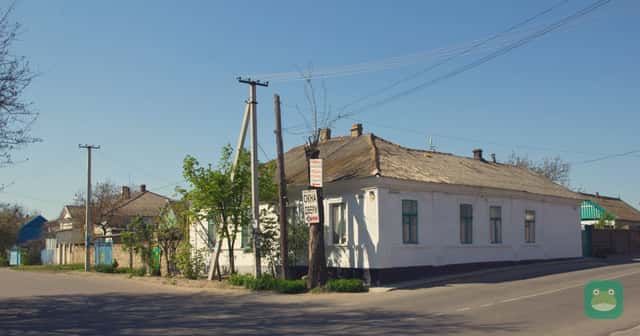
Russian drones struck Ukraine's Kherson region again on Monday, November 2, hours after a six-day local ceasefire around the occupied town of Oleshky expired. The truce let aid reach a town that had been cut off for months and let several hundred civilians leave. It was brokered with help from U.S. first lady Melania Trump and, by several accounts, the Vatican. It was the longest pause in fighting anywhere along the front since Russia's full-scale invasion in 2022, Euronews reported.
Kyiv and Moscow both called the mission a success. They disagree on almost everything else: who gained militarily from the pause, why it was not extended, and whether it can serve as a model for wider talks. Those talks among Ukraine, Russia and the United States are expected to resume this month.
Quotations from Ukrainian- and Russian-language sources are 567politics translations unless an English version is linked.
What happened on Monday
At about 8 a.m. local time on Monday, a Russian drone hit a car in the Korabelnyi district of Kherson city, wounding a 62-year-old woman and a 73-year-old man, Euronews reported, citing local authorities. Regional governor Oleksandr Prokudin urged residents to stay alert. Euronews also reported that one person was killed in a separate attack in Izium, in the Kharkiv region.
A senior Ukrainian official told AFP that Russia had refused a Ukrainian offer to extend the truce, according to Euronews and DW's live coverage. DW reported that neither side reported violations while the truce held. It ended at 11 p.m. local time on Sunday, November 1.
How the truce worked
Ukraine's human rights commissioner, Dmytro Lubinets, said the ceasefire ran from October 27 to November 1. It was coordinated through Melania Trump with Russia's human rights commissioner, Yana Lantratova, he said in a statement reported by Interfax-Ukraine. He said both sides kept to it. Interfax-Ukraine reported that the pause took effect at 3 a.m. on October 27 and that earlier reports had described both the Vatican and Melania Trump as mediators.
Oleshky sits on the left bank of the Dnipro River, across from Kherson city, and has been under Russian occupation since 2022. The Kyiv Independent reported that about 2,000 residents there faced starvation before the truce. Ukraine's General Staff said its forces also used the pause to evacuate 167 civilians from the Ukrainian-held right bank. That group included 22 children and 21 people with limited mobility.
Melania Trump said on X that "the mission was a success, delivering critical aid to the region and enabling the evacuation of nearly 800 people," Anadolu Agency reported. She thanked Russia and Ukraine for their "leadership and cooperation." She added: "I hope Oleshky serves as a foundation for lasting peace between both nations."
The exact number of evacuees is uncertain. Ukrainian officials withheld it, citing security, the Kyiv Independent reported on October 31. That report described a 19-hour route for those who chose Ukraine. They traveled from Armiansk in Crimea to Anapa in southern Russia, flew on four planes to Gomel in Belarus and crossed into Ukraine's Chernihiv region. The oldest evacuee was 94 and the youngest about one year old, the outlet said. It cited a Newsmax correspondent who said about 750 people had registered, with 11 buses going toward Ukraine and four toward Russia.
BBC News Ukrainian reported that Ukrainian Prime Minister Serhiy Koretskyi told parliament 527 people would return to Ukrainian-controlled territory, then withdrew that figure as incorrect. The ombudsman's office said it could not confirm it. By rough estimates cited by the BBC before the buses left, about 1,500 people were still living in the town, including about 40 children. Russian outlets reported that evacuees who chose Russia went first to Simferopol and then to a sanatorium in Krasnodar Krai, according to RIA Novosti. Oleshky had about 24,000 residents before the full-scale invasion, the Kyiv Independent reported.
Kyiv's view: success, but Russia regrouped
Ukrainian officials praised the humanitarian result. "When there is the attention of the world, there is the salvation of people," President Volodymyr Zelensky said, according to the Kyiv Independent. "Further de-escalation steps and a real approach to peace are also needed." Lubinets said he was working with Lantratova on "further humanitarian initiatives" and that it was "important to maintain this mechanism," Anadolu reported.
The military told a harder story. Ukraine's General Staff said Russian forces used the pause to rotate troops, fortify positions, set up anti-drone defenses and move ammunition, Ukrainska Pravda reported. An unnamed Ukrainian officer told DW that fighting in the area had become "worse than before."
Moscow's view: a one-off, for now
The Kremlin confirmed the operation. "We can indeed confirm the successful execution of this humanitarian operation," spokesman Dmitry Peskov said on Monday, according to Anadolu. He thanked Washington and Melania Trump. Asked about repeating it, he said: "There are no similar plans yet, nor are there any similar initiatives." Asked about Ukraine's claim that Russia regrouped, Peskov said Ukraine might also have done so and called that "perfectly standard practice."
Lantratova said she held regular calls with the first lady's team and had asked for such missions to become regular, RIA Novosti reported. Russian officials have repeated President Vladimir Putin's claim that Ukrainian forces mined the approaches to the town. The BBC reported Lantratova's statement that one Russian soldier was killed while clearing mines. Neither claim could be independently verified. On October 29, Putin accused Ukraine of "creating a humanitarian catastrophe" in Oleshky, the Kyiv Independent reported.
The skeptics' case
Some analysts argue that Moscow gained more from the truce than Kyiv did. John Foreman, a former British defense attaché, told the Kyiv Independent: "They know exactly what they're doing." He argued that "allowing Melania to take the credit bolsters (Russia's) credentials to the MAGA base as peacemakers before the midterms." That is his interpretation of Russia's motives, not a documented finding.
Marc Beckman, an adviser to the first lady, offered the opposite reading in the same article. He said Putin "wanted very much" her involvement and that "everybody, the Russians included, is working in good faith."
Aid workers raised a separate concern. Daria Rabinovitsch of the volunteer group Helping to Leave told the Kyiv Independent that other isolated places, including the Kinburn Spit, the Polohy district and Enerhodar, face similar conditions. The same article cited an anonymous source who said Russian authorities had threatened residents with "filtration," the screening process Russia applies to people leaving occupied areas.
The Kyiv Independent's October 31 report also cited testimony collected by the Media Initiative for Human Rights. It suggested parts of the route had been staged for cameras. A volunteer, Kseniia Arkhipova, said Russia started the evacuation earlier than agreed. Russia has not responded to those specific claims in the sources we reviewed.
Who gets the credit
The question of credit has its own politics. Al Jazeera reported on October 27 that the White House and the Vatican gave different accounts. Melania Trump said the deal would not have happened "without my intervention." Al Jazeera reported that Pope Leo XIV spoke with Putin on October 16 and with Zelensky on October 19. Cardinal Matteo Zuppi, the pope's envoy, had visited Moscow in late September.
DW reported that President Donald Trump said, "Let Oleshky become the starting point for lasting peace." He said residents had gained "freedom to move, access to food, clean water, medicine." Pope Leo said he hoped the pause would strengthen the desire for talks between the two sides, DW reported.
Beyond the administration, we did not find on-the-record statements from Democratic or Republican members of Congress in the sources we reviewed, so this article does not characterize U.S. partisan reaction.
Alert apps hacked as the truce ended
Both countries' air-raid alert apps were hacked on Sunday, the BBC reported. The Ukrainian app pushed a false message in Russian. Ukraine's air force responded: "There is no radiation threat!" Euronews reported that the fake Ukrainian message referred to Russia's Oreshnik missile. Russia's alert app also sent fake warnings, which Moscow blamed on a "massive cyberattack," according to Euronews.
The BBC reported that it was unclear who was behind either attack. Peskov said Russia faces constant cyberattacks. Herbert Lin, a cyber policy researcher at Stanford University, told the BBC: "I think it's the first time it's happened to an official Ukrainian information app, but I suspect it won't be the last." The BBC reported that the Ukrainian alerts went out minutes before the Kherson ceasefire ended. No government or group has shown that the hacks were connected to the truce.
What comes next
The local truce happened against a backdrop of continued strikes elsewhere. Zelensky said Russian strikes had knocked out power for hundreds of thousands of people, DW reported. The Kyiv Independent reported that a drone strike on the railway station in Dnipro on October 29 killed at least 13 people.
Diplomacy continues on a separate track. DW reported that Yuri Ushakov, Putin's foreign policy aide, wants the first rounds of three-way talks to exclude European governments. DW reported that Ukraine expects the three-way talks in the first half of November. Our report on the timing of the planned Abu Dhabi talks covers the positions each side has staked out. Some European leaders argue that Europe must take more responsibility for its own security. Former British Prime Minister Keir Starmer made that case in Dublin last week, as we reported in our story on Starmer's speech on European security.
Both Lantratova and Lubinets say they want more humanitarian missions. "Oleshky is to be the first step," Lantratova said, according to the Kyiv Independent. Lubinets said: "We are not stopping at this mission." The Kremlin's public line on Monday was that no such plans exist yet.
About this report
Ukrainian and Russian officials do not have profiles on 567 Politics, and our political funding tool covers only U.S. federal candidates. This article makes no claims about political funding. Casualty figures, evacuee numbers and claims about troop movements come from the governments and outlets named and could not be independently verified. We did not embed social media posts because we could not open and verify their permalinks. Our editorial standards and methodology explain how we handle contested claims from parties to a war.
Differing perspectives
Did Russian forces use the Oleshky ceasefire to strengthen their military positions?
Each position is summarized as its supporters make it, with equal weight and in alphabetical order. A summary is not an endorsement; the evidence for each is weighed in the story above.
Perfectly standard practice
Who holds it: Dmitry Peskov, Kremlin spokesman
Asked on Nov. 2 about Ukraine's claim that Russia regrouped, Peskov said, as Anadolu Agency reported, that Russia did not rule out that Ukraine might also have used the ceasefire for the same purpose. He called that "perfectly standard practice in such situations." He also said the humanitarian operation was "successful." Anadolu's report records no denial of the General Staff's specific claims about rotations, fortification or ammunition.
In their words: Anadolu Agency, Nov. 2, 2026, quoting Peskov ↗
The enemy used the pause to reinforce
Who holds it: General Staff of the Armed Forces of Ukraine
In a Nov. 2 statement carried by Ukrainska Pravda, the General Staff said Ukrainian units "ensured that the ceasefire was observed." It said that "by contrast, the enemy used the humanitarian pause to reinforce its positions." It listed Russian units rotating, positions being strengthened, anti-drone measures along roads being expanded, and logistics capacity being scaled up, "including the delivery of ammunition." Ukrainska Pravda gave the statement in English.
In their words: Ukrainska Pravda, Nov. 2, 2026, quoting the General Staff ↗
READ BEYOND 567POLITICS
Alternate sources & perspectives
Independent coverage and primary evidence to help you compare arguments. A link is not an endorsement; perspective labels describe the linked material.
- independent analysis
Russia resumes attacks on Ukraine's Kherson region after truce ends, Kyiv says ↗
Euronews
Monday's Kherson drone strike, Russia's reported refusal to extend the truce and the alert-app hacks.
- independent analysis
Ukraine: six-day localized ceasefire in Oleshky comes to end ↗
DW
Live coverage with statements from President Trump, Pope Leo XIV, Zelensky and Ushakov.
- primary evidence
Lubinets on ceasefire in Oleshky ↗
Interfax-Ukraine
Ukrainian ombudsman's statement on the Oct 27-Nov 1 ceasefire and its coordination with Russia's commissioner.
- other perspective
General Staff statement on Russian regrouping during the Oleshky truce ↗
Ukrainska Pravda
Ukrainian military's claim that Russia rotated troops and fortified positions during the pause.
- other perspective
Kremlin says US-brokered ceasefire in Oleshky was successful ↗
Anadolu Agency
Peskov's account: the mission succeeded, no similar plans yet, regrouping is standard practice.
- other perspective
US first lady announces successful conclusion of Oleshky ceasefire ↗
Anadolu Agency
Melania Trump's statement on nearly 800 evacuees and Lubinets on further humanitarian initiatives.
- other perspective
Aleshki humanitarian mission (RIA Novosti report) ↗
RIA Novosti
Russian state media account, including Lantratova's call for regular missions and where evacuees to Russia were taken.
- independent analysis
Oleshky residents reach Ukrainian-controlled territory after escaping Russian occupation ↗
Kyiv Independent
Evacuation route via Crimea, Anapa and Belarus, evacuee estimates and human-rights testimony.
- independent analysis
'They know exactly what they're doing': What Russia gains from a ceasefire in Oleshky ↗
Kyiv Independent
Skeptical analysis from John Foreman alongside the first lady's adviser Marc Beckman and aid workers.
- independent analysis
Evacuation in Oleshky: Ukrainians taken to Anapa, but why some residents stayed ↗
BBC News Ukrainian
Retracted 527 figure, residents who chose to stay and mediation by Melania Trump and Pope Leo XIV.
- independent analysis
Melania or the pope? Who brokered the Russia-Ukraine ceasefire in Oleshky ↗
Al Jazeera
Competing White House and Vatican accounts of who brokered the truce.
- independent analysis
Fake nuclear warnings issued after Ukrainian and Russian air alert apps hacked ↗
BBC News
Both countries' alert apps hacked minutes before the truce ended; attribution unclear.
Reviewed 2026-11-02. Reviewed November 2, 2026. Discovery surfaced Oleshky background pages (Wikipedia, Meduza, CBS, BBC) that we did not open for this update, so the list uses sources the article cites and we opened. The war's sides are not a left-right question: perspectives here are Ukrainian officials, Russian officials and state media, the U.S. administration, the Vatican, and skeptical analysts. We found no on-the-record U.S. congressional reaction, so no left or right argument is labeled. Melania Trump's X post is cited via Anadolu because we could not open its permalink. AP coverage timed out and was not used.