Citizenship-only voting passes in four states; California, Colorado and Arizona reject voter ID measures
Early returns show every citizenship amendment passing and voter ID splitting by what it would change. California's $72 million Prop. 39 lost by about 20 points. What the measures do, and what the evidence on noncitizen voting shows.
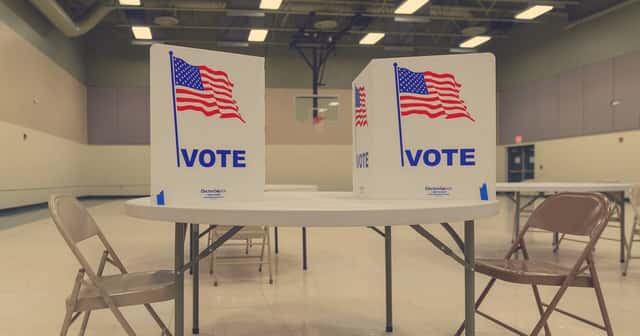
Voters in 11 states decided measures on Tuesday that would write voter identification rules or citizenship-only voting into their constitutions. The pattern in the early returns is clear and, in one respect, familiar. Citizenship amendments passed everywhere they were decided, in Arkansas, Kansas, South Dakota and West Virginia, continuing a run of 15 straight approvals since 2018. Voter ID measures split by state: North Carolina and Ohio approved amendments, while California, Colorado and Arizona rejected theirs, according to Ballotpedia's tally at 1:30 a.m. Eastern on Wednesday. Alaska's citizenship initiative and Nevada's voter ID question were uncalled in that tally, though two Nevada outlets reported Question 7 passing.
This story sets out the results as they stood on Wednesday morning and what each measure does. It then lays out the evidence on noncitizen voting that both sides cite, and the arguments each side made in its own words. Every figure below is from a partial count and will change. We could not sample Reddit or X directly during this run, and we say so in the section on online reaction.
The results so far
| State and measure | What it does | Result (partial) |
|---|---|---|
| West Virginia Amendment 1 | Citizenship-only voting | Approved, 78.8% yes at 73% of precincts |
| Kansas amendment | Citizenship-only voting | Approved; 54% to 64% yes in partial counts |
| Arkansas Issue 1 | Citizenship-only voting | Approved, per Ballotpedia; no figures retrieved |
| South Dakota Amendment J | Citizenship-only voting | Approved, per Ballotpedia; no figures retrieved |
| Alaska Ballot Measure 3 | Citizenship-only voting | Not called; slow count expected |
| Arizona Proposition 144 | Citizenship, ID for all ballots, more | Defeated, about 57% no in early returns |
| California Proposition 39 | ID in person, ID digits by mail | Defeated, about 60% no, AP call at 49% counted |
| Colorado Amendment 84 | ID number on mail ballots | Defeated; needed 55% |
| Nevada Question 7 | Photo ID in person, ID digits by mail | Reported passing; uncalled in Ballotpedia tally |
| North Carolina amendment | Photo ID for all voters, mail included | Approved, per Ballotpedia |
| Ohio Issue 3 | Photo ID in constitution | Approved, per Ballotpedia |
Sources: Ballotpedia News for approved and defeated calls; West Virginia Watch via Yahoo News for the West Virginia count; Law Commentary and MultiState for Kansas and Arizona partial figures; LAist for California. Nevada's passage was reported by The Hill and KLAS; we could not open either article. The two Kansas figures come from different points in the count, 54.31 percent at 38 percent of precincts and 63.68 percent in a later pending tally.
The split is not between red and blue states so much as between types of measure. Citizenship amendments passed by wide margins. In most states they change nothing in practice, because noncitizens are already barred from state and federal elections. Measures that would change how people actually vote failed in states with large mail-voting populations. Colorado's would have required ID numbers on mail ballots; Arizona's an ID for every ballot. California's measure, which would have required ID in person and ID digits by mail, lost by about 20 points in a state where most ballots arrive by mail.
What the citizenship amendments do
Each citizenship amendment rewrites a constitutional clause. The current text says "every citizen" may vote, or describes voters without excluding noncitizens. The new text says "only a citizen of the United States" may vote. In Kansas, House Concurrent Resolution 5004 passed the House 90 to 28 and the Senate 37 to 3 in early 2025, Ballotpedia's measure page records. Ballotpedia notes that Kansas already bars noncitizens from state elections through a 1930s court decision and from federal elections through federal law. Arkansas's Issue 1 passed the House 82 to 6 and the Senate 27 to 0, per Ballotpedia. South Dakota's Amendment J passed the Senate 33 to 2 and the House 58 to 11, per Ballotpedia. In each state Democratic legislators supplied most of the no votes and abstentions, by Ballotpedia's roll calls.
West Virginia's amendment changes the phrase "citizens of the state" to "only citizens of the United States who are citizens of this state." State code already limits voting to U.S. citizens, West Virginia Watch reported. The Associated Press called the amendment at 8:43 p.m. Tuesday, with 78.8 percent in favor at 73 percent of precincts, per that report.
The measures are part of a coordinated campaign. Americans for Citizen Voting, a group that promotes the amendments, says 15 states amended their constitutions this way between 2018 and 2025. Ballotpedia's count agrees. All 15 passed, with an average of 73 percent support, per its July analysis. The practical target is local elections. A small number of municipalities elsewhere have authorized noncitizen voting for local offices through local measures, and the amendments foreclose that option in the states that adopt them. Ballotpedia counted 18 local measures to authorize noncitizen voting between 1991 and 2025, of which nine passed and nine failed, and found none on the 2026 ballot.
The 2026 approvals are Arkansas, Kansas, South Dakota and West Virginia. Arizona's Proposition 144 also contained a citizenship clause but failed; we count it under voter ID below because its other provisions drove the campaign. Alaska's is uncalled.
What the voter ID measures do, and why some failed
The voter ID measures differ more than the citizenship amendments. North Carolina and Ohio already require photo ID by statute; their amendments move the requirement into the constitution, where a future legislature cannot repeal it by simple majority. North Carolina's amendment also extends the requirement to mail voters. It passed the state Senate 30 to 19 on party lines and the House with all 72 Republicans and one Democrat in favor, per Wikipedia's summary of the legislative record.
The three that failed would have changed current practice. Colorado's Amendment 84 would have required mail voters to add an ID number alongside their signature: the last four digits of a Social Security number, or a driver's license or REAL ID number. Signature matching would no longer have been the sole check. As a constitutional amendment it needed 55 percent, Colorado Politics explained. Arizona's Proposition 144 bundled several changes. It required government-issued ID for every voting method, including mail. It added a citizenship clause and a ban on foreign nationals funding ballot campaigns. It allowed ballots to be counted at polling places on Election Day, and it made election laws harder to challenge in court, Law Commentary summarized. About 57 percent of early returns opposed it.
California's Proposition 39 was the most expensive. Supporters raised about $37 million, including $17 million from Richard Uihlein and $8 million from Joe Gebbia; opponents raised about $35 million, with nearly $6.5 million from the Democratic Party, LAist reported. The Legislative Analyst's Office estimated implementation costs in the tens of millions to low hundreds of millions of dollars. Polling had moved against the measure over the year. A Berkeley IGS survey of 5,962 registered voters in April found 56 percent yes and 39 percent no. A Public Policy Institute of California survey of 986 likely voters in May found 49 yes and 51 no, per the polling table on Wikipedia. The result, roughly 60 percent no, was worse for supporters than either poll.
| California Prop. 39 | Yes | No |
|---|---|---|
| Berkeley IGS, Apr. 9–18, 5,962 RV | 56% | 39% |
| PPIC, May 14–18, 986 LV | 49% | 51% |
| Result, AP call at 49% counted | about 40% | about 60% |
Sources: Wikipedia polling table citing the pollsters; LAist. RV is registered voters, LV likely voters. Margins of error were plus or minus 2.0 and 3.2 points.
Nevada's Question 7 is a different case. It is an initiated amendment, which Nevada requires voters to approve in two consecutive even-year elections. It passed in 2024 with 73.23 percent, per Wikipedia's summary of the official result, and needed a second approval on Tuesday to take effect. The Hill and KLAS reported that it passed; Ballotpedia's early-morning tally had it uncalled. Our Virginia results report covers that state's voting-rights restoration amendment, which went the other direction, expanding the electorate.
The evidence both sides cite
The case for the citizenship amendments rests on a legal argument, not on evidence of widespread noncitizen voting. Kansas Rep. Pat Proctor, the sponsor, argued that while federal law and court precedent bar noncitizen voting in some elections, "no law prevents municipalities from allowing it in local elections," Ballotpedia records. Arkansas Rep. David Ray said the existing language "leaves room for other people to be added to that list." West Virginia Sen. Patricia Rucker argued that statutes can be changed by a simple bill, so only a constitutional amendment binds future legislatures. These are claims about what the law permits, and they are accurate as far as they go: a state statute can be repealed, and a handful of localities elsewhere do allow noncitizen local voting.
Opponents argue the amendments answer a problem that the evidence shows to be rare. The best recent audit is Georgia's. In October 2024, Secretary of State Brad Raffensperger, a Republican, reported the results of a review of county court, driver's license and federal immigration records. It found 20 noncitizens registered among 8.2 million voters. Nine had voted, most before the state began citizenship checks in 2012, the Alabama Reflector reported from his announcement. That is about one registration in 400,000. Arkansas Rep. Diana Gonzales Worthen said there had been no documented cases of noncitizens voting in her state. The League of Women Voters of Kansas warned the amendment could be used to revive a documentary proof-of-citizenship requirement that a federal court struck down in 2018. The ACLU of Kansas said the language could justify restrictive registration laws. Jenny Farrell of the League of Women Voters of California said, "There is no widespread noncitizen voting that would justify adding these strict requirements," LAist reported.
Both arguments can be true at once. The amendments do close a legal door, and the door has rarely been used. Where the sides disagree is on cost. Supporters say a constitutional guarantee costs nothing and settles the question. Opponents say the amendments are a step toward proof-of-citizenship rules of the kind Kansas enforced between 2013 and 2018. They say those rules blocked tens of thousands of eligible registrants. That figure comes from the federal litigation the League cited, which we did not open during this run. Readers can weigh that history against the Georgia audit. One inference does not follow from either side: that a wide margin of approval proves noncitizen voting is common, or that a rare problem proves the amendment is harmful. Approval measures preference, not prevalence, and rarity measures the present, not the future.
The federal backdrop matters this year. The Justice Department charged 63 people with election crimes, including noncitizen voting, on the eve of the midterms, as we reported. A federal judge barred DHS and DOJ from sending more noncitizen voter lists to election officials after a rights group found that 42 percent of one list was not on state rolls, covered in our report on Judge Chutkan's order. The Supreme Court declined to set aside 20,000 California ballots the department had challenged, as we reported. Supporters of the amendments cite the prosecutions as proof the problem is real; opponents cite the list errors as proof that enforcement built on bad data harms citizens. Both are drawing on the same month's events.
Money and polling
Campaign finance on the citizenship amendments was close to nonexistent. In Kansas, the only registered committee was Women 4 Kansas PAC, opposing, with $31,734 raised through October 22; no supporting committee reported, Ballotpedia found. In Arkansas and South Dakota, no committee registered on either side. That contrasts with California's $72 million contest. South Dakota had the only representative poll we found on a citizenship amendment. An Emerson College/KELOLAND survey of 803 likely voters, October 19 to 21, found 64.0 percent in favor, 32.6 percent opposed and 3.4 percent undecided, per Ballotpedia. Its margin of error was plus or minus 3.5 points.
Our report on the sex-based school sports measures covers the other statewide questions in Arizona and Colorado, and our Missouri results report covers that state's ballot.
What people are saying online
Our standard method is to read Reddit's r/politics, r/Conservative and r/moderatepolitics listings and X's trending pages, then open posts. During this run every Reddit listing was blocked from our research desk, X's explore pages refused automated access, and our tool for opening individual X posts failed on every attempt. We also found no X posts on these specific measures through web search that we could attribute with confidence. We therefore report no online reaction for this story rather than quote posts we could not verify. That is a gap, not a finding that people were silent; the measures drew heavy spending in California and Arizona, and reaction there is likely.
The representative evidence is thin too. Beyond the South Dakota and California polls above, we found no statewide poll on the other measures with published method and field dates. We make no claim about what voters in those states think beyond the results themselves.
What remains unknown
Final percentages in every state, since all counts were partial on Wednesday morning. Alaska's citizenship initiative, which will take days to count. Whether Nevada's Question 7 is formally called and at what margin. Arkansas, South Dakota, North Carolina and Ohio figures, which we could not retrieve from official sources during this run. Whether any state follows its citizenship amendment with a proof-of-citizenship registration bill, which is the change opponents say they fear and supporters have not, in these campaigns, proposed. We will update the table as official counts post.
Differing perspectives
Should states write citizenship-only voting and voter ID requirements into their constitutions?
Each position is summarized as its supporters make it, with equal weight and in alphabetical order. A summary is not an endorsement; the evidence for each is weighed in the story above.
Keep signature verification for mail ballots
Who holds it: Opponents of Colorado's Amendment 84 and defenders of existing mail-voting systems in Colorado, Arizona and California
Those who defend current mail-ballot checks argue that signature verification already catches the rare ineligible ballot, that in-person voters already show ID, and that first-time mail voters already provide a document. They say adding an ID number requirement means minor mistakes could leave eligible voters' ballots uncounted, that voters with privacy concerns or without the listed numbers would be discouraged from voting by mail, and that the change adds cost and burden without a measurable security gain in a system that is already secure.
In their words: Colorado Politics, summarizing the arguments against Amendment 84 from the state's Blue Book, Oct. 2, 2026 ↗
Lock citizenship-only voting into the constitution
Who holds it: Republican legislative sponsors such as West Virginia Sen. Patricia Rucker and Kansas Rep. Pat Proctor, state Republican parties and Americans for Citizen Voting
Sponsors argue that a statute barring noncitizen voting can be repealed by a simple bill, so only a constitutional amendment binds future legislatures and municipalities. They say current wording that voters must be citizens "of the state" leaves room for localities to add other groups, as a few cities elsewhere have done for local elections. They point to approval margins above 70 percent in 15 states since 2018 as evidence that voters want the rule settled, and say the amendment gives the state clearer authority to enforce the law it already has.
In their words: West Virginia Watch, reporting Sen. Patricia Rucker's sponsorship statement, Nov. 3, 2026 ↗
Reject the amendments as unnecessary and a path to restrictive rules
Who holds it: The ACLU of Kansas, the League of Women Voters of Kansas and California, Loud Light Civic Action and Democratic legislators in Arkansas and Kansas
Opponents argue that noncitizens are already barred from voting, that no documented cases exist in their states, and that audits elsewhere find a handful of registrations among millions. They say the amendments do nothing to strengthen a constitution and instead lay groundwork for documentary proof-of-citizenship requirements of the kind a federal court struck down in Kansas in 2018, which they say blocked tens of thousands of eligible people. They warn the language could be used to justify restrictive registration laws and will cause confusion among voters and clerks.
In their words: Ballotpedia, recording statements by the ACLU of Kansas, League of Women Voters of Kansas and Loud Light Civic Action ↗
Require ID for every ballot, including mail
Who holds it: Reform California and Assemblymember Carl DeMaio, the California Republican Party, the Howard Jarvis Taxpayers Association and backers of Arizona's Proposition 144
Supporters of voter ID argue that showing identification is a routine part of daily life and that 36 other states require or request some form of it. They say ID in person and ID digits on mail ballots deter fraud and impersonation, give voters confidence that each ballot is cast by the person it belongs to, and were designed around what voters across the political spectrum would want. They add that free state ID cards and audits of county compliance answer the objection that eligible voters would be shut out.
In their words: LAist, reporting Carl DeMaio and the Yes on 39 campaign, Nov. 3, 2026 ↗
READ BEYOND 567POLITICS
Alternate sources & perspectives
Independent coverage and primary evidence to help you compare arguments. A link is not an endorsement; perspective labels describe the linked material.
- primary evidence
Democrats win U.S. House and Senate majorities (with statewide ballot measure results) ↗
Ballotpedia News
Nonpartisan approved/defeated calls for every citizenship and voter ID measure as of 1:30 a.m. Eastern.
- primary evidence
Kansas Citizenship Voting Requirement Amendment (2026) ↗
Ballotpedia
Amendment text, legislative roll calls, supporter and opponent statements and campaign finance; the opponents' case from the ACLU of Kansas and League of Women Voters is quoted here.
- independent analysis
Prop 39: California voters reject conservative voter ID proposal ↗
LAist
AP call, funding totals on both sides, the LAO cost estimate and quotes from Carl DeMaio and the League of Women Voters of California.
- right argument
West Virginia voters approve noncitizen voting constitutional amendment ↗
West Virginia Watch (via Yahoo News)
Carries Sen. Patricia Rucker's case for a constitutional rather than statutory bar, alongside the AP call and the Citizen Action Group's objection.
- independent analysis
Arizona Rejects Voter ID Overhaul as Kansas Backs Citizenship Amendment ↗
Law Commentary
Early-return figures for Arizona Proposition 144 and Kansas, with a summary of Proposition 144's provisions.
- other perspective
Amendment 84: ID requirements for mail ballots ↗
Colorado Politics
Pre-election explainer setting out the 55 percent threshold and the supporters' and opponents' arguments on mail-ballot ID numbers.
- primary evidence
Georgia GOP secretary of state: Audit found 20 noncitizens registered to vote out of 8.2M ↗
Alabama Reflector (States Newsroom)
Raffensperger's 2024 audit findings, the main empirical measure of noncitizen registration cited in the story.
- independent analysis
Six citizenship voting measures on the ballot in 2026 continue historical trend ↗
Ballotpedia News
History of statewide and local citizenship-voting measures since 1894, including the 15 approvals from 2018 to 2025.
- primary evidence
South Dakota Citizenship Voting Requirement Amendment (2026) ↗
Ballotpedia
Legislative votes, the Emerson/KELOLAND poll with method, and the absence of registered committees.
Reviewed 2026-11-04. Reviewed on the morning of November 4, 2026, with all counts partial. The discover_politics_sources tool returned an irrelevant result, so sources were found by direct search and opened individually. Official secretary-of-state results pages for Arkansas, South Dakota, North Carolina, Ohio and Nevada were not retrieved; results for those states rest on Ballotpedia's early-morning summary and on headlines from The Hill and KLAS that could not be opened. NBC News, Axios, The Hill, Arizona Mirror, KDVR and Fox 8 Cleveland pages were blocked. The Fish v. Kobach litigation on Kansas's proof-of-citizenship law was not opened. Reddit listings were blocked and no X posts on these measures could be verified.