Justice Department charges 63 people with election crimes on the eve of the midterms
Most are green card holders accused of voting in 2022 or 2024. The cases revive disputes over how often noncitizens vote and over timing.
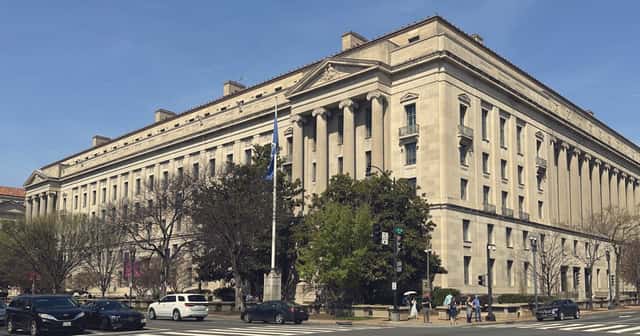
The Justice Department announced on Monday, November 2, 2026, that federal prosecutors had charged 63 people in 15 states. The charges involve voting or registering to vote while not a U.S. citizen, or lying about it later. The announcement came the day before the midterm elections. In a department press release, Attorney General Todd Blanche called it "the largest surge of voter-fraud arrests since President Trump returned to office." The department said it has charged 195 noncitizens in 25 states with illegal voting and registration crimes in the past nine weeks. It said it has charged 239 people with voting fraud crimes since January 2025.
The cases are accusations, not findings. The department's own release notes that charging papers "merely contain accusations." Every defendant is presumed innocent. Most of the alleged votes described in the release were cast in the 2022 or 2024 general elections. A few defendants are also accused of voting in 2026 primaries. The release does not describe any ballot cast in today's election. The announcement still lands in the middle of a broader fight over what the federal government may do about suspected noncitizen voters. That fight reached the Supreme Court on Monday night. The cases raise three questions. How often do noncitizens vote? How many of those charged knew they could not vote? And should the department make such announcements in the last hours of a campaign?
What the department announced
The release lists cases in 20 federal judicial districts. By 567politics' count of the release, 58 of the 63 people are described as lawful permanent residents. These are green card holders who live here legally but cannot vote in federal elections. Four are described in the release as "illegal aliens," the department's term for people in the country without legal status. There is one each in the Northern District of Georgia, the Southern District of Texas, the District of Maryland and the Eastern District of North Carolina. One defendant, in New Mexico, is a 63-year-old Maryland man accused of falsely claiming New Mexico residency on a registration form. That case does not involve citizenship at all.
North Carolina accounts for the largest group. Federal prosecutors in its three districts charged 18 people, half of them in the Eastern District. California's two districts account for 12, Tennessee's three districts for 7, and Texas and eastern Pennsylvania for 5 each. The chart below counts the defendants named in the release by state.
Source: U.S. Department of Justice, Office of Public Affairs, Nov. 2, 2026
Show the numbers
| State | People charged |
|---|---|
| North Carolina | 18 |
| California | 12 |
| Tennessee | 7 |
| Texas | 5 |
| Pennsylvania | 5 |
| Nevada | 4 |
| New Jersey | 2 |
| New York | 2 |
| Wisconsin | 2 |
| Arkansas | 1 |
| Georgia | 1 |
| Maryland | 1 |
| Missouri | 1 |
| New Mexico | 1 |
| Utah | 1 |
The charges fall into three broad groups. Most defendants are charged with "voting by an alien," the federal misdemeanor in 18 U.S.C. 611. It covers elections held at least in part to choose a president, vice president or member of Congress. It carries up to one year in prison. Many are also charged under 18 U.S.C. 1015(f). That law makes it a felony to knowingly claim U.S. citizenship in order to register or vote in any election. It carries up to five years. A third group, in the Central District of California and New Jersey, is charged with lying on citizenship papers. They are accused of denying that they had ever registered or voted.
Both main statutes contain the same narrow exception. They do not apply to someone whose parents were all U.S. citizens, who lived here before age 16 and who reasonably believed he or she was a citizen. Outside that exception, section 1015(f) requires that the false claim be made "knowingly." Section 611 does not use that word. That is one reason lawyers on both sides argue over what a defendant understood when signing a form.
Who was charged
The release gives examples that range from a single alleged ballot to decades of voting. In the Eastern District of North Carolina, a 52-year-old Kenyan national is accused of registering in 2008 and voting in nine general elections and nine primaries from 2008 through 2026. A 64-year-old Bermudan national in the same district is accused of registering in 2000 and voting in 12 general elections. A 62-year-old British national is accused of voting in four general elections since 2008. In the Southern District of Texas, one lawful permanent resident is accused of voting in a 2022 special election for the 34th Congressional District.
In the Central District of California, the six defendants are each charged with one count of making false statements on a naturalization application. The Guardian reviewed the criminal complaints. They allege that the defendants registered and voted in past elections. Later, when applying for citizenship, they said under oath that they had never registered. They are not charged with the voting itself. Bill Essayli, the top federal prosecutor in Los Angeles, brought the cases. He said five of the six had been arrested. He said all were on the federal list of about 20,000 California voters the government suspects are noncitizens. The defendants had not been indicted as of Monday, and The Guardian reported it was not clear whether they had lawyers.
The Utah defendant shows how small some of the cases are. The Salt Lake Tribune reported that the Samoan national accused of voting in Utah in 2024 was arrested in Alaska and charged with a misdemeanor. The defendant denied the charge at an October 30 hearing, got a public defender and was released. The paper said it was not naming the defendant because it generally does not cover low-level criminal charges. 567politics is following the same practice in this story and is not naming individual defendants, none of whom has been convicted.
How the announcement fits a larger campaign
Monday's release follows an October 26 announcement of charges against 48 noncitizens in Pennsylvania, California, Florida, New York and Nevada. In October, federal prosecutors in California also charged 28 people, according to The Guardian. Those cases have run alongside civil litigation in which the department tried to make California set aside the ballots of the roughly 20,000 registrants on its list. A federal judge in Washington, James Boasberg, barred the government on Monday from demanding that California officials set those ballots aside. The Supreme Court denied the department's emergency application the same night without noted dissent. Earlier, an immigrant-rights group told the court that more than 40 percent of the people on the government's list could not be found on the state's rolls. The department disputed that claim in a request for sanctions.
The department has also been told by courts to limit other election-season actions. A federal judge in Washington, Tanya Chutkan, on Monday barred DHS and DOJ from sending lists of suspected noncitizen voters to state and local election officials. Her order still allows single citizenship checks through the federal SAVE database. In California, a restraining order that bars federal officials from threatening election workers with prosecution remains in effect after the full Ninth Circuit stepped in late Monday. And the department has sent federal election monitors to polling places in all 50 states. A dozen went to Salt Lake County, the Tribune reported.
Essayli acknowledged that the list behind the California cases is imperfect. On Monday he said the government had used "third-party databases" and that the list "may not be 100%" accurate. He also cited a "very, very high confidence rate," The Guardian reported. Trent McCotter, the acting deputy attorney general, said at an October briefing that "there may be some names on there who, it turns out, ultimately are citizens."
How common noncitizen voting is
Federal prosecutions can show that specific people are accused of voting illegally. They cannot by themselves show how often it happens, because cases depend on what investigators look for and how they find it. The best available measures come from state audits and surveys of election officials, each with its own limits.
Georgia's Republican secretary of state, Brad Raffensperger, released a citizenship audit in October 2024. It checked the state's 8.2 million registered voters and found 20 noncitizens on the rolls. Nine of them had ever voted, CNN reported. His office opened files on another 156 registrations that needed further review. A Utah review of more than 2 million registration records, described by the Tribune, found that 99.72 percent of voters could be confirmed as citizens. It flagged about 27 alleged and 25 possible noncitizens. About 13 of them had voted. Nearly all were lawful permanent residents or people with Deferred Action for Childhood Arrivals status.
A 2017 Brennan Center for Justice study surveyed officials in 42 places with large noncitizen populations. Those officials oversaw 23.5 million votes in the 2016 general election. They referred about 30 cases of suspected noncitizen voting for further action, about 0.0001 percent of votes. The Brennan Center is a nonpartisan law and policy institute often aligned with voting-access advocates. It acknowledged that local officials "may not be aware of every incident of ineligible voting" and that their tools are imperfect.
Those who favor stricter rules build their case on that point. They say audits and referrals measure only what current systems catch. They also note that the United States does not require proof of citizenship to register for federal elections. Supporters of the current system answer that the penalties already deter would-be offenders. Georgia's chief operating officer for elections, Gabriel Sterling, put it this way in 2024. A legal resident on a path to citizenship who registers to vote "will never get to be a citizen. It is very high risk, very low reward." Neither the audits nor the prosecutions settle exactly how many cases go unnoticed. 567politics found no national estimate based on checked records that would.
The scale of the federal cases can still be compared with the electorate. The 239 people the department says it has charged since January 2025 are spread across several election years. Georgia alone has 8.2 million registered voters. California has more than 23 million, The Guardian reported. Monday's release does not say that any race was decided by the alleged votes. That does not make the crimes legally minor. A vote cast by an ineligible person is illegal whatever its effect on the outcome.
What the public thinks
Concern about ineligible voting divides sharply by party. A Gallup poll surveyed 1,007 U.S. adults by phone from September 3 to 15, 2024. Its margin of error is plus or minus 4 points. In it, 44 percent said "votes cast by people who, by law, are not eligible to vote" would be a major problem in that year's presidential election. That included 74 percent of Republicans, 43 percent of independents and 14 percent of Democrats. Gallup has asked the question in presidential years since 2008. The gap between Republicans and Democrats has grown from 28 points that year to 60 points in 2024. The poll measures expectations about a problem, not how often it happens. It also came before the 2026 cases. 567politics did not find a representative poll from this fall that asks about the Justice Department's cases specifically.
Source: Gallup, Sept. 25, 2024
Show the numbers
| Year | Republicans | Independents | Democrats |
|---|---|---|---|
| 2008 | 55% | 47% | 27% |
| 2016 | 69% | 37% | 22% |
| 2020 | 67% | 42% | 24% |
| 2024 | 74% | 43% | 14% |
Intent and confusion
Several reports describe defendants who say they did not understand the rules. The New York Times, as summarized by the Tribune, contacted several people who were charged. Some said they got registration information or were approached by canvassers and believed they could vote. They cited confusion and language barriers. The Guardian reported that experts say noncitizens who end up on the rolls usually do so through confusion. Those accounts do not establish what any individual defendant knew. That will be decided case by case. In some cases the knowledge requirement in section 1015(f) will matter. They do bear on the department's description of the defendants as people who "took advantage of the trust of the American people." That description is an accusation until a court rules.
The dispute over timing
Former Justice Department officials have criticized the timing of this and other election-season actions. The department has long followed an unwritten practice. It avoids public steps in cases within about 60 days of an election when they could affect a race. CBS News reported on October 29 that the Justice Manual separately bars prosecutors from timing actions to help or hurt a candidate or party. CBS also reported, citing several sources, that Blanche had not sent staff the usual pre-election memo on such concerns.
"If you don't absolutely need to do something within 60 days of the election, the better practice was, for good reason, just don't do it," Gregory Brower, a U.S. attorney for Nevada under President George W. Bush, told CBS. David Becker is a former lawyer in the department's voting section. He now runs the Center for Election Innovation & Research. He said such cases "could have easily been put off until after the election."
The department rejects that criticism. A spokesperson told CBS that "this Department is following the facts and the law, not anyone's political timetable." A department official said none of its voting cases breaks internal rules. The official said they all involve past elections. Blanche has said the 60-day practice "is not part of the Justice Manual." His argument is simple. A prosecutor with evidence of a past crime need not wait, and these defendants are voters, not candidates. Critics answer that the worry is not any single defendant. It is the publicity, including photos and videos in some October cases, as voters decide. Both claims rest on a view of what the norm is for. Neither can be settled by the text of the manual alone.
What Congress has and has not done
The cases have become part of a legislative argument. The House passed the SAVE America Act in February 2026. Rep. Chip Roy of Texas sponsored it, and Sen. Mike Lee of Utah filed it in the Senate. It would require proof of citizenship to register for federal elections and photo ID to vote. It would also order states to find and remove noncitizens from their rolls, according to a House Republican Conference summary. "Only American citizens should decide American elections," said Conference Chairwoman Lisa McClain of Michigan. Roy said voter ID enjoys broad support and urged the Senate to restore the "talking filibuster" to force a vote. The bill has not passed the Senate. There it would need 60 votes to overcome a filibuster.$$$
Opponents argue the cost would fall on eligible citizens. In a March 17, 2026 letter to senators, Brennan Center president Michael Waldman wrote that more than 21 million citizens lack a passport or birth certificate close at hand. He said the bill would in effect end mail and online registration and voter drives. He also said state reviews in Louisiana and Utah show noncitizen voting is "vanishingly rare." Today, registration relies mostly on applicants swearing that they are citizens. Several defendants in Monday's release are accused of swearing falsely. Supporters say proof of citizenship would close that gap. The size of each effect, citizens blocked versus noncitizens deterred, has not been measured on a national scale.
567politics pulled a Federal Election Commission snapshot of Roy's 2026 money from other political committees on November 3, 2026 (FEC candidate H8TX21307). It shows $5,000 each from the House Freedom Fund, Freedom First PAC and several trade group PACs. None of them is a voting-policy group. The snapshot leaves out individual donors, so it is not a full picture. Contributions do not show that any donor shaped his position on the bill.
What remains unknown
Several questions cannot be answered from Monday's release. It does not say how many of the 239 people charged since January 2025 have been convicted, pleaded guilty or had charges dismissed. It does not say how the cases were found. Sources could include citizenship interviews, jury-duty records or the federal list matching that courts have questioned. Most defendants had not responded in public. Defense lawyers for most of them had not been identified in press reports by Monday night. The government data 567politics checks, including FBI crime data and Census series, does not track federal election-crime cases. So this story relies on the department's own release and on state audits.
What is known is narrower. The department has filed charges against dozens of mostly long-term legal residents, most for votes cast in 2022 or 2024. Courts have rejected the department's efforts to change how California counts this year's ballots. And Congress has not changed the registration rules at the center of the policy fight. The cases now move to federal courts in 15 states. Prosecutors will have to prove each element. Under section 1015(f), that includes showing the defendant knew the citizenship claim was false.
How we reported this
This story is based on the Justice Department's November 2 release and the laws it cites. It also draws on state audits as reported by CNN and The Salt Lake Tribune, and the Brennan Center's 2017 study and 2026 letter. Other sources are the House Republican Conference's statement on the SAVE America Act, Gallup's 2024 survey, and reporting by The Guardian and CBS News. 567politics counted defendants by state from the release itself. The site's government datasets tool has no series covering federal election-crime prosecutions. Its funding tool has an FEC snapshot for Rep. Roy, summarized above. Attorney General Blanche and Essayli are not candidates. Our methodology and editorial standards explain how we choose and check sources and how we handle criminal accusations.
Differing perspectives
How should the federal government respond to cases of noncitizens registering or voting in U.S. elections?
Each position is summarized as its supporters make it, with equal weight and in alphabetical order. A summary is not an endorsement; the evidence for each is weighed in the story above.
Avoid overt steps close to elections
Who holds it: Former Justice Department officials including Gregory Brower, Peter Carr and David Becker
These former officials say the department has long avoided public investigative steps within about 60 days of an election when they could affect a race, and that its power depends on public trust that charges rest on merit. They argue that cases about past votes could wait until after the election without losing evidence, and that publicizing arrests on the eve of voting gives at least the perception of interference and may make juries doubt otherwise solid cases.
In their words: CBS News (interviews with former DOJ officials) ↗
Keep current checks; reject new mandates
Who holds it: Brennan Center for Justice and other voting-rights advocates
These advocates say existing checks already keep noncitizens off the rolls and that state reviews in places such as Utah and Louisiana find such voting vanishingly rare. They argue that a proof-of-citizenship mandate would block some of the more than 21 million citizens who lack ready access to a passport or birth certificate, end most mail, online and drive-based registration, and burden election officials, while solving a problem that evidence shows to be very small.
In their words: Brennan Center for Justice ↗
Prosecute and publicize the cases now
Who holds it: Attorney General Todd Blanche and the Justice Department
The department says federal law makes it a crime for noncitizens to vote in federal elections or to claim citizenship they do not have in order to register, and that it has charged 195 people in 25 states in nine weeks. It argues that the defendants took advantage of the public's trust and that steady investigation and prosecution will restore confidence in the electoral system. It says it follows the facts and the law, not a political calendar, and that the cases concern votes in past elections.
In their words: U.S. Department of Justice, Office of Public Affairs ↗
Require documentary proof of citizenship
Who holds it: Rep. Chip Roy, Sen. Mike Lee, House Republican Conference Chair Lisa McClain and House Republicans who passed the SAVE America Act
Supporters say only American citizens should decide American elections and that prosecutions after the fact are not enough. They want documentary proof of citizenship when people register for federal elections, photo identification to vote, and state programs to find and remove noncitizens from the rolls. They describe these steps as simple, common-sense safeguards with broad public support for voter ID, and they urge the Senate to pass the bill the House approved in February 2026.
In their words: House Republican Conference ↗
READ BEYOND 567POLITICS
Alternate sources & perspectives
Independent coverage and primary evidence to help you compare arguments. A link is not an endorsement; perspective labels describe the linked material.
- primary evidence
Justice Department Announces Charges Involving 63 Individuals for Election-Related Crimes ↗
U.S. Department of Justice
The Nov. 2, 2026 release listing each case by federal district, the statutes charged, the department's 195- and 239-person totals and Attorney General Blanche's statement. Source of the state counts in the chart.
- primary evidence
18 U.S. Code § 611 - Voting by aliens ↗
Legal Information Institute, Cornell Law School
Text of the federal misdemeanor most defendants face, including its application to federal elections and the exception for people who reasonably believed they were citizens.
- primary evidence
18 U.S. Code § 1015 - Naturalization, citizenship or alien registry ↗
Legal Information Institute, Cornell Law School
Text of subsection (f), the felony for knowingly claiming citizenship to register or vote, with the same reasonable-belief exception.
- right argument
House Republicans: Only American Citizens should decide American Elections ↗
House Republican Conference
February 2026 statement on House passage of the SAVE America Act, with remarks by Chairwoman Lisa McClain and Rep. Chip Roy on proof of citizenship and voter ID.
- left argument
Brennan Center Letter to the Senate Opposing the SAVE America Act ↗
Brennan Center for Justice
March 17, 2026 letter from Michael Waldman arguing the bill would block millions of eligible citizens and that state roll reviews show noncitizen voting is very rare.
- independent analysis
Noncitizen Voting: The Missing Millions ↗
Brennan Center for Justice
2017 survey of election officials in 42 jurisdictions finding about 30 suspected noncitizen votes referred out of 23.5 million in 2016. The institute is often aligned with voting-access advocates, and the study counts only cases officials detected.
- other perspective
DOJ veterans say politically charged moves close to election run afoul of historical norms ↗
CBS News
Oct. 29, 2026 report with former officials on the 60-day practice and the Justice Manual, plus the department's response that it follows the facts and the law.
- independent analysis
Trump’s DoJ charges six more people in ‘voter fraud’ crackdown in California ↗
The Guardian
Nov. 2, 2026 report on the six Central District of California complaints, Bill Essayli's comments on the federal list and expert views that noncitizen registration usually stems from confusion.
- independent analysis
Federal charges for election-related crimes include a Utah case ↗
The Salt Lake Tribune
Nov. 2, 2026 report on the Utah case and the state's review of more than 2 million registration records, plus federal election monitors in Salt Lake County.
- independent analysis
Georgia’s Republican secretary of state finds just 20 noncitizens registered to vote out of 8.2 million ↗
CNN
October 2024 report on Secretary of State Brad Raffensperger's citizenship audit of 8.2 million registrations, including Gabriel Sterling's comments on deterrence.
- independent analysis
Partisan Split on Election Integrity Gets Even Wider ↗
Gallup
Sept. 3-15, 2024 telephone poll of 1,007 U.S. adults (margin of error ±4 points) with trend data since 2008 on whether votes by ineligible people are a major problem. Source of the party chart.
Reviewed 2026-11-03. discover_politics_sources returned unrelated pages for this topic, so all sources were selected by hand and opened on Nov. 3, 2026. Heritage Foundation's election fraud database and the Georgia Secretary of State's site returned 403 and Newsweek returned 402, so the Georgia audit is represented through CNN and the right-of-center case through the House Republican Conference. The federal government datasets tool has no series on election-crime prosecutions. Gaps: no defense lawyer statements were available, and no national poll from fall 2026 on these prosecutions was found.