Australia's leaders trade blame after RBA lifts cash rate to 4.85% in a 6–3 split vote
The fifth rate rise of 2026 took the cash rate to its highest level since 2008. Labor blames the Middle East war, the Coalition blames spending and the Greens blame corporate profits.
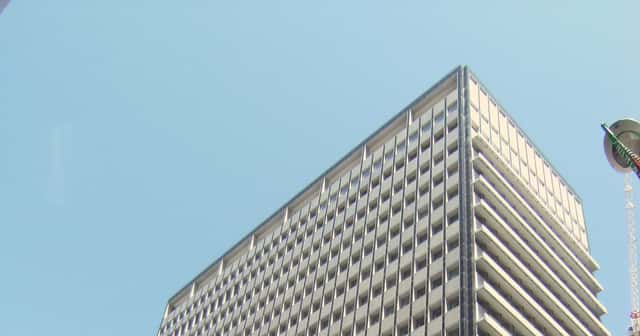
Australia's political leaders spent Wednesday arguing over who is to blame for the country's fifth interest rate rise of 2026. On Tuesday, November 3, the Reserve Bank of Australia (RBA) lifted its cash rate target by 25 basis points to 4.85 percent. That is the highest level since 2008. The decision was not unanimous. Six members of the bank's Monetary Policy Board voted to raise the rate, and three voted to hold it.
Treasurer Jim Chalmers said the war in the Middle East is the "primary driver" of the recent rise in inflation. Opposition Leader Angus Taylor said the problem is "homegrown" and caused by government spending. The Greens said corporate profits are the real cause and called for new taxes on big companies. Prime Minister Anthony Albanese spoke from the Commonwealth leaders' meeting in Antigua and Barbuda. He said savings are coming in December's budget update, but Labor will not "rip money out of health or schools."
This report sets out what the RBA decided and why, how the vote split, and what each side of politics says should happen next. It draws on the RBA's statement and the governor's press conference, transcripts published by the Australian Parliament, and Australian news reports. Facts are current as of about 3 p.m. ET on November 4, 2026 (7 a.m. AEDT on November 5).
What the Reserve Bank decided
The RBA's statement said the board "decided to increase the cash rate target by 25 basis points." The bank said inflation "remains elevated" and is "broadly based." It said the inflation outlook had "been revised materially higher" in new staff forecasts.
The bank gave several reasons. It pointed to "higher fuel and other commodity prices affected by the conflict in the Middle East." It also said "domestic capacity pressures are also judged to have been a little tighter than earlier thought." And it said investment linked to artificial intelligence "is driving rapid growth in prices for technology-related goods."
The RBA now expects inflation to stay high for longer. Its statement said inflation "is not expected to reach the top of the 2–3 per cent target range until late 2027, around three quarters later than previously forecast." It warned of "upside risks to inflation expectations" and said "some measures are assessed to have risen lately."
The bank also described an economy that is slowing. "The economy is slowing, housing prices have fallen significantly and the unemployment rate has risen," the statement said. It said the board "judged that a further tightening in financial conditions is warranted to support the return of inflation to target."
The new rate took effect on November 4, according to the RBA's cash rate table. The table lists five increases this year, each of 25 basis points. They took effect in February, March, May, September and November. The board held the rate in June and August.
Source: Reserve Bank of Australia, cash rate target table
Show the numbers
| Effective date | Cash rate target |
|---|---|
| 10 Dec 2025 | 3.6% |
| 4 Feb 2026 | 3.85% |
| 18 Mar 2026 | 4.1% |
| 6 May 2026 | 4.35% |
| 17 Jun 2026 | 4.35% |
| 12 Aug 2026 | 4.35% |
| 30 Sep 2026 | 4.6% |
| 4 Nov 2026 | 4.85% |
A 6–3 split on the board
The RBA's statement said the decision "was by majority." Six members voted for the increase and three voted to leave the rate unchanged. ABC News reported that it was the fourth split decision since the new board structure began in early 2025. Three of those four have come this year.
At her press conference, Governor Michele Bullock explained the minority view. "Those looking for a hold were thinking that housing has reacted, the unemployment rate is drifting up, there is no sign of wages growth accelerating," she said. She said they felt "maybe we should wait a bit longer to get some more data," since the bank had "already done four interest rate rises."
Bullock said the majority saw more risk on the other side. "Those who voted in favor of a rise felt there was more upside risk," she said. She also tried to separate the bank's move from the oil shock. "Monetary policy cannot impact global oil prices," she said. She said the tightening "is to address domestic capacity pressures," which "were evident before the rise in oil prices."
She acknowledged the cost for borrowers. "I understand that today's decision is going to be difficult for Australians with mortgages," Bullock said. She added that "high inflation is particularly painful for Australians on lower incomes, including people who rent." Her summary of the trade-off was blunt: "Some pain now will prevent even worse pain down the track."
The statement also dropped a line from September that said the board would raise the rate further if needed. ABC News quoted UBS economist George Tharenou calling that change "clearly dovish," meaning less inclined to raise rates again. AAP reported that Bullock would not rule out further increases if inflation stayed too high.
What it means for households
The figures behind the political argument are large. Financial comparison site Canstar estimated that the five increases this year have added about $456 a month to repayments on a $600,000 mortgage, ABC News reported. Canstar data insights director Sally Tindall said "five rate hikes in a single year is a significant hit to household budgets."
AAP reported that property prices had fallen 6.7 percent nationwide since the first increase in February, citing data provider Cotality. The Commonwealth Bank now expects a fall of 14 percent from peak to trough. AAP also reported that the RBA revised up its unemployment forecast to 5 percent by 2028 and expects real wages to fall about 1 percent in 2026.
Inflation data released the week before set the scene. ABC News reported that headline inflation rose to 4.3 percent in September. It also reported that annual trimmed mean inflation, the underlying measure the RBA watches most closely, was 3.7 percent in the September quarter.
The government's case: the war is the main driver
Chalmers spoke to reporters at Parliament House shortly after the decision. The full transcript is published on the Parliament's ParlInfo service. "Today's decision was widely expected, but that doesn't make it any easier for Australian families and businesses to absorb," he said.
Chalmers said the conflict in the Middle East is "the primary driver of that uptick in inflation, but it's not the only driver." He noted that the RBA's August forecasts assumed oil would be about $81 a barrel. Prices "have hovered higher than $110 a barrel in recent weeks," he said.
He rejected the claim that his budgets caused the rate rises. "Our budgets are not what's putting upward pressure on inflation, but we can play a helpful role," he said. He cited the RBA's own statement that "public demand was weaker than expected over the first half of the year." He said public demand growth "halved" last financial year while private demand growth "tripled."
Chalmers said the government had "found $180 billion in savings" and that the mid-year budget update in December "will have savings in it as well." Asked whether those savings must be net savings, he said "the composition of the savings matters." He also addressed a poll that rated him the government's lowest-performing minister. "No reforming Treasurer expects there to be some kind of unanimously positive reaction," he said, and he ruled out stepping aside.
Finance Minister Katy Gallagher made similar points before the decision. ABC News reported that she would not say whether the update would target net savings. "The treasurer and I and the PM have all flagged that there will be savings," she said.
On Wednesday, Albanese spoke to reporters on the sidelines of the Commonwealth Heads of Government Meeting. The Nightly reported his comments. "We will take appropriate action. We won't rip money out of health or schools," he said. He argued that the Coalition had blocked some savings, including changes to private health insurance rebates. He also said a free trade agreement with the European Union "will make goods to Australia cheaper."
The opposition's case: spending is to blame
Taylor held a press conference in Sydney with Shadow Treasurer Tim Wilson on Tuesday afternoon. The transcript is also on ParlInfo. "The more Labor spends, the more Australians pay," Taylor said.
He said the rise "did not happen by accident." He counted "17 interest rate increases under this Government." The Nightly described Tuesday's move as the 17th rise since Albanese came to power in 2022. "Under Anthony Albanese and Jim Chalmers, we are the only advanced country in the world that has seen five interest rate increases this year," he said. "Australia is an outlier. This is homegrown."
Taylor pointed to the Coalition's plan. He said it had announced "$31 billion of sensible savings" in the last week. He also promised a "Future Generations Fund" to save budget windfalls and a return of the Charter of Budget Honesty. Asked about the split vote, he said he had "no comment on that."
Wilson said that Middle East tensions and AI investment are "happening to other countries too." He argued that they do not explain "why we are the only country in the advanced world that has had five interest rate rises this year." Earlier on ABC News Breakfast, he said underlying inflation "lifted above the RBA's target band in July of last year, so seven months before a single bomb was dropped on Tehran."
On Wednesday, Taylor told Seven's Sunrise that the prime minister was "in denial," according to The Nightly. "The Reserve Bank governor called it out yesterday," he said. "She said interest rates aren't going up because of oil prices."
Chalmers rejected the Coalition's numbers. "I'm not sure that the $31 billion figure is a credible one," he said. He said the Liberal Party has "at least $110 billion in extra unfunded commitments since the election."
The Greens' case: tax corporate profits
The Greens blamed corporate profits. In a media release on November 3, Greens Leader David Shoebridge said the rise "takes billions more from people who have already cut their spending to the bone." He said it was "barely touching the corporations that are pushing up prices on almost everything."
Treasury spokesperson Nick McKim said "the Reserve Bank's approach to inflation is clearly not working." He called on Labor to "stop outsourcing its inflation fight to the RBA." He said "taxing excessive corporate profits and making price gouging illegal would take pressure off inflation." The release pointed to the party's plan to return "over $1,000" to people, funded by higher taxes on resources companies.
Business groups and economists
Business groups backed spending restraint. "It's hard to ask Australians to tighten their belts when the federal government isn't tightening its own," Business Council of Australia chief executive Bran Black said, as quoted by AAP.
Economists are divided on what comes next. KPMG chief economist Brendan Rynne told AAP that the RBA would likely pause in December but could raise rates again in the new year. HSBC Australia chief economist Paul Bloxham put the risk of recession at one in two. "In our central case, a faster weakening of growth keeps the RBA from hiking further," he wrote in a client note, AAP reported.
Bullock said the bank's central forecast does not include a recession. "We don't see the economy cracking at this point," she said. Chalmers said neither the Treasury nor the RBA expects "the economy to go backwards."
Where the claims stand
Both main parties cite the RBA to support their case, and the bank's own words leave room for each reading. The statement lists the Middle East conflict and fuel prices as causes. It also says domestic capacity pressures were "a little tighter than earlier thought." Bullock said the bank "take[s] public demand as a given and we set interest rates accordingly," ABC News reported. "I don't tell them what to do with fiscal policy. They don't tell me what to do with interest rates," she said.
Polls show the argument is live with voters. Asked about a Capital Brief poll at his press conference, Chalmers was told that about a third of respondents blamed global issues and about 45 percent blamed government spending. That figure comes from a reporter's question, and this report has not reviewed the poll's methods or field dates.
The spending debate connects to wider policy fights covered in the 567politics guide to Australia's 20 issues, including restraint on public spending. It also feeds into the next federal contest, tracked on the Australia elections page. Nationals leader Matt Canavan is already seeking a lower house seat in central Queensland.
The December budget update and RBA meeting
The government will release its mid-year economic and fiscal outlook in December. Chalmers said the Expenditure Review Committee is working on it now. The RBA board meets again in early December. Bullock has about eight speeches and panel appearances before then, a reporter noted at her press conference.
This story will need an update after the mid-year budget update and the RBA's December decision.
Differing perspectives
What is the main cause of Australia's 2026 interest rate rises, and how should the government respond?
Each position is summarized as its supporters make it, with equal weight and in alphabetical order. A summary is not an endorsement; the evidence for each is weighed in the story above.
Corporate profits drive prices; tax them instead of squeezing households
Who holds it: Australian Greens (Leader David Shoebridge, Treasury spokesperson Nick McKim)
The Greens say corporate profits and the surge in AI data centre investment have been major drivers of inflation. They argue the Reserve Bank's approach is not working because it keeps squeezing renters and mortgage holders while large companies escape. They want Labor to stop outsourcing the inflation fight to the RBA and instead tax excessive corporate profits, raise taxes on resources companies, make price gouging illegal and return over $1,000 to people.
In their words: Parliament of Australia ParlInfo, Australian Greens media release, Nov 3 2026 ↗
Inflation is homegrown; cut government spending
Who holds it: Opposition Leader Angus Taylor and Shadow Treasurer Tim Wilson (Liberal–National Coalition)
Taylor says the rise did not happen by accident and that Labor has lost control of its spending, noting Australia is the only advanced country with five rate rises this year. Wilson says the Middle East conflict and AI investment affect other countries too, so they cannot explain Australia's position. The Coalition says its $31 billion in announced savings, a Future Generations Fund for budget windfalls and a restored Charter of Budget Honesty would ease pressure on inflation and rates.
In their words: Parliament of Australia ParlInfo, Opposition Leader's doorstop transcript, Nov 3 2026 ↗
The Middle East war is the main driver; keep finding savings
Who holds it: Treasurer Jim Chalmers and the Albanese Labor government
Chalmers says the war in the Middle East is the primary driver of the recent rise in inflation, though not the only one, pointing to oil prices above $110 a barrel against the RBA's earlier $81 assumption. He says budgets are not what is putting upward pressure on prices, citing the RBA's finding that public demand was weaker than expected in the first half of the year. The government says it has found $180 billion in savings and will find more in December's mid-year update.
In their words: Parliament of Australia ParlInfo, Treasurer's press conference transcript, Nov 3 2026 ↗
READ BEYOND 567POLITICS
Alternate sources & perspectives
Independent coverage and primary evidence to help you compare arguments. A link is not an endorsement; perspective labels describe the linked material.
- primary evidence
Statement by the Monetary Policy Board: Monetary Policy Decision ↗
Reserve Bank of Australia
The board's November 3 statement raising the cash rate target to 4.85% and recording the 6–3 vote.
- primary evidence
Media Conference: Monetary Policy Decision – 3 November 2026 ↗
Reserve Bank of Australia
Transcript of the Governor explaining the decision and the split vote, and answering questions on fiscal policy.
- primary evidence
Cash Rate Target ↗
Reserve Bank of Australia
Official table of cash rate changes, the source for the story's chart.
- other perspective
Transcript of press conference: Parliament House, Canberra: 3 November 2026: RBA interest rate decision ↗
Office of the Treasurer, Jim Chalmers (via Parliamentary Library ParlInfo)
The government's case: the Middle East war and oil prices are the primary driver, and the budget has found $180 billion in savings.
- right argument
Opposition Leader Angus Taylor on the November 2026 rate rise ↗
Office of the Leader of the Opposition, Angus Taylor (via Parliamentary Library ParlInfo)
The Coalition's case that inflation is homegrown and driven by government spending.
- left argument
Australian Greens statement on the November 2026 rate rise ↗
Australian Greens (via Parliamentary Library ParlInfo)
The Greens' case that corporate profits, not household spending, are pushing prices up.
- independent analysis
Treasurer urged to rein in spending as rates rise again ↗
Australian Associated Press
Wire report on the decision, economists' forecasts and the cost to borrowers.
- independent analysis
RBA hikes cash rate to 18-year high of 4.85 per cent — as it happened ↗
ABC News
Public broadcaster's running coverage, with reaction from economists and politicians.
- independent analysis
PM called out over response to latest rate hike ↗
The Nightly
Report on the Prime Minister's response and his pledge not to cut health or schools funding.
Reviewed 2026-11-04. Sources were hand-picked because the discovery tool returned only dictionary pages for the word 'reserve'. Every source below was opened on November 4, 2026. The Reserve Bank's statement, the Governor's press conference transcript and its cash rate table are the primary record of the decision and the vote. The Treasurer's, Opposition Leader's and Greens' positions come from their own transcripts and releases as archived on the Parliamentary Library's ParlInfo database. The right argument (spending drives inflation) comes from the Coalition and the left argument (corporate profits) from the Greens; no separate business-group or union statement was opened. Economists' views come from AAP and ABC reporting. No representative public poll on the rate rise was found by publication.