Bangladesh garment protests enter a fourth day as hundreds of factories shut over a 30,000-taka wage demand
Workers want the sector's minimum wage raised from 12,500 to 30,000 taka a month. The government formed a wage board on Nov. 1, owners threaten "no work, no pay," and the home minister blames unnamed actors across the border.
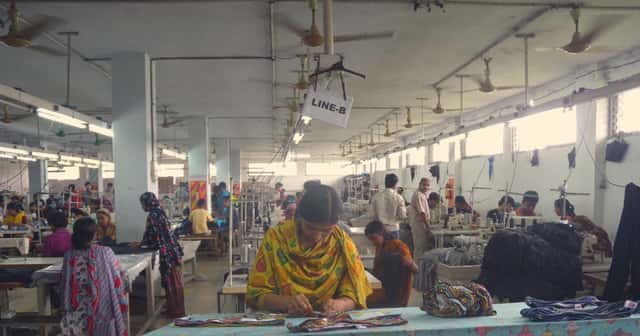
Bangladesh's garment industry, the world's second-largest clothing exporter, entered a fourth day of wage protests on Tuesday, Nov. 3, 2026, with hundreds of factories closed around Dhaka and police firing tear gas at workers who blocked roads in Ashulia, Gazipur and Mirpur. Workers want the sector's minimum monthly wage raised from 12,500 taka, about $100, to 30,000 taka, about $245. The government formed a six-member wage board on Sunday, Nov. 1, to review the figure, but the announcement did not end the walkouts.
The stakes are large for a country heavily dependent on one industry. The ready-made garment sector employs about 4 million people and brings in more than 80% of export earnings, roughly $40 billion a year, according to figures cited by Arab News and a Reuters report carried by Asharq Al-Awsat. It supplies H&M, Zara, Gap, Primark and Inditex, among others. Prime Minister Tarique Rahman of the Bangladesh Nationalist Party has held emergency meetings, and his home minister has alleged, without naming anyone, that the unrest is being encouraged from across the border.
This article sets out what is known about the protests, the wage dispute behind them, the official data on prices and pay, and the positions of workers, factory owners and the government. It also explains what we could not verify. Bangladesh is new ground for 567politics; our earlier coverage of minimum wage fights in France and Turkey and of working-hours reform in Brazil shows how differently governments handle the same pressure, as do the cost-of-living protests across Europe and Italy's general strike this autumn.
What has happened, day by day
Smaller protests over pay began in mid-October in the industrial belts north of Dhaka, Arab News reported, and the government said on Oct. 15 that it would form a wage board, according to a Daily Star analysis. The protests grew sharply from Saturday, Oct. 31.
On Sunday, Nov. 1, the government constituted the board. A BGMEA situation report that day, published by The Daily Star, counted disruptions at 529 of the 2,134 member factories it tracks across five industrial regions, with 987,190 workers having left their posts. Gazipur and Mymensingh accounted for 276 of the affected factories, Savar, Ashulia and Jirani for 185, and the Mirpur area of Dhaka for 68. Narayanganj and Chattogram reported none. That evening Home Minister Salahuddin Ahmed met the prime minister for an hour and then told reporters that "many people from across the border are encouraging unrest," The Daily Star reported. He offered no names or documents.
On Monday, Nov. 2, closures spread. BGMEA director Faisal Samad told Arab News that 700 to 800 factories had shut; Reuters put the figure at nearly 700; Al Jazeera, reporting earlier in the day, said about 500. The association's president, Mahmud Hasan Khan, warned that if protests continued the association would invoke the labor law's "no work, no pay" provision, Al Jazeera reported.
On Tuesday, Nov. 3, clashes resumed in Ashulia. By 11:20 a.m., the superintendent of Ashulia Industrial Police-1, Mohammad Mominul Islam Bhuiyan, said at least 70 factories had declared holidays, The Daily Star reported. Police fired tear gas after protesters set fires at several points along the Baipail-Abdullahpur road. Reuters reported that dozens of people, including several police officers, were injured over the course of the protests, after demonstrators threw bricks and stones and police answered with tear gas and sound grenades. BBC News, cited by Just Style, reported at least 29 arrests for blocking roads and vandalizing factories. We have not seen an official injury count.
| Date | Factories affected | Source of the count |
|---|---|---|
| Nov. 1 | 529 of 2,134 | BGMEA situation report via The Daily Star |
| Nov. 2 | about 500 to 800 | Al Jazeera, Reuters, BGMEA via Arab News |
| Nov. 3 (Ashulia only) | at least 70 | Ashulia Industrial Police via The Daily Star |
The counts use different methods. The BGMEA figure covers members only and counts any disruption, not just closures. The Nov. 3 figure covers one industrial area and only factories that formally declared a holiday. None of them is a national total.
The wage dispute
Bangladesh sets a separate minimum wage for the garment sector through a tripartite board with government, employer and worker members. The current floor of 12,500 taka a month took effect in December 2023, after a board process that began with a worker demand of 23,000 taka and a worker representative's formal proposal of 20,393 taka, according to Just Style and contemporaneous reporting in The Financial Express. The 2023 round was also violent. At least two workers died, by BGMEA's own count at the time, and unions demanded compensation for the family of one of them, Rasel Hawlader.
This year's demand of 30,000 taka is 2.4 times the current floor. The IndustriALL Bangladesh Council, a grouping of garment union federations, had earlier asked for 32,085 taka, Just Style reported. Workers in the street have also demanded an end to blacklisting and the reinstatement of dismissed colleagues, The Daily Star reported.
The timing is itself disputed. Bangladesh's labor law long required a new wage board every five years, which would put the next review in 2028. Unions say a 2026 amendment shortened the cycle to three years, making a new wage due by December 2026, The Financial Express reported in August. Mohammad Hatem, president of the knitwear makers' association BKMEA, told the paper that a law cannot apply retroactively and that the board is due in 2028 either way. The government's decision to form a board now has, in practice, settled the question in the unions' favor.
The board announced on Nov. 1 has six members. The Daily Star, cited by Just Style, named Professor Mosleh Uddin Ahmed of Dhaka University as the independent member; Babul Akhter, general secretary of the Bangladesh Garment and Industrial Workers Federation, is the workers' representative, according to Al Jazeera. BGMEA's Samad said a concrete proposal "will take some time" and that past rounds took about three months.
What the official data say about prices and pay
The workers' case rests on living costs, and official statistics support the direction of their claim while leaving the size of a fair increase open. The Bangladesh Bureau of Statistics reported point-to-point inflation of 8.34% in September 2026, up from 8.26% in August, with food inflation at 7.22% and non-food inflation at 9.30%, according to bdnews24's account of the Oct. 7 release. The same release put the national wage growth rate at 7.9%, below inflation for the month. Bangladesh Bank's monetary policy statement for October to December 2026 describes the August figure as a 10-month low and keeps the policy rate at 9.5%; it also notes "subdued global demand for garments."
Source: bdnews24 on the BBS release, Bangladesh Bank MPS
Show the numbers
| Measure | August 2026 | September 2026 |
|---|---|---|
| General inflation | 8.26% | 8.34% |
| Food inflation | 7.02% | 7.22% |
| Non-food inflation | 9.32% | 9.3% |
| National wage growth | 8.05% | 7.9% |
Two caveats apply. The wage index is a national series and does not isolate garment workers, whose pay is set by the sector floor and has been fixed since December 2023. And a single year-on-year rate near 8% understates the cumulative change since the last wage board took effect in December 2023, the period in which, as the Daily Star analysis put it, workers' real income has eroded. We have not computed a three-year figure from BBS data and do not report one.
Mustafizur Rahman of the Center for Policy Dialogue, a Dhaka think tank, told Arab News that owners accept that the demands are justified because inflation has outpaced wage increases over three years, but he also pointed to gas and electricity shortages and high interest rates pressing on factories, and warned that closures would help no one if the sector lost competitiveness.
What each side argues
Workers and unions. Babul Akhter told Al Jazeera that Bangladesh has "among the lowest garment wages in the world" and that owners "cannot build a business on the backs of underpaid workers"; they should, he said, negotiate better prices from buyers. IBC's August memorandum argued that wages are a right rather than charity, that timely adjustment supports industrial peace and competitiveness, and that workers should not bear the cost of "energy mismanagement, corruption or inefficiency." Unions also want independent worker representation on the board, enforcement of statutory wage structures, protection from retaliation and state rationing of staples.
Factory owners. BGMEA's position is that the government has acted by forming the board and that workers should let it work. Khan asked workers to return and warned of "no work, no pay" if they did not. Owners cite higher operating costs, uncertainty in energy markets linked to the conflict involving Iran, and softer demand in export markets, Al Jazeera and Reuters reported. Officials have warned that prolonged closures could delay shipments and hand orders to Vietnam and India. In 2023, then-BGMEA president Faruque Hassan put the owners' case bluntly: "You would lose jobs if buyers go away from the country, and it is not acceptable."
The government. Prime Minister Rahman directed authorities to keep factories running and protect lives and property, and to "protect garment workers' interests, improve their living standards" while increasing exports, according to the home minister. Salahuddin Ahmed said genuine workers were not involved in violence and that masked outsiders had infiltrated the protests. Labor Minister Ariful Haque Chowdhury said a political group was plotting to destabilize the government ahead of December, and that "we will counter these politically." He did not name the group.
Independent analysts. The Daily Star's Tanim Ahmed argued that the board "could have come sooner," noting that the government had recently given its own employees a generous raise while garment workers waited, and that the owners' usual claim that business is bad "may have some truth to it" this time.
Checking the claims
The home minister's allegation of cross-border instigation is unverified. He cited "the information we have" and "our analysis," and no evidence has been made public. The claim does not establish that any foreign actor is involved, and the pattern of the protests, which follow the 2023 wage round closely in location, timing and demands, is consistent with a domestic dispute. It is also true that the allegation cannot be ruled out from the outside. We report it as a government assertion, not a finding. The labor minister's reference to a plot "ahead of December" is similarly unsupported in the material we reviewed; December is when the new wage is due under the unions' reading of the law.
The owners' claim that business is bad has some support. Bangladesh Bank's statement describes subdued global garment demand, and the energy cost pressures are real. Whether margins can absorb a 140% increase in the wage floor is a question no public document we found answers, because factory-level cost data are not published. The unions' claim that wages are among the lowest in the world is widely repeated, but we did not verify a current international comparison tonight and do not cite one.
A false dilemma runs through parts of the debate: that the choice is between the current wage and factory closures. The 2023 round raised the floor by 56%, and Bangladesh remained the world's second-largest garment exporter afterward, which suggests the range of workable outcomes is wider than either side's opening position.
What people are saying online
We were unable to open X or Reddit from our environment tonight, and our social-post verification tool returned errors for X links. We therefore could not sample posts from Bangladeshi workers, union accounts, factory owners or officials, and this article contains no social media reactions. Readers should treat the positions above as those of the organizations and officials quoted in the reporting we could verify, not as a measure of public opinion. We found no representative poll of Bangladeshi adults on the wage demand.
What remains unknown
The number of injured, the number arrested and whether anyone has died in this round of protests are not established; Reuters said "dozens" were hurt and the BBC counted at least 29 arrests, but no official tally has been published. The wage board's timetable and its opening proposals are unknown. Whether the government will enforce the no-work-no-pay provision or press owners to keep paying is unclear. So is the response of the brands that buy from Bangladesh, none of which had commented in the reports we reviewed. The outcome will shape not only 4 million workers' pay but the test the new government faces in December, when the wage is due.
Differing perspectives
How should Bangladesh set the garment sector's next minimum wage, and how fast?
Each position is summarized as its supporters make it, with equal weight and in alphabetical order. A summary is not an endorsement; the evidence for each is weighed in the story above.
A board was overdue; weigh workers' losses against real business strain
Who holds it: Independent economists and commentators, including the Center for Policy Dialogue and The Daily Star's analysis desk
Analysts argue that the wage board should have been formed months earlier, since workers' real incomes have fallen for three years while the government gave its own employees a generous raise. They say owners accept that the demand is justified in principle, but that gas and electricity shortages, high interest rates and weak global demand are real constraints this time, so a settlement should weigh both. They warn that closures benefit no one if the sector loses competitiveness, and that the street pressure has at least forced the authorities to act.
In their words: The Daily Star, news analysis by Tanim Ahmed ↗
Let the wage board work and return to the factories
Who holds it: The Bangladesh Garment Manufacturers and Exporters Association (BGMEA) and factory owners
Factory owners argue that the government has already acted by forming a wage board with worker and employer members, and that a fair figure should come from that process rather than from road blockades. They say factories face higher energy and borrowing costs, uncertainty in energy markets tied to the conflict involving Iran and softer demand in export markets, and that prolonged closures will push orders to Vietnam and India and cost jobs. They warn that continued walkouts will trigger the labor law's no-work, no-pay provision, and say past wage rounds took about three months to conclude.
In their words: Arab News, quoting BGMEA director Faisal Samad ↗
Protect workers' living standards while keeping factories open
Who holds it: Prime Minister Tarique Rahman's government, Home Minister Salahuddin Ahmed and Labor Minister Ariful Haque Chowdhury
The government argues that it has moved to raise living standards by constituting the wage board and that its priority now is to keep factories running, protect lives and property and sustain exports. Ministers say genuine workers and their organizations are not behind the violence, that masked outsiders have infiltrated the protests and that some of the unrest is being encouraged from across the border and by a political group seeking to destabilize the government before December. They call for dialogue through the board and strict action against those who commit violence.
In their words: The Daily Star, reporting Home Minister Salahuddin Ahmed's briefing ↗
Raise the floor to 30,000 taka now
Who holds it: Protesting garment workers, the IndustriALL Bangladesh Council and allied union federations
Workers and their unions argue that 12,500 taka a month no longer covers food, rent and transport after three years of inflation above 8%, and that Bangladesh pays among the lowest garment wages in the world. They say wages are a right rather than charity, that owners should negotiate better prices from international buyers rather than hold down pay, and that the labor law's shortened three-year cycle makes a new wage due by December 2026. They also want independent worker representatives on the board, an end to blacklisting and the reinstatement of dismissed workers.
In their words: Al Jazeera, quoting Babul Akhter of the Bangladesh Garment and Industrial Workers Federation ↗
READ BEYOND 567POLITICS
Alternate sources & perspectives
Independent coverage and primary evidence to help you compare arguments. A link is not an endorsement; perspective labels describe the linked material.
- primary evidence
BGMEA reports disruptions at 529 garment factories amid wage protests ↗
The Daily Star (Dhaka)
Publishes BGMEA's Nov. 1 situation report by industrial area: 529 of 2,134 factories affected, 987,190 workers off the job.
- other perspective
Garment unrest being instigated from across the border, alleges Salahuddin ↗
The Daily Star (Dhaka)
The government's position after the prime minister's emergency meeting, including the home minister's unverified cross-border allegation and the labor minister's remarks.
- independent analysis
Ashulia tense as garment workers continue wage protests; 70 factories shut ↗
The Daily Star (Dhaka)
Nov. 3 ground report from Ashulia with police counts and a union official's account.
- independent analysis
A garment wage board that could have come sooner ↗
The Daily Star (Dhaka)
News analysis arguing the board was overdue while acknowledging business strain.
- left argument
Bangladesh garment factories disrupted as protests continue for third day ↗
Al Jazeera
Quotes union leader Babul Akhter's case for the increase and BGMEA president Mahmud Hasan Khan's no-work, no-pay warning.
- right argument
Worker unrest shuts hundreds of garment factories in Bangladesh ↗
Arab News
BGMEA director Faisal Samad on closures, the board's timetable and buyers; also the Center for Policy Dialogue's assessment.
- independent analysis
Bangladesh garment workers stage fourth day of wage protests ↗
Asharq Al-Awsat (Reuters)
Reuters' Nov. 3 account of clashes, injuries and the industry's export share.
- independent analysis
Garment factories close in hundreds amid worker unrest in Bangladesh ↗
Just Style
Trade-press summary citing BBC on arrests and The Daily Star on the wage board's independent member; wage history from 2023.
- left argument
Garment unions push for urgent minimum wage revision ↗
The Financial Express (Dhaka)
August 2026 union memorandums on the three-year cycle and worker representation, with BKMEA's contrary reading of the law.
- primary evidence
Inflation rises to 8.34% in September ↗
bdnews24.com, reporting Bangladesh Bureau of Statistics data
Official September 2026 inflation, food and non-food inflation and national wage growth figures.
- primary evidence
Quarterly Monetary Policy Statement, October to December 2026 ↗
Bangladesh Bank
Central bank statement with August inflation, the 9.5% policy rate and its note on subdued global garment demand.
- right argument
Wage protests spread fast in Dhaka, Gazipur garment belts (2023) ↗
The Financial Express (Dhaka)
2023 account with then-BGMEA president Faruque Hassan's warning about buyers and the deaths during that wage round.
Reviewed 2026-11-03. Reviewed late on Nov. 3, 2026 (U.S. Eastern time). The automated source-discovery search returned unrelated results for this subject and was not used. Reuters' own site and the BBC's report were not opened directly; Reuters' account is cited through Asharq Al-Awsat and the BBC's through Just Style. No statement from the Prime Minister's Office, the Ministry of Labour and Employment or BGMEA's own website could be opened; government and owner positions are cited through Bangladeshi and international press reports quoting named officials. The Bangladesh Bureau of Statistics release is cited through bdnews24 because the BBS site could not be opened. No comment from the brands named, no official injury or arrest tally and no representative poll of Bangladeshi opinion were available. X and Reddit could not be opened, so no social-media reactions are included.