Brazil counts 45 cases of political violence around the runoff; investigations so far are mixed
The Justice Ministry logged 10 deaths from Oct. 24 to 28 and said victims backed Lula. It has not released its list, and some widely shared cases point to other motives.
Brazil's federal government has counted dozens of violent attacks around the October 25 presidential runoff. On October 28, the Ministry of Justice and Public Security said it had logged 45 cases of political violence between Saturday, October 24, and Wednesday, October 28. They involved 47 victims, and 10 people died, three of them Indigenous, according to the government's news service.
Guilherme Boulos, the minister who heads the presidency's General Secretariat, said the victims were supporters of President Luiz Inácio Lula da Silva, who won the runoff. He blamed supporters of the defeated candidate, Senator Flávio Bolsonaro. "This has no place in a democracy," Boulos said. "It is barbarism and will not go unpunished."
The government has not published its list of cases. That matters, because the public record is mixed. Some widely reported attacks targeted Lula supporters at rallies and celebrations. In several other deaths that circulated online as political killings, police, prosecutors or election officials have pointed to robbery, personal disputes or drunk driving, or have not yet found a motive. This article sets out what the government counted, what is known about the cases reported in the press, and what the different counts can and cannot show.
What the government counted
The ministry presented its figures at a press conference in Brasília. Agência Brasil, the public news agency, published the breakdown by type. The six categories add up to 47, the number of victims.
| Type of case | Victims |
|---|---|
| Homicides | 10 |
| Physical assaults, beatings and stabbings | 14 |
| Intentional run-overs by vehicles | 7 |
| Abuse of authority and police violence | 6 |
| Shootings and firearm attacks | 5 |
| Violence and coercion against Indigenous peoples | 5 |
Source: Ministry of Justice and Public Security figures for October 24-28, 2026, as reported by Agência Brasil.
The states with the most cases were Paraná, São Paulo, Mato Grosso do Sul, Minas Gerais and Santa Catarina, in that order. The ministry did not give a count for each state. Boulos said most cases happened between Sunday night, after the result was announced, and Monday, Rede 98 reported.
Accounts differ on one key point. Agência Brasil reported that Boulos said all the victims were Lula supporters. Rede 98 reported that he said all the cases referred to the government involved attacks on Lula supporters, and described most victims that way. The ministry did not explain how it decided that a case was political or how it learned each victim's politics. It said the figures covered cases registered by October 28 and would be updated.
Brazilian law has two specific offenses here. Article 359-P of the Penal Code covers political violence in general. Article 326-B of the Electoral Code covers political violence against women. Ademar Borges, the ministry's executive secretary, said some cases were electoral crimes committed on or before election day, and others involved gender-based political violence, which falls to federal police and prosecutors.
The government announced these steps:
- Federal Police inquiries into crimes under federal jurisdiction.
- Requests to state police internal affairs units for data on cases involving their officers.
- Coordination with the federal Prosecutor General's Office and state prosecutors.
- A task force to gather all records and make sure each case reaches the right agency.
- The National Force and the Federal Police to protect Indigenous territories and investigate the killings of Indigenous people.
The cases in the public record
The cases below were reported by named outlets and, in most instances, confirmed by an authority. It is not known which of them are in the government's 45.
| Place and date | What happened | What authorities say |
|---|---|---|
| Montes Claros (MG), Oct. 24 | PT councilor hit in the face by an object at a pro-Lula motorcade | Federal Police inquiry; no suspect named |
| Santos (SP), Oct. 24 | Engineer beaten after a pro-Lula show; later died | Investigated as robbery-murder; two teens held |
| Bonito (MS), Oct. 24 | Man shot in a fight near a pro-Flávio motorcade | Election court says personal dispute |
| Ilhabela (SP), Oct. 24 | Two children hit by a car during a pro-Flávio motorcade | Driver arrested; motive not established |
| Mangueirinha (PR), Oct. 25 | Man hit by a car at a Lula victory party; died Oct. 26 | Investigated as homicide; driver failed breath test |
| Campo Novo do Parecis (MT), Oct. 25 | Civil Police officer shot dead | Suspect held; motive under investigation |
| Porto Esperidião (MT) | Man shot in a fight during a pro-Bolsonaro event | Police found no link to the election |
| Tacuru (MS), after Oct. 25 | Audio urging that Indigenous water be poisoned | City workers suspended; federal inquiry |
Attacks on Lula supporters at rallies and celebrations
One of the first cases reported came on the eve of the vote. In Montes Claros, in northern Minas Gerais, councilor Iara Pimentel of Lula's Workers' Party (PT) was struck in the face by an object thrown at the sound truck she was riding, Agência Brasil reported. She lost consciousness and was taken away by ambulance. By her account, the truck was pelted with bottles and bricks. A child was also hurt, Revista Fórum reported. The Federal Police opened an inquiry and took her statement. No suspect had been publicly identified by November 2.
Other reports concern the police themselves. In Florianópolis, a highway police car struck a motorcyclist during Sunday night's celebrations, Brasil de Fato reported. A photo caption in the report said the highway police were investigating the officers involved. The motorcyclist was also placed under arrest for allegedly riding dangerously. In Apucarana, in Paraná, videos showed police and municipal guards using pepper spray on people celebrating, and a public servant filming the scene was hit in the leg by rubber bullets, Brasil de Fato reported. No police account of either episode had been published in the reports reviewed.
In General Carneiro, in Mato Grosso, a city councilor from the MDB party fired shots during a celebration of Lula's win, and a woman was injured, HiperNotícias reported. The councilor, Marcos Aurélio Bento Pena, surrendered after about 50 minutes of talks with police. He was released on bail of R$1,000. He said he had fired an air pistol into the air.
Deaths with motives still unsettled
In Santos, on the São Paulo coast, environmental engineer Marcelo de Oliveira Rocha, 30, was beaten early on October 24 after leaving a show by a band supporting Lula. He was declared brain-dead the next day, and reports give his date of death as October 25 or 26. Civil Police are investigating the case as latrocínio, a robbery that ends in death, because his phone and other belongings were taken, O Liberal reported from Estadão Conteúdo. Police identified seven suspects, five of them minors. Two teenagers were taken into custody on October 27, and the attack was streamed live by those involved. The same report said there was also a suspicion of homophobia. The reports reviewed did not include a police finding on political motive.
In Mangueirinha, in Paraná, Eliseu Pedrozo dos Santos, 38, was hit by a car during a victory celebration on Sunday night and died the next day. Agência Brasil, citing the Gazeta do Paraná newspaper, reported that a drunk driver ran through a police roadblock and struck four men. The driver was arrested and failed a breath test. Military Police are treating the death as a homicide, Brasil de Fato reported.
In Campo Novo do Parecis, in Mato Grosso, Civil Police officer Emilson Ormond Souza, 56, was shot dead in front of a supermarket on Sunday night. A suspect was detained the next day. Reports said the suspect had questioned the presence of people linked to a party before the shooting, but police had not confirmed that. In a first statement, the suspect said he had been aiming at a sound system, HiperNotícias reported.
Cases where officials pointed to other motives
Some deaths that spread online as political killings have drawn different findings from authorities.
In Bonito, in Mato Grosso do Sul, Ewerton Rodrigues da Silva was shot dead on October 24 in a brawl near a motorcade for Flávio Bolsonaro. Another man was wounded. The suspected shooter is a teenager who, according to reports, took a gun to defend his father in the fight. The regional election court said the claim of a political crime "does not hold," after checking with the local election judge, and described the fight as personal, A Crítica reported. Civil Police had not announced their own conclusion.
In Porto Esperidião, in Mato Grosso, Anderson Bolandin was shot dead in a fight at a gas station during a pro-Bolsonaro event. Civil Police said they found no link to the election, HiperNotícias reported.
In Naviraí, in Mato Grosso do Sul, posts claimed that Indigenous people had been killed for political reasons. Federal prosecutors investigated and said their inquiry "disproved the rumors," according to the federal prosecution service. State prosecutors and the city said the case was an attempted double murder arising from a family dispute. Photos of that crime had circulated in altered form, the victims had no Indigenous background, and leaders of two nearby Indigenous communities said none of their members had been attacked.
Revista Fórum, which compiled many of the weekend's reports, also noted claims it could not verify, including posts that spoke of murdered children and a killed trans woman. 567politics found no confirmation of those claims.
Incidents at pro-Flávio events
The public record also includes incidents at events for Flávio Bolsonaro, though none has been shown to be an attack on his supporters. In Ilhabela, on the São Paulo coast, a car struck two children during a motorcade for Flávio on October 24. The 56-year-old driver was arrested. Police registered the case as attempted homicide, drunk driving and failure to give aid, Revista Fórum reported. The car carried Lula stickers, but the outlet noted that this did not establish the driver's motive. 567politics searched for reports of attacks on Flávio Bolsonaro's supporters in this period and found none confirmed by an authority.
Threats against Indigenous communities
The Articulation of Indigenous Peoples of Brazil (Apib) said it had received more than 30 complaints of violence against Indigenous people during the 2026 election period. In an October 29 letter to Lula, it cited killings and death threats against the Guarani and Kaiowá people after the runoff, according to Apib. The government has not publicly identified the three Indigenous people it counted among the dead.
In Tacuru, in Mato Grosso do Sul, audio recordings attributed to a city employee said Indigenous people should be poisoned through their water for voting for the PT, the Indigenist Missionary Council (Cimi) reported. The city suspended the workers involved and opened a disciplinary process. Federal prosecutors gave the city 48 hours to explain who made the recordings, and the national Indigenous agency, Funai, asked the Federal Police to investigate. No poisoning has been reported. "It is not an isolated threat, it is part of how they kill our people," said Voninho Benites, a coordinator of the Aty Guasu Guarani and Kaiowá assembly.
Pressure at work
In Paraná, two newly elected state deputies, Jessicão of the PL and Guilherme Kilter of Novo, urged followers on social media to fire employees who back Lula, Brasil de Fato reported. The state's labor prosecutors opened an investigation into suspected electoral hate and workplace discrimination and asked them to delete the posts. The report did not include responses from the two deputies.
What the counts can and cannot show
Several organizations track political violence in Brazil, but they measure different things. Their numbers should not be added together.
| Count | Period | Figure |
|---|---|---|
| Justice Ministry, voters and supporters | Oct. 24-28 | 45 cases, 10 deaths |
| Human rights hotline complaints | Oct. 1-25 | 90 complaints |
| Terra de Direitos and Justiça Global | Aug. 16-Oct. 4 | 134 cases |
| Apib, Indigenous people | 2026 election period | 30+ complaints |
Sources: Agência Gov, Radioagência Nacional, Agência Brasil and Apib.
The Ministry of Human Rights said its Disque 100 hotline received 90 complaints of political violence from October 1 to 25, against 20 in all of September. It called that a 350% rise. Those are complaints, not verified cases, and the two periods differ in length.
The study by the human rights groups Terra de Direitos and Justiça Global uses a narrower definition. It counts attacks on candidates, officeholders and other political figures, not on ordinary voters. It found 134 cases in the 50 days of the first-round campaign, or one every nine hours, compared with 121 in the same stage of 2022. Women were the targets in 70 cases, or 52.2%, and two people were killed, a city councilor and a municipal secretary. None of the 134 cases had led to a punishment when data collection ended. The groups say their count is an undercount, because many cases never become public. That study is the only like-for-like comparison with 2022 found for this article. It does not cover the runoff.
Weighing the government's claim. The ministry's statement that the victims were Lula supporters cannot be checked until it publishes its list. The cases confirmed in the press do lean that way. Of the incidents at or after partisan events described above, six involved Lula events and three involved Flávio or Bolsonaro events, and no confirmed attack on a Flávio supporter was found. But several deaths that were shared as political killings have so far been tied to robbery, a family dispute, personal fights or drunk driving. If any of those are among the 10 deaths, the share that is political would be smaller than the headline suggests.
Two opposite errors are possible. One is to treat every violent event near a rally as a political attack because a video went viral. The Naviraí photos show how quickly that can mislead. The other is to dismiss all the cases because some have turned out to be something else. That would be a hasty generalization in the other direction, since cases such as Montes Claros and the Tacuru recordings have clear political content. The evidence supports neither a story of no political violence nor a tally of 10 confirmed political killings.
How each side has responded
The government framed the cases as an assault on democracy. "Brazil watched, stunned and shocked, images of people being attacked and killed," Boulos said. "If this goes unpunished, it is an invitation to repeat it," he said, as quoted by Rede 98. The PT's Paraná branch set up a channel for reporting political violence, and its state president, Arilson Chiorato, demanded investigations.
567politics found no public statement from Flávio Bolsonaro or his Liberal Party (PL) responding to the government's count, as of November 2. His departure from Brazil in the same days is covered in our report on his leaving the country after the runoff. In a letter from the United States, he said he was the target of political persecution, but the reports reviewed did not show him addressing the violence.
Some officials urged caution about labeling cases. Mato Grosso do Sul Governor Eduardo Riedel of the Progressistas (PP) party called the Bonito killing "regrettable." "You can't say it is a consequence of the end of the campaign," he said, Midiamax reported. "Sometimes they are supporters of the same candidate; sometimes not."
Researchers and Indigenous groups asked for structural changes. "A state task force is needed to give faster answers to these kinds of violence," said Gisele Barbieri of Terra de Direitos, as quoted by Agência Brasil before the runoff. Apib asked Lula for immediate protection measures and for the demarcation of 73 Indigenous lands that have already been declared.
What to watch
The Justice Ministry said it would update its figures. Publishing the list of cases, with the basis for calling each one political, would let the public test its claims. Other open questions include the Federal Police inquiry in Montes Claros, the Santos investigation, the Tacuru recordings and the identities of the three Indigenous victims. For results and background on the vote itself, see our Brazil election guide and our Brazil issues page.
Quotations from Portuguese are 567politics translations unless marked otherwise. Names of victims appear only where the press and authorities have published them; minors are not named.
Photo and reporting note
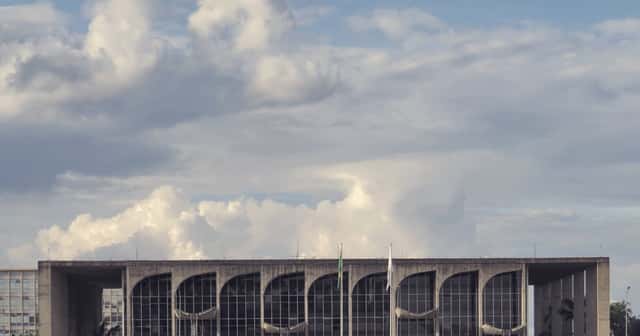
File image for institutional context, not a photograph of the events reported here: the Palácio da Justiça, headquarters of Brazil's Ministry of Justice and Public Security, in Brasília, in March 2018. Photo: Gabriel Fernandes, original file, CC BY-SA 2.0. Cropped for publication. This AI-assisted report was prepared on November 2, 2026, from the sources linked above.

Differing perspectives
How should Brazil respond to the violence reported around the 2026 presidential runoff?
Each position is summarized as its supporters make it, with equal weight and in alphabetical order. A summary is not an endorsement; the evidence for each is weighed in the story above.
Let investigations establish motive before labeling cases
Who holds it: Mato Grosso do Sul Governor Eduardo Riedel (PP); the state's regional election court in the Bonito case
Riedel argues that a killing near a campaign event is not automatically political. On the Bonito shooting, he called the death regrettable but said it was not possible to say it was a consequence of the campaign, since those involved are sometimes supporters of the same candidate. He said police were gathering the facts and declined to judge the case before the investigation ends. The election court separately described that fight as personal.
In their words: Midiamax, Oct. 25, 2026 ↗
Protect Indigenous territories and speed land demarcation
Who holds it: The Articulation of Indigenous Peoples of Brazil (Apib) and its regional member organizations
Apib argues that Indigenous communities, especially the Guarani and Kaiowá, face killings and death threats that grew after the runoff, and that it received more than 30 complaints during the election period. In a letter to Lula, it asked for immediate protection measures and for the demarcation of 73 Indigenous lands already declared, saying secure land rights are the lasting answer to violence against its peoples.
In their words: Apib, Oct. 30, 2026 ↗
Set up a state task force for faster answers
Who holds it: Human rights groups Terra de Direitos and Justiça Global
These researchers argue that political violence was already rising before the runoff, with 134 cases in the first-round campaign against 121 in 2022, and that none had been punished when their data collection ended. Gisele Barbieri of Terra de Direitos said a state task force is needed to give faster answers. They say fear keeps many cases from becoming public, so their own count is an undercount.
In their words: Agência Brasil, Oct. 8, 2026 ↗
Treat the cases as political violence and punish them
Who holds it: The federal government: Minister Guilherme Boulos and Justice Ministry officials
The government argues that the 45 cases it logged from October 24 to 28, including 10 deaths, are an attack on democracy that cannot be treated as a normal part of an election. Boulos said Brazilians watched images of people being attacked and killed and that this is barbarism that will not go unpunished. Officials say a task force, Federal Police inquiries and coordination with prosecutors are needed so that no case is lost between agencies.
In their words: Agência Gov (Ministry of Justice and Public Security), Oct. 28, 2026 ↗
READ BEYOND 567POLITICS
Alternate sources & perspectives
Independent coverage and primary evidence to help you compare arguments. A link is not an endorsement; perspective labels describe the linked material.
- primary evidence
Governo anuncia medidas de prevenção e combate à violência política e apuração rigorosa ↗
Agência Gov (Ministry of Justice and Public Security)
The government's own account of its Oct. 24-28 count: 45 cases, 47 victims, 10 deaths, the most affected states and the measures announced.
- independent analysis
Governo reforçará investigações de violência política no segundo turno ↗
Agência Brasil
Breakdown of the count by type of case and descriptions of the Montes Claros, Santos and Mangueirinha cases.
- primary evidence
Federal prosecutors open inquiries into reported attacks on Indigenous communities in Mato Grosso do Sul ↗
Ministério Público Federal (MS)
Federal prosecutors found that a reported political killing of Indigenous people in Naviraí was a family dispute shown in altered photos, and opened an inquiry into threats in Tacuru.
- independent analysis
Santos engineer's death: police treat it as robbery-murder and hold two teenagers ↗
O Liberal (Estadão Conteúdo)
Police treat the Santos killing as a robbery-murder; seven suspects identified and two teenagers held.
- independent analysis
Uma semana após segundo turno, MT tem saldo de morte, tiroteio e atropelamento ↗
HiperNotícias
Mato Grosso cases, including a killing during a pro-Bolsonaro event that police say had no election link.
- independent analysis
Bonito killing: regional election court says the motive was personal, not political ↗
A Crítica (Campo Grande)
The regional election court's statement that the Bonito killing near a pro-Flávio motorcade stemmed from a personal dispute.
- other perspective
Governor Riedel calls the Bonito death regrettable and declines to tie it to the campaign ↗
Midiamax
Mato Grosso do Sul's governor urges waiting for the investigation before calling the death political.
- left argument
Violência política no 2º turno: morte, espancamento e ataques a apoiadores de Lula ↗
Revista Fórum
A left-leaning outlet's compilation of weekend incidents, which flags several cases as unconfirmed or disputed, including incidents at pro-Flávio events.
- left argument
Homicídio, ataque a grêmio estudantil e ameaças a apoiadores marcam a semana após vitória de Lula, no Paraná ↗
Brasil de Fato
Paraná cases from a left-leaning outlet, including police force at celebrations and labor prosecutors' inquiry into deputies-elect who urged firing Lula supporters.
- other perspective
APIB pede a Lula medidas urgentes contra a violência e avanço na demarcação de 73 Terras Indígenas ↗
Articulação dos Povos Indígenas do Brasil (Apib)
Indigenous organizations' letter citing more than 30 complaints and asking for protection and land demarcation.
- independent analysis
Com alta da violência política no Brasil, mulheres são maiores vítimas ↗
Agência Brasil
Terra de Direitos and Justiça Global's first-round count of 134 cases against candidates and officeholders, compared with 121 in 2022.
- primary evidence
Número de denúncias de violência política cresce 350% em outubro ↗
Radioagência Nacional
Human Rights Ministry hotline complaint figures for September and October 1-25; complaints, not verified cases.
Reviewed 2026-11-02. Reviewed November 2, 2026. The Justice Ministry has not published its list of 45 cases, so individual cases here come from press reports and official statements and may or may not be in the government count. No public statement from the PL or Flávio Bolsonaro's campaign on the government's count was found; that perspective is missing rather than omitted. No confirmed attack on a Flávio Bolsonaro supporter in this period was found. The three Indigenous deaths in the government count were not publicly identified. Several pages (Correio da Manhã, Extra Classe, a PT page and an Apib-linked page) returned errors or timed out and are not listed. The site's automated source discovery was not relied on; sources were found by manual search and opened individually.