Burnham puts EU deals at 0.4% of GDP and says he has not proposed free movement
Before the Nov. 20 Brussels summit, a draft EU statement links cheaper university fees for European students to UK access to the Made in Europe program.
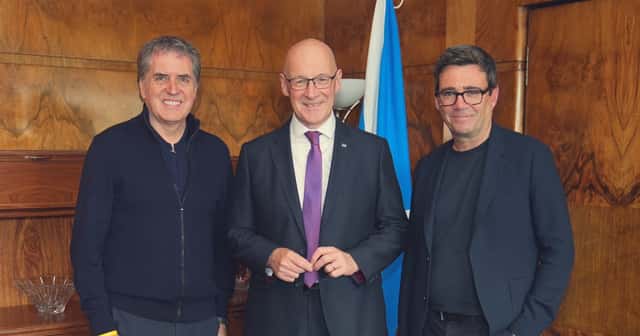
Prime Minister Andy Burnham said on Tuesday, November 3, that the agreements Britain hopes to sign with the European Union this month could add up to 0.4% to the UK's gross domestic product. He said the Treasury had revised its estimate upward in recent days. In a separate interview the same day, he denied that he had proposed bringing back free movement of people between the UK and the EU.
"A deal could add up to 0.4% to GDP," Burnham told The Economist, according to a Press Association report published by The Independent. "Now, that is a number that you cannot ignore." The Guardian reported that he put the gain at £17 billion.
The comments came 17 days before Burnham is due in Brussels for a summit on November 20. Both sides expect to sign three deals there: on food and farm trade, on emissions trading, and on a youth mobility scheme. Officials have also begun drafting a separate joint statement on future cooperation that would reach into university fees and European industrial policy. That statement is where the harder trade-offs sit.
This article reflects reporting available as of about 7:20 p.m. Eastern Time on November 3. None of the texts has been published by either side.
What Burnham said about free movement
The prime minister has spent more than a week answering questions about whether he wants Britain to return to free movement. In a Sunday Times interview reported on October 25, he said he would welcome an "honest discussion" about it. He said a new relationship could include full EU membership or joining the single market, both of which would require free movement. Labour's 2024 manifesto ruled out all three for this parliament.
In the ITV News interview that aired on Tuesday, Burnham said: "I have not proposed freedom of movement coming back." The Guardian reported that he went on: "I do believe that we should have an honest discussion with people about how immigration has changed since the Brexit vote." He said shorter-term migration from Europe "has been replaced with long-term settlement in bigger numbers, and that was the Boriswave." "Boriswave" is a term for the rise in long-term visas, and in the dependants who came with them, under Boris Johnson's government after the UK left the EU.
He said he would keep Labour's manifesto red lines on the customs union, the single market and free movement for the rest of this parliament. "I think public opinion has changed nationally," he said. "But I want to be really clear on this issue. I will not run ahead of public opinion. The public need to be the boss when it comes to whatever happens with Brexit."
PA reported that Burnham also accused critics of misjudging the mood. "Those who are making the argument over 'oh my goodness, don't open up this psychodrama' are misreading the public mood in my view," he told The Economist. PA said the remark appeared aimed at Conservative leader Kemi Badenoch, who has warned against reopening Brexit.
The denial follows days of mixed signals. PA reported that in one interview Burnham said there would be no change this parliament and signaled he could fight the next election on a promise to rejoin. In another, he said "no" when asked whether he would bring back free movement without a referendum. Downing Street then said he was "not leaning either way." He has also written to the Cabinet telling ministers not to publicly back specific options for the future relationship.
What his ministers said
Two senior ministers spoke on Monday, November 2, in terms that stressed the limits.
Home Secretary Shabana Mahmood told Sky News she would not take part in speculation. "What I am keen on is abiding by our manifesto," she said. She added that the prime minister had himself acknowledged "significant issues with the free movement of people." She said that should be part of the national debate about the Brexit settlement. She also said losing access to EU-wide databases after Brexit had "had a very significant impact on us and our ability to manage migration into this country."
On BBC Radio 4's Today program, Mahmood said: "We had a manifesto commitment not to reopen in this parliament the question of freedom of movement, and that will not change in this parliament." Mahmood is also the minister behind the plan to lengthen the path to permanent settlement, which Burnham has backed.
Immigration minister Anna Turley also told Sky that her priority was "getting young people in my constituency into work" and fixing the current system, including removals and small-boat crossings.
The three deals for November 20
The Guardian reported on Tuesday that officials on both sides have all but agreed the three agreements, although some details remain open.
Food and farm trade. A draft text of the sanitary and phytosanitary (SPS) agreement has been circulated to the 27 member governments. We reported earlier on Tuesday that most of its checks are now unlikely to end before early 2028. The government says the deal will be worth more than £5 billion to the UK economy by 2040, according to the Guardian. Under it, travelers would get a pet passport in place of a certificate for each trip, and trade in live molluscs and Scottish salmon would be freed up. UK producers could keep selling some products banned under EU law, such as certain pesticides, for a transition period.
Emissions trading. The UK would link its carbon market to the EU's emissions trading scheme and pay to avoid the bloc's cross-border carbon tax, which starts in January. Critics argue that this means accepting rules that Britain left the EU to escape.
Youth mobility. The "youth experience scheme" would let people under 30 live, work and travel in each other's territory. The Guardian reported that both sides have agreed each EU member state should get its own quota, to spread the benefits and costs. The UK is negotiating a mechanism like an emergency brake. If a member state does not issue its share of visas to young Britons, the UK could cut the number of visas for that country's nationals. The total size is still open. The Guardian reported on November 1 that up to 80,000 young Europeans could be allowed in, while member states had pushed for 100,000 to 150,000.
The draft joint statement
The more contested document is a separate joint statement on future cooperation. The Guardian said a draft prepared by the EU, and not yet agreed by the UK, would aim to settle lower fees for European students at British universities within six months. It describes the two sides as "trusted partners." UK officials believe that wording would let Britain take part in Made in Europe, the EU's planned industrial program that restricts trade with countries outside the bloc.
That trade-off has been reported before. On November 1, the Guardian reported that ministers were ready to spend up to £450 million a year compensating universities so EU students could pay home fees. They would do so only if Brussels let the UK into Made in Europe. EU officials want their students to pay just over £9,000 a year instead of international fees, which can exceed £60,000. A government spokesperson told the paper that the UK was "building an ambitious, close relationship with the EU" that would strengthen the economy and protect British industry.
The Guardian said three other issues appear in the EU's draft:
- European governments want Britain to match higher tariffs on Chinese electric vehicles. UK ministers and businesses are resisting, and the draft says only that both sides will "cooperate closely and explore further solutions."
- The draft says the UK is likely to pay into the EU's "cohesion" budget for poorer member states. The UK has not signed off on this, and it is seen as more likely in a later agreement.
- The EU has raised concerns about a UK plan to speed up deportations of "foreign national offenders from the UK to the EU," and wants London to drop it.
Downing Street has said Burnham will also set out his longer-term vision for the relationship, including possible re-entry, "around the time of the summit," the Guardian reported.
The opposition
The Conservatives and Reform UK both oppose any return to free movement.
When Burnham first raised it in late October, Badenoch called it "yet another example of Burnham's foot in mouth syndrome" in a post on X, the BBC reported. "Most people who voted for Brexit did so because they didn't want free movement," she wrote. Former chancellor Jeremy Hunt, who backed Remain in 2016, told the BBC the current deal can still work. "Having made the decision, we should stick with it and make the most of it," he said. He added that the priority should be filling jobs with the million young people not in work or training.
Reform UK leader Nigel Farage called Burnham's stance "a total betrayal of Brexit Britain and Burnham's Makerfield pitch," in a statement on the party's website on October 26. He said: "Reform will fight the next election on stopping freedom of movement." Reform's economy spokesperson Robert Jenrick told the BBC the idea was "completely mad."
The Liberal Democrats argue the government should go further. Responding to the food deal on Tuesday, Europe spokesperson Al Pinkerton called it "a step in the right direction, but it's a patch, not a fix," STV News reported. "The real solution is to rejoin the single market and to establish a customs union with the EU," he said, and urged ministers to "drop their self-imposed red lines."
What polling shows
Burnham's claim that opinion has shifted is supported by recent polling, though most voters also want a say.
A YouGov poll for The Times was carried out online on October 4–5, 2026, among 2,312 adults in Great Britain, with results weighted to be representative of all adults. It asked: "If an election were held tomorrow for Britain to rejoin the European Union (EU), how would you vote?" Fifty-two percent said they would vote to rejoin, 27% to stay outside, 7% would not vote and 15% did not know. The published tables do not give a margin of error.
The same poll asked whether, if the government negotiated a deal to rejoin, there should be a referendum first. Sixty-four percent said yes, 23% said the government should be able to decide without one, and 13% did not know. YouGov's write-up says a referendum is the preferred option among every voting group it reported, including 54% of those who would vote to rejoin.
Source: YouGov/The Times, fieldwork Oct. 4–5, 2026
Show the numbers
| Answer | Share (%) |
|---|---|
| Vote to rejoin the EU | 52 |
| Vote to remain outside the EU | 27 |
| Would not vote | 7 |
| Don't know | 15 |
A separate YouGov tracker was conducted online on September 24–25 among 2,062 adults in Great Britain. Asked whether Britain was right or wrong to vote to leave, 57% said wrong and 30% said right, according to YouGov's tables. The question of a return to free movement on its own was not asked in either poll. For how we report polls, see our methodology.
The summit and the deals still open
The near-term test is the November 20 summit with European Commission President Ursula von der Leyen and European Council President António Costa. The points to watch are:
- the size of the youth scheme and whether the UK wins its brake mechanism;
- whether the fees-for-Made-in-Europe trade is in the joint statement or left for later;
- the final position on Chinese EV tariffs and any cohesion payment;
- the timing and content of Burnham's longer-term "vision" speech.
Burnham's case rests on combining a firm promise for this parliament with an open question for the next one. He will keep the red lines until the next general election, due by 2029, and he says any bigger change would need public consent. For background on the parties' positions on Europe, see our United Kingdom issues guide. We also covered how former prime minister Keir Starmer and former chancellor Rachel Reeves made the case for closer EU ties.
Key facts
| Item | Detail |
|---|---|
| Summit | Brussels, Nov. 20, 2026 |
| Deals expected | Food and farm trade (SPS), emissions trading, youth experience scheme |
| Growth claim | Up to 0.4% of GDP (about £17bn), per Burnham, citing the Treasury |
| Youth scheme | Under-30s; quota per member state; UK seeking a brake mechanism |
| Joint statement | EU draft covers student fees within six months, Made in Europe, EV tariffs, cohesion |
| Red lines | No single market, customs union or free movement this parliament |
| Poll | YouGov/Times, Oct. 4–5: 52% rejoin, 27% stay out |
Differing perspectives
How far should the UK go in rebuilding its relationship with the EU?
Each position is summarized as its supporters make it, with equal weight and in alphabetical order. A summary is not an endorsement; the evidence for each is weighed in the story above.
Make the current Brexit deal work
Who holds it: Conservative Party, including Kemi Badenoch and Jeremy Hunt
Conservatives say most people voted for Brexit because they did not want free movement, and reopening the question would be divisive. Hunt says the government was paralyzed for years after the referendum and the country should make the existing deal a success. They argue the priority should be getting a million young people not in work or training into jobs, not more migration.
In their words: BBC News, quoting Kemi Badenoch and Jeremy Hunt ↗
Rejoin the single market and customs union
Who holds it: Liberal Democrats, including Europe spokesperson Al Pinkerton
The Liberal Democrats welcome the food deal but call it a patch rather than a fix. They argue trade barriers since Brexit have held back farmers and businesses and raised prices for families. Their answer is to rejoin the single market and form a customs union with the EU, and they want ministers to drop the self-imposed red lines that limit the talks.
In their words: STV News (PA), quoting Al Pinkerton ↗
Rule out free movement for good
Who holds it: Reform UK, including Nigel Farage and Zia Yusuf
Reform says any move toward free movement would betray the 2016 vote and Burnham's promise in Makerfield not to rerun Brexit arguments. It argues EU migration has added to welfare costs, citing £11.9 billion in Universal Credit paid to households with foreign nationals. Farage says Reform will fight the next election on stopping free movement.
In their words: Reform UK statement, Oct. 26, 2026 ↗
Sign the deals now and let voters decide the rest
Who holds it: Prime Minister Andy Burnham and the Labour government
Burnham says the food, emissions and youth deals could add up to 0.4% to GDP, a gain he says the country cannot ignore. He will keep Labour's red lines on the single market, customs union and free movement for this parliament. He argues public opinion on Brexit has shifted, and wants an honest debate about the trade-offs, with the public deciding any bigger change.
In their words: The Independent (PA), quoting Andy Burnham ↗
READ BEYOND 567POLITICS
Alternate sources & perspectives
Independent coverage and primary evidence to help you compare arguments. A link is not an endorsement; perspective labels describe the linked material.
- independent analysis
PM: EU deal could add 0.4% to GDP and critics have 'misread the mood' ↗
The Independent (Press Association)
Nov. 3 report on Burnham's Economist and ITV interviews, the Treasury estimate and his Cabinet letter.
- independent analysis
Andy Burnham to unveil EU trade deals worth billions of pounds ↗
The Guardian
Nov. 3 details of the three deals, youth-scheme quotas and brake, and the EU's draft joint statement.
- independent analysis
Burnham denies proposing return to free movement in talks with EU ↗
The Guardian
Burnham's ITV remarks and Shabana Mahmood's and Anna Turley's Nov. 2 interviews.
- independent analysis
UK willing to spend £450m a year on EU students if it can join Made in Europe scheme ↗
The Guardian
Nov. 1 report on the fees-for-Made-in-Europe trade-off and youth-scheme numbers.
- right argument
Burnham open to 'honest discussion' on EU free movement ↗
BBC News
Oct. 25 report with Kemi Badenoch, Jeremy Hunt and Robert Jenrick making the case against reopening Brexit; also Daisy Cooper for the Lib Dems.
- right argument
Nigel Farage slams Andy Burnham on freedom of movement: 'This is a total betrayal' ↗
Reform UK
Reform UK's own statement opposing free movement, Oct. 26.
- left argument
Burnham: I have not proposed return to EU freedom of movement ↗
STV News (PA)
Includes Liberal Democrat Al Pinkerton's case for rejoining the single market and a customs union.
- primary evidence
YouGov/The Times survey results, Oct. 4–5, 2026 ↗
YouGov
Full tables for the rejoin-vote and referendum questions charted in the article.
- independent analysis
If the government decides to rejoin EU, Britons say there should be a referendum ↗
YouGov
YouGov's write-up of the same poll by voting group.
- primary evidence
YouGov Brexit tracker, Sept. 24–25, 2026 ↗
YouGov
Right-or-wrong-to-leave tracker tables.
Reviewed 2026-11-03. Automated discovery returned only generic UK pages, so these sources were picked by hand from pages opened while reporting. The draft deal texts and the EU's draft joint statement have not been published; details come from Guardian reporting. Burnham's Economist interview is cited through the PA report. Conservative and Reform positions are linked to their late-October statements because no new responses to the Nov. 3 interviews had been found as of about 7:45 p.m. ET.