Ninth Circuit vacates stay, keeping order that shields election workers from DOJ threats in force
A panel paused Judge Thompson's order Monday night. Hours later the full court voted to rehear the case en banc and wiped the stay away.
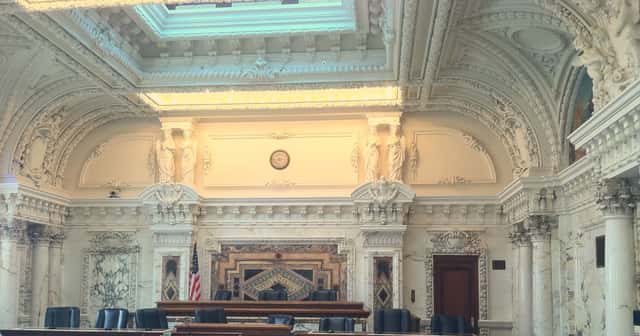
A federal judge's order that bars the Justice Department and the Department of Homeland Security from threatening election workers over ballots cast by people the government calls noncitizens is in force on Election Day. That is the result of two rulings issued within a few hours of each other on Monday night, November 2, 2026, by the U.S. Court of Appeals for the Ninth Circuit.
First, a three-judge panel voted 2-1 to pause the order, issued by U.S. District Judge Trina L. Thompson in San Francisco. Then, after a judge of the court called for a vote, a majority of the court's active judges who were not recused ordered the case reheard en banc and vacated the panel's ruling. The en banc order was entered at 10:23 p.m. Pacific time, or 1:23 a.m. Eastern on Tuesday. With the stay wiped away, Thompson's temporary restraining order is again in effect.
The case is Service Employees International Union v. U.S. Department of Justice, No. 26-7303. Its plaintiffs are two public-sector unions, the Service Employees International Union and the American Federation of State, County and Municipal Employees, along with the League of United Latin American Citizens and the NAACP. The defendants are the Justice Department, Attorney General Todd Blanche, the Department of Homeland Security and Homeland Security Secretary Markwayne Mullin.
What Judge Thompson ordered
Thompson granted the temporary restraining order on October 30, the same day the plaintiffs asked for it. 567politics covered that order when it was issued and the government's appeal.
According to the government's description in its stay motion, the order bars federal officials from threatening, intimidating or coercing election officials to halt processing the ballots of any registered voter "solely on the basis" that federal officials believe the voter is an ineligible noncitizen. It also bars demands that officials remove such voters, refuse to issue them ballots, or segregate or not count their ballots. It forbids threats of criminal prosecution for failing to comply.
The order also directed the Justice Department "to inform the Court of any pending search warrant applications, grand jury subpoenas, or other demands to access election materials or ballots" tied to any list of allegedly ineligible voters. By its terms it lasts 17 days, until November 16. A hearing is scheduled for November 13.
Thompson found that the plaintiffs were likely to show that the government violated Section 11(b) of the Voting Rights Act, which bars intimidating or threatening anyone "for urging or aiding any persons to vote." She also found a likely violation of the Constitution's Elections Clause, which gives states the power to set the "Times, Places and Manner" of congressional elections.
What the government argued
The Justice Department asked the Ninth Circuit for an emergency stay on November 1. Its motion said the order "improperly interferes with the government's efforts to stop unlawful voting by noncitizens and its investigations of potential criminal violations of federal voting laws."
The motion described how the program works. Homeland Security "compares immigration and voting records to preliminarily identify persons who may have registered or voted illegally," the government wrote. It said the two departments had asked state and local officials to temporarily "pause or segregate ballots" of anyone the government had "credibly identified as potential noncitizens." It added that the Justice Department "has also initiated investigations of potential illegal voting by ineligible noncitizens, including whether election workers knowingly facilitated such illegal voting."
On the law, the government made three main points. It said Section 11(b) "has no private right of action, does not apply to the federal government, and is not violated by the Executive Branch's efforts to prevent and investigate violations of federal criminal laws." It argued that the Elections Clause "applies only to Congress and does not constrain the Executive Branch's duty to enforce the law." And it said Thompson issued the order "without giving the government any opportunity to respond."
The government also objected that the order could force it to disclose grand jury material, which federal criminal rules keep secret. Voting in a federal election as a noncitizen is generally a misdemeanor under 18 U.S.C. 611, the motion noted. Knowingly aiding a federal crime is itself a crime under 18 U.S.C. 2.
What the plaintiffs argued
The plaintiffs answered the same night. Their opposition brief described an "unprecedented and sustained campaign to intimidate, threaten, and coerce election officials, election workers, and voters."
The brief quoted an October 16 Justice Department letter to Los Angeles County. It warned that "[i]f persons knowingly tabulate ballots cast by individuals identified by federal agencies as noncitizens, they risk becoming aiders and abettors to a federal crime." The brief also quoted a post by President Donald Trump on Truth Social about California officials: "They will all go to jail for a long period of time!!!"
The plaintiffs also cited a declaration from the clerk-recorder of San Benito County, California, who said he "understood this visit as an effort to intimidate me." According to the brief, he was unsure whether he "might be arrested" and drew up an emergency plan for running his office without him.
A group of former election officials from both major parties also filed a friend-of-the-court brief backing the plaintiffs. In their view, the demands that officials "segregate ballots and verify citizenship under the threat of criminal prosecution upend the rules they are responsible for enforcing and unnecessarily risk disenfranchising eligible voters." They wrote that the federal government "has provided no evidence of widespread error or wrongdoing by election officials."
The panel's ruling
The panel order was written by Judge Carlos T. Bea and joined by Judge Consuelo M. Callahan. Chief Judge Mary H. Murguia dissented.
The majority first held that Thompson's order, although called a temporary restraining order, could be appealed as a preliminary injunction because it ran longer than the usual 14 days. It noted that Thompson had tried at a November 2 hearing to shorten the order to 14 days. The panel said she lacked the power to do so once the government had appealed.
On the merits, the majority wrote that "the district court is likely wrong on both counts." It said Section 11(b) "does not contain an express private cause of action" and that the statute gives enforcement power to the attorney general. It said the plaintiffs' claim would require the court "to recognize an implied private cause of action against the Executive."
The majority also distinguished an October 30 ruling by a different Ninth Circuit panel in United States v. California. That panel had refused to force California to segregate ballots. The Bea majority said the earlier panel "decided whether a state must adopt the ballot-sequestration process requested by the Government here," while "we consider only whether the Government can make such a request in the first place." It called the federal requests "core Executive functions that did not actually disturb the states' regulation of their own elections."
On harm, the majority wrote: "The Government's injury—being barred from requesting that the states segregate ballots from suspected non-citizens—cannot be undone after the fact."
The dissent
Murguia opened her dissent by comparing the two Ninth Circuit rulings. In the earlier case, she wrote, the court held that federal officials could not force California to use the government's ballot procedures. In this one, the majority held that federal officials "may compel state election officials to put aside state election procedures in favor of Defendants' preferred procedures by threatening prosecution." She concluded: "These two decisions cannot be reconciled. I dissent."
She wrote that the federal executive "has no right to dictate election procedures to the states." If it cannot do that directly, she added, "then they likewise cannot dictate them by subjecting vulnerable election workers to baseless—but chilling—threats of federal prosecution."
Murguia also cited the Justice Department's own manual. Section 9-85.300 directs prosecutors not to take "overt criminal investigative measures . . . involving alleged ballot fraud" until an election is over. She noted reports that federal marshals had served at least one county employee at home. And she said the principles of Purcell v. Gonzalez, which warn federal courts against changing election rules close to an election, favored leaving Thompson's order in place.$
How the en banc vote happened
The docket shows how quickly the court moved. The panel order was entered at 7:45 p.m. Pacific time. Six minutes later, the court set a 9 p.m. deadline for any rehearing petition. At 8:10 p.m., the court said a judge had made a "sua sponte request for an en banc vote" and ordered both sides to file briefs by 10 p.m.
The plaintiffs petitioned for rehearing en banc at 9:54 p.m. In a two-page letter brief, the government urged the court not to rehear the case. It wrote that "the government has not violated the Elections Clause simply by warning state officials of possible legal consequences for knowingly facilitating illegal voting in violation of federal law." It also said the panel's order "does not contradict any other orders of this Court or the Supreme Court."
At 10:23 p.m., Murguia signed the en banc order. It says that "upon the vote of a majority of nonrecused active judges," the case will be reheard en banc and that the panel order "is vacated." The order does not give a vote count or set a date for argument. Bloomberg Law reported that "a panel of 11 judges" will rehear the case and that "the rehearing voids that previous order."
- Judge Thompson grants temporary restraining order, set to last until Nov. 16
- Government appeals to the Ninth Circuit
- Government files emergency stay motion; plaintiffs respond that night
- Panel grants stay 2-1 at 7:45 p.m. Pacific; judge calls for en banc vote at 8:10 p.m.
- Majority of active judges orders en banc rehearing and vacates stay at 10:23 p.m. Pacific
- Hearing scheduled before Judge Thompson
- Temporary restraining order expires unless extended
Where this fits
The case is one of several federal court fights over the government's lists of people it describes as likely noncitizen voters. On Monday the Supreme Court denied the Justice Department's request to force California to segregate ballots, and Chief Judge James E. Boasberg in Washington barred federal segregation demands in a separate case. Also on Monday, U.S. District Judge Tanya S. Chutkan in Washington blocked the departments from sending further lists of alleged noncitizen voters to state and local election officials, in a case brought by LULAC and the Electronic Privacy Information Center.
The government's position has been stated publicly by its officials. In an October interview with CBS's 60 Minutes, as quoted by the Election Law Blog, Assistant Attorney General Harmeet Dhillon said of possible noncitizen voters: "There are literally thousands of them out there that we are looking at." She also said that, barring an unexpected event, she did not expect any interruption in the usual counting and certifying of results in the states.
567politics has also reported on federal election monitors and state limits on them. Our United States elections guide tracks the races on the ballot today.
What comes next
Thompson's order binds the government through Election Day and the early days of the count. The Ninth Circuit has not said when the 11-judge panel will hear the case. The government could also ask the Supreme Court to step in, as it did in the California case. As of early Tuesday, 567politics had found no such filing.
The district court hearing on November 13 will consider what happens after the order's November 16 end date. Under the appeals court's preliminary injunction schedule set on October 31, the government's opening brief is due November 30. Those dates could change after the en banc order.
How we reported this
This story is based on the Ninth Circuit's docket and the filings posted to it, including the panel order and dissent, the en banc order, the government's stay motion and letter brief, the plaintiffs' opposition and the former election officials' brief. Docket times are in Pacific time as shown on the court record. We also used reporting from Bloomberg Law and the Election Law Blog. 567politics found no representative poll that asks specifically about federal warnings to election workers over noncitizen ballots. The site's government datasets tool has no dataset relevant to this case. Its funding tool has no verified Federal Election Commission snapshot for President Trump or Secretary Mullin, so this story makes no claims about their campaign funding. Our methodology and editorial standards explain how we choose and check sources.
Differing perspectives
Should courts bar federal officials from warning election workers about prosecution over ballots from people listed as possible noncitizens?
Each position is summarized as its supporters make it, with equal weight and in alphabetical order. A summary is not an endorsement; the evidence for each is weighed in the story above.
Keep the order protecting election workers
Who holds it: SEIU, AFSCME, LULAC and the NAACP, the plaintiffs in the case
The plaintiffs say federal officials have run a sustained campaign to intimidate election officials, workers and voters. They point to a Justice Department letter warning Los Angeles County workers they could become aiders and abettors, visits by federal agents to county clerks, and the president's statement that officials would go to jail. They argue these threats pressure workers to abandon state counting rules and could keep eligible citizens' ballots from being counted.
In their words: Plaintiffs' opposition to stay ↗
Leave ballot rules to state election officials
Who holds it: Bipartisan group of former state and local election officials, as friends of the court
Former election officials from both major parties say the federal demands conflict with state and federal laws that officials must follow when processing ballots. They say segregating ballots and checking citizenship under threat of prosecution upends those rules and risks disenfranchising eligible voters. They add that the government has offered no evidence of widespread wrongdoing by election officials, and that the threats come amid rising harassment of election workers.
In their words: Amicus brief of bipartisan former election officials ↗
Let federal officials warn and investigate
Who holds it: U.S. Department of Justice, Department of Homeland Security, Attorney General Todd Blanche
The government says it is enforcing federal laws that bar noncitizens from voting. It says Homeland Security compares immigration and voting records to identify likely ineligible voters, and that asking officials to pause or segregate those ballots is a lawful request. It argues the Voting Rights Act gives private groups no right to sue the government, that the Elections Clause limits Congress rather than prosecutors, and that warning officials about aiding illegal voting is ordinary law enforcement.
In their words: Government's emergency stay motion, Ninth Circuit ↗
READ BEYOND 567POLITICS
Alternate sources & perspectives
Independent coverage and primary evidence to help you compare arguments. A link is not an endorsement; perspective labels describe the linked material.
- primary evidence
Order for publication, SEIU v. DOJ, No. 26-7303 (Nov. 2, 2026), with dissent by Chief Judge Murguia ↗
U.S. Court of Appeals for the Ninth Circuit
The 2-1 panel order granting the government's stay, later vacated, and the chief judge's dissent.
- primary evidence
Order granting rehearing en banc, SEIU v. DOJ, No. 26-7303 ↗
U.S. Court of Appeals for the Ninth Circuit (copy hosted by Just Security)
The one-page order vacating the panel stay on a majority vote of nonrecused active judges.
- primary evidence
Docket, Service Employees International Union v. DOJ, No. 26-7303 ↗
CourtListener (Free Law Project)
Time-stamped docket entries showing the sequence of filings and orders on Nov. 1 and 2.
- right argument
Emergency motion for administrative stay and stay pending appeal ↗
U.S. Department of Justice
The government's full case for lifting the order, including its Voting Rights Act and Elections Clause arguments.
- right argument
Government letter brief opposing rehearing en banc ↗
U.S. Department of Justice
Two-page letter urging the full court not to rehear the panel's stay order.
- left argument
Plaintiffs-Appellees' opposition to motion for stay pending appeal ↗
SEIU, AFSCME, LULAC and NAACP (copy hosted by Democracy Docket)
The plaintiffs' account of federal letters, agent visits and statements they describe as threats to election workers.
- other perspective
Brief of bipartisan former election officials as amici curiae ↗
Former state and local election officials
Election administrators from both parties on how ballot segregation demands interact with state and federal law.
- independent analysis
Ninth Circuit Will Reconsider DOJ's Election Worker Threats Case ↗
Bloomberg Law (Isaiah Poritz)
Report on the en banc order and the 11-judge rehearing.
- independent analysis
CBS's 60 Minutes: federal actions around voting system expand weeks ahead of midterms ↗
Election Law Blog
Quotes from Assistant Attorney General Harmeet Dhillon on noncitizen-voting investigations and vote counting.
- independent analysis
Judge blocks Trump administration from pressuring states over noncitizen voting ↗
Reuters (Luc Cohen), via StreetInsider
Wire report on the related Chutkan ruling with context on the Ninth Circuit panel order.
Reviewed 2026-11-03. discover_politics_sources has returned only unrelated pages for recent topics in this batch, so sources were selected by hand and opened on Nov. 3, 2026. Judge Thompson's Oct. 30 order was read as described and quoted in the government's motion and the panel order; the district court docket was not opened directly. No public Justice Department statement on the en banc order was found by deadline; the government's position is represented by its own filings. No representative poll on this question was found.