Justice Department names 126 places for Election Day monitors as judge bars armed or sworn officers
The list spans all 50 states and leans toward Democratic-voting places. A court order and state laws limit what the roughly 1,000 monitors may do.
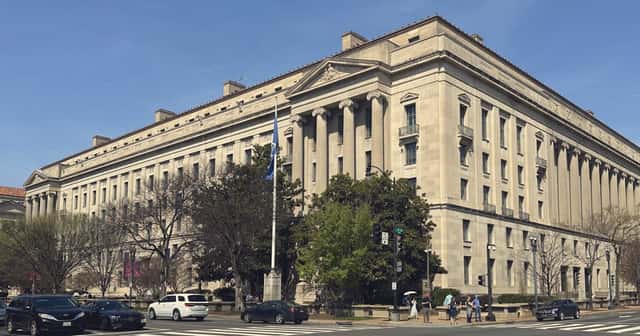
The Justice Department on Tuesday published the list of places where its election monitors are working on Election Day: 126 counties and cities in all 50 states, named in a department press release issued the morning of the vote. The department calls it the largest monitoring effort in its history, with about 1,000 monitors and observers. Hours earlier, late Monday, a federal judge in Washington declined to block the deployment but ordered the department to make sure that none of the monitors are armed, uniformed or sworn officers with arrest powers.
Two questions now sit side by side. One is where the monitors went: news analyses by The Washington Post and Reuters found that most of the named places voted Democratic in recent presidential elections. The other is what the monitors may do once they arrive, which depends on a court order and on state laws that in several states keep them outside the polling place.
This story is a follow-up to our Nov. 2 report on the state limits set before the vote. It covers what changed on Monday night and Tuesday, the evidence on each side, and what remains unknown. It does not report or project any results. For the wider election picture, see the 567 Politics United States elections guide.
What the department released on Election Day
The Nov. 3 release said the monitors will include staff of the Civil Rights Division, other department components and U.S. Attorney's Offices, plus federal observers from the Office of Personnel Management. It said division staff will keep in contact with state and local election officials through the day.
The monitors will check compliance with the laws enforced by the division's Voting Section, the department said. Those include the Voting Rights Act, the National Voter Registration Act, the Help America Vote Act, the Uniformed and Overseas Citizens Absentee Voting Act and the Civil Rights Acts. Its Disability Rights Section enforces the Americans with Disabilities Act at polling places, and its Criminal Section enforces laws against voter intimidation and suppression based on race, color, national origin or religion.
"Election integrity has been one of the top priorities for this Administration and this Division," Assistant Attorney General Harmeet K. Dhillon, who leads the division, said in the release. "I am very proud we are deploying the largest monitoring effort in DOJ history, and pursuing transparency for elections in an assertive and nondiscriminatory manner."
The release asks voters to report polling place disruptions to local election officials first, and to call 911 for violence or threats, before contacting the department. It lists a hotline, 1-800-253-3931, for complaints under federal voting rights law.
How the 126 places are spread
The list names counties in most states and cities in some. It includes overlapping places, such as both Chicago and Cook County, both Minneapolis and Hennepin County, and both Detroit and several of its suburbs. Nineteen states have one listed place each. Michigan has the most, with eight cities, followed by Texas with seven counties.
Source: U.S. Department of Justice, Nov. 3, 2026
Show the numbers
| State | Places listed |
|---|---|
| Michigan | 8 |
| Texas | 7 |
| Georgia | 6 |
| Illinois | 6 |
| Florida | 5 |
| New York | 5 |
The Michigan entries are Lansing, East Lansing, Grand Rapids, Flint, Detroit, Hamtramck, Warren and Dearborn. The Texas entries are Bexar, Dallas, Harris, Waller, Blanco, Bowie and Nueces counties. Georgia's six are Cobb, DeKalb, Fulton, Gwinnett, Chatham and Bibb counties; our Georgia Election Day report noted earlier that state officials expected monitors there. Westchester County, New York, where scanners rejected ballots on Tuesday morning, is also on the list; our report on that failure has the details.
Where the monitors went, by past vote
A Washington Post analysis published Tuesday looked at the places on the list. At least 89 voted for the Democratic candidate in each of the last three presidential elections. At least 29 voted Republican each time, and five switched at least once. A separate Reuters analysis found that more than two-thirds of the jurisdictions supported Kamala Harris over Donald Trump in 2024.
Source: The Washington Post analysis, Nov. 3, 2026
Show the numbers
| Pattern | Jurisdictions |
|---|---|
| Voted Democratic all three times | 89 |
| Voted Republican all three times | 29 |
| Switched at least once | 5 |
That pattern has more than one reading, and the Post's own analysis supplies context for both. The Post found that the Biden administration's 2022 deployment, which covered 24 states, went to Democratic-leaning places in roughly the same proportion. Monitors have long been sent to large cities because that is where most voters live and where language-assistance and disability-access rules apply most often. The department told PBS News before the election that it focuses on "high-population areas because that's where the most voters are," as our earlier report noted.
Critics argue that the purpose has changed even if the map looks similar. Reuters reported that Democrats have criticized the plan as possible voter intimidation and that department officials have said their priorities include areas with a history of voter-access problems and competitive races that could be targets of intimidation.
A note on inference: the partisan lean of the chosen places, by itself, does not show why they were chosen. Large urban counties lean Democratic and hold many voters, so a list built on population or on language-assistance requirements would also lean Democratic. The distribution is consistent with the department's stated criteria and with its critics' concern; it does not settle which explanation is correct. What differs from 2022 is the scale. The department says this is the first deployment in all 50 states. Published counts of past deployments range from 289 to 388 monitors in 2022 and 714 in 2024, as our Nov. 2 report detailed.
The court order on Monday night
The NAACP asked a federal court on Nov. 2 for an emergency order in NAACP v. Blanche. In its press statement, the NAACP cited records it obtained through Freedom of Information Act litigation. It said they showed the department planned to use agents from the Bureau of Prisons, the Drug Enforcement Administration and the Bureau of Alcohol, Tobacco, Firearms and Explosives, all law enforcement components. "The law is clear - law enforcement agents can have an intimidating effect on voters, especially Black voters, and they have no role and no right to be inside our polling places," said Kristen Clarke, the NAACP's general counsel. The NAACP said the action was led with the Advancement Project and the Legal Defense Fund, a separate organization.
U.S. District Judge Reggie Walton, an appointee of President George W. Bush, denied the request without prejudice late Monday, according to the court's order and Fox News. He found that the record did not show the NAACP was likely to succeed on its claim under Section 11(b) of the Voting Rights Act, which bars intimidation of voters. But he ordered the department to follow through on what its lawyers had conceded. Monitors would be "administrative or clerical personnel and not law enforcement officials," would not wear uniforms or federal insignia, would not carry firearms and would not have the power to make arrests.
Walton also ordered monitors not to interfere with voters or election officials, to follow state and local rules, and not to speak with voters inside polling places. They may talk to voters outside only after those voters have cast a ballot. Monitors must introduce themselves to election officials and carry federal credentials. The judge ordered a status report by 7 a.m. Tuesday.
In that filing, the department wrote that "there is no prohibition on the use of sworn law enforcement officers as civil rights election monitors." But it said the Civil Rights Division "undertook reasonable efforts to avoid using sworn officers," including excluding FBI and Homeland Security personnel and consulting the ATF, the U.S. Marshals Service and the DEA "to ensure no sworn agents from those agencies participated," according to Fox News. At the hearing, Walton warned that if the department misstated its plans, "obviously there'd be hell to pay," Democracy Docket reported. Voting Section chief Eric Neff wrote in a declaration that monitors "have not been told of any situation that would be appropriate for them to effectuate an arrest."
Both sides found something to point to. Walton wrote that, given the limits, the deployment "would not place the average voter 'in reasonable fear of harassment and interference with their right to vote.'" Clarke told Democracy Now! on Tuesday morning that "in some respects, this is a victory for voters," and said the department had pulled back people from the ATF and the U.S. Marshals who would have been deployed. That account of a withdrawal is Clarke's; the department's filing, as reported, describes efforts to exclude sworn agents rather than a withdrawal of named staff.
What state law allows
Officials in several states have concluded that, without a court order, settlement or other legal authority, their laws keep federal monitors out of the voting room. Reuters noted that department staff cannot conduct investigations on the spot or stop anyone from voting.
Connecticut. Secretary of the State Stephanie Thomas said in an Oct. 30 statement that state law "clearly defines who is permitted inside a polling place, and federal Department of Justice election monitors are not among those authorized to enter." She said two teams of two monitors would visit New Haven. They will focus on language help and disability access. They will stay outside the 75-foot restricted area and speak with voters only with consent. "Barring federal monitors from inside polling locations is not a partisan issue, but an issue of state law," she said.
Kentucky. Jefferson County Clerk David Yates said Oct. 26 that his office had taken advice from counsel and the State Board of Elections. It then told the department that "routine federal monitoring inside polling locations is not authorized under Kentucky law absent other applicable legal authority." He said the department expected about a dozen monitors in Louisville and described them as civil staff, "not federal law enforcement officers."
Indiana. Officials in Marion and Lake counties said up to a dozen monitors each would stay at least 50 feet from polling place entrances and conduct voluntary exit interviews, the Indiana Capital Chronicle reported. Attorney General Todd Rokita, a Republican, welcomed the deployment. "Federal monitors who observe and report simply add another layer of accountability to the work our great state already does to protect the integrity of every legal vote," he said.
Wyoming. Attorney General Keith Kautz issued an opinion on the question. Without a court order, settlement or consent decree, he wrote, county clerks "not only have the authority to exclude the general public, including DOJ election monitors,… our law requires that they do so," WyoFile reported. Laramie County Clerk Debra Lee said the department agreed to conduct interviews only with willing voters and only outside the 100-yard restricted boundary around polling places. Gov. Mark Gordon had described the conduct of two monitors at a Cheyenne polling place during the August primary as "aggressive" and "irregular."
Alabama. Mobile County Probate Judge Mark Erwin told AL.com that state law lets only poll workers, sheriff's officials, party poll watchers and voters inside. So monitors "will not be inside a poll." He said the federal staff he spoke with understood the law and that he did not expect problems. U.S. Attorney Phil Williams of the Northern District of Alabama wrote on social media about the department's goal. Its aim, he wrote, is "to make sure that your Constitutional right to vote is not diluted by someone taking steps to cheat or vote when they shouldn't," AL.com reported.
How each side frames the stakes
Supporters of the deployment include the department and Republican officials such as Rokita. They say monitoring is a decades-old practice used by both parties. They say the monitors only observe and report. And they argue that wider coverage adds accountability when, in their view, public trust in elections needs support. They point to the department's recent charges against people accused of voting as noncitizens, which we covered in our report on the 63 cases announced Nov. 2.
Critics include the NAACP and many Democratic officials. They say the scale of the effort, the use of staff from law enforcement agencies and a focus on fraud rather than access could keep some voters, especially Black voters, from the polls. They also point to recent court losses by the administration on election matters, including the Supreme Court's refusal on Nov. 2 to let the department force California to set aside mail ballots, covered in our report on that order, and an October order barring the department and DHS from threatening election workers.
A third group, mostly state and county election officials of both parties, takes a narrower view. Officials such as Thomas, Yates, Erwin and Marion County Clerk Kate Sweeney Bell say monitors may observe within the limits of state law and should be treated like any member of the public. "They've got a right to be there, just as our voters have a right to vote free from harassment, intimidation, or any sort of coercion," Sweeney Bell told the Capital Chronicle. "So I'm not going to say the sky is falling until I see it with my own eyes."
What is not yet known
As of mid-afternoon Tuesday, 567 Politics had not found a verified report of a monitor entering a polling place against state rules, of a voter being turned away because of a monitor, or of an arrest involving a monitor. That is a gap in available reporting at this hour, not a finding that no incident occurred. The department has said monitors "report concerns to the Department, which the Department will review after Election Day and act where appropriate," in a statement quoted by the Indiana Capital Chronicle. What it does with those reports, and whether it releases them, is unknown. The NAACP's lawsuit continues, and Walton's denial was without prejudice, which means the group can return to court. Results are not reported in this story; polls in the first states close at 7 p.m. Eastern time.
Differing perspectives
How should the Justice Department's Election Day monitoring program operate in 2026?
Each position is summarized as its supporters make it, with equal weight and in alphabetical order. A summary is not an endorsement; the evidence for each is weighed in the story above.
Deploy monitors in all 50 states
Who holds it: The Justice Department's Civil Rights Division and Republican officials including Indiana Attorney General Todd Rokita
Supporters say election monitoring is a practice the department has carried out under every administration since the Voting Rights Act of 1965, and that this year's deployment simply extends it to every state. They argue that monitors check compliance with federal voting, disability-access and anti-intimidation laws, report what they see for later review, and add a layer of accountability that strengthens public confidence in the count.
In their words: U.S. Department of Justice ↗
Keep law enforcement agents away from polling places
Who holds it: The NAACP, the Advancement Project and the NAACP Legal Defense Fund
These groups argue that sending agents from law enforcement components such as the Bureau of Prisons, the DEA and the ATF to serve as monitors can intimidate voters, especially Black voters. They say the Voting Rights Act bars attempts to intimidate voters, that such agents have no role inside polling places, and that courts should set firm limits before the deployment begins.
In their words: NAACP ↗
Let state law set where monitors may go
Who holds it: State and county election officials of both parties, including Connecticut Secretary of the State Stephanie Thomas
These officials say monitors may observe, but only within the rules each state sets for who may enter a polling place. They argue that keeping federal monitors outside restricted zones, and letting them speak with voters only by consent, is a matter of state law rather than partisanship, and that it protects voters' privacy while still allowing outside observation.
In their words: Connecticut Secretary of the State ↗
READ BEYOND 567POLITICS
Alternate sources & perspectives
Independent coverage and primary evidence to help you compare arguments. A link is not an endorsement; perspective labels describe the linked material.
- primary evidence
DOJ To Monitor Elections in All 50 States for First Time ↗
U.S. Department of Justice
Nov. 3 release: about 1,000 monitors and observers, laws covered, hotline and the full list of 126 counties and cities.
- primary evidence
NAACP v. Blanche, memorandum opinion and order (Nov. 2, 2026) ↗
U.S. District Court for D.C. (copy hosted by Just Security)
Judge Walton denies the restraining order without prejudice and requires unarmed, non-uniformed monitors without arrest powers.
- left argument
NAACP Takes Emergency Action To Block Federal Law Enforcement Agents From Polling Sites ↗
NAACP
Plaintiffs' Nov. 2 statement on the emergency motion and the BOP, DEA and ATF records obtained through FOIA.
- other perspective
Statement from Secretary Thomas regarding DOJ intention to send election monitors to New Haven ↗
Connecticut Secretary of the State
State election official, Oct. 30: monitors not authorized inside polling places under state law; two teams of two outside the 75-foot area.
- other perspective
Clerk Yates Addresses DOJ Election Monitors Ahead of General Election ↗
Jefferson County (Ky.) Clerk's Office
Local election official, Oct. 26: inside monitoring not authorized under Kentucky law; about a dozen civil monitors expected.
- independent analysis
Justice Dept. election monitors overwhelmingly deployed to Democratic locales ↗
The Washington Post
Counts at least 89 consistently Democratic, 29 consistently Republican and five swing jurisdictions; compares with 2022.
- independent analysis
Trump's Justice Dept identifies where US election monitors will be in the 50 states ↗
Reuters (via Investing.com)
More than two-thirds of jurisdictions backed Harris in 2024; department's stated priorities; monitors cannot investigate on the spot.
- independent analysis
NAACP fails to block DOJ poll monitors but judge sets strict limits ↗
Fox News
Details of the order and the department's 7 a.m. status report on excluding sworn agents.
- other perspective
Judge won't bar DOJ from deploying law enforcement to voting sites ↗
Democracy Docket
Voting-rights-focused outlet's hearing account, including Walton's warning and the Neff declaration.
- independent analysis
Federal election monitors won't enter Indiana polling sites, officials say ↗
Indiana Capital Chronicle
Marion and Lake county limits; Attorney General Rokita's support; department's national statement.
- independent analysis
DOJ election monitors will return to Cheyenne, but this time they've agreed to stay 100 yards from polling places ↗
WyoFile
Attorney General Kautz's opinion and Laramie County's agreement with the department.
- independent analysis
DOJ poll monitors will likely be in Alabama on Election Day: What to expect ↗
AL.com
Mobile County's 30-foot rule and U.S. Attorney Phil Williams's comments.
Reviewed 2026-11-03. discover_politics_sources returned only dictionary and general pages about the word 'justice', so sources were picked by hand and every page below was opened before publication. The department's list of 126 places was counted by 567 Politics from the Nov. 3 release. The Washington Post and Reuters partisan-lean analyses are cited as their own findings. No department statement on how places were chosen beyond its general criteria was found. The department's own release stands for its position; no separate conservative think-tank statement on the Nov. 3 list was found in the time available. No results are reported; polls were open at review time.