Fiji passes indigenous rights law as Rabuka seeks votes for constitutional change
The law writes the UN indigenous rights declaration into Fiji's law and orders a 12-month action plan. Critics said it should wait or was not needed.
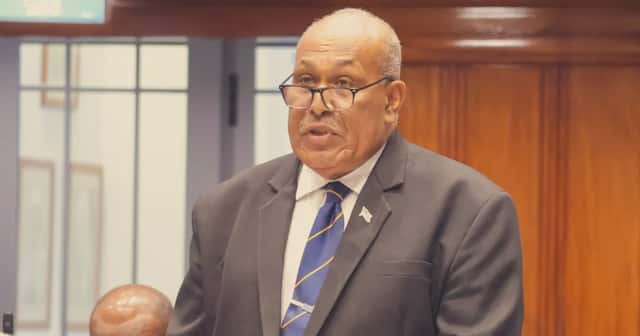
Fiji's Parliament has passed the Rights of Indigenous Peoples Bill 2025. The law gives effect in domestic law to the United Nations Declaration on the Rights of Indigenous Peoples. It also requires the government to draw up a National Action Plan within 12 months. Lawmakers approved it on Monday, Nov. 2, according to the Fiji Sun.
The vote came as Prime Minister Sitiveni Rabuka's government tries to amend the 2013 Constitution. That effort needs a two-thirds majority, and it has split the coalition. Supporters say the new law will help protect iTaukei identity, land and culture. Some who testified on the bill said it was not needed. Others said it should have waited for constitutional reform and needed stronger consent rules.
What the law does
The Fiji government said the law marks "an important step towards strengthening the recognition, protection and promotion of indigenous peoples' rights in Fiji." Its main tool is the National Action Plan. According to the government, the plan is meant to:
- address discrimination and promote indigenous peoples' rights;
- protect cultural heritage, traditional knowledge and customary practices;
- support fair participation in benefits from natural resources;
- review existing laws that affect indigenous interests; and
- strengthen accountability through reporting to Parliament.
Minister for iTaukei Affairs Ifereimi Vasu told Parliament that "the main way the Bill will put these commitments into action is through the National Action Plan," the Fiji Sun reported. The minister must prepare the plan after consulting the Bose Levu Vakaturaga, or Great Council of Chiefs, and the iTaukei Affairs Board. The Standing Committee on Justice, Law and Human Rights kept the 12-month deadline for the plan.
Vasu said the plan must also cover the sharing of benefits from natural, genetic and cultural resources and from traditional knowledge. He said consultations must reach indigenous communities and customary bodies. They must also include women, young people, people with disabilities, civil society and public bodies.
"Consultation must be meaningful, not just a formality," he said. "The success of this law will not be measured only by its passage. It will be measured by the quality of the Action Plan, how widely and honestly people are consulted, and whether indigenous people see a real difference in their lives."
The UN declaration behind the law
The UN General Assembly adopted the Declaration on the Rights of Indigenous Peoples on Sept. 13, 2007, by a vote of 143 to 4, with 11 abstentions, according to the UN's record of the meeting. The UN described it as "a non-binding text." Fiji was listed among the 34 countries absent from that vote.
The four countries that voted against it were Australia, Canada, New Zealand and the United States. Their objections included the declaration's language on land and resources and on free, prior and informed consent, which some read as a veto over national decisions. All four later moved to support it in some form. Fiji's new law now writes the declaration into domestic law, which is the step Rabuka highlighted in the debate.
Assurances for other communities
Fiji is a multiethnic country. The iTaukei, or indigenous Fijians, live alongside a large Indo-Fijian community and other groups.
Rabuka sought to reassure non-indigenous citizens. "I want to make it very clear that the acknowledgement of the rights of indigenous people does not extinguish the rights of non-indigenous people," he said, according to the Fiji Sun. "The onus now is upon the iTaukei of this land to look after everyone in the land."
Rabuka said the UN declaration had existed for some time but was now being written into Fiji's domestic law, particularly through the Ministry of iTaukei Affairs. He cited Leviticus 19:33-34, a Bible passage that calls on communities to treat foreigners living among them like those born in the land. Vasu made a similar point. He said the bill recognizes the particular rights, identity and heritage of indigenous people while providing a framework for mutual respect among all communities. "The protection and promotion of indigenous rights should not be understood as diminishing the rights or dignity of any other persons in Fiji," he said.
The opposition's response
In the final debate, as reported by the Fiji Sun, opposition speakers focused on what comes next. Faiyaz Koya said the law and its action plan should be weighed as lawmakers consider changes to the Constitution. "It must also have a bearing on our constitution about what we do and what we turn into law," he said.
Jone Usamate urged the government not to delay work already underway, especially on laws covering traditional knowledge and intellectual capital. He said those efforts should continue while the plan is being drawn up.
The objections raised in committee
The bill drew sharply different views when it went to committee this year. Three submissions show the range.
SEEP, a Fiji nongovernmental group that works on social empowerment and education, urged Parliament to wait. In an August submission, research and policy officer Metuisela Gauna said the bill should not become law until the Constitution had been reviewed and approved in a national referendum. "The Bill creates serious problems with the Constitution that cannot be fixed by passing an ordinary law," he said, according to the Fiji Sun.
SEEP also wanted stronger protections. It said free, prior and informed consent should be a legal requirement for all mining, forestry, quarrying and development projects. "The Bill leaves critical questions unanswered. Do indigenous communities have the power to say no?" Gauna asked. The group said the law would mean little unless more than 30 existing laws on iTaukei land and resources were also reviewed. "The Bill becomes meaningless when other laws can simply override it," he said.
From the other direction, the Bua Urban Youth Network told the committee in June that the bill should not go ahead in its current form. Alisi Rabukawaqa argued that Fiji already has stronger indigenous protections than most countries, the Fiji Sun reported. She listed the iTaukei Affairs Act, the iTaukei Lands Act, the iTaukei Land Trust Act and other laws. She said indigenous Fijians own roughly 87 percent of the land.
"The ultimate objective should not simply be recognition of rights but the practical strengthening of Indigenous authority, participation, stewardship, and decision-making," she said.
Rabukawaqa also noted that the UN declaration is not legally binding. She said Fiji had already ratified binding treaties on some of the same ground, such as the Convention on Biological Diversity. Her colleague Luke Uluiborotu of the Bua Provincial Youth Council said placing an action plan inside a law was poor practice that would limit future policy. Asked by Usamate whether there was simply no need for the bill, Rabukawaqa answered: "Yes."
- UN General Assembly adopts the Declaration on the Rights of Indigenous Peoples, 143 to 4
- Bua youth groups tell the committee the bill is not needed
- SEEP urges Parliament to wait for constitutional review
- Parliament passes the Rights of Indigenous Peoples Bill 2025
- Independent G-11 bloc pledges support for Rabuka's constitutional amendment
Source: UN, Fiji Sun, Fiji government
The constitutional fight
The law passed while a larger fight continues over the 2013 Constitution. That document sets a high bar for amendment. The government's Constitution (Amendment) Bill 2026 still faces a third reading.
On Nov. 3, a group of 11 independent MPs known as the G-11 met Rabuka and pledged to back him and the amendment bill, the Fiji Sun reported. The group is led by Minister for Policing and Communications Ioane Naivalurua. "We simply reassured the Prime Minister that we have his back," Naivalurua said.
The paper reported that with the G-11, Rabuka has 31 votes, "four short of the required two-thirds majority." It noted that the exact threshold depends on how many MPs are present for the vote. Two of the original coalition partners, the National Federation Party, with four MPs, and the Social Democratic Liberal Party, known as SODELPA, with three, have said they will not support the amendment at its third reading.
Rabuka said the government was also reaching out to opposition MPs. He said he believed some of the original coalition partners had been told not to vote for the bill. "So, we are working on the 11 independent members who have come to join the Government," he said. He added that opposition MPs who had worked with the government had "seen how serious" its members of the special committee had been in trying to reach consensus.
That fight matters for the indigenous rights law. Both SEEP and Koya, from different angles, argued that the law and constitutional change are linked. If the Constitution is amended, the government may have to revisit how the new law fits with it.
How Fiji compares
Fiji joins other countries working out how to put indigenous rights into domestic law and policy. Canada has opened talks on a First Nations wealth fund and wider project financing, a model of benefit-sharing similar to the one Fiji's plan must address. Indigenous issues also feature in our country guides for Australia and Canada. And in Japan, the debate over the first-ever revision of the Constitution shows how hard it can be to reach a two-thirds threshold.
The next 12 months
The government now has 12 months to produce the National Action Plan. The Great Council of Chiefs and the iTaukei Affairs Board will help shape it. Vasu has said the ministry and other bodies need to start early and coordinate.
The plan will test the two main criticisms of the law. Supporters of stronger consent rules will look for whether it gives communities a real voice on mining and forestry projects. Those who argued the law was unnecessary will watch whether it adds new layers on top of existing iTaukei laws. 567 Politics reports these competing views under its editorial standards and will follow the plan's progress and the vote on the constitutional amendment.
Differing perspectives
Is a standalone indigenous rights law the right way for Fiji to protect iTaukei rights?
Each position is summarized as its supporters make it, with equal weight and in alphabetical order. A summary is not an endorsement; the evidence for each is weighed in the story above.
No, existing protections are already strong
Who holds it: Bua Urban Youth Network and Bua Provincial Youth Council representatives
These youth representatives told Parliament that Fiji already has stronger indigenous protections than most countries, through the iTaukei Affairs, Lands and Land Trust Acts and other laws, and that indigenous Fijians own roughly 87 percent of the land. They say the bill rests on a declaration without binding legal force, that placing an action plan inside primary legislation would constrain future policy, and that the goal should be strengthening indigenous authority and decision-making in practice.
In their words: Fiji Sun ↗
Not yet, settle the Constitution and consent rules first
Who holds it: SEEP, a Fiji nongovernmental group
SEEP argues the bill raises constitutional problems that an ordinary law cannot fix, and that passing it before the Constitution is reviewed and approved in a referendum creates legal uncertainty. It wants free, prior and informed consent to be a legal requirement for mining, forestry, quarrying and development projects, asks whether communities will have the power to say no, and says more than 30 existing laws must be reviewed or the new law can simply be overridden.
In their words: Fiji Sun ↗
Yes, with a consultative action plan
Who holds it: Minister for iTaukei Affairs Ifereimi Vasu and the Fiji government
The government says the law is an important step toward recognizing, protecting and promoting indigenous peoples' rights, including identity, cultural heritage, traditional knowledge and fair participation in benefits from natural resources. It says a National Action Plan, built through meaningful consultation with chiefs, communities, women, young people and people with disabilities, will turn those commitments into practice, and that the law should be judged by whether indigenous people see a real difference in their lives.
In their words: Fiji Government ↗
READ BEYOND 567POLITICS
Alternate sources & perspectives
Independent coverage and primary evidence to help you compare arguments. A link is not an endorsement; perspective labels describe the linked material.
- primary evidence
Parliament approves bill to strengthen indigenous rights ↗
Fiji Government
Government summary of the law and the National Action Plan, with Minister Vasu's remarks.
- primary evidence
General Assembly adopts Declaration on Rights of Indigenous Peoples ↗
United Nations
UN record of the 2007 vote, 143-4-11, with explanations of vote.
- other perspective
Rights protected for all under new Indigenous Rights Act, PM assures ↗
Fiji Sun
Prime Minister Rabuka's assurances to non-indigenous Fijians.
- independent analysis
Indigenous Bill faces implementation test ↗
Fiji Sun
Third-reading debate, including opposition MPs Koya and Usamate.
- left argument
SEEP says indigenous rights Bill should await constitutional review ↗
Fiji Sun
NGO submission calling for binding consent rules and delay until constitutional review.
- right argument
Youth leaders challenge need for Indigenous Rights Bill ↗
Fiji Sun
Bua youth submission arguing existing iTaukei laws already protect indigenous rights.
- independent analysis
G-11 bloc pledges full support to Rabuka ↗
Fiji Sun
Vote count for the Constitution (Amendment) Bill 2026.
Reviewed 2026-11-03. Discovery returned no relevant results; sources hand-picked from Fiji government, Fiji Sun and UN records.