Japan's Constitution turns 80 unamended as Takaichi's deadline for a first revision runs into resistance
Takaichi wants an amendment proposal in sight by February. The upper house math, an Article 9 split with Ishin and Komeito's objections stand in the way.
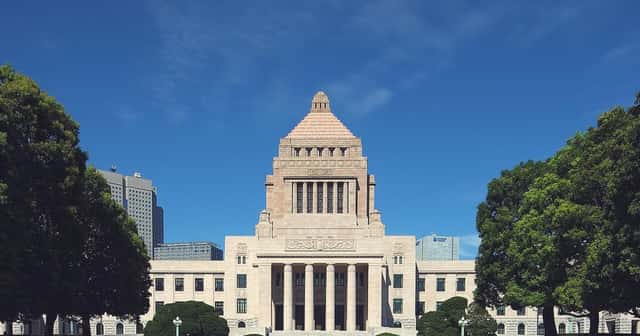
Japan's Constitution turned 80 on Tuesday, measured from its promulgation on November 3, 1946. It has never been amended. Prime Minister Sanae Takaichi wants to change that, and she has done something few of her predecessors risked: she named a date.
Takaichi spoke at her Liberal Democratic Party's convention on April 12. She said she wanted to reach the next convention "in a state where we can say a proposal for amendment is in sight," according to Sankei Shimbun. That convention has since been moved up to February 2027, so it will not clash with unified local elections expected in April, Kyodo News reported. The timetable is now shorter.
Seven months after her pledge, the Diet's constitution commissions have made no notable progress toward drafting amendment text, Kyodo reported. The obstacles are in the upper house, where the ruling coalition lacks a majority, and inside the coalition itself, where the LDP and its partner disagree on what to change first.
What an amendment requires
Japan sets a high bar for constitutional change. The Diet can propose an amendment only with the support of at least two-thirds of all members of each chamber, Jiji Press noted. A proposal then goes to a national referendum, where it needs majority support.
The lower house is no longer the obstacle. In the February general election, the LDP and the Japan Innovation Party (Ishin) won about three-quarters of the seats in the House of Representatives, according to Jiji Press's Japanese-language service. The upper house, the House of Councillors, is different. There the coalition lacks a majority, so it needs opposition votes to send any amendment to a referendum. Kyodo has reported that the LDP and other parties open to amendment are "within reach of two-thirds" of upper house seats.
Jiji's Japanese service reported that some in Tokyo see the 2028 upper house election as a possible turning point.
How the ruling coalition changed the debate
The LDP has listed "independent revision of the Constitution" as a founding goal since the party was formed in 1955, Jiji noted. The goal stayed largely out of reach. Former Prime Minister Shinzo Abe declared in 2017 that he wanted 2020 to be the year a new constitution took effect. He resigned in 2020 for health reasons.
Jiji's account of the years since shows how each successor got pulled away. Yoshihide Suga was consumed by the COVID-19 pandemic. Fumio Kishida, who aimed for a revision during his term, struggled as his cabinet's approval fell after the LDP's slush fund scandal. Shigeru Ishiba lost the ruling bloc's majorities in both chambers and had to focus on immediate problems.
Takaichi's arrival in October 2025 changed the math. Komeito, which Jiji described as the LDP's "brake" on constitutional change, left the government. Ishin, which calls itself the "accelerator," joined. Their coalition agreement called for drafting committees in both chambers' constitution commissions to be set up "as soon as possible," Jiji reported. As of this week, there was no sign those committees would be created.
Takaichi has kept up the pressure in the Diet. "The ideal country is set out in the Constitution," she told the upper house budget committee on October 16, according to Jiji. Kiyomi Tsujimoto of the Constitutional Democratic Party (CDP) replied: "Ideals differ from person to person."
The coalition partners disagree on Article 9
The most likely first amendment is an emergency clause. It could temporarily extend lawmakers' terms or let the cabinet issue decrees with the force of law in a large natural disaster or an armed attack, Kyodo reported. In May, the lower house's legislative bureau presented the House constitution commission with a draft outline of possible wording. A lower house official described it to Jiji as "effectively a draft text."
Ishin wants more. It argues that Article 9, which renounces war, should be revised at the same time, Jiji reported. The two parties also disagree on how to revise it.
The LDP wants to keep Article 9's current wording and add a new Article 9-2 that mentions the Self-Defense Forces. Ishin wants to delete the paragraph saying Japan will not maintain forces with "war potential" and that the right of belligerency will not be recognized. It would replace that paragraph with wording that explicitly establishes a national defense force, Kyodo reported. The LDP and Ishin are holding working-level talks to narrow the gap.
Sankei Shimbun put the problem bluntly in its anniversary coverage: the opposition parties reluctant to amend are not the only thing holding the process back.
Defense policy is the backdrop for this debate. Takaichi's government is also preparing a new five-year defense buildup, and Article 9 sets the constitutional limits on what Japan's forces can do.
Opponents and skeptics push back on the deadline
Komeito's leader, Mitsunari Okamoto, criticized the deadline on Tuesday. "Setting a deadline is quite rough," he told reporters in Aomori, according to Kyodo as carried by Nikkei. "Trying to move the Constitution on your own schedule gets the order wrong." He accepted that adding the Self-Defense Forces to Article 9 needed discussion. But he said politicians "should not lightly say what to change and how" as if the outcome were already decided.
Toru Kunishige of Komeito, a director on the lower house's constitution commission, told Jiji that "there is no need to build our thinking around the timeline the prime minister set."
Outside the Diet, groups that oppose amendment turned out in large numbers. Organizers said about 14,000 people rallied in front of the Diet on Tuesday, the Tokyo Shimbun reported. Participants chanted "Protect the Constitution" and "No to war."
Denny Tamaki, the former governor of Okinawa, told the crowd: "Let us make our determination never to allow war, under the Constitution of Japan, into a loud voice," according to the Tokyo Shimbun. He also warned that reviewing Japan's three non-nuclear principles, a question raised in the government's revision of its security documents, would bring "the fear of war" back to Japan and Okinawa.
Other speakers raised their own concerns. A speaker from the think tank New Diplomacy Initiative said that writing the Self-Defense Forces into the Constitution could open the way to conscription. Mutsuko Asakura, an emeritus professor at Waseda University, criticized a separate plan to cut the number of proportional representation seats in the lower house. The ruling parties and the Democratic Party for the People agreed on that plan. The crowd chanted against the drafting committees.
NHK reported that groups seeking amendment also held gatherings on Tuesday. We could not access a detailed account of those events.
What polls show
Japanese voters are more open to amendment in general than to any specific change, and most want a broad consensus first.
Kyodo News surveyed 3,000 adults by mail in March and April. In that survey, 69 percent supported or somewhat supported changing the Constitution, while 31 percent were opposed, according to Kyodo's report as carried by the Straits Times. The survey had 1,913 valid responses. On Article 9, opinion was split, at 50 percent in favor of revision and 48 percent against.
Source: Kyodo News via the Straits Times
Show the numbers
| Question | Support | Oppose |
|---|---|---|
| Changing the Constitution at all | 69 | 31 |
| Revising Article 9 | 50 | 48 |
| Faster debate in the Diet | 46 | 53 |
The same survey found 73 percent wanted priority given to "a broad consensus including among parties cautious about amendments." Only 25 percent backed drafting amendment provisions with pro-amendment parties alone. The emergency clause polled best: 84 percent welcomed a new article to extend Diet members' terms when a disaster makes elections hard to hold.
An NHK poll released on May 3 found less enthusiasm. In that survey, 38 percent said the Constitution needed to be amended, 20 percent said it did not, and 38 percent said they could not say either way, NHK reported. The two surveys used different methods and wording, which helps explain the gap.
We did not find a new national poll taken around the November anniversary.
The four main positions
The debate has settled into four broad camps. Takaichi and much of the LDP want to move quickly, starting with an emergency clause and the Self-Defense Forces provision. Ishin also wants speed, but with a bolder Article 9 change. Komeito says it is open to discussion but rejects a timetable set by the governing party, and the CDP's Tsujimoto has challenged Takaichi's framing. Groups at Tuesday's rallies oppose amendment, arguing the Constitution has kept Japan at peace.
Kyodo's survey captured that last view among voters. Many opponents of change told pollsters the Constitution "has maintained peace by renouncing war."
What to watch before February
Three steps will show whether Takaichi's timeline is realistic. The first is whether the LDP agrees to set up the drafting committees that Ishin wants. The second is whether the two coalition partners can agree on Article 9 or postpone it. The third is whether enough opposition members in the upper house will back an emergency clause.
Other Takaichi priorities are also competing for Diet time, including a bill to cut the consumption tax.
How we reported this
This story draws on English-language reporting by Kyodo News, Jiji Press and the Straits Times, and on Japanese-language reporting by Jiji Press, Sankei Shimbun, Nikkei, NHK and the Tokyo Shimbun. Translations from Japanese are ours. Crowd figures for the Diet rally come from organizers and were not independently verified. Japanese politicians are outside our US campaign finance data, and this story does not concern political donations. Our methodology explains how we source and attribute claims.
Differing perspectives
Should Japan's Diet move to propose the first amendment to the Constitution by early 2027?
Each position is summarized as its supporters make it, with equal weight and in alphabetical order. A summary is not an endorsement; the evidence for each is weighed in the story above.
Discuss it, but no deadline set by the governing party
Who holds it: Komeito leader Mitsunari Okamoto and Komeito's Toru Kunishige
Okamoto says setting a deadline is quite rough and that moving the Constitution on one party's schedule gets the order wrong. He accepts that adding the Self-Defense Forces to Article 9 needs discussion, but says politicians should not lightly declare what will change. Kunishige says there is no need to plan around the prime minister's timeline.
In their words: Nikkei ↗
No, protect the current Constitution
Who holds it: Former Okinawa Governor Denny Tamaki and civic groups at the November 3 Diet rally
Rally speakers describe Japan's charter as an anti-war constitution that should not be changed. Tamaki urged the crowd to make its determination never to allow war into a loud voice, and warned that reviewing the non-nuclear principles would bring the fear of war back to Okinawa. Others warned that naming the Self-Defense Forces could open a path to conscription.
In their words: Tokyo Shimbun ↗
Yes, and revise Article 9 more boldly at the same time
Who holds it: Japan Innovation Party (Ishin), the LDP's coalition partner
Ishin calls itself the accelerator of constitutional change and wants Article 9 revised alongside any emergency clause. It would delete the paragraph that bars Japan from keeping forces with war potential and denies the right of belligerency, and replace it with wording that explicitly creates a national defense force. It also wants the drafting committees promised in the coalition agreement set up quickly.
In their words: Jiji Press ↗
Yes, start now with an emergency clause and the Self-Defense Forces
Who holds it: Prime Minister Sanae Takaichi and LDP leaders
Takaichi wants a proposal for Japan's first amendment in sight by the LDP's February 2027 convention. Her party favors an emergency clause that could extend lawmakers' terms or allow cabinet decrees in a disaster or attack, and would keep Article 9's text while adding a provision naming the Self-Defense Forces. She told the Diet that the ideal country is set out in the Constitution.
In their words: Sankei Shimbun ↗
READ BEYOND 567POLITICS
Alternate sources & perspectives
Independent coverage and primary evidence to help you compare arguments. A link is not an endorsement; perspective labels describe the linked material.
- independent analysis
Path to amendment uncertain 80 yrs after promulgation of Japan Constitution ↗
Kyodo News via The Mainichi
State of Diet deliberations, the February 2027 convention timetable and the LDP-Ishin split on Article 9.
- independent analysis
Japan Constitution at Critical Juncture 80 Years On ↗
Jiji Press
Amendment thresholds and the ruling bloc's position in each chamber.
- independent analysis
改憲論議、激しさ増す攻防=与党来春照準、慎重派抵抗―28年参院選が分岐点か ↗
Jiji Press (Japanese)
History of LDP amendment efforts, coalition change and the Komeito view of the timeline.
- right argument
憲法公布80年 改憲発議、与党で停滞 高市首相の「来年の自民党大会めど」号令響かず ↗
Sankei Shimbun
Conservative paper's account of Takaichi's April pledge and the stall within the ruling parties.
- other perspective
公明党の岡本三成代表、高市首相の改憲めど発言は「かなり乱暴」 ↗
Nikkei (Kyodo)
Komeito leader's criticism of the deadline.
- left argument
進む改正議論、護憲派が抗議の声 公布80年、各地で「憲法守れ」 ↗
Tokyo Shimbun
Rallies against amendment on the anniversary.
- left argument
玉城デニー前沖縄県知事「戦争は絶対にさせない、憲法の下、大きな声に」 国会前で1万4000人デモ ↗
Tokyo Shimbun
Speeches at the Diet rally, including Denny Tamaki's.
- primary evidence
Over 70% say first-ever constitutional change in Japan needs broad consensus ↗
The Straits Times (Kyodo News)
Full results of Kyodo's March-April 2026 mail survey on constitutional change.
- primary evidence
憲法改正「必要」と「どちらともいえない」がいずれも38%「改正必要ない」が20% NHK世論調査 ↗
NHK
NHK's May 2026 poll on whether the Constitution needs amending.
- independent analysis
憲法公布80年 改憲派・護憲派がそれぞれ集会 ↗
NHK
Report that both pro- and anti-amendment groups held gatherings on November 3.
Reviewed 2026-11-03. 567 Politics staff selected and opened these sources directly rather than relying on automated discovery, which has been returning unrelated pages. NHK's November 3 report on rallies by both camps was only partly accessible, so we could not describe the pro-amendment gatherings in detail. We found no new national poll taken around the November 3 anniversary; the most recent surveys we found were from the spring.