French Assembly votes to let workers withdraw up to €10,000 of locked company savings
The bill passed 95 to 34 with the center, right and RN in favor; the left called it a false answer to stagnant wages. Senators wanted a €5,000 cap.
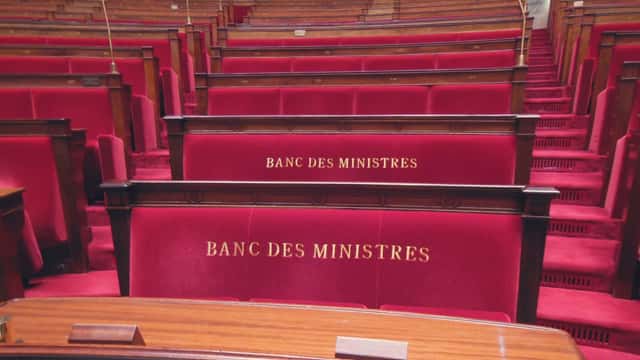
France's National Assembly voted on Monday, November 16, to let employees withdraw up to €10,000 from their locked company savings plans for one year. The bill passed its first reading by 95 votes to 34, with one abstention, according to the Assembly's record of public vote No. 9905. The government, the center and the right backed it, and the National Rally (RN) supported it. The left voted against.
The Senate passed its own version on April 7 with a €5,000 cap. Because the government chose the fast-track procedure, a joint committee of seven deputies and seven senators, known as a CMP, can now try to agree on a single text. The vote came the evening before a national day of strikes and protests over wages, including the public-sector walkout planned for November 17.
What the bill does#
The bill is titled a proposal "to strengthen the appeal of employee savings and to set up an exceptional release procedure." It was filed in the Senate in January by Olivier Rietmann and other senators from Les Républicains. In the Assembly, its rapporteur was Sylvie Bonnet of the Droite Républicaine group.
Under French law, money that workers receive through profit-sharing schemes, known as "participation" and "intéressement," is usually locked in a company savings plan for five years. In return, it is exempt from income tax and most social contributions.
The adopted text opens a one-time window. According to the Assembly's committee report and Capital's account of the floor debate, employees could ask once, within a year of the law taking effect, to withdraw profit-sharing money placed in a plan before January 1, 2026. The cap is €10,000 net of social levies. There is no income condition. The money must be used to buy goods or services. Solidarity funds and retirement savings plans are excluded. Where the savings are invested in the employer's own shares, release requires an agreement or decision by the employer. The tax advantages remain, employers must inform staff within two months and the government must report back to Parliament.
The text also adds new permanent reasons for early release. These include the birth or adoption of a first child, and a serious illness, disability or very serious accident affecting a dependent child. Births and adoptions count only if they happen after the law takes effect. Deputies also restored an article easing the rules for "takeover" funds, which help employees buy the company they work for.
How the vote split#
All 95 votes in favor came from the center, the right and the RN. All 34 votes against came from the four left-wing groups and one non-attached deputy. Only 130 of the Assembly's 577 deputies took part in the vote.
Source: Assemblée nationale, scrutin n° 9905
Show the numbers
| Group | Votes |
|---|---|
| RN (for) | 31 |
| Ensemble pour la République (for) | 24 |
| Les Démocrates (for) | 15 |
| Droite Républicaine (for) | 11 |
| Horizons (for) | 6 |
| UDR (for) | 5 |
| LIOT (for) | 2 |
| Non-attached (for) | 1 |
| La France insoumise (against) | 19 |
| Socialists (against) | 7 |
| Écologiste et Social (against) | 4 |
| Gauche démocrate et républicaine (against) | 3 |
| Non-attached (against) | 1 |
Deleted in committee, restored on the floor#
The bill nearly lost its core. On November 10, the Assembly's social affairs committee deleted the exceptional release, the takeover-fund article and the new family-related release cases. It did so by adopting four identical amendments from the Socialists, the Communist-led GDR group, the Ecologists and La France insoumise, against the rapporteur's advice, the committee report shows. Bonnet said the text had been "emptied of most of the concrete measures," according to Capital. On the floor, the government and its allies restored the articles.
The cap then doubled. A sub-amendment from Valérie Létard and six other deputies of the LIOT group raised it from €5,000 to €10,000. Their written explanation noted that the 2022 purchasing-power law had allowed €10,000. It said that "the situation of households" did not justify a release "half as ambitious" as in 2022. It cited an Assembly fact-finding mission that found average real wages fell 3 percent between 2017 and 2024, and said inflation reached 3.1 percent in September 2026.
- Bonnet files her own bill with a €50,000 cap
- Papin announces a €2,000 release for lower earners; it does not go ahead
- Rietmann and other LR senators file the bill in the Senate
- Government fast-tracks the bill; Senate adopts it with a €5,000 cap
- Assembly committee deletes the release and the family cases
- Assembly restores them, raises the cap to €10,000 and adopts the bill 95–34
Source: Assemblée nationale dossier, Sénat dossier, committee report No. 3468
The government had first aimed lower. In January 2026, Minister Serge Papin announced plans for a €2,000 release limited to workers earning up to twice the minimum wage, the committee report says. That plan did not go ahead. When the Senate kept €5,000 with no income test, the government had favored €2,000 with an income condition, according to the report.
Bonnet had pushed further before. In December 2025 she filed her own bill for a release capped at €50,000. The social affairs committee rejected its articles on January 14, 2026, and it never reached a floor vote, the report says. In the Senate, rapporteur Laurence Muller-Bronn added language to exclude employers' matching contributions from the release. The report notes that the labor ministry had read the identical 2022 wording the other way.

Supporters: "money that belongs to employees"#
Papin, the minister for small businesses, trade and purchasing power, called the measure a matter of freedom. "The money we are talking about belongs to employees, the fruits of their work, their commitment and their contribution to the company's results," he said, according to Capital. He gave the example of a worker facing a €3,000 bill who already has that sum in a savings plan. "Why should he take out a consumer loan and pay interest to a bank when he already has this money?" he asked.
In her report, Bonnet argued that the bill "does not claim to create new income." She wrote that it lets employees who want to do so use money that already belongs to them, a year early and within a cap. It creates no new tax break, she wrote, because the tax and social treatment of the money was set when it was paid. So it weighs neither on social security accounts nor on pension rights.
On the right, Ian Boucard of Droite Républicaine accused the left of acting like "tartuffes," or hypocrites. He said the left calls for protests while opposing a measure that offers immediate purchasing power, AFP reported via Le Figaro. The RN backed the bill. It called the measure insufficient but said it could be "a breath of oxygen" for some households.
There were doubts inside the center, too. Louise Morel of the MoDem regretted the higher cap, saying it could weaken investment. She hoped the joint committee would revisit it, Capital reported. She also questioned writing some of the new release cases into law, saying they belonged in regulations.
How past releases worked out#
Parliament has allowed an exceptional release six times since 1994, most recently in 2022, according to the committee report. Use has fallen each time. In 2008, with a €10,000 cap, 1.6 million requests released €3.9 billion. In 2013, with a €20,000 cap, 471,000 requests released €2.2 billion. In 2022, 309,000 holders released €1.3 billion. The report says that was about 5 percent of the €26.3 billion paid out that year and just over 1 percent of the €106.8 billion then locked up.
Source: Assemblée nationale committee report No. 3468
Show the numbers
| Year | Released |
|---|---|
| 2008 | 3.9bn € |
| 2013 | 2.2bn € |
| 2022 | 1.3bn € |
Opponents: "a false solution"#
The left argued that the bill creates no new income and ignores wages. Socialist deputy Romain Eskenazi called it "unequal" and "ineffective," saying earlier releases had not boosted consumption, according to AFP. Ecologist Eva Sas said the government was using "every trick" to look active on purchasing power "without ever acting on wages." Communist deputy Yannick Monnet denounced the "cynicism" of having employees "pay themselves out of their savings," including when a child is ill. Louis Boyard of La France insoumise said: "You are proposing to give employees money they already own."
The Socialists set out their case in their committee amendment to delete the release. They said profit-sharing reaches only some employees, not the self-employed or jobseekers. They wrote that about 15 percent of the sums go to the best-paid 5 percent of employees, citing data from the social security collection agency. They also argued that releasing money that was exempt from social charges would deepen the social security deficit. Instead, they proposed a targeted cut in the CSG social levy, which they said would give a minimum-wage worker without children €83 more a month.
A record pool of savings#
The pool of savings has grown sharply since then. The report cites the French asset management association AFG, which put employee and company retirement savings at €229.4 billion at the end of 2025. That was up 14.7 percent in a year. The schemes cover 13.2 million people in about 442,000 companies. Company savings plans accounted for €191 billion of the total and collective retirement savings for €39 billion. New money paid in reached €23.4 billion in 2025.
Source: Assemblée nationale committee report No. 3468
Show the numbers
| Scheme | Paid out |
|---|---|
| Participation | 11.4bn € |
| Intéressement | 11.9bn € |
The flows each year are large as well. In companies with 10 or more employees, the report says, €11.4 billion was paid out under participation in 2024, to 5.8 million people. Another €11.9 billion went to 5.6 million people under intéressement. Including employer top-ups and smaller firms, total payouts reached a record €27.2 billion. The average amount held in a plan was €17,100 at the end of 2025.
What comes next#
Deputies and senators must now settle the differences, starting with the cap. The Senate voted for €5,000; the Assembly voted for €10,000. If the joint committee agrees, both chambers vote again on the final text.
The bill is one of several purchasing-power debates under way. Others include the government's plan to raise the Livret A ceiling and the debate over a minimum-wage boost. Unions, which are calling for higher wages, march on Tuesday. The fight over the revenue part of the 2027 budget also continues.
Differing perspectives
Should French employees be allowed an exceptional early release of their locked profit-sharing savings?
Each position is summarized as its supporters make it, with equal weight and in alphabetical order. A summary is not an endorsement; the evidence for each is weighed in the story above.
No: it excludes many workers and dodges wages
Who holds it: Socialist deputies led by Romain Eskenazi, joined in committee by the GDR, Ecologist and LFI groups
The Socialists argue that profit-sharing reaches only employees of firms that pay it, not the self-employed or jobseekers, so the measure excludes many people. They say about 15 percent of the sums go to the best-paid 5 percent of employees. Releasing money exempt from social charges would, in their view, widen the social security deficit and reduce future pension rights, and could strain company cash. They propose a targeted cut in the CSG levy, which they say would give a minimum-wage worker €83 more a month.
In their words: Assemblée nationale, committee amendment AS1 (Eskenazi and others) ↗
Yes, and the cap should be €10,000
Who holds it: Valérie Létard and six other deputies of the LIOT group
The LIOT deputies argue that a €5,000 cap is half the amount allowed by the 2022 purchasing-power law, and that households are not better off now. They cite an Assembly mission finding that average real wages fell 3 percent between 2017 and 2024, and inflation of 3.1 percent in September 2026. Because the money already belongs to employees, letting them use more of it while their fixed costs rise is a matter of freedom and trust, and the employer-consent safeguard stays in place.
In their words: Assemblée nationale, sub-amendment No. 24 (Létard and others) ↗
Yes: it is the employees' own money
Who holds it: Rapporteur Sylvie Bonnet (Droite Républicaine), backed by Minister Serge Papin and the government
Bonnet argues that the release does not claim to create new income. It lets employees who wish to do so use, a year early and within a cap, money that already belongs to them. It creates no new tax break, because the tax and social treatment of the sums was fixed when they were paid, so it weighs neither on social security accounts nor on pension rights. Company cash and employee share ownership are protected because release of money invested in the employer requires the employer's agreement.
In their words: Assemblée nationale, committee report No. 3468 by Sylvie Bonnet ↗
Cite this article
Patrick Karsh. “French Assembly votes to let workers withdraw up to €10,000 of locked company savings.” 567politics. Published 2026-11-16. https://567politics.com/news/france-assembly-employee-savings-release-10000-euros-95-34-vote-papin-bonnet-november-2026
Wikipedia citation
{{cite news |title=French Assembly votes to let workers withdraw up to €10,000 of locked company savings |url=https://567politics.com/news/france-assembly-employee-savings-release-10000-euros-95-34-vote-papin-bonnet-november-2026 |work=567politics |author=Patrick Karsh |date=2026-11-16 |language=en}}CSL-JSON for reference managers
{
  "id": "https://567politics.com/news/france-assembly-employee-savings-release-10000-euros-95-34-vote-papin-bonnet-november-2026",
  "type": "article-newspaper",
  "title": "French Assembly votes to let workers withdraw up to €10,000 of locked company savings",
  "URL": "https://567politics.com/news/france-assembly-employee-savings-release-10000-euros-95-34-vote-papin-bonnet-november-2026",
  "container-title": "567politics",
  "language": "en",
  "author": [
    {
      "literal": "Patrick Karsh"
    }
  ],
  "issued": {
    "date-parts": [
      [
        2026,
        11,
        16
      ]
    ]
  }
}Citations identify this article and its publication date. Assess the reporting and its linked sources before using it as evidence.
Read this article as Markdown or JSON. Cite the original page and retain its sources, dates and qualifications.
Embed this article summary
Paste this HTML into your page. The summary stays linked to the full story and updates with it. No account required.
<iframe src="https://567politics.com/embed/news/france-assembly-employee-savings-release-10000-euros-95-34-vote-papin-bonnet-november-2026?theme=auto" title="French Assembly votes to let workers withdraw up to €10,000 of locked company savings by 567politics" width="100%" height="440" style="border:0;max-width:100%" loading="lazy"></iframe>
<p style="font-size:14px">French Assembly votes to let workers withdraw up to €10,000 of locked company savings by <a href="https://567politics.com/news/france-assembly-employee-savings-release-10000-euros-95-34-vote-papin-bonnet-november-2026" rel="nofollow">567politics</a></p>
<script async src="https://567politics.com/embed.js"></script>
READ BEYOND 567POLITICS
Alternate sources & perspectives
Independent coverage and primary evidence to help you compare arguments. A link is not an endorsement; perspective labels describe the linked material.
- primary evidence
Analyse du scrutin n° 9905 ↗
Assemblée nationale
Official record of the 95–34 vote, with each group's votes.
- primary evidence
Proposition de loi visant au renforcement de l'attractivité de l'épargne salariale et à la mise en oeuvre d'une procédure de déblocage exceptionnelle – dossier législatif ↗
Assemblée nationale
Assembly legislative file listing each stage, the committee changes and the adopted text.
- primary evidence
Renforcement de l'attractivité de l'épargne salariale ↗
Sénat
Senate legislative file: the original bill, the April 7 Senate vote and the fast-track procedure.
- primary evidence
Rapport n° 3468 fait au nom de la commission des affaires sociales ↗
Assemblée nationale (rapporteur Sylvie Bonnet)
Committee report with the history and results of past releases and the rapporteur's arguments.
- primary evidence
Proposition de loi, T.A. n° 365 ↗
Assemblée nationale
The text as adopted by the Assembly on Nov 16, 2026.
- other perspective
Sous-amendement n° 24 (Létard et autres) ↗
Assemblée nationale
LIOT sub-amendment raising the cap from €5,000 to €10,000, with its authors' reasoning.
- other perspective
Amendement n° AS1 (Eskenazi et autres) ↗
Assemblée nationale
Socialist committee amendment to delete the release, setting out their objections and alternative.
- independent analysis
Épargne salariale : les députés votent un déblocage exceptionnel jusqu'à 10 000 euros ↗
Capital
Detailed account of the text's mechanics and the floor debate, including Papin, Boyard and Morel.
- independent analysis
Pouvoir d'achat : l'Assemblée nationale adopte un texte pour débloquer l'épargne salariale dans la limite de 10.000 euros ↗
Le Figaro (AFP)
AFP report on the vote with quotes from Eskenazi, Sas, Monnet and Boucard.
- independent analysis
Déblocage de l'épargne salariale: l'Assemblée nationale adopte le texte voulu par le gouvernement ↗
BFMTV
Report on the vote, the RN's support and the next step in a joint committee.
- primary evidence
Proposition de loi (Assemblée nationale) – texte déposé n° 2217 de Sylvie Bonnet ↗
Assemblée nationale
Bonnet's earlier December 2025 bill for a larger exceptional release, referenced in the committee report.
Reviewed 2026-11-16. Hand-picked for the National Assembly's Nov 16, 2026 first-reading vote on the employee savings release bill: the official vote record, both chambers' legislative files, the Assembly committee report, the adopted text, the key amendments in their authors' words, and AFP and specialist reporting on the floor debate. Each link was opened and read on Nov 16, 2026.