Nuñez tells French inquiry the 'lack of anticipation' before the October 17 riots was his own
Testifying under oath, France's interior minister called the day a failure but defended the police. The National Rally is boycotting the inquiry.
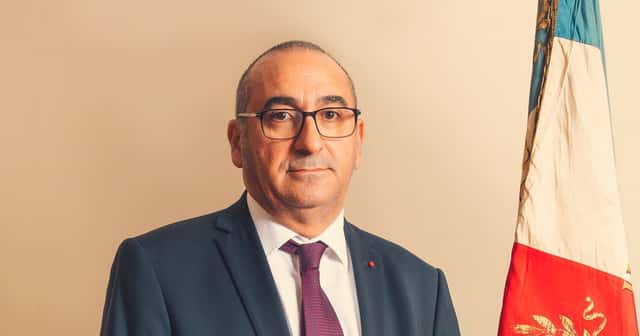
France's interior minister, Laurent Nuñez, told a parliamentary inquiry on Tuesday that he bears personal responsibility for a "lack of anticipation" before the riots and looting of October 17. Speaking under oath, he called the day "a failure" but said that failure "does not in itself presume a fault by the services of the State."
The hearing opened the inquiry that the National Assembly's law committee set up into the events of October 17 and 18. That Saturday's protests against the cost of living ended with shops looted in several large cities, the town hall in Limoges set on fire, and injuries among both police and protesters. Nuñez was the first witness. The committee hears shop owners hit by the violence on Wednesday afternoon, according to the Assembly's inquiry page.
The hearing came amid a second wave of protest. High school and university students blocked schools across France on Tuesday, and unions have called a national strike for Thursday, November 5. Quotations from French-language sources are 567politics translations.
What Nuñez told the committee
Nuñez began with an opening statement after swearing "to tell the truth, the whole truth." According to franceinfo's live coverage, he said: "I stand by this phrase, a lack of anticipation, a lack of anticipation that is first of all mine."
He argued that the intelligence services had warned of each of the risks that came true. What the government missed, he said, was "that all these phenomena foreseen by the intelligence services would happen at the same time, in a way that would make the police deployment burst apart." He listed four events he said happened at once:
- a march of some 110,000 people that police had to supervise in Paris;
- "radicalized activists" who held the Place de la République all afternoon;
- unauthorized marches that tried to reach "the places of power";
- the arrival in the late afternoon and evening of "rioters and looters."
"I am the only one responsible," he said, according to Ouest-France's live coverage. Later he added: "I am not trying to shift my responsibility onto anyone."
Intelligence, leave and the far left
Nuñez said he would "stand by" his decision not to call back officers who were on leave that weekend. He thanked the police for their work and noted the many injuries in their ranks.
He accepted that intelligence services had probably underestimated the size of the turnout, the looting and the damage. But he said a better estimate would not have prevented what happened, given "the intensity of the violence that day." He compared some violent incidents to terrorist attacks, saying: "There are violent acts that cannot be detected."
Nuñez put much of the blame on the far left. "There were immediate clashes. We have a fairly new phenomenon," he said. "The ultra-left mobilized in an unusual way with the aim of disrupting the police deployment." He said early warnings had pointed to "the insurrectional potential of the movement, with the participation of the ultra-left, disorganized and without clear leadership, which recalls the start of the Yellow Vests."
He also said intelligence had warned of far-right activists who might clash with far-left groups near the marches. According to Ouest-France, he said that "when there are attacks on public buildings, it's signed: it's always the ultra-left." He also said that the far right's role in "provocation in the marches" was known to his services. Nuñez cited the role of social media in coordinating the looting as "quite new."
Injuries and weapons
One of the inquiry's rapporteurs asked about protesters badly hurt by police weapons. Franceinfo reported that the question cited high school students who had lost a hand or an eye. "I regret that there were these serious injuries," Nuñez said.
He referred in particular to Evan, a 15-year-old who lost a hand to a stun grenade during a school blockade in Lens on October 5. Nuñez said "the conditions for the use of force were met." A day earlier, at a budget hearing, he told deputies he would not give up "any intermediate means," such as grenades and tear gas, because "police officers need to defend themselves when they are attacked."
Earlier on Tuesday, during question time in the Assembly, Nuñez said there had been "more than 1,500 injured over the three Saturdays of social mobilization," according to Ouest-France. Ouest-France noted that he did not mention injured protesters in that answer.
The judicial response so far
Justice Minister Gérald Darmanin gave the latest judicial figures on Tuesday morning on RMC and BFMTV, as reported by Ouest-France. He said they covered all the protests since October 17.
Source: Gérald Darmanin on RMC-BFMTV, via Ouest-France
Show the numbers
| Stage | People |
|---|---|
| Police custody | 4,914 |
| Prosecutions opened | 2,290 |
| Brought before a court | 1,820 |
| Jailed | 329 |
Darmanin said 70% of those held in police custody were adults and 30% minors. "That shows it is a movement of adults and not a continuation of the high school students," he said. He called it "an extremely strong penal response." He also said more than 1,300 police officers and gendarmes had been injured.
A divided inquiry
The inquiry began in a dispute over its leadership. When the committee chose three rapporteurs on October 20, the National Rally (RN) candidate lost the final round, Le Figaro reported. The posts went to Agnès Firmin Le Bodo of Horizons, Roger Vicot of the Socialist Party and Pouria Amirshahi of the Green-led group. Caure had proposed a trio with one member from each main bloc, including the RN and its allies. In the secret final round, Amirshahi beat the RN's Michaël Taverne by 28 votes to 23, according to parliamentary sources cited by the paper.
RN group leader Marine Le Pen wrote on X that "the left maneuvered to prevent the RN from having" one of the three posts, "contrary to the word given" by group leaders. She called the inquiry a "masquerade" and said her group would boycott it. Firmin Le Bodo later resigned as co-rapporteur over the same issue, according to BFMTV.
The committee's chair, Vincent Caure of President Emmanuel Macron's party, told BFMTV his rule would be "no taboo, but no circus." He said the room "will be neither the tribunal of the republican police nor a rubber stamp." He criticized the RN's absence. "In a democracy, when you lose a vote, you don't overturn the table: you work," he said. He also admitted that "the backroom maneuvers of recent days have not given a good image of Parliament." He opened Tuesday's hearing by saying the work "cannot be the work of one camp against another."
The left gathers testimony
Two groups on the left have asked the public for evidence. La France Insoumise, the party of Jean-Luc Mélenchon, opened an online form for victims and witnesses of police violence during the student protests, "notably those of October 17." It says accounts, photos and videos "will make it possible to document the facts, question those responsible about their decisions and identify the failings of the State." Deputy Ugo Bernalicis called it "a very broad appeal."
Socialist deputy Sandrine Runel said during question time that "you don't answer anger with a baton." Labor Minister Jean-Pierre Farandou replied that he hoped the government could present measures on wages around November 5. LFI deputy Manuel Bompard wrote on X that "too many children have already been injured and maimed since the start of this movement" and urged the government to "turn the page on contempt and repression," as quoted by Ouest-France.
The Green-led group launched a separate site for citizens, protesters, shop owners and, "why not, the police," its spokeswoman Léa Balage El Mariky said, according to Ouest-France.
Other parties have focused on the violence against police. Julien Dive of the Republican Right group told the Assembly that "certain political leaders bear a responsibility," naming Mélenchon. He urged the government to schedule a bill to make rioters pay for damage. Nuñez said that bill would come forward with one on municipal police. He also said he would like to hear "firmer condemnations" of violence against the police from the left of the chamber.
Open questions for the inquiry
The inquiry will look at how the authorities prepared, what intelligence they had, how police were deployed and whether the judicial response was adequate. Several questions are unresolved after the first hearing:
- whether the intelligence services' warnings reached the right level in time;
- why officers on leave were not called back, and what difference that would have made;
- how police used grenades and other weapons, and how complaints of police violence will be handled;
- how much of the violence was planned, and by whom.
Protests are continuing as the inquiry starts. The Yellow Vests coordination has called a rally on the Place de la Concorde in Paris for Saturday, November 7, and said it would practice "civic disobedience" if the rally is banned, according to Ouest-France. Former minister Jean-François Copé, the center-right mayor of Meaux, told TF1 on Tuesday that students were "being led by the ultra-left minority" and were "losing their year."
The RN boycott means its deputies will not question witnesses. The committee has the powers of an inquiry, including the right to demand documents, under a 1958 ordinance cited on its page.
For background, see our stories on the student blockades and the November 5 strike and on the row over Mélenchon and Philippe's TV appearances after October 17. Our France country guide explains the parties in the Assembly. Our methodology page explains how we report contested figures.
Differing perspectives
What went wrong on October 17, and how should the inquiry proceed?
Each position is summarized as its supporters make it, with equal weight and in alphabetical order. A summary is not an endorsement; the evidence for each is weighed in the story above.
A failure of anticipation, not a fault of the services
Who holds it: Interior Minister Laurent Nuñez and the government
Nuñez says the day was a failure and that the lack of anticipation was first of all his own. He argues intelligence services foresaw each risk but not that four events would happen at once and overwhelm police. He points to an unusual mobilization of what he calls the "ultra-left," defends the use of force and says better estimates would not have prevented the violence.
In their words: franceinfo ↗
Document police violence and the State's failings
Who holds it: La France Insoumise
LFI says the inquiry must shed full light on events and establish responsibilities, including for police violence against young protesters. It has asked victims and witnesses to send accounts, photos and videos, arguing these will help document the facts, question those in charge about their decisions and identify the failings of the State.
In their words: La France Insoumise ↗
No taboo, but no circus
Who holds it: Committee chair Vincent Caure (Renaissance)
Caure says the inquiry should look at the facts without becoming a trial of the police or a rubber stamp for the government. He argues the work cannot be one camp against another, and that parties which lose a vote should stay and work. He also concedes that backroom maneuvers over the rapporteur posts gave Parliament a poor image.
In their words: BFMTV ↗
The inquiry is rigged, so boycott it
Who holds it: Marine Le Pen and the National Rally
Le Pen says the left maneuvered to keep the National Rally from holding one of the three rapporteur posts, against the word given by group leaders. She argues that this broke an agreement and turned the inquiry into a masquerade, and says her deputies will therefore refuse to take part in its hearings.
In their words: Le Figaro ↗
READ BEYOND 567POLITICS
Alternate sources & perspectives
Independent coverage and primary evidence to help you compare arguments. A link is not an endorsement; perspective labels describe the linked material.
- primary evidence
Travaux d'enquête sur les événements des 17 et 18 octobre 2026 ↗
National Assembly
The law committee's inquiry page, legal basis and hearing schedule.
- independent analysis
Live: Laurent Nuñez's hearing on his handling of public order ↗
franceinfo
Running account of Nuñez's sworn testimony, including his quotes on anticipation, the ultra-left and injuries.
- independent analysis
Live: Laurent Nuñez again acknowledges a failure before the inquiry ↗
Ouest-France
Hearing coverage plus Darmanin's judicial figures and question-time exchanges.
- independent analysis
Devant les députés, Laurent Nuñez reconnaît un manque d'anticipation ↗
ICI (France Bleu)
Public radio summary of the hearing and the context of the Oct. 17 cost-of-living protests.
- other perspective
Commission d'enquête sur le 17 octobre: son président ne veut ni tabou ni cirque ↗
BFMTV
Chair Vincent Caure's account of how the inquiry should work and his criticism of the RN boycott.
- right argument
Privé de rapporteur, le RN boycottera la commission d'enquête ↗
Le Figaro
How the rapporteurs were chosen and Marine Le Pen's reasons for the National Rally boycott.
- left argument
Victime ou témoin de violences policières? Témoignez ↗
La France Insoumise
LFI's call for testimony on police violence during the protests, in the party's own words.
Reviewed 2026-11-03. The discovery tool returned unrelated fashion and name pages, so sources were found and opened directly. Le Figaro blocked the fetch tool and was read by direct download. No National Rally statement after the Nov. 3 hearing was found; the boycott position is sourced to Le Pen's announcement after the Oct. 20 rapporteur vote, as reported by Le Figaro. Police union reactions to the hearing were not verified.