Glucksmann backs moving France's May 2 presidential runoff as the government refuses
The Socialist-backed candidate joins Retailleau and the RN in questioning a runoff the day after May Day. The government says there is no reason to change.
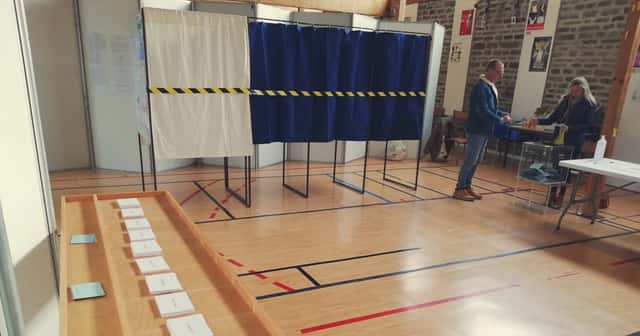
Raphaël Glucksmann said on Monday that it "would be intelligent" to change the dates of France's 2027 presidential election. He is the candidate of the Socialist Party and Place publique. The runoff is now set for Sunday, May 2, the day after the May Day marches.
His comments widen a dispute that had mostly pitted the right and the Rassemblement national (RN) against the government. Bruno Retailleau, the Les Républicains (LR) candidate, and RN figures have asked for the vote to be moved. Government spokesperson Maud Bregeon said last week there was "no reason" to do so.
The government has until the end of January to change its mind. This report sets out what the law allows, what each side has said and what the timetable looks like. Quotes from French-language sources are 567politics translations. For background, see our France issues guide.
What Glucksmann said
Glucksmann spoke on BFMTV and RMC on the morning of Monday, November 2. "I think it would be intelligent, yes," he said, according to Le Parisien. "Given the state of polarization, given the state of hatred, given the state of violence in society, I think it would indeed be intelligent to change the date of the election."
BFMTV published the exchange as a video under the headline that he favors postponing the date of the second round. He did not propose specific alternative dates in the remarks quoted by either outlet.
The same morning, Glucksmann also turned down Gabriel Attal's call for a "great primary of democrats," as we reported in our story on the center-right primary dispute.
How the dates were set
The Council of Ministers fixed the calendar on July 1, 2026. According to the Élysée's official report of that meeting, the Interior Minister presented a communication on the 2027 electoral calendar after consulting the parties. Sunday, April 18, 2027, was chosen for the first round and Sunday, May 2, for the second.
Voters in Guadeloupe, Martinique, French Guiana, Saint-Pierre-and-Miquelon, Saint-Barthélemy, Saint-Martin and French Polynesia will vote a day early because of the time difference. They will cast ballots on Saturdays, April 17 and May 1, according to the government's Service-Public information site. The Élysée report also noted that the period for counting campaign spending and receipts began on April 1, 2026.
The choice is narrower than it looks. Article 7 of the Constitution says the new president is elected "at least twenty days and at most thirty-five days before the expiry of the powers of the president in office." The Constitutional Council proclaimed Emmanuel Macron president "from May 14, 2022, at 0 hours," in its decision of April 27, 2022.
That leaves only two workable pairs of Sundays, BFMTV reported. One is April 11 and April 25. The other is April 18 and May 2. A first round on April 11 would fall 33 days before May 14, 2027, and one on April 18 would fall 26 days before.
Neither option avoids the school calendar. Spring vacations run from April 3 to May 2, depending on the zone, BFMTV reported. The April 11 and 25 dates fall when two of the three school zones are on vacation, according to 20 Minutes, citing AFP.
A person close to President Emmanuel Macron defended the choice to AFP over the summer, BFMTV reported. On May 2, two zones will no longer be on vacation and "the third will be coming back," the aide said. The aide suggested the choice was made to "hope for the highest turnout."
- July 1, 2026Council of Ministers sets April 18 and May 2, 2027
- January 31, 2027Latest date for the convocation decree if April 11 and 25 were chosen
- April 17, 2027Some overseas territories vote in the first round
- April 18, 2027First round
- May 1, 2027May Day marches; some overseas territories vote in the runoff
- May 2, 2027Second round
- May 14, 2027Five years after Macron's second term began
Source: Élysée, Service-Public, Conseil constitutionnel, BFMTV
Why May 1 matters
May 1 is Labor Day in France. Unions traditionally march across the country, and the parades are "traditionally very political," franceinfo reported, citing AFP. Le Parisien noted that May 1 is also the day of the RN's tribute to Joan of Arc, a symbol the party holds dear.
French law limits campaigning just before a vote. The Constitutional Council has described Article L. 49 of the Electoral Code as "prohibiting the dissemination of messages of an electoral-propaganda nature the day before and the day of the vote."
The council has enforced that rule in a presidential race. In April 2022, it annulled all 90 votes cast in the commune of Lourdios-Ichère in the Pyrénées-Atlantiques. It found that candidate Jean Lassalle had staged his abstention in front of cameras in the polling station. It said he then posted the video and comments on social media, breaching Article L. 49.
The question now is whether May Day rallies on the eve of a runoff could do the same at national scale. Critics of the current dates say they could. Supporters say the law and the police are equal to the task.
The case for moving the dates
The debate began in the summer. In early July, RN vice president Sébastien Chenu called the calendar "a maneuver by the president," Le Parisien reported. He objected to a vote "just after the May Day parades, which have some political connotations." The timing was "not particularly judicious if one wants to respect electoral silence," he said.
It returned after October 17. On that day, looting and damage took place on the margins of a protest against the cost of living, franceinfo reported. Our report on youth protests across Europe covers the wider wave of protest. After October 17, the right and the RN asked the government again to drop the May 2 runoff, franceinfo reported.
Louis Aliot, the RN mayor of Perpignan and a close ally of Marine Le Pen, made the case on Sunday, October 25. "The neutrality and serenity that must prevail before Sunday's vote will necessarily be broken by the holding, all over France, of May Day demonstrations," he said, BFMTV reported. He called the marches "the preserve of the CGT and of all the left-wing trade-union and activist organizations."
Bruno Retailleau has been the most active campaigner on the subject, according to BFMTV. He had already called May 2 "a date for creating chaos," 20 Minutes reported. On CNews and Europe 1 on Wednesday, October 28, he said he feared that on May Day 2027 "what happened on October 17" would happen again.
Retailleau also raised what he called "a problem of legality." "The election campaign stops at midnight on Friday," he said. "It will continue [on Saturday] with May Day. You will have candidates of the left who will show themselves." He and others argue that April 11 and 25 would stay within the constitutional window, franceinfo reported.
Glucksmann's argument is different. He did not cite the campaign-silence rule in the remarks quoted by Le Parisien. He pointed instead to the general climate of "polarization," "hatred" and "violence."
The case for keeping them
The government has said no. Bregeon spoke after the Council of Ministers on October 28, franceinfo reported. "There is no reason to change these dates," she said, "unless we bend the knee to the delinquents, the rioters, the seditious who sowed terror these last days and these last weeks in the country."
"The State showed [...] last weekend that it knew [...] how to have the upper hand," she added, according to franceinfo. "I believe the elections will take place in good conditions. In any case, we will do everything to make sure of it," she said, Le Parisien reported.
Marc Fesneau, who leads the MoDem group in the National Assembly, also opposes a change. On Public Sénat on October 28, he regretted that people were "in the process, six months in advance, of preempting things," BFMTV reported. He said he refused to imagine "that people would come to smash or destroy town halls." "That is not a democracy. That is the law of the strongest imposing itself," he said.
La France insoumise (LFI) has taken the same side as the government, for different reasons. Manuel Bompard, the party's coordinator and a close ally of Jean-Luc Mélenchon, answered Retailleau in Le Monde in July, BFMTV reported. "May 1 is a date for union demonstrations. I don't really see the problem," he said.
Bompard also gave a political reading. "The controversy that Mr. Retailleau wants to stir up proves that he knows we are more able than ever to qualify for the second round and to win," he said.
Not everyone in LFI was relaxed about the dates. "It's a real pain to do May Day under an electoral truce," an LFI official told Le Parisien in early July.
The January deadline for a change
The government can still change course. The law requires the decree convening voters to be published at least 10 weeks before the vote. For an April 11 first round, that means by January 31, 2027, BFMTV and 20 Minutes reported.
There is no sign yet that the government will move. Bregeon's statement on October 28 is the latest official position. With Glucksmann's support, figures from the Socialist-backed left, LR and the RN now favor a change. The government, MoDem leader Marc Fesneau and LFI coordinator Manuel Bompard do not.
The debate overlaps with others in the campaign. The center and the right are still arguing over a primary. The appeal over Le Pen's eligibility is also pending.
567politics will report any decision on the calendar, including the publication of the convocation decree.
Differing perspectives
Should France move the 2027 presidential runoff away from May 2, the day after May Day?
Each position is summarized as its supporters make it, with equal weight and in alphabetical order. A summary is not an endorsement; the evidence for each is weighed in the story above.
Change the date given the political climate
Who holds it: Raphaël Glucksmann (Socialist Party and Place publique)
French society is in a state of polarization, hatred and violence. In that climate, holding the decisive round of the presidential election right after a national day of street mobilization adds a risk that can be avoided. Changing the date of the election would therefore be the intelligent choice, whatever one thinks of the legal arguments made by others.
In their words: BFMTV, interview with Raphaël Glucksmann ↗
Keep April 18 and May 2
Who holds it: The government through spokesperson Maud Bregeon, MoDem leader Marc Fesneau and La France insoumise coordinator Manuel Bompard
The dates were set after consulting the parties and chosen to favor turnout, since most school zones will be back from vacation. Changing them would mean bending the knee to rioters, and the State has shown it can keep control. May 1 is an ordinary day of union marches. Assuming six months ahead that town halls will be attacked lets the law of the strongest prevail.
In their words: BFMTV ↗
Move the vote to April 11 and 25
Who holds it: Bruno Retailleau (Les Républicains) and Rassemblement national figures including Louis Aliot and Sébastien Chenu
Holding the runoff the day after May Day marches, which they see as led by unions and left-wing organizations, would break the neutrality and calm expected before a vote. Campaigning must legally stop at midnight on Friday, yet rallies with candidates would continue on Saturday. After the violence of October 17, the risk of disorder is real. April 11 and 25 remain within the constitutional window.
In their words: franceinfo with AFP ↗
READ BEYOND 567POLITICS
Alternate sources & perspectives
Independent coverage and primary evidence to help you compare arguments. A link is not an endorsement; perspective labels describe the linked material.
- primary evidence
Compte rendu du Conseil des ministres du mercredi 1er juillet 2026 ↗
Élysée
Official report setting the first round on April 18, 2027, and the second round on May 2, with Saturday voting in several overseas territories.
- primary evidence
Les dates de l'élection présidentielle de 2027 sont annoncées ↗
Service-Public (French government)
Government information page listing the dates and the overseas territories that vote on Saturdays, April 17 and May 1.
- primary evidence
Texte intégral de la Constitution du 4 octobre 1958 en vigueur ↗
Conseil constitutionnel
Article 7 sets the 20-to-35-day window before the outgoing president's powers expire.
- primary evidence
Décision n° 2022-197 PDR du 27 avril 2022 ↗
Conseil constitutionnel
Proclaims Macron president from May 14, 2022, and annuls the Lourdios-Ichère votes over a breach of the Article L. 49 ban on propaganda the day before and the day of the vote.
- independent analysis
Faut-il changer les dates de la présidentielle 2027? Le second tour de l'élection au lendemain du 1er-Mai divise les candidats ↗
BFMTV
November 2 overview of positions from Retailleau, Aliot, Glucksmann, Bompard, Fesneau and the government, with the constitutional and school-calendar constraints.
- independent analysis
Le gouvernement estime qu'il n'y a "pas de raison de changer" les dates de la présidentielle après les violences du 17 octobre ↗
franceinfo (with AFP)
Maud Bregeon's October 28 statement and the renewed requests from the right and the RN to move the runoff.
- independent analysis
Colère sociale: le gouvernement rejette l'idée de changer les dates de la présidentielle 2027 ↗
20 Minutes (with AFP)
Reporting on the government's refusal, Retailleau's and Aliot's objections and the January 31 deadline for the convocation decree.
- independent analysis
"Ce serait intelligent": Raphaël Glucksmann favorable au décalage des dates de l'élection présidentielle ↗
Le Parisien
Glucksmann's remarks, with earlier comments from Sébastien Chenu and an LFI official and the limits on the government's options.
- left argument
"Je pense que ce serait intelligent": Raphaël Glucksmann se dit favorable au report de la date du second tour de l'élection présidentielle ↗
BFMTV
Video of the Socialist-backed candidate making his case on BFMTV and RMC on November 2.
Reviewed 2026-11-02. discover_politics_sources returned only unrelated pages (food, US court and tax calendars) for this topic, so sources were chosen by hand and each was opened on November 2, 2026. Official texts come first. No first-hand transcript of Bruno Retailleau's or Louis Aliot's remarks was found, so their arguments are represented through AFP-based reporting by franceinfo and 20 Minutes. Quotes are in French at the source.