CDU nominates Ilse Aigner for German president, putting the first woman head of state within reach
The CSU politician has the coalition's projected majority and Green support for the Jan. 30 vote. The AfD calls her too partisan; the Left says the coalition kept the choice to itself.
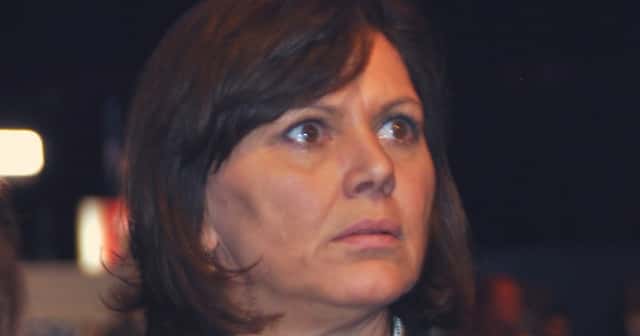
The Christian Democratic Union's leadership formally nominated Ilse Aigner on Monday, November 9, as its candidate to succeed Frank-Walter Steinmeier as Germany's federal president. Chancellor Friedrich Merz then presented the 61-year-old president of the Bavarian state parliament at a joint press conference in Berlin. If the Federal Convention elects her on January 30, she would be the first woman and the first member of the Bavarian Christian Social Union to serve as the country's head of state.
Her path to the office looks clear on paper. The three governing parties, the CDU, the CSU and the Social Democrats, hold a projected majority in the convention, and the SPD's presidium backed Aigner before Monday's announcement, according to Deutschlandfunk. Leading Greens have also endorsed her. The Alternative for Germany and The Left oppose her and plan to field their own candidates. The open question is less whether she wins than how broad her majority will be, and whether the opposition's objections about party politics and process shape the race.
Quotations from German-language sources in this article are 567politics translations.
What Merz and Aigner said on Monday#
Merz settled the choice at a meeting of the CDU presidium on Sunday evening, and the party's leadership bodies confirmed it on Monday morning, tagesschau reported. At the press conference, Merz said that "Germany gains in Ilse Aigner a federal president with dignity and with heart." He cited her "clear commitment to the basic values of our democracy" and her "consistent stance against extremism, against hatred and against social exclusion."
Merz also said the office needs a person with a clear compass and broad support from the political center, according to Deutschlandfunk. He said it was "high time" for a woman to hold the post. Last week he told CDU district chairs that the candidate "must be a woman," as 567politics reported at the time, but he did not name her then.
Aigner acknowledged the weeks of speculation. "The chancellor kept it exciting, for me too," she said. She described herself as "a candidate of the center" who wants to bridge divides. "My language will be clear and understandable," she said.
She framed the role as a counterweight to polarization. "Our country and our democracy are being attacked, from within and from outside," she said, adding that extremes were celebrating triumphs and that consensus was being treated with contempt. "My position is unambiguous and is directed against any attack on human dignity." She also said: "Yes, we have problems in this country, but Germany is not a problem case."
Who Aigner is#
Aigner trained as a radio and television technician and later qualified as a state-certified electrical engineer. From 1990 to 1994 she developed electrical systems for helicopters at Eurocopter, according to her official biography on the Bavarian state parliament's website.
Her political career has run through local, federal and state posts. The biography lists these offices:
| Period | Office |
|---|---|
| 1998–2013 | Member of the Bundestag |
| 2008–2013 | Federal minister for food, agriculture and consumer protection |
| 2013–2018 | Bavarian economy minister and deputy minister-president |
| 2018 | Bavarian minister for housing, construction and transport |
| Since Nov. 2018 | President of the Bavarian state parliament |
She has been a CSU member since 1985 and sits on the party's presidium. Her current role as speaker of the Bavarian parliament is the basis for both the praise and the criticism she has drawn this week. Supporters cite her conduct of that office as proof she can stand above party lines. The AfD argues it shows the opposite.
How the vote works and why the numbers favor her#
Germany's president is not elected by the public. Article 54 of the Basic Law assigns the choice to the Federal Convention, which meets without debate. It consists of all members of the Bundestag plus an equal number of delegates elected by the state parliaments under proportional representation. Any German citizen who can vote in Bundestag elections and is at least 40 years old is eligible. The term lasts five years, and a president may be reelected once.
With 630 members of the Bundestag, the convention will have 1,260 members, tagesschau explained. In the first two rounds, a candidate needs a majority of all members, or 631 votes. If no one reaches that, a third round is decided by a plurality.
In September, after the Saxony-Anhalt state election, Der Spiegel reported projections from the Wahlrecht.de platform. They put the CDU and CSU at 433 delegates and the SPD at 252 to 254. That gives the coalition 685 to 687 seats, at least 54 more than it needs. The projection relied in part on polls for the Berlin and Mecklenburg-Western Pomerania elections, which have since taken place, so the final count could differ slightly once states finish naming delegates. Tagesschau described the coalition's cushion on Monday as "about 50 votes."
Source: Der Spiegel, citing Wahlrecht.de (Sept. 8, 2026), Basic Law, Art. 54
Show the numbers
| Group | Seats |
|---|---|
| CDU/CSU | 433 |
| SPD | 252 |
| CDU/CSU + SPD | 685 |
| Needed to win in rounds 1–2 | 631 |
The convention votes by secret ballot, so a paper majority is not a guarantee. Spiegel noted that defections could shrink the margin. Green support would make a first-round win more likely even if some coalition delegates break ranks.
Where the parties stand#
CSU and CDU. Bavarian minister-president Markus Söder, who first floated Aigner's name in April, called Monday "a good day for democracy and a historic day for the CSU," according to tagesschau. Bundestag President Julia Klöckner of the CDU said Aigner brings what is needed "to give our country new orientation as federal president." Klöckner noted that, if Aigner is elected, women would hold the two highest offices of state for the first time.
SPD. The Social Democrats' presidium endorsed Aigner before the CDU's formal decision, Deutschlandfunk reported. The SPD's support matters most, since the coalition's majority depends on it.
Greens. Bundestag group leader Britta Haßelmann said on Friday that the Greens value Aigner, who has "always appeared approachable and open" in her past offices, according to a dpa report carried by Schwäbische Zeitung. "We Greens consider it appropriate and right that, for the first time after 75 years, a woman holds the highest office in the state," she said. "The time is ripe." Haßelmann also criticized how the Union handled the search: "The unprofessional search process of the Union and of Friedrich Merz is unworthy of this office. How can anyone stumble through a process like this?"
AfD. Co-leader Alice Weidel said on Sunday that Aigner is "not a good choice for the office of federal president," according to a dpa report in the Augsburger Allgemeine. Weidel said the head of state must stand above parties and camps. "Unfortunately, as president of the Bavarian state parliament, Ms. Aigner has repeatedly shown that she, too, cannot shed the role of a party politician," she said. Weidel also said she expects Aigner to present herself to the AfD's Bundestag group, as the largest opposition group. The AfD plans its own candidate, described by the party as a man "from the middle of society," tagesschau reported. The report called that candidate's chances nil given the convention's makeup.
The Left. Co-leader Ines Schwerdtner said she would have liked the Union and the SPD to look beyond their own ranks for a candidate who could bring the country together, Deutschlandfunk reported. "Instead, the governing parties are once again settling the highest office in the state among themselves," she said. Co-leader Luigi Pantisano said the nomination makes "our own proposal absolutely necessary." He did not name anyone, tagesschau reported.
The AfD and the Left make related but distinct arguments. The AfD's objection is about Aigner herself: it says her record as a parliamentary speaker shows partisanship. Weidel's statement does not cite specific incidents, so readers cannot test the claim from her remarks alone. The Left's objection is mainly about process: that the coalition chose a candidate from its own ranks rather than a cross-party figure. Supporters reply that cross-party backing from the Greens shows Aigner is acceptable beyond the coalition.
A first, after 12 men#
All 12 federal presidents since 1949 have been men. Several women have run before, but always for parties with no realistic majority, tagesschau noted. They include Annemarie Renger of the SPD in 1979, Hildegard Hamm-Brücher of the FDP in 1994, Dagmar Schipanski of the CDU in 1999 and Gesine Schwan of the SPD, who lost in 2004 and 2009.
The new president's term begins on March 19. Steinmeier remains in office through March 18. The incumbent has worked from temporary offices since the summer because Bellevue Palace is under renovation, tagesschau reported, so the next president will not move in right away.
- Merz tells CDU presidium he will propose Aigner
- CDU leadership nominates Aigner; joint press conference
- Federal Convention votes in Berlin
- Steinmeier's second term ends
- New president's term begins
Source: tagesschau
What to watch before January 30#
Three things could still shape the vote. First, the opposition candidates: the AfD and the Left have both said they will nominate someone, and their choices will show how each party wants to use a contest it cannot win. Second, the delegate lists: states are still naming their members. Schleswig-Holstein's CDU plans to send former chancellor Angela Merkel, and Saxony's BSW group has nominated journalist Constantin Schreiber, tagesschau reported. Third, the size of the majority. A first-round win with votes beyond the coalition would support Merz's claim that Aigner has broad backing from the center. A narrow or multi-round result would give weight to the opposition's argument that the process was too partisan.
For the full field and how the race has developed, see 567politics' page on the next president of Germany and the Germany political spectrum, which shows where the parties in the convention sit on economic and social questions. Positions on that chart are dated editorial estimates, not measured scores.
Differing perspectives
Should the Federal Convention elect Ilse Aigner as Germany's next federal president?
Each position is summarized as its supporters make it, with equal weight and in alphabetical order. A summary is not an endorsement; the evidence for each is weighed in the story above.
Back Aigner across party lines, but fault the process
Who holds it: Green Party Bundestag leaders, including Britta Haßelmann
Green leaders say they value Aigner as approachable and empathetic, and that a woman leading the state after 75 years is right and overdue. They argue the presidency should not become a party battleground, so they support her despite disagreeing with the coalition on many policies. They also say the Union's drawn-out, unprofessional search for a candidate was unworthy of the office.
In their words: Schwäbische Zeitung (dpa), quoting Britta Haßelmann ↗
Elect Aigner as a candidate of the center
Who holds it: CDU and CSU leadership, including Chancellor Friedrich Merz and Markus Söder; the SPD presidium
Supporters say Aigner offers what the office needs at a polarized moment: a clear commitment to democratic values and what Merz called a "consistent stance against extremism, against hatred and against social exclusion." They point to her long experience in local, federal and state government and her broad backing from the political center. They argue her plain language suits the role and that it is high time Germany had a woman as head of state.
In their words: tagesschau (ARD), quoting Merz, Aigner and Söder ↗
Reject Aigner as too partisan for the office
Who holds it: Alternative for Germany, including co-leader Alice Weidel
The AfD says the head of state must stand above parties and camps, protect the rights of the opposition and reunite the country rather than divide it further. Weidel argues Aigner has repeatedly shown as Bavarian parliament speaker that she cannot set aside the role of a party politician, so she is not a good choice. The party expects Aigner to present herself to its Bundestag group, the largest in opposition.
In their words: Augsburger Allgemeine (dpa), quoting Alice Weidel ↗
Seek a candidate beyond the coalition's ranks
Who holds it: The Left, including co-leader Ines Schwerdtner
The Left says the Union and the SPD should have looked beyond their own parties for a candidate able to bring the whole country together, rather than choosing one from inside the governing camp. Instead, co-leader Ines Schwerdtner argues, the governing parties are once again settling the highest office in the state among themselves, as they have done before.
In their words: Deutschlandfunk, quoting Ines Schwerdtner ↗
Cite this article
567politics staff. “CDU nominates Ilse Aigner for German president, putting the first woman head of state within reach.” 567politics. Published 2026-11-09. https://567politics.com/news/germany-aigner-nominated-federal-president-greens-afd-left-november-2026
Wikipedia citation
{{cite news |title=CDU nominates Ilse Aigner for German president, putting the first woman head of state within reach |url=https://567politics.com/news/germany-aigner-nominated-federal-president-greens-afd-left-november-2026 |work=567politics |author=567politics staff |date=2026-11-09 |language=en}}CSL-JSON for reference managers
{
  "id": "https://567politics.com/news/germany-aigner-nominated-federal-president-greens-afd-left-november-2026",
  "type": "article-newspaper",
  "title": "CDU nominates Ilse Aigner for German president, putting the first woman head of state within reach",
  "URL": "https://567politics.com/news/germany-aigner-nominated-federal-president-greens-afd-left-november-2026",
  "container-title": "567politics",
  "language": "en",
  "author": [
    {
      "literal": "567politics staff"
    }
  ],
  "issued": {
    "date-parts": [
      [
        2026,
        11,
        9
      ]
    ]
  }
}Citations identify this article and its publication date. Assess the reporting and its linked sources before using it as evidence.
Read this article as Markdown or JSON. Cite the original page and retain its sources, dates and qualifications.
Embed this article summary
Paste this HTML into your page. The summary stays linked to the full story and updates with it. No account required.
<iframe src="https://567politics.com/embed/news/germany-aigner-nominated-federal-president-greens-afd-left-november-2026?theme=auto" title="CDU nominates Ilse Aigner for German president, putting the first woman head of state within reach by 567politics" width="100%" height="440" style="border:0;max-width:100%" loading="lazy"></iframe>
<p style="font-size:14px">CDU nominates Ilse Aigner for German president, putting the first woman head of state within reach by <a href="https://567politics.com/news/germany-aigner-nominated-federal-president-greens-afd-left-november-2026" rel="nofollow">567politics</a></p>
<script async src="https://567politics.com/embed.js"></script>
READ BEYOND 567POLITICS
Alternate sources & perspectives
Independent coverage and primary evidence to help you compare arguments. A link is not an endorsement; perspective labels describe the linked material.
- primary evidence
Grundgesetz, Article 54 (election of the federal president) ↗
Federal Ministry of Justice (gesetze-im-internet.de)
The constitutional rules for the Federal Convention: its makeup, the age requirement, the five-year term and the majority needed in each round.
- primary evidence
Ilse Aigner, official member profile and biography ↗
Bavarian State Parliament
Aigner's self-reported biography and the parliament's record of her offices, used for her career timeline.
- independent analysis
Aigner soll Bundespräsidentin werden: "Meine Sprache wird klar sein und verständlich" ↗
tagesschau (ARD)
Public broadcaster's account of the joint press conference, with quotes from Merz, Aigner, Söder and Klöckner.
- other perspective
Kritik von AfD und Linken an Entscheidung für Aigner ↗
Deutschlandfunk
Summarizes the objections of AfD leader Alice Weidel and Left leader Ines Schwerdtner to the nomination.
- independent analysis
Merz's conservatives poised to nominate Germany's first woman president ↗
POLITICO Europe
English-language report ahead of the announcement, including SPD state premier Dietmar Woidke's endorsement of Aigner.
- independent analysis
Schwarz-rote Koalition hat bei Bundespräsidentenwahl klare Mehrheit ↗
Der Spiegel
Wahlrecht.de seat projections for the Federal Convention and a note on the risk of defections in a secret ballot.
Reviewed 2026-11-09. Reviewed November 9, 2026. The discovery tool returned mostly unrelated results (name-meaning sites and a fashion brand), which were discarded; only the POLITICO report was relevant. A Handelsblatt report on the Greens' endorsement letter blocked our access and is not listed. We found no standalone opinion piece for or against Aigner that we could open and verify; party positions are represented through the parties' own quoted statements. No representative poll on Aigner's candidacy was found.