Merz says Germany's next federal president must be a woman
The chancellor's pledge points to Germany's first female head of state on Jan. 30. The CSU backs Ilse Aigner; the CDU says the choice is its to make.
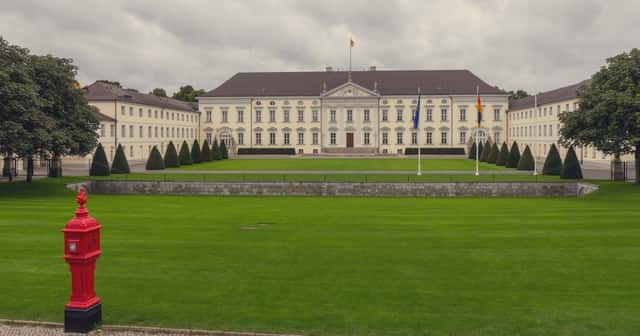
Chancellor Friedrich Merz has said Germany's next head of state must be a woman. Speaking on Monday at a closed conference of the Christian Democratic Union's district chairs in Berlin, he told them, according to participants quoted by the dpa news agency: "I will propose a joint candidate to the party, a candidate of the political center. I have made up my mind that it must be a woman."
If the Federal Convention follows on January 30, Germany would have its first female federal president. All twelve presidents since 1949 have been men, dpa noted. The incumbent, Frank-Walter Steinmeier, cannot run again after two terms.
Merz's statement settles one question and leaves the main one open: which woman, and who gets to pick her. The CSU, the CDU's Bavarian sister party, has spent months promoting Ilse Aigner, the president of the Bavarian state parliament. Leading Social Democrats and Greens have praised her. Merz says the right to propose lies with the CDU as the largest group in the convention. This article sets out what Merz said, the candidates named so far, how the vote works and where each party stands. Quotations from German-language sources are 567politics translations.
What Merz said, and what he did not
The dpa report, carried by RPR1 and other outlets, is based on participants' accounts of the closed meeting. It quotes Merz as saying he would propose "a joint candidate" and that "it must be a woman." He did not name anyone.
Merz had hinted at the idea before. In August 2025 he said: "I can very well imagine that in 2027 we will elect a woman as federal president for the first time in the history of the Federal Republic of Germany. That would be good." He then declined to commit for months, dpa noted.
According to dpa, a preliminary decision could come when the CDU's leadership bodies meet next Monday. Before that, Merz plans talks with the CDU's state chairs and with the CSU. The goal is a joint proposal from the two Union parties that is also agreed with the SPD, the CDU's partner in the federal coalition, which the Union needs for a majority. Merz also wants to involve the Greens in the search, dpa reported.
CDU general secretary Franziska Hoppermann told the broadcaster RTL/ntv that the candidate would come "from the ranks of the Union" and would be agreed in party bodies early next week, Merkur reported. The CSU is part of "the Union," so that wording does not exclude Aigner.
The women named so far
dpa and Merkur list the same group of possible candidates:
| Name | Party | Current or former post |
|---|---|---|
| Ilse Aigner | CSU | President of the Bavarian state parliament |
| Julia Klöckner | CDU | President of the Bundestag |
| Karin Prien | CDU | Federal education minister |
| Annegret Kramp-Karrenbauer | CDU | Former CDU leader and defense minister |
| Ines Claus | CDU | CDU group leader in the Hesse state parliament |
Julia Klöckner would also chair the Federal Convention itself in her role as Bundestag president, Tagesspiegel reported.
Several men had been mentioned earlier, according to dpa: Hesse's minister-president Boris Rhein, Federal Constitutional Court president Stephan Harbarth and former constitutional judge Udo Di Fabio. dpa wrote that they were now unlikely to have a chance.
The case for Aigner, and the CDU's reservations
Markus Söder, the CSU leader and Bavarian minister-president, first floated Aigner in April. At the CSU party congress in Munich on October 23 he backed her again. "That would be a great thing," he said, according to ZDFheute, while acknowledging that the decision would be "made elsewhere." Delegates applauded, and Aigner stood and waved from the front row. Söder said he would say it again on the Saturday, when Merz was due to speak at the congress as a guest. Merz greeted Aigner by name at the start of his own speech and drew cheers, Der Spiegel reported.
Some CDU district chairs voiced support for her around Monday's conference, dpa reported. Dresden's CDU chair, Ingo Flemming, said: "I would support that if that were the proposal." Bastian Ernst, a member of the Bundestag and district chair in Oldenburg-Land, said before the conference that Aigner would be "in every respect a very suitable federal president." Christian Carmienke of Lüchow-Dannenberg said: "One should have taken up this proposal early and pushed it together, instead of letting a long debate develop."
Others in the CDU are irritated by the pressure from Munich. Merkur, citing Table.Briefings, quoted an unnamed member of the CDU presidium: "Anyone who knows the relationship between the CDU and CSU knows that such insistent pressure from Munich only does harm." Oliver Lembcke, a political scientist in Bochum, told AFP that by presenting Aigner, Söder had narrowed Merz's room to maneuver, and that the longer Merz waited, the harder it would be to put forward an alternative without damaging the Union.
Where the SPD and Greens stand
The SPD and the Greens have called for a woman for weeks. Dirk Wiese, the SPD's parliamentary whip in the Bundestag, told the Kölner Stadt-Anzeiger in October, as quoted by Der Spiegel: "For me it is clear that the highest office in the state should be taken by a woman." He said the office needed integrity, judgment, international standing and diplomatic skill, and added: "I do not see why only men should bring these qualities. The time for a female federal president is long overdue."
SPD politician Ralf Stegner told the Rheinische Post that Aigner "would certainly be a respectable candidate" to become the first female head of state in postwar German history. Britta Haßelmann, co-leader of the Green group in the Bundestag, told the Kölner Stadt-Anzeiger: "Of course a woman can and should finally take on the highest office in the state. The time is right for a woman."
The AfD's position
The Alternative for Germany has not named a candidate. The party wants the president elected directly by the people. In March, party and parliamentary group leader Alice Weidel told Tagesspiegel: "We will surely again think about a suitable candidate who can bring the country together instead of dividing it." She said the president must be "a person of respect who stands above all parties and camps and is respected across the nation, and not a party politician in need of a post who misuses the highest office of state to keep doing party politics." The AfD has not said whether it would field a woman.
In the 2022 convention the AfD had 151 of 1,472 delegates, Tagesspiegel noted.
How the Federal Convention works
The Federal Convention meets only to elect the president. Under Article 54 of the Basic Law it consists of all members of the Bundestag plus an equal number of delegates elected by the 16 state parliaments. In 2027 that means 1,260 members, so an absolute majority is 631 votes. A candidate needs an absolute majority in the first or second ballot; in a third ballot, a plurality is enough.
State delegates are chosen in proportion to party strength in each state parliament, so the final numbers are not fixed until those votes take place. The election-law site wahlrecht.de has published a projection based on current seat counts, including the results of the September state elections in Saxony-Anhalt, Berlin and Mecklenburg-Western Pomerania.
| Party | Bundestag members | Projected total |
|---|---|---|
| CDU/CSU | 208 | 431–432 |
| AfD | 150 | 260–262 |
| SPD | 120 | 251–253 |
| Greens | 85 | 193–197 |
| Left | 64 | 78–80 |
| FDP | – | 11 |
| BSW | – | 7 |
| Others | 3 | 24 |
On these figures, CDU/CSU and SPD delegates together would number 682 to 685, a margin of about 50 over the 631 needed. That matches dpa's estimate. Ties, joint lists and absences in state parliaments can still shift individual seats, wahlrecht.de notes. On the projection, the AfD would be the second-largest group, ahead of the SPD.
A coalition majority means the Union and SPD can elect their candidate without other parties' votes, provided their delegates vote as expected. A candidate also backed by the Greens would have a much wider margin.
Nine women ran before
Women have stood for the office before, but always as candidates of parties without a majority in the convention. Merkur lists nine:
- Annemarie Renger (SPD) lost to Karl Carstens (CDU)
- Luise Rinser (Greens) lost to Richard von Weizsäcker (CDU)
- Hildegard Hamm-Brücher (FDP) lost to Roman Herzog (CDU)
- Dagmar Schipanski (CDU) and Uta Ranke-Heinemann (independent, for the PDS) lost to Johannes Rau (SPD)
- Gesine Schwan (SPD) lost to Horst Köhler (CDU)
- Gesine Schwan (SPD) lost to Horst Köhler again
- Luc Jochimsen (independent, for the Left) lost to Christian Wulff (CDU)
- Beate Klarsfeld (independent, for the Left) lost to Joachim Gauck
- Stefanie Gebauer (Free Voters) lost to Frank-Walter Steinmeier (SPD)
Source: Merkur
Every winner in those contests was a man backed by the convention's majority, from Carstens in 1979 to Christian Wulff in 2010 and Steinmeier in 2022. Germany has had a woman at the head of government: Angela Merkel served as chancellor from 2005 to 2021.
Why the office matters
The federal president's powers are mostly formal: signing laws, appointing the chancellor and ministers after a parliamentary vote, representing the country abroad. The president also has reserve powers, such as proposing a chancellor candidate to the Bundestag and deciding whether to dissolve it after a failed confidence vote.
Political scientist Karl-Rudolf Korte told AFP, as quoted by Merkur, that the next president may matter more than the title suggests. With more parties in parliaments and firewalls against the AfD, he said, deadlock in forming governments could become more frequent, giving the head of state not only the power to frame public debate but also "a decisive reserve power in times of crisis."
The timetable
The CDU leadership is expected to discuss a name at its meeting on Monday, November 9, according to dpa's reporting that a preliminary decision could come at "next week Monday's" session. Any Union candidate then needs SPD agreement. The convention meets on Saturday, January 30, 2027, in the Bundestag building, with Klöckner presiding.
For background on Germany's parties and institutions, see our Germany country guide. Our methodology page explains how we attribute reporting from closed meetings.
Differing perspectives
Who should choose Germany's next federal president, and how?
Each position is summarized as its supporters make it, with equal weight and in alphabetical order. A summary is not an endorsement; the evidence for each is weighed in the story above.
Elect a figure above parties, ideally directly
Who holds it: AfD leader Alice Weidel and the AfD
The AfD argues the president should be chosen directly by the people rather than by the Federal Convention. Weidel says the office needs a respected figure standing above all parties and camps, not a party politician looking for a post who uses it to continue party politics. She says the AfD will consider its own candidate who can bring the country together instead of dividing it.
In their words: Tagesspiegel ↗
Ilse Aigner is the right candidate
Who holds it: CSU leader Markus Söder and the CSU
Söder has promoted Bavarian parliament president Ilse Aigner since April and told the CSU congress in October that her election would be a great thing, while acknowledging the decision is made elsewhere. The CSU argues she already has backing across party lines, including from Social Democrats and Greens, which supporters say meets the test of being acceptable beyond the governing camp.
In their words: ZDFheute ↗
It is time for a woman, chosen across parties
Who holds it: SPD whip Dirk Wiese, SPD politician Ralf Stegner and Green co-leader Britta Haßelmann
SPD and Green leaders argue the highest office in the state should finally go to a woman and that the time is long overdue. Wiese says the job requires integrity, judgment, international standing and diplomacy, and that nothing suggests only men bring those qualities. Stegner calls Aigner a respectable candidate, and Haßelmann says a woman can and should take the office.
In their words: Der Spiegel ↗
The CDU should name a centrist woman
Who holds it: Chancellor Friedrich Merz (CDU) and the CDU leadership
Merz says he will propose a joint candidate of the political center and that it must be a woman. He argues the CDU, as the largest group in the Federal Convention, has the first right to propose a name. He wants a joint Union proposal agreed with the SPD, which is needed for a majority, and aims to bring the Greens into the search as well.
In their words: RPR1 (dpa) ↗
READ BEYOND 567POLITICS
Alternate sources & perspectives
Independent coverage and primary evidence to help you compare arguments. A link is not an endorsement; perspective labels describe the linked material.
- primary evidence
Merz will eine Frau an der Staatsspitze ↗
RPR1 (dpa)
dpa report of Merz's remarks to CDU district chairs, the possible candidates and the timetable for a decision.
- independent analysis
Zusammensetzung der 18. Bundesversammlung (30. Januar 2027) ↗
wahlrecht.de
Projected seat distribution in the Federal Convention after the September 2026 state elections.
- independent analysis
Bundespräsidentin: Merz sucht Kandidatin – Zoff um Ilse Aigner ↗
Münchner Merkur
CDU-CSU tensions over Aigner, list of women who previously ran, and comments from political scientists.
- right argument
CSU-Parteitag: Söder wirbt für Aigner und Kampf gegen Extreme ↗
ZDFheute
Söder's case for Aigner at the CSU congress on Oct. 23.
- left argument
SPD und Grüne sehen Zeit reif für Bundespräsidentin ↗
Der Spiegel
SPD and Green leaders call for a woman and praise Aigner.
- other perspective
Weidel deutet Aufstellung von eigenem AfD-Kandidaten an ↗
Tagesspiegel
AfD's call for direct election and its plans for a candidate; convention procedure.
Reviewed 2026-11-03. discover_politics_sources has returned only irrelevant results throughout this session, so sources were chosen by hand and opened in full on 2026-11-03. The Merz quote comes from participants of a closed meeting via dpa; no official CDU transcript was available.