After Reichstag flag swap, German coalition leaders float return of a protest-free zone
Union leaders want the Bonn-era Bannmeile back and the SPD's Wiese is open to talks. A Union whip doubts it would have stopped Sunday's flag action.
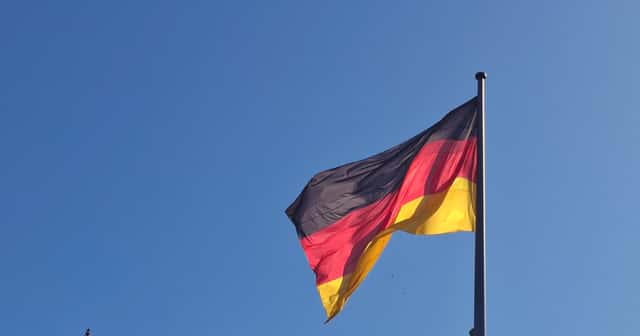
Two days after an activist pulled down the German flag in front of the Reichstag and raised a Palestinian one, leaders of Germany's governing parties are openly discussing a return of the Bannmeile. That is the protest-free zone that surrounded parliament in Bonn and that lawmakers abolished in 1999 when they moved to Berlin. The idea has backing from the two Union leaders in the Bundestag, and the SPD's chief whip says he is now willing to talk about it. But a senior Union whip doubts it would have stopped Sunday's stunt, and in past rounds of this debate lawmakers of every party defended an open parliament.
No draft law exists. The proposal would mean amending a 2008 federal law that already restricts outdoor assemblies near the Bundestag on sitting days. It would also have to fit a constitutional order in which the Federal Constitutional Court treats demonstrations as a core part of democracy.
What happened on Sunday#
At about 11:30 a.m. on Sunday, Nov. 8, a 22-year-old man climbed the flagpole on the Platz der Republik in front of the Reichstag building, according to a Berlin police statement and reporting by tagesschau. He took down the black, red and gold "Flagge der Einheit," threw it to the ground and hoisted a Palestinian flag. Two men aged 20 and 32 stood at the foot of the pole and supported him, police said. According to ZDF, they also filmed the action, and all three have German citizenship.
Secured by a climbing harness, the man stayed at the top for about an hour and climbed down on his own around 12:30 p.m. Police, helped by the fire brigade, removed the Palestinian flag. Because the pole's hoisting system was damaged, the unity flag could not immediately be raised again, police said.
The climber and the 20-year-old were briefly taken into custody. The younger supporter was released and ordered to leave the area, as was the 32-year-old. The police state security unit is investigating on suspicion of denigrating the state and its symbols, damage to public property, trespass and a breach of Berlin's assembly law. Legal Tribune Online noted that under section 90a(2) of the Criminal Code, even removing a publicly displayed federal flag can be a crime. No charges have been announced, and the suspects are presumed innocent.
A group called "Peacefully Against Genocide" claimed responsibility on Sunday. In an online statement, it said the action was about "civil society solidarity with the people in Palestine," tagesschau reported.
The flag itself carries weight. It was raised on Oct. 3, 1990, the day German reunification took effect, and at six by ten meters it is the largest official flag of the Federal Republic. Its pole is 28.5 meters high, according to tagesschau.
Who wants a Bannmeile back#
The push began with Thorsten Frei, the CDU politician who leads the Union group in the Bundestag. "With a view to ever more aggressive forms of protest, the question arises whether the existing protection is still sufficient," Frei told the Rheinische Post, in remarks translated from German. "Wouldn't it be time, given this escalation, to think about reintroducing the Bannmeile?"
Frei said protest must remain possible within sight of its political targets. "But the state may draw clear lines where targeted disruption and intimidation impair the work of parliament and government," he said. He called the removal of the unity flag a "denigration of our state." It was one of many incidents, he said, in which activists and violent disrupters abuse the right to demonstrate.
On Tuesday, Alexander Hoffmann, who leads the CSU members of the Bundestag, went further. "It was a mistake to abolish the Bannmeile around the government quarter," he said in Berlin, according to n-tv. "We must think about how we can better protect our national symbols in the government quarter." He added: "Berlin is increasingly becoming a biotope for haters of Germany and Israel."
Günter Krings, a deputy leader of the Union group, backed stricter rules. "If we want to protect our representative democracy effectively, we need stricter rules and an expansion of the protected areas," he told Bild. Demonstrations must still be possible within sight of their targets, he said, but the state must step in when protests disrupt parliament and government. Krings also argued this month for making rioters jointly liable for damage.
The SPD is open to talks#
The Social Democrats have long opposed a Bannmeile. Dirk Wiese, the SPD group's chief whip, said that is no longer settled. "Until now we took the view that the German Bundestag needs no Bannmeile, because we want to be an approachable parliament," he told Bild. "In light of the events and the attempted storming by circles close to the AfD a few years ago, one can certainly talk about it again, I think."
Wiese also called for a thorough review of how the flag could be swapped and why police did not step in faster, according to an ad-hoc-news report of his comments to the Funke media group. He pointed to the split in responsibility. Berlin's state police handle the area outside the Bundestag's property, while the Bundestag police guard its buildings. He also cited a bill on the Bundestag police now under discussion. It would write stricter vetting of people with access to parliament into law and give the Bundestag police powers to defend against drones.
Doubts inside the Union#
Not everyone in the Union is convinced. Catarina Dos Santos-Wintz, a parliamentary manager of the CDU/CSU group, said a Bannmeile might not have prevented Sunday's incident at all, n-tv reported. Parliament had to strike a balance, she said. It should stay open, but precautions are needed so that such incidents are not repeated and lawmakers are never blocked from entering.
Her point goes to the facts of the case. The flagpole stands on the Platz der Republik, inside the existing pacified district, and the action took place on a Sunday. A ban on assemblies does not by itself stop one person from climbing a pole.
What the law says now#
Germany does not currently have a Bannmeile around the Bundestag in the old sense. Instead, the Act on Pacified Districts for Federal Constitutional Organs of 2008 creates "befriedete Bezirke" around the Bundestag, the Bundesrat and the Federal Constitutional Court. Outdoor assemblies there are banned in principle, LTO explained.
But section 3 of the act says such assemblies "are to be permitted" if they pose no risk of impairing the work of the Bundestag or blocking access to its buildings. The law presumes that is usually the case on days without sittings. Organizers should apply at least seven days ahead to the federal interior ministry, which decides in agreement with the president of the Bundestag, now Julia Klöckner. Taking part in an unapproved assembly can bring a fine of up to 20,000 euros, according to LTO. Section 5 states plainly that the act restricts the constitutional right of assembly in Article 8 of the Basic Law.
The Bonn-era Bannmeile was broader and stricter. According to the Rheinische Post, open-air assemblies and demonstrations were banned in a zone that covered almost the entire parliament and government quarter. Berlin police counted 6,501 demonstrations and assemblies in the city between Jan. 1 and Dec. 1 last year, most of them in the central Mitte district, the paper reported.
- Oct. 3, 1990Flagge der Einheit raised in front of the Reichstag as reunification takes effect
- Bannmeile law replaced by rules on pacified districts as parliament moves to Berlin
- Current Act on Pacified Districts for Federal Constitutional Organs
- Aug. 29, 2020Protesters against coronavirus measures storm the Reichstag steps
- Nov. 8, 2026Activist replaces the unity flag with a Palestinian flag
- Nov. 9-10, 2026Frei, Hoffmann and Krings float a Bannmeile; SPD's Wiese open to talks
Source: tagesschau, LTO, RND
The last time this came up#
The debate is not new. After protesters against coronavirus measures ran up the Reichstag steps in August 2020, Frei, then a deputy Union group leader, also called for tighter rules. At the time, most lawmakers pushed back, the RedaktionsNetzwerk Deutschland reported.
"It is part of the essence of our democracy that the Bundestag is an open and approachable parliament," the late SPD vice president of the Bundestag, Thomas Oppermann, told RND then. "Extending the Bannmeile would be the wrong signal." Britta Haßelmann of the Greens said parliament must stay close to citizens despite all needed security measures. Jan Korte of the Left party said: "Not higher fences, but more democracy must be the answer."
Legal scholar Tim Wihl made the constitutional case in a 2020 essay for LTO. He argued that under the court's 1985 Brokdorf ruling, approval of protests near parliament must be granted unless there is an immediate danger. Bannmeile rules are the exception in liberal democracies, he wrote. If demonstrators use force to enter the building, he argued, that is a police enforcement problem, not an emergency that calls for new legislation.
Reactions to the flag action itself#
Beyond the Bannmeile, the incident drew sharp words from the government. Klöckner said: "Our German Bundestag needs more protection!" She told Bild she would not accept "that something like this is even possible at the German Bundestag," and said the area around the building was also Berlin's responsibility, Welt reported.
Interior Minister Alexander Dobrindt of the CSU called it "an act of absolute disrespect and deliberate provocation." He said it was evidently "a planned action by left-wing troublemakers," according to Welt, and called for more protection for symbols of freedom and democracy. CSU general secretary Martin Huber told the Rheinische Post that the rule of law must act "with full severity" against such groups.
No statement from the AfD, the Greens or the Left on the Bannmeile proposal appeared in the sources 567 Politics reviewed on Tuesday. The positions of the coalition partners on security and civil liberties are set out in the profiles of the CDU, the CSU and the SPD.
Differing perspectives
Should Germany restore a Bannmeile, a protest-free zone, around the Bundestag?
Each position is summarized as its supporters make it, with equal weight and in alphabetical order. A summary is not an endorsement; the evidence for each is weighed in the story above.
Keep parliament open but better protected
Who holds it: CDU/CSU parliamentary manager Catarina Dos Santos-Wintz
A Bannmeile might not have prevented Sunday's incident at all, since a ban on assemblies does not by itself stop one person climbing a flagpole. Parliament needs a balance: it should remain open to citizens, while precautions are taken so that such incidents are not repeated. Above all, lawmakers must never be prevented from entering the Bundestag.
In their words: n-tv (quoting Dos Santos-Wintz) ↗
No new restrictions on protest near parliament
Who holds it: Legal scholar Tim Wihl, in a 2020 essay after the Reichstag steps incident
Under the Constitutional Court's Brokdorf ruling, protest near parliament must be allowed unless there is an immediate danger. Bannmeile rules are the exception in liberal democracies. The represented people may remind their representatives whom they serve, including right in front of the building. When demonstrators use force, that is a police enforcement problem, not an emergency requiring new legislation.
In their words: Legal Tribune Online (Tim Wihl) ↗
Reintroduce the Bannmeile
Who holds it: CDU/CSU group leader Thorsten Frei; CSU group leader Alexander Hoffmann; deputy group leader Günter Krings
Protests near parliament are becoming ever more aggressive, and existing protection may no longer be enough. Abolishing the Bannmeile around the government quarter was a mistake. Protest should still be possible within sight of its political targets, but the state may draw clear lines where targeted disruption and intimidation impair the work of parliament and government. Stricter rules and larger protected areas would better defend representative democracy and national symbols.
In their words: Rheinische Post (quoting Frei) ↗
Reopen the debate and strengthen Bundestag police powers
Who holds it: SPD chief whip Dirk Wiese
The SPD has held that the Bundestag needs no Bannmeile because it wants to be an approachable parliament. After the flag action and the attempted storming of the Reichstag steps in 2020, a Bannmeile can be discussed again. First there should be a thorough review of how the flag was swapped and why police did not intervene faster, alongside the pending bill giving the Bundestag police stricter vetting and drone-defense powers.
In their words: ad-hoc-news (quoting Wiese to Funke media group) ↗
Cite this article
567 Politics staff. “After Reichstag flag swap, German coalition leaders float return of a protest-free zone.” 567politics. Published 2026-11-10. https://567politics.com/news/germany-bannmeile-bundestag-reichstag-flag-palestinian-frei-hoffmann-wiese-november-2026
Wikipedia citation
{{cite news |title=After Reichstag flag swap, German coalition leaders float return of a protest-free zone |url=https://567politics.com/news/germany-bannmeile-bundestag-reichstag-flag-palestinian-frei-hoffmann-wiese-november-2026 |work=567politics |author=567 Politics staff |date=2026-11-10 |language=en}}CSL-JSON for reference managers
{
  "id": "https://567politics.com/news/germany-bannmeile-bundestag-reichstag-flag-palestinian-frei-hoffmann-wiese-november-2026",
  "type": "article-newspaper",
  "title": "After Reichstag flag swap, German coalition leaders float return of a protest-free zone",
  "URL": "https://567politics.com/news/germany-bannmeile-bundestag-reichstag-flag-palestinian-frei-hoffmann-wiese-november-2026",
  "container-title": "567politics",
  "language": "en",
  "author": [
    {
      "literal": "567 Politics staff"
    }
  ],
  "issued": {
    "date-parts": [
      [
        2026,
        11,
        10
      ]
    ]
  }
}Citations identify this article and its publication date. Assess the reporting and its linked sources before using it as evidence.
Read this article as Markdown or JSON. Cite the original page and retain its sources, dates and qualifications.
Embed this article summary
Paste this HTML into your page. The summary stays linked to the full story and updates with it. No account required.
<iframe src="https://567politics.com/embed/news/germany-bannmeile-bundestag-reichstag-flag-palestinian-frei-hoffmann-wiese-november-2026?theme=auto" title="After Reichstag flag swap, German coalition leaders float return of a protest-free zone by 567politics" width="100%" height="440" style="border:0;max-width:100%" loading="lazy"></iframe>
<p style="font-size:14px">After Reichstag flag swap, German coalition leaders float return of a protest-free zone by <a href="https://567politics.com/news/germany-bannmeile-bundestag-reichstag-flag-palestinian-frei-hoffmann-wiese-november-2026" rel="nofollow">567politics</a></p>
<script async src="https://567politics.com/embed.js"></script>
READ BEYOND 567POLITICS
Alternate sources & perspectives
Independent coverage and primary evidence to help you compare arguments. A link is not an endorsement; perspective labels describe the linked material.
- primary evidence
Flagge der deutschen Einheit zu Boden geworfen ↗
Polizei Berlin
Police account of the Nov. 8 incident, detentions and offenses under investigation.
- primary evidence
BefBezG 2008 § 3: Zulassung von Versammlungen ↗
Federal Ministry of Justice (gesetze-im-internet.de)
Current rule for approving assemblies near the Bundestag.
- independent analysis
Palästina-Flagge löst Strafermittlungen und Bannmeile-Debatte aus ↗
Legal Tribune Online
Legal explainer on § 90a StGB and the pacified-district rules.
- right argument
Palästinenser-Fahne vor Reichstag: Union regt Bannmeile für Bundestag an ↗
Rheinische Post
Frei's case for a Bannmeile and CSU general secretary Huber's reaction.
- independent analysis
CSU fordert Wiedereinführung der Bannmeile um den Bundestag ↗
n-tv
Hoffmann's call and Dos Santos-Wintz's skepticism.
- other perspective
Bundestag: Wiese offen für Bannmeile nach Palästina-Flagge ↗
ad-hoc-news
SPD whip's openness to talks and the pending Bundestag police bill.
- left argument
'Bannmeile': Stürmen nicht erlaubt, demonstrieren schon ↗
Legal Tribune Online (Tim Wihl, 2020)
Constitutional argument against tightening protest rules near parliament.
- independent analysis
Aktivisten hissen Palästinenser-Flagge vor dem Reichstag ↗
ZDFheute
Incident report with Klöckner and Dobrindt reactions and the group's claim.
Reviewed 2026-11-10. Sources opened in full on Nov. 10, 2026. Primary evidence is the Berlin police statement and the Act on Pacified Districts. Positions come from reports quoting CDU, CSU and SPD lawmakers directly; the civil-liberties argument comes from a 2020 legal essay, since no current statement from opponents of a Bannmeile was found. discover_politics_sources returned no relevant results, so the list was compiled from documents opened directly.