CDU's Krings calls for joint liability for riot damage after Frankfurt looting; Left and police union object
Krings wants rioters to pay jointly even when no one can show who did what. Critics cite existing civil law and the right to assemble; Dobrindt holds his line.
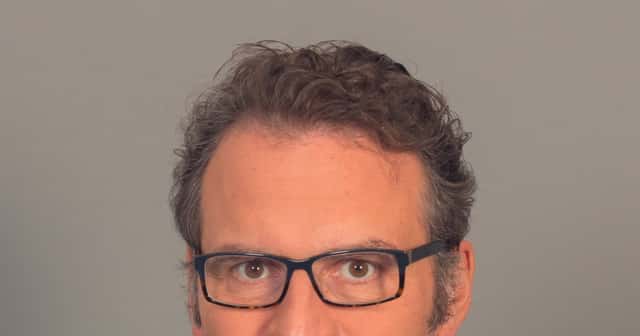
A senior conservative lawmaker in Germany has called for a new rule that would make people who take part in riots jointly liable for the damage, even when no one can show who broke what. Günter Krings, a deputy leader of the CDU/CSU group in the Bundestag, made the proposal after rioting and looting in Frankfurt and other cities on the night of October 31. That evening, youth protests that had been largely peaceful earlier in the day turned violent in some places.
Krings told the newspaper Welt, in remarks released on Tuesday ahead of its Wednesday edition, that the state could only respond "with maximum severity and consistency." Civil liability "definitely" belongs to that response, he said, according to the dts news agency report carried by Epoch Times. Opposition politicians and the head of a police union questioned whether such a rule is needed or workable. The proposal comes as the federal government's account of who was behind the violence remains in dispute. On Tuesday, Interior Minister Alexander Dobrindt defended his description of the rioters to a police union congress in Berlin.
Quotations from German-language sources in this article are 567politics translations.
What Krings proposes
Krings pointed to France as his model and quoted former French Prime Minister Gabriel Attal: what you break, you repair; what you dirty, you clean. New rules on shared liability are needed, he said, because it is hard to prove that a specific person caused a specific piece of damage during a riot. "Whoever takes part in rioting approves of it and must then answer for the resulting damage as a joint debtor," he said, as reported by dts.
Krings also said: "We must find a new way of dealing, everywhere in Europe, with these neglected groups that do not want to integrate anywhere in the EU." He added: "Apparently every perceived weakness of state order is misunderstood as an invitation to violence and looting."
Krings sided with Dobrindt's view that the violence came mainly from left-wing extremists and migrant milieus that had hijacked the protests of school and university students. "The security authorities still have to analyze the events in detail, but the first findings already paint a clear picture: in Frankfurt about 95 percent of those arrested came from immigrant families," he said. In the reports 567politics reviewed, neither the Frankfurt police nor the Hessian state government published a figure matching that claim. Others, he said, came "prepared, as is typical for the scene, with Molotov cocktails, weapons, homemade pyrotechnics and masks."
The phrase Krings borrowed comes from a January 2024 speech in which Attal, then prime minister, responded to the 2023 riots in France. According to Public Sénat, Attal used it to sum up a plan for "educational work" penalties for minors, a youth version of community service. "You break, you repair. You dirty, you clean," he said.
What German law already says
German civil law already covers some of this ground. Under Section 830 of the Civil Code, when several people cause damage through a wrongful act they commit together, each of them is responsible for it. "The same applies if it cannot be determined which of several participants caused the damage by his act," the section says. Instigators and accomplices are treated as joint perpetrators. Under Section 840, when several people are responsible side by side for damage from a wrongful act, they are liable as joint debtors. That means a victim can claim the full amount from any one of them.
The legal dispute is over who counts as a participant. Krings wants to make it easier to hold people liable during riots. His critics reject liability for anyone who cannot be shown to have caused harm. Article 8 of Germany's Basic Law protects the right to assemble peacefully.
The Left: a risk to the right to protest
Clara Bünger, the Left party's lead member on the Bundestag's interior committee, told Welt that no new law is needed. Anyone who demonstrably causes damage can already be held liable under Sections 823 and 830 of the Civil Code, she said, according to the dts report carried by Ad Hoc News.
What is being discussed goes much further, Bünger said: people would pay for damage they did not cause. She called that "highly problematic" and said it would deter people from demonstrating. People who exercise their basic right to freedom of assembly should not risk financial ruin for the conduct of complete strangers, she said. A blanket liability of demonstrators, in her view, would not be compatible with Article 8.
Konstantin von Notz, deputy leader of the Greens' parliamentary group, focused his criticism on Dobrindt. Debates of this kind about division would not raise Germany's internal security "one iota," he told Welt, according to dts. Violent crimes must be pursued no matter who commits them, he said.
Police union: an idea with legal hurdles
Heiko Teggatz, head of the German Police Union (DPolG), said the basic idea of stronger liability was understandable. But he doubted that the French model could be carried over to Germany one-to-one, because the two countries have different legal systems, according to the dts report as published by the Berliner Sonntagsblatt. In Germany, damage claims are usually pursued through civil law, he said, so a comparable model would face "considerable legal challenges." The central question would be what extra benefit a new model would bring, Teggatz said. He said it would make more sense to apply and tighten existing tools, speed up criminal proceedings and hold violent offenders to account faster.
Teggatz backed Dobrindt's assessment of the situation. Focusing on known groups of offenders is not blanket suspicion of whole groups but "situation-based police work," he said.
The criminal cases in Frankfurt
The criminal investigation is moving on its own track. Frankfurt prosecutors now know the names of 54 suspects in connection with the rioting, hessenschau reported on Tuesday. An 18-year-old is in pretrial detention, accused of stealing a weapon from a gun shop. Prosecutors are investigating offenses including breach of the peace, dangerous bodily harm, burglary and attacks on police officers. They are working with a special police commission. Hesse's justice minister, Christian Heinz (CDU), said many offenders had already been identified and "must expect consequences."
Matthias Jahn, a criminal law professor at Goethe University Frankfurt, told hessenschau that the cases would not bring "the draconian sentences that are being demanded in some quarters." Aggravated breach of the peace carries up to ten years in prison, he said, but prosecutors must prove that violence was committed from within a crowd and that each defendant took part in it. Thefts and property damage seen in social media videos would be easier to prove, he said, and could be handled in fast-track proceedings. For aggravated breach of the peace, "that will be a rocky road."
At a press conference on Sunday, police and the Hessian interior ministry reported 54 arrests, 100 injured officers and five looted shops, tagesschau reported. Police said the later rioting and looting were mainly the work of young men with a migration background, from groups already known to them, and that no political motive was apparent. Those arrested were aged 13 to 29. According to state Interior Minister Roman Poseck (CDU), most hold German citizenship.
Dobrindt holds his line
Dobrindt first said after the riots that "violent left-wing groups and troublemakers from the migrant milieu" had hijacked the peaceful demonstrations. He later stopped using the word "milieu," ZDFheute reported. Speaking at the federal congress of the GdP police union in Berlin on Tuesday, he rejected the criticism. "They are troublemakers, and one can then discuss how to describe them further," he said, according to tagesschau. "Are they troublemakers from the left, from the right, Islamist troublemakers, troublemakers with a migrant background." He also rejected claims that police violence had contributed to the escalation.
The criticism has come from inside the government as well as from the opposition. Defense Minister Boris Pistorius (SPD) asked on ZDF: "What are migrant groups? Are they people who live in Germany in the third generation and are German citizens?" Greens parliamentary leader Britta Haßelmann said it was wrong to mark people with a migration background, nearly a third of the population, as a problem. CDU lawmaker Norbert Röttgen said many of the rioters were "either foreigners or Germans of foreign descent," but warned that "there is not one single milieu of migrants in Germany."
Sonja Eichwede, a deputy leader of the SPD's parliamentary group, told Welt that the causes of violence, not the background of offenders, should be at the center of the debate, according to dts via Ad Hoc News. "We must act hard against violence, and also fight the causes of violence," she said. The state must respond "with the full severity of the law," she said, adding: "No matter what background the perpetrators have, whoever breaks the law has to bear the consequences."
The GdP stood behind Dobrindt. Andreas Roßkopf, who heads the union's federal police branch, said officers' reports "confirm exactly these groups of offenders," ZDFheute reported. Gökay Sofuoglu, chairman of the Turkish Community in Germany, accused Dobrindt and the Union of looking for "scapegoats" to stigmatize demonstrations.
Chancellor Friedrich Merz has called for tough action against the rioters while showing understanding for the demands of the young protesters, tagesschau reported. 567politics covered the protests themselves, in Germany, France and Portugal, in an earlier report.
Where the proposal stands
Krings's idea is a proposal from one senior lawmaker, not a government bill. 567politics found no public statement from the federal justice ministry or the coalition leadership on it. Dobrindt told Bild that further announced demonstrations would again be met with a "comparably massive police presence," according to ZDFheute. Prosecutors in Frankfurt say they are treating the cases as a priority.
How we reported this
567politics read the dts agency reports of Krings's, Bünger's, von Notz's, Teggatz's and Eichwede's remarks to Welt, as published by Epoch Times, Ad Hoc News and the Berliner Sonntagsblatt. The Welt article itself is behind a paywall. We also read the text of Sections 830 and 840 of the Civil Code, and reports by tagesschau, hessenschau and ZDFheute. We could not independently verify Krings's figure on the backgrounds of those arrested. See our methodology and our Germany elections page for background on the parties.
Differing perspectives
Should Germany make people who take part in riots jointly liable for damage they cannot be shown to have caused?
Each position is summarized as its supporters make it, with equal weight and in alphabetical order. A summary is not an endorsement; the evidence for each is weighed in the story above.
Apply current tools harder and speed up prosecutions
Who holds it: Heiko Teggatz, chairman of the German Police Union (DPolG)
Teggatz says the idea of stronger liability is understandable, but the French model cannot simply be copied because the two legal systems differ and German damage claims run through civil law. A new model would face considerable legal hurdles and its added benefit is unclear. Existing tools should be applied and tightened, and violent offenders held to account faster.
In their words: Berliner Sonntagsblatt (dts news agency) ↗
Create a new joint-liability rule for riot damage
Who holds it: Günter Krings, deputy leader of the CDU/CSU Bundestag group
Krings says the state must answer rioting and looting with maximum severity, and civil liability belongs to that. Because it is hard to prove who caused which damage in a riot, new shared-liability rules are needed. Anyone who joins in approves of the rioting and should answer for all the damage as a joint debtor. He cites Gabriel Attal: what you break, you repair.
In their words: Epoch Times (dts news agency) ↗
Punish offenders individually and address the causes of violence
Who holds it: Sonja Eichwede, deputy leader of the SPD Bundestag group
Eichwede says the state must act against the violence quickly and with the full severity of the law, whatever the offenders' background. Crimes must be solved and those responsible held to account. But peaceful protest must be kept separate from crime, and blanket groupings drag in people who had nothing to do with the offenders. The causes of violence also have to be fought.
In their words: Ad Hoc News (dts news agency) ↗
Rely on existing law and protect the right to assemble
Who holds it: Clara Bünger, Left party lead member on the Bundestag interior committee
Bünger says anyone who demonstrably causes damage can already be held liable under Sections 823 and 830 of the Civil Code, so no new law is needed. Making people pay for damage they did not cause would deter people from demonstrating and could ruin them for strangers' conduct. A blanket liability would conflict with Article 8 of the Basic Law.
In their words: Ad Hoc News (dts news agency) ↗
READ BEYOND 567POLITICS
Alternate sources & perspectives
Independent coverage and primary evidence to help you compare arguments. A link is not an endorsement; perspective labels describe the linked material.
- primary evidence
§ 830 BGB: Joint perpetrators and participants ↗
Federal Ministry of Justice (Gesetze im Internet)
Existing rule on liability when several people cause damage or the cause cannot be attributed.
- primary evidence
§ 840 BGB: Liability of several persons ↗
Federal Ministry of Justice (Gesetze im Internet)
Joint and several liability for wrongful acts.
- independent analysis
Polizei zieht Bilanz zu Krawallen in Frankfurt ↗
tagesschau / hessenschau
Police and interior ministry tally: 54 arrests, 100 injured officers, five looted shops.
- independent analysis
Strafrechtler zu Krawallen in Frankfurt ↗
hessenschau
Prosecutors' case status and law professor Matthias Jahn on the burden of proof.
- independent analysis
Dobrindt verteidigt "Chaoten"-Aussage ↗
tagesschau
Dobrindt at the GdP congress; reactions from Haßelmann, Pistorius and Röttgen.
- right argument
Krings will kollektive Mithaftung bei Krawallen ↗
Epoch Times (dts)
Full dts text of Krings's proposal and responses.
- left argument
Krawalle: Krings fordert Mithaftung für Schäden in Frankfurt ↗
Ad Hoc News (dts)
Includes Clara Bünger's objection based on existing law and Article 8.
- other perspective
Krings will kollektive Mithaftung bei Krawallen ↗
Berliner Sonntagsblatt (dts)
Police union DPolG chairman Heiko Teggatz on legal hurdles.
- other perspective
Krawalle: SPD fordert Ursachenforschung statt Täterherkunft ↗
Ad Hoc News (dts)
SPD deputy group leader Sonja Eichwede.
- independent analysis
Polizeigewerkschaft stellt sich hinter Dobrindt ↗
ZDFheute
GdP support for Dobrindt; Turkish Community criticism.
- other perspective
Les réponses d'Attal aux émeutes ↗
Public Sénat
Origin of the 'you break, you repair' phrase Krings quoted (January 2024).
Reviewed 2026-11-03. Krings's Welt interview is paywalled; his and critics' remarks were read via the dts agency copy on three outlets. Civil Code sections, tagesschau, hessenschau and ZDFheute reports read in full.