Germany's 'Demokratie leben!' cuts hit groups fighting extremism and anti-Muslim racism
About 150 national projects were invited to apply for 2027. A taz report says ministry leaders overrode reviewers; the ministry calls it a leaked paper.
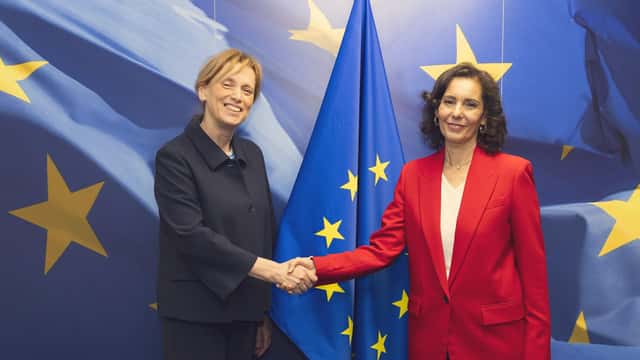
Germany's family ministry has told about 150 projects that they may apply for money from "Demokratie leben!" ("Live Democracy!") in 2027. Far more groups learned that they may not. The federal program pays for civil-society work against extremism, racism and antisemitism. Since the letters went out on Friday, November 13, several national groups have said they will lose most or all of their federal money. Among them are the umbrella body for counseling teams that advise towns on far-right activity and a group that says it is the only national charity focused on fighting anti-Muslim racism.
The cuts come as the program's budget falls. Under the 2027 federal budget, it drops by about 20 million euros, to about 167 million, MDR reported. The Bundestag's budget committee approved the figure in its final session, which ran overnight into Friday, November 13. Federal Family Minister Karin Prien of the Christian Democratic Union (CDU) has led a broader redesign of the program this year.
The fight is not only about money. A report in the Berlin daily taz says the ministry's leadership overrode outside reviewers on at least two projects. The ministry has not confirmed that account. A conservative think tank co-founded by a former CDU family minister also lost a separate federal grant in the same budget round. Its backers say that shows a tilt toward the left. Critics of the program cuts say the opposite.
Who lost money#
The Bundesverband Mobile Beratung (Federal Association of Mobile Counseling) said in a press release that it may apply for only one of three proposed projects. The ministry rejected the other two. The association said that means 60 percent less federal money from 2027. It coordinates about 50 local teams that advise schools, councils and residents on right-wing extremism, racism, antisemitism and conspiracy theories.
The local teams themselves are not affected, the association told Deutschlandfunk. But it said it could no longer publish national analyses of the far right or guides for schools and local offices. It received 760,000 euros from the program in 2026, according to official figures cited by MiGAZIN, a news site that covers migration.
CLAIM, an alliance against anti-Muslim racism, said in a statement on November 16 that it will get no money from the program from 2027. MiGAZIN put its 2026 federal support at about 625,000 euros. CLAIM said its national count of anti-Muslim incidents, which was already only partly funded, is now at risk. So are its yearly action weeks and its training for counselors and other groups.
Source: MiGAZIN, Bundesverband Mobile Beratung, Kristina Schröder on X
Show the numbers
| Group | 2026 | 2027 |
|---|---|---|
| Mobile Counseling association | 760,000 | 304,000 |
| CLAIM | 625,000 | 0 |
| R21 think tank (planned grant) | 500,000 | 0 |
Other groups said they were also turned down. CLAIM named Each One Teach One (EOTO), which works against anti-Black racism, the group Transaidency, and "Trialoge," a school dialog project run by the group Gesellschaft im Wandel. The taz reported on November 16 that projects of the Antidiscrimination Association and work against anti-queer hostility were also rejected.
Several projects against antisemitism also lost out, the taz said. They include work by the Research and Information Center on Antisemitism (RIAS), the counseling service Ofek, and a joint school project of the Fritz Bauer Forum and the New Israel Fund. The paper said the Central Council of Jews will take over coordination in that field, and one Anne Frank Center project will be funded while another was rejected. "We think it is wrong, and we think the timing is fatal," the Fritz Bauer Forum told the paper.
Shai Hoffmann, a Jewish social entrepreneur, started Trialoge. He visits schools with his Palestinian colleague Jouanna Hassoun to talk with students about the Middle East conflict. According to MiGAZIN, he says the project has reached more than 6,000 students. He told the taz that it got only "a standard rejection email." He said it looked as if the ministry had "decided politically and not by impact and need." A ministry spokesperson told the taz that fighting antisemitism matters to the minister. The spokesperson said many other parts of the program, such as local "Partnerships for Democracy," continue unchanged.
The ministry's case for a smaller, broader program#
The ministry has said little about single decisions. A spokesperson confirmed on Monday that invitations to apply had gone out but would not comment on cuts to individual groups, Deutschlandfunk reported. The application round is not yet complete.
The ministry's wider case is on the program's own website. It says the governing coalition of the CDU, its Bavarian sister party the CSU, and the Social Democrats (SPD) agreed to keep the program but make it "more targeted, more efficient and more transparent." It says the program will become "more pluralistic and broader" in order to reach the "silent middle" of society. "What has proven itself will continue," the page says. "What has not proven itself will be discontinued."
Under the new design, the focus is on democracy education, the prevention of extremism, and the online world. Sports clubs, youth fire brigades, companies, employers and unions are to be brought in. Projects may cover right-wing, left-wing and Islamist extremism, as well as antisemitism, racism and other forms of hostility toward groups. Two old strands, a "federal infrastructure" line for national groups and a line for "innovation projects," end on December 31, 2026. Groups in those strands had to apply again. Independent reviewers rated the bids, and selected projects were to be invited to apply from October.
The scale of the cut in national projects is large. The ministry told the taz in a November 13 report that it received about 1,200 expressions of interest and chose about 150 projects. About 40 percent will be run by groups that are new to the program, a spokesperson said. The paper said the program now funds about 600 projects in total. That includes about 350 local partnerships and 16 state democracy centers that keep their money. About 50 current projects will end, the taz said after correcting an earlier version of its story.
Source: taz, November 13, 2026
Show the numbers
| Stage | Projects |
|---|---|
| Expressions of interest | 1,200 |
| Invited to apply | 150 |
A ministry spokesperson told the taz that the high number of bids showed "the great potential and the diversity of ideas" among volunteers. The ministry said it had aimed for "a balanced mix of new and proven organizations" with a spread of themes and regions. "Unfortunately, not all project ideas can be funded because of limited budget funds," the spokesperson said.
The taz report on the ministry's leadership#
The sharpest charge comes from documents the taz says it has seen. The paper reported on November 13 that State Secretary Ingo Behnel had a project by the investigative newsroom Correctiv removed from the funding list after the fact. It said Behnel also chose to fund a "Democracy Campus" project of the CDU-linked Konrad Adenauer Foundation, even though outside reviewers gave it low priority.
The ministry has not confirmed that account. On Monday a spokesperson said the taz was reporting on "a leaked paper" and declined to comment on it. But he said it was true that the ministry's leadership "has a say at the end," the taz reported. Earlier, a spokesperson had said outside experts from research and practice rated the bids, with the final call made by the ministry.
Florence Wild, a member of Correctiv's management, told the paper that if it is confirmed that Behnel overrode the outside review, "we consider that a highly questionable procedure that requires a public explanation." She said Correctiv's project, "Brandherd Desinformation," had trained young people and fire brigade volunteers to deal with false information.
A conservative think tank's grant ends too#
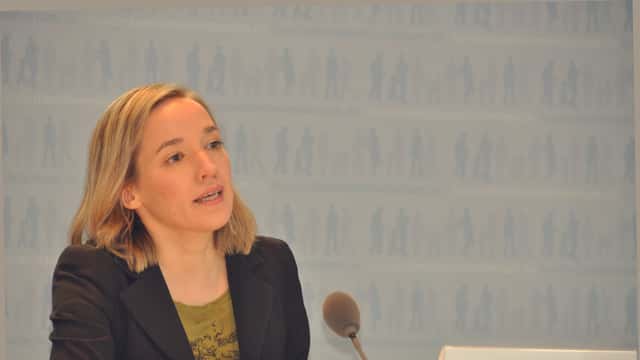
In a separate decision, the budget committee ended a federal grant for Republik21 (R21), a think tank that calls itself liberal-conservative. Kristina Schröder, a former CDU family minister and the think tank's deputy head, wrote on X on November 15 that R21 was "out of state funding again after one year." She said the think tank had always seen the 500,000 euros a year as a bridge, because "civil-society initiatives should also be carried by civil society." But she said the decision deepens "the already crushing dominance of left-wing organizations" among state-funded groups. She asked supporters to become paying members.
Wolfgang Kubicki, leader of the Free Democratic Party (FDP), which is no longer in the Bundestag, went further. "In Germany, NGOs are apparently only subsidized by the state if they are committed to a left-wing mindset or promote it," he wrote on X. He called that "undemocratic." Quoted by Bild, he said the federal government has no power to "do 'democracy promotion' with its wallet." Bild noted that federal data do not show how many funded groups lean left or right.
The R21 grant was not part of "Demokratie leben!". Deutschlandfunk described it as a separate decision on the federal budget. No source reviewed by 567 Politics links the two decisions.
Reactions from the groups and the opposition#
CLAIM's co-director Rima Hanano said in the group's statement: "Anyone who dismantles structures against anti-Muslim racism endangers the safety of Muslim people." She said the loss of funding "is not a coincidence, but the result of political decisions." CLAIM cited the federal government's own integration report, which it said showed hate-motivated violent crime up about 70 percent from 2021 to 2025. 567 Politics covered that report when it came out.
Green lawmaker Lamya Kaddor called the end of CLAIM's grant "a slap in the face for the work of Muslim civil society" in a post on X. She said the government must explain how it will fight hostility toward Islam.
Gökay Sofuoğlu, who chairs the Turkish Community in Germany, was quoted by MiGAZIN as saying that "instead of strengthening" migrant groups, "they are being denied the necessary funds." He said it was "a bitter disappointment" that the SPD backed the change. Timo Reinfrank of the Amadeu Antonio Foundation told the taz the changes "threaten to become a historic cut for democracy promotion," with eastern Germany hit hardest.
Grit Hanneforth, who runs the Mobile Counseling association, asked Prien to reverse the cuts. "Our work is not an abstract nice-to-have, but an important building block of democratic infrastructure," she said.
Where the money goes next#
Source: German Wikipedia, MiGAZIN, MDR
Show the numbers
| Year | Budget |
|---|---|
| 2015 | 40.5 |
| 2016 | 50 |
| 2017 | 104.5 |
| 2018 | 120.5 |
| 2019 | 115.5 |
| 2023 | 182 |
| 2026 | 187 |
| 2027 | 167 |
Some of the money is moving elsewhere. In the same budget round, the committee approved a new 10-million-euro program for civil society in eastern Germany. It will be run by Elisabeth Kaiser of the SPD, the federal commissioner for the eastern states. Kaiser told MDR the program would back "defenders of democracy in eastern Germany." She said civil society in the east is weaker than in the west because it gets less support from business and foundations. The rules for who can apply have not yet been set.
The timing matters most in Saxony-Anhalt. The taz reported that the Alternative for Germany (AfD) candidate Ulrich Siegmund wants to be elected state premier in mid-December, and that his party has said it would end democracy projects there. The fight over the state's next government has already split another party, as 567 Politics reported.
- Early 2026Prien announces a redesign of the program
- June 2026Calls for new national projects scheduled for release
- Late August 2026Expected deadline for expressions of interest
- November 12-13, 2026Budget committee approves about 167 million euros for 2027
- November 13, 2026Ministry sends invitations and rejections
- November 15-16, 2026R21, CLAIM and the Mobile Counseling association go public
- January 1, 2027New projects are due to start
Source: Demokratie leben!, taz, Bundesverband Mobile Beratung
The selected groups now have to file full applications. New projects are due to start on January 1, 2027. The national infrastructure and innovation projects end on December 31. The groups that lost out have asked members of the Bundestag to step in. The budget itself, though, has already passed the committee.
Differing perspectives
Should Germany's federal government cut its "Demokratie leben!" grants to national civil-society groups, or keep them at current levels?
Each position is summarized as its supporters make it, with equal weight and in alphabetical order. A summary is not an endorsement; the evidence for each is weighed in the story above.
Keep national work against anti-Muslim racism
Who holds it: CLAIM, an alliance against anti-Muslim racism, and co-director Rima Hanano
CLAIM says ending its federal funding weakens the only national charity focused on anti-Muslim racism, just as threats against Muslims are rising. It cites official figures showing hate-motivated violent crime up about 70 percent from 2021 to 2025 and anti-Muslim attacks roughly doubling since October 7, 2023. It argues the cut is a political decision, not an accident. CLAIM says national incident monitoring and support for those affected will break away, and it asks members of the Bundestag to step in and close the gaps.
In their words: CLAIM press release, November 16, 2026 ↗
No tax money for political NGOs
Who holds it: Wolfgang Kubicki, leader of the Free Democratic Party (FDP)
Kubicki argues that in Germany NGOs seem to get state money only if they hold or promote a left-wing mindset. He calls that undemocratic and says it reflects boundless arrogance toward the free formation of the public's political will. He holds that the federal government should not fund political groups at all, of any leaning. In his view the state should stick to its core tasks rather than use public money for what he calls democracy promotion.
In their words: Bild, quoting Wolfgang Kubicki ↗
Refocus the program on the broad middle
Who holds it: Federal Family Minister Karin Prien (CDU) and her ministry, under the CDU/CSU-SPD coalition agreement
The ministry says the coalition kept the program but agreed to make it more targeted, efficient and transparent. After a review, proven work continues and work that has not proven itself ends. It argues a broader, more pluralistic program can reach the silent middle of society through schools, sports clubs, youth fire brigades, companies, employers and unions. It wants more focus on democracy education, the prevention of all forms of "extremism" and online radicalization. It says independent experts rated the bids and that limited funds mean not every idea can be paid for.
In their words: Bundesprogramm Demokratie leben! (Federal Family Ministry) ↗
Reverse the cuts to the national counseling network
Who holds it: Bundesverband Mobile Beratung, the umbrella body for about 50 local mobile counseling teams, led by Grit Hanneforth
The association says losing 60 percent of its federal money from 2027 comes at the worst possible time. It argues that strong umbrella groups are needed now to pool knowledge about "right-wing extremism" and share it. Without the money, it says, it could only coordinate the local teams. National analyses of the "extreme right" and practical guides for schools, local offices and civil society would end. It calls its work an important building block of democratic infrastructure, not an optional extra, and asks Minister Prien to reverse the decision.
In their words: Bundesverband Mobile Beratung press release ↗
State funding is tilted toward the left
Who holds it: Kristina Schröder (CDU), former federal family minister and deputy head of the think tank Republik21
Schröder says the budget committee's decision to end Republik21's planned 500,000-euro yearly grant after one year deepens what she calls the crushing dominance of left-wing groups among state-funded NGOs. She says the think tank always saw the grant only as a bridge, because civil-society initiatives should be carried by civil society. She calls the decision politically bitter and telling, and asks supporters of center-right politics to back the think tank with money as members.
In their words: Kristina Schröder on X ↗
Cite this article
567 Politics staff. “Germany's 'Demokratie leben!' cuts hit groups fighting extremism and anti-Muslim racism.” 567politics. Published 2026-11-17. https://567politics.com/news/germany-demokratie-leben-cuts-mobile-beratung-claim-r21-behnel-correctiv-prien-november-2026
Wikipedia citation
{{cite news |title=Germany's 'Demokratie leben!' cuts hit groups fighting extremism and anti-Muslim racism |url=https://567politics.com/news/germany-demokratie-leben-cuts-mobile-beratung-claim-r21-behnel-correctiv-prien-november-2026 |work=567politics |author=567 Politics staff |date=2026-11-17 |language=en}}CSL-JSON for reference managers
{
  "id": "https://567politics.com/news/germany-demokratie-leben-cuts-mobile-beratung-claim-r21-behnel-correctiv-prien-november-2026",
  "type": "article-newspaper",
  "title": "Germany's 'Demokratie leben!' cuts hit groups fighting extremism and anti-Muslim racism",
  "URL": "https://567politics.com/news/germany-demokratie-leben-cuts-mobile-beratung-claim-r21-behnel-correctiv-prien-november-2026",
  "container-title": "567politics",
  "language": "en",
  "author": [
    {
      "literal": "567 Politics staff"
    }
  ],
  "issued": {
    "date-parts": [
      [
        2026,
        11,
        17
      ]
    ]
  }
}Citations identify this article and its publication date. Assess the reporting and its linked sources before using it as evidence.
Read this article as Markdown or JSON. Cite the original page and retain its sources, dates and qualifications.
Embed this article summary
Paste this HTML into your page. The summary stays linked to the full story and updates with it. No account required.
<iframe src="https://567politics.com/embed/news/germany-demokratie-leben-cuts-mobile-beratung-claim-r21-behnel-correctiv-prien-november-2026?theme=auto" title="Germany's 'Demokratie leben!' cuts hit groups fighting extremism and anti-Muslim racism by 567politics" width="100%" height="440" style="border:0;max-width:100%" loading="lazy"></iframe>
<p style="font-size:14px">Germany's 'Demokratie leben!' cuts hit groups fighting extremism and anti-Muslim racism by <a href="https://567politics.com/news/germany-demokratie-leben-cuts-mobile-beratung-claim-r21-behnel-correctiv-prien-november-2026" rel="nofollow">567politics</a></p>
<script async src="https://567politics.com/embed.js"></script>
READ BEYOND 567POLITICS
Alternate sources & perspectives
Independent coverage and primary evidence to help you compare arguments. A link is not an endorsement; perspective labels describe the linked material.
- primary evidence
Das Bundesprogramm "Demokratie leben!" wird weiterentwickelt (German) ↗
Federal Ministry for Education, Family, Senior Citizens, Women and Youth
The ministry's explanation of the redesign, its new priorities and the timetable for the 2027 funding round.
- other perspective
60 Prozent weniger Förderung: Struktur und Qualität in Gefahr (German) ↗
Bundesverband Mobile Beratung
The counseling association's statement on losing 60 percent of its federal money and what work would end.
- other perspective
Bundesregierung gefährdet den Schutz muslimischen Lebens – Kahlschlag bei "Demokratie leben!" (German) ↗
CLAIM
CLAIM's November 16 statement on losing all program funding, with the other groups it says were cut.
- independent analysis
CDU-Staatssekretär Behnel strich persönlich Projekt von der Förderliste (German) ↗
taz
Lists rejected projects, including antisemitism work, and the ministry's Monday response to the leaked-document report.
- independent analysis
Kürzungen im neuen Bundeshaushalt: Demokratie sparen (German) ↗
taz
The November 13 report with the ministry's figures on bids and selections and the documents on the Correctiv and Adenauer Foundation projects.
- independent analysis
Förder-Aus empört Nahost-Dialogprojekt, Initiative gegen Islamfeindlichkeit und konservative Denkfabrik (German) ↗
Deutschlandfunk
Public radio summary of reactions from Trialoge, CLAIM and the R21 think tank.
- independent analysis
Beratungsstelle: Bund streicht Gelder zur Rechtsextremismus-Prävention (German) ↗
Deutschlandfunk
Reports the ministry's confirmation that invitations went out and its refusal to discuss single cuts.
- independent analysis
Demokratie leben!: Kürzungen treffen CLAIM und Mobile Beratung (German) ↗
MiGAZIN
Gives 2026 funding levels for the affected groups and reactions from migrant organizations.
- independent analysis
Kaiser: Programm für "Demokratie-Verteidiger" wichtiges Signal (German) ↗
MDR
The new 10-million-euro program for eastern German civil society and the 167-million-euro program budget.
- right argument
Kristina Schröder on the end of R21's federal grant (German) ↗
Kristina Schröder on X
The former CDU family minister says the decision deepens left-wing dominance among state-funded groups.
- right argument
R21: Kein Steuergeld mehr für konservative Denkfabrik (German) ↗
Bild
Reports the R21 grant plan and quotes FDP leader Wolfgang Kubicki's case against state money for political NGOs.
- left argument
Lamya Kaddor on the end of CLAIM's funding (German) ↗
Lamya Kaddor on X
The Green lawmaker calls the decision a blow to Muslim civil society and asks how the government will respond.
Reviewed 2026-11-17. Compiled 2026-11-17 from pages opened and read in full. discover_politics_sources returned only unrelated pages (sports, software and adult sites), so every source was chosen by hand. German-language sources are labeled. The family ministry has not published a list of funded or rejected projects and declined to comment on individual decisions; figures for single organizations come from the groups themselves or from reporting. The taz account of State Secretary Ingo Behnel's role rests on documents the paper says it has seen; the ministry called them a leaked paper and did not confirm them. Affected civil-society groups are labeled other perspective rather than assigned a political lean. No statement from the SPD or the Union parliamentary groups on the individual cuts was found.