Germany awards first backup power plant contracts, with 10 of 11 going to RWE and LEAG
Eleven gas projects won 15-year backup contracts at an average well below the price cap. Critics say the rules shut out batteries and smaller bidders.
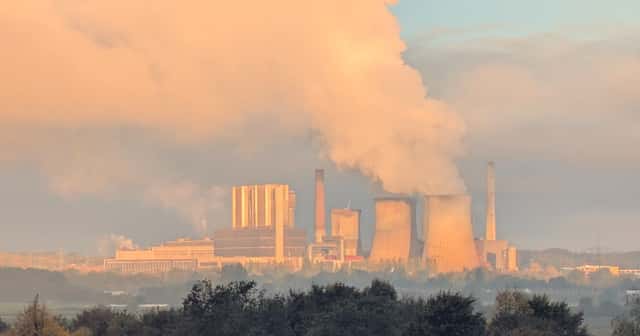
Germany's Federal Network Agency on Tuesday named the first power plants that will be paid to stand by when wind and solar output falls short. Eleven gas-fired projects with a combined 5,160 "reduced megawatts" (rMW) won 15-year capacity contracts in the first auction under the Electricity Supply Security and Capacity Act, known in German as the StromVKG. Ten of the eleven awards went to two companies, RWE and LEAG, both of which run large lignite (brown coal) operations.
The government called the result a success. Economy Minister Katherina Reiche said the round drew far more bids than it could fund and cleared well below the price ceiling. Environmental groups, the Greens and the battery-storage industry said the rules favored large fossil-fuel incumbents. Bavaria's economy minister welcomed one award in his state and said one was not enough.
This article sets out what the agency announced, who won, what it will cost electricity customers, and the arguments over the design of the next rounds. Quotations from German-language sources are 567politics translations.
What the Bundesnetzagentur announced
The agency, known as the Bundesnetzagentur or BNetzA, tendered 4,500 rMW of what the law calls long-term capacity. It received 41 bids offering about 11,958 rMW, so the round was oversubscribed by a factor of more than two and a half. Seven bids were excluded. The agency awarded 11 bids for a combined 5,160 rMW, more than the volume tendered.
The volume-weighted average award was €155,296 per rMW per year, against a ceiling of €244,000. On the agency's detailed results page, the lowest successful bid was €129,551 and the highest €189,970 per rMW per year.
"Reduced megawatts" is the auction's own unit. As RWE explained in its statement on the result, the law counts only 85 percent of a gas plant's installed capacity in the auction. That is why companies quote two different numbers for the same plants. LEAG, for example, said its seven winning units have an installed capacity of 3,680 megawatts but count as 2,998 rMW.
The awards count as formally notified on November 10, according to the agency. Winners must lodge a security deposit by December 8. Bidders can appeal to the Higher Regional Court in Düsseldorf within one month, but an appeal does not suspend the awards. The plants must be running by the end of 2031, LEAG said in its own release.
Klaus Müller, the agency's president, said in a statement quoted by WirtschaftsWoche that "the regional distribution of the awards will contribute to secure grid operation in future." He said the agency would prepare the second round quickly.
Where the plants will be built
The agency broke the awards down by state. North Rhine-Westphalia received the largest share and Brandenburg the most individual awards.
Source: Bundesnetzagentur
Show the numbers
| State | Awarded capacity |
|---|---|
| North Rhine-Westphalia | 2,118 |
| Brandenburg | 1,819 |
| Saxony | 910 |
| Bavaria | 269 |
| Baden-Württemberg | 45 |
The company announcements fill in the sites.
| Bidder | Sites | Awards | Capacity |
|---|---|---|---|
| RWE | Voerde, Weisweiler, Werne (North Rhine-Westphalia) | 3 | about 2,100 rMW |
| LEAG, incl. Gaskraftwerk Leipheim | Jänschwalde (Brandenburg), Boxberg (Saxony), Leipheim (Bavaria) | 7 | 2,998 rMW |
| Stadtwerke Karlsruhe | Karlsruhe (Baden-Württemberg) | 1 | about 45 rMW |
RWE said its three plants are hydrogen-capable combined-cycle units: about 730 rMW at Voerde and about 700 rMW each at Weisweiler and Werne. The company said it had already hired international consortia for permit planning, reserved manufacturing slots for core components and started permit procedures, and that it planned to begin building the first plant "in a few weeks." RWE chief executive Markus Krebber said: "With competitive bids we prevailed in the auction and can now build three new power plants that Germany urgently needs for security of supply."
LEAG said four new gas units of 560 megawatts each will go up at Jänschwalde and two at Boxberg, both existing lignite sites in Lusatia, under what it calls its FuelSwitch concept. The company said it will reuse grid connections, some buildings and some technical components, which it said cuts material use, cost and construction time. In Leipheim, where it has run a grid-stabilizing gas turbine plant since 2023, LEAG plans a new 320-megawatt hydrogen-ready plant. LEAG said it will invest about €1.5 billion to €2 billion in total. Chief executive Adi Roesch said winning seven units in one round was "a great success."
The Karlsruhe bidder, Stadtwerke Karlsruhe, is majority-owned by local government, WirtschaftsWoche reported, citing dpa.
Counts differ slightly between sources. The environmental group Deutsche Umwelthilfe (DUH) counted three RWE plants, six LEAG plants and one municipal plant. The agency, dpa and LEAG's own release list Leipheim as a separate award to Gaskraftwerk Leipheim, a LEAG subsidiary, which makes seven for LEAG in total.
What it will cost, and who pays
The contracts pay plants for being available, not only for the power they sell. According to tagesschau, the eleven awards will cost a little over €800 million a year, or about €12 billion over the 15-year term. The cost will be recovered through a new levy on electricity customers. How much it will add to bills has not been set, because further rounds are still to come.
The plants are not a reserve kept off the market. A summary of the law published by Verbandsbüro notes that winning plants sell power normally on the exchange or through contracts, but must deliver their committed capacity during price spikes.
Reiche, a member of Chancellor Friedrich Merz's Christian Democrats, said the low average price mattered for consumers. "Forty-one bids for almost twelve gigawatts show how much willingness to invest we mobilize with the right framework," she said in a ministry statement. "That is also important for electricity customers, because it lowers the cost of securing our power supply." She said the new plants would provide firm capacity from 2031 at the latest, and added: "With this we secure the further expansion of renewables and the coal phase-out."
Germany's legal deadline to stop burning coal for power is 2038. Plants funded under the act must be able to switch to hydrogen; tagesschau reported they must be climate-neutral from 2046. The European Commission approved the scheme under EU state-aid rules on September 2, and the law took effect on July 22.
Why only gas won
The first two rounds carry special technical conditions. Bidders must be able to feed in at least 80 percent of installed capacity for ten hours without interruption, and only generating plants may bid, according to the Verbandsbüro summary. Emissions must stay below 550 grams of CO2 per kilowatt-hour. A ten-hour run at near full output is beyond what most battery projects are built for.
Batteries did bid. WirtschaftsWoche, citing dpa, reported that storage bids were submitted but were not competitive on price. The DUH said no battery project won.
Later rounds are meant to be broader. The law sets further auction dates of May 18, 2027, December 1, 2027 and October 1, 2029, which the agency can move with the ministry's agreement. For the 2027 auctions, the act names energy-limited technologies such as batteries and pumped storage, as well as flexible loads. Tagesschau reported that a 2,000 MW round in May 2027 will drop the ten-hour requirement.
The volume of the second round is not yet fixed in public. DUH and BUND both describe the law as funding 4.5 gigawatts in each of the first two rounds. The Bavarian state government said 3.84 gigawatts would be awarded in round two, a figure equal to 4.5 gigawatts minus the amount by which round one was exceeded; its release gave a closing date that appears to contain a typing error. Citing dpa, WirtschaftsWoche reported that bids for round two are due December 29. The agency said it will publish the round-two notice on November 10.
The criticism
Environmental groups
The DUH said the result "confirms warnings" that fossil companies would benefit. "The federal government is making electricity customers pay for new fossil power plants and selling it as security of supply," said its federal managing director, Sascha Müller-Kraenner, in the group's press release. He said the conversion of LEAG's lignite sites showed "the business interests of fossil mega-corporations dominate." The DUH said converted plants may explain why bids came in lower than expected, and called for fair competition that includes batteries.
Friends of the Earth Germany (BUND) said the government had created a fossil subsidy program. Verena Graichen, its head of policy, said: "Instead of pumping billions into climate-damaging gas plants, we need full speed for renewables and the consistent expansion of climate-friendly flexibility in the power system." BUND asked for transparent proof that further rounds are needed and proposed a different tool: an obligation on electricity suppliers to secure their own backup capacity.
The Greens
Green politician Michael Kellner told Reuters, as quoted by tagesschau, that the result gives "enormous market power to the old coal companies RWE and LEAG," adding that "monopolies always become expensive" for businesses and consumers. In a June motion summarized by the Bundestag's press service, the Green parliamentary group said gas plants run on fossil fuel for the long term "without a credible and ambitious conversion perspective" were "no option." It asked for auction criteria that treat all technologies equally and for early clarity on how much the levy would cost households and businesses. Reiche's predecessor at the economy ministry was the Green Robert Habeck.
Storage industry
The battery-storage association BVES announced in June that it would complain to the European Commission about the law. "This is not about storage against gas power plants. It is about technology openness," its managing director, Urban Windelen, told a Bundestag hearing. He said the deciding question should be which technology can provide security of supply in a legally robust, future-proof and cost-efficient way, and that the act restricts that competition.
Bavaria
Bavaria's economy minister, Hubert Aiwanger of the Free Voters, governs alongside Minister-President Markus Söder's CSU. He welcomed the Leipheim award as "an important positive signal" but called it "a disappointment" that only one Bavarian project succeeded. "We need substantially more firm and dispatchable capacity locally," he said. His ministry said converted coal plants are cheaper than new gas plants but do not reach the roughly 60 percent efficiency of modern units, so they burn more gas for the same power. The ministry said the unsuccessful Bavarian projects will bid again in round two.
Aiwanger tied his demand to grid bottlenecks and periods of low wind and sun. The agency's statement says the regional spread of awards supports grid operation; Bavaria and Baden-Württemberg together received about 314 of the 5,160 rMW.
What the companies say about the criticism
LEAG's release argues the reuse of existing sites is a benefit to the system. It says the lower cost of its FuelSwitch projects is reflected in award values "well below" the ceiling, which it says benefits electricity customers in the long run. Its works council chair, Silke Rudolf, said new plants in Lusatia secure skilled jobs beyond the coal exit. RWE said its plants will be built to run on hydrogen and that it plans to invest about €9 billion in flexible generation, battery storage and hydrogen production by 2031.
Upcoming dates in the auction process
- November 10: the agency publishes the round-two notice and the round-one awards count as notified.
- December 8: deadline for winners' security deposits.
- December 29: bid deadline for round two, according to dpa.
- 2027: rounds that admit batteries, pumped storage and flexible demand.
- End of 2031: deadline for round-one plants to be running.
The levy's size and the effect on household bills remain open. So does whether any bidder appeals to the Düsseldorf court. For background on the parties in the Bundestag that wrote the law, see our Germany country guide. An earlier 567politics story covers another Reiche energy measure, the draft fuel price cap. Our methodology page explains how we source and attribute figures.
Differing perspectives
Should Germany keep funding new gas-fired backup plants through the StromVKG auctions as designed?
Each position is summarized as its supporters make it, with equal weight and in alphabetical order. A summary is not an endorsement; the evidence for each is weighed in the story above.
Build more capacity in southern Germany
Who holds it: Bavarian Economy Minister Hubert Aiwanger and the Bavarian state government
Bavaria welcomes the award for Leipheim but argues one southern project is not enough for a major industrial region. It says substantially more firm, dispatchable capacity is needed locally to cover periods of low wind and sun and grid bottlenecks. It argues converted coal plants are cheaper but less efficient than modern gas units, and says its unsuccessful projects are well advanced and should win in the second round.
In their words: Bavarian State Government ↗
Keep the auctions as designed
Who holds it: Economy Minister Katherina Reiche (CDU), the federal economy ministry and the Bundesnetzagentur
The government argues the first round shows the design works. Forty-one bids for almost twelve gigawatts produced real competition, and the average award came in far below the €244,000 ceiling, which it says lowers the cost of securing supply for electricity customers. It says plants that can run for long periods when wind and sun are weak are needed to make the coal exit and further renewable expansion safe, with firm capacity available by 2031.
In their words: Federal Ministry for Economic Affairs and Energy ↗
Open the auctions to every technology
Who holds it: The energy storage association BVES and its member companies
BVES argues security of supply should come from fair competition for the best solution, not from a political choice of one technology in advance. It represents batteries, pumped storage and hydrogen storage and says the question is not storage against gas but which option can secure supply in a legally robust, future-proof and cost-efficient way. It says the law restricts that competition and has announced a complaint to the European Commission.
In their words: Bundesverband Energiespeicher Systeme (BVES) ↗
Rewrite the rules for equal treatment and hydrogen
Who holds it: The Green parliamentary group in the Bundestag
The Greens argue that gas plants running on fossil fuel for the long term without a credible conversion path are not compatible with climate neutrality by 2045. Their motion asks for auction criteria that treat all technologies equally so every source of capacity can be used, for plants with a short and secure path to hydrogen, and for early clarity on what the levy will cost households and businesses. Party figures also warn of market power for RWE and LEAG.
In their words: Deutscher Bundestag, heute im bundestag ↗
Stop subsidizing fossil gas plants
Who holds it: Deutsche Umwelthilfe (DUH) and other environmental groups including BUND
The DUH argues customers are being made to pay for new fossil plants under the label of security of supply. It says the special criteria in the first two rounds effectively excluded batteries, that awards concentrated on two large incumbents, and that LEAG is having the conversion of old lignite plants subsidized. It calls for a new direction toward fair competition that includes storage and other sustainable options, and warns the law could lock in fossil structures.
In their words: Deutsche Umwelthilfe ↗
READ BEYOND 567POLITICS
Alternate sources & perspectives
Independent coverage and primary evidence to help you compare arguments. A link is not an endorsement; perspective labels describe the linked material.
- primary evidence
Bundesnetzagentur erteilt Zuschläge in erster Ausschreibung nach dem StromVKG ↗
Bundesnetzagentur
Official results: 41 bids, 11 awards for about 5,160 rMW, average €155,296 per rMW per year, breakdown by state.
- primary evidence
Ergebnisse der Ausschreibung Langzeitkapazitäten (details) ↗
Bundesnetzagentur
Lowest and highest award values, notification date, security deposit deadline and appeal route.
- primary evidence
Zitat Ministerin Reiche zu den Ergebnissen der Ausschreibungen nach dem StromVKG ↗
Federal Ministry for Economic Affairs and Energy
Economy Minister Katherina Reiche's statement calling the round a success.
- other perspective
RWE baut nach Auktionserfolg drei neue wasserstofffähige Kraftwerke in Deutschland ↗
RWE AG
Winning bidder's account of its Voerde, Weisweiler and Werne plants and construction plans.
- other perspective
LEAG erhält Zuschläge für sieben Zukunftskraftwerke in der Lausitz und in Bayern ↗
LEAG
Winning bidder's account of its FuelSwitch conversions at Jänschwalde and Boxberg and the Leipheim plant.
- independent analysis
Bundesnetzagentur fördert den Bau elf neuer Gaskraftwerke ↗
tagesschau (ARD)
Public-broadcaster report with cost estimates, levy, later rounds and Green criticism.
- independent analysis
RWE und LEAG: Bundesnetzagentur vergibt erste Zuschläge für neue Kraftwerke ↗
WirtschaftsWoche (dpa)
Wire report on award locations, battery bids, round-two deadline and official quotes.
- left argument
Fossile Großkonzerne RWE und LEAG als Gewinner ↗
Deutsche Umwelthilfe
Environmental group's criticism that the rules excluded batteries and favored large fossil incumbents.
- left argument
BUND fordert Kurswechsel nach erster Stromauktion ↗
Verbandsbüro
Summary of BUND's demand for changes and an obligation on suppliers to secure capacity, plus key rules of the law.
- other perspective
BVES kündigt EU-Beschwerde gegen StromVKG an ↗
Bundesverband Energiespeicher Systeme
Storage industry's case for technology-open auctions and its planned EU complaint (June 2026).
- right argument
Bundesnetzagentur gibt Ergebnisse der ersten Ausschreibungsrunde für Kraftwerke bekannt ↗
Bavarian State Government
Bavarian Economy Minister Aiwanger welcomes the Leipheim award and calls for more southern capacity.
- left argument
Grüne warnen vor konventionellen fossilen Strukturen ↗
Deutscher Bundestag (hib)
Summary of the Green group's June 2026 motion on technology-equal auctions and a hydrogen conversion path.
Reviewed 2026-11-03. discover_politics_sources returned only irrelevant results, so sources were chosen by hand and each was opened in full on 2026-11-03. Primary evidence comes from the Bundesnetzagentur, the economy ministry and the two main winning bidders. The 'right argument' label on Bavaria reflects the CSU/Free Voters state government's regional case, not a general right-wing position on the law; no right-of-center source arguing against the auction design was found.