German states move to renegotiate the Kita law over a federal funding cut, as Schwesig backs a revision
States want Friday's Bundesrat vote to send the Kita law to mediation, as federal Kita money would fall from about 2 billion euros a year to 993 million.
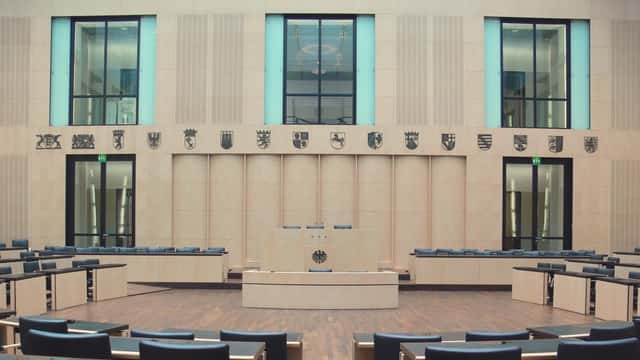
Germany's states are lining up to send Berlin's new law on daycare centers, known as Kitas, back for renegotiation. The Bundesrat, where the 16 state governments sit, votes on Friday, November 20, on the "Startchancen" law for child daycare. Its family and finance committees have recommended calling the mediation committee "with the aim of fundamentally revising the law." On Tuesday, November 17, Manuela Schwesig's new government in Mecklenburg-Vorpommern said it would vote for a revision.
The dispute is about money, not the goal. The law, passed by the Bundestag on November 12, requires tests of every child's language and development by age four, with targeted support afterward. The states said in October that they broadly back that aim. But federal money for Kita quality would fall from about 2 billion euros a year now to 993 million a year from 2030. The states say Berlin is handing them lasting duties while pulling back its share of the cost.
What the law requires#
The law's full name is the law to improve children's starting chances and to develop quality in daycare. According to the Bundesrat's summary, it requires that every child's development be assessed by age four at the latest. The checks cover language, motor skills and early math. Children then get learning built into daily Kita life and, where needed, targeted support. The federal government says the focus is on language, as the basis for learning and social life.
Kitas with many children in difficult circumstances are to get extra staff. At least 10 percent of Kitas in each state must benefit. They are to be chosen by criteria that include family poverty, the language spoken at home and children's language development.
The law also sets time budgets, according to the Bundestag's account as republished by the Lower Saxony early-childhood institute nifbe. Kitas get staff time of two hours per child for each assessment and at least 30 minutes per child per week to plan and support the follow-up. Children who do not attend a Kita are also to be assessed and supported, under state law. The Bundestag phased the duties in. Language checks become fully binding for all children in 2029. Tests of motor skills, number sense and emotional development follow in 2032.
The government's case rests on research about early gaps. In its explanatory notes, it says children's chances still depend on their social background and that most performance gaps open before school starts.
How the money changes#
The current federal program, known as the KiQuTG, pays the states 1.993 billion euros a year through a larger share of VAT revenue. It runs out in 2026. The new law replaces it with a falling path. The states would get 1.493 billion euros in each of 2027 and 2028, 1.243 billion in 2029 and 993 million a year from 2030 to 2034. That adds up to about 9.25 billion euros over eight years.
Source: Bundesrat, Drucksache 505/26 (Beschluss)
Show the numbers
| Year | Federal money in the law | States' demand (minimum) |
|---|---|---|
| 2026 | 1,993 | – |
| 2027 | 1,493 | 2,000 |
| 2028 | 1,493 | 2,000 |
| 2029 | 1,243 | 2,000 |
| 2030 | 993 | 2,000 |
| 2031 | 993 | 2,000 |
| 2032 | 993 | 2,000 |
| 2033 | 993 | 2,000 |
| 2034 | 993 | 2,000 |
The states set out their objection in their formal opinion of October 16. They wrote that the 2 billion euros now paid under the KiQuTG should be made permanent and adjusted over time. Shifting those costs to the states "is not affordable for their budgets," they wrote.
The draft law itself put the extra yearly cost for states and local governments at about 1.41 billion euros. The states said the real cost will be higher. They noted that the draft admits limits in its data, including on existing staff and population trends. Cutting federal money below 1 billion euros while raising standards "is not comprehensible," they wrote, especially as staff wages are expected to rise.
The federal government rejected those demands in its formal reply. It said that, if anything, the costs were overestimated, according to the Bundesrat's committee summary. The committees answered that this claim had not been backed by "a reliable cost calculation."
The states also cite a principle from the coalition agreement of the governing Christian Democrats and Social Democrats, known as Veranlassungskonnexität. In plain terms, whoever orders a new task should pay for it. The committees noted that the premiers and the chancellor had recently reaffirmed it.
Mecklenburg-Vorpommern's turn#
Schwesig spoke after the first meeting of her new state cabinet in Schwerin, dpa reported via t-online. It is good that the federal government wants uniform standards, she said. "But we clearly reject the plans to withdraw more and more from the funding." She said her state would vote for a revision in the Bundesrat.
Her government has named education as a priority for its new term. During the election campaign, Schwesig praised the state's free Kitas and promised smaller groups. The state also relies heavily on federal money for its Kitas, dpa noted.

The stance puts the Social Democratic premier at odds with the federal government led by Chancellor Friedrich Merz, whose cabinet includes her own party. The law comes from Education and Family Minister Karin Prien, a Christian Democrat. Schwesig was sworn in for a third term this month, as 567 Politics reported.
Other states had already signaled the same view. In the Bundestag debate, Saxony's culture minister Conrad Clemens, a Christian Democrat, spoke for the states. He warned that "it is probably the first time in human history that a young generation falls behind the generations before it" in its skills. That is why the law matters, he said, because Kitas must assess children and act on the results. But he called halving the federal money for quality "unacceptable" and said the states would call the mediation committee, according to the Bundestag's account.
The Bundestag debate#
The Bundestag passed the law with 457 votes in favor, 132 against and one abstention, according to abgeordnetenwatch. Christian Democrat Wilhelm Gebhard voted no against his group's line. The Left's Luigi Pantisano voted yes against his.
Source: abgeordnetenwatch.de
Show the numbers
| Vote | Members |
|---|---|
| Yes | 457 |
| No | 132 |
| Abstained | 1 |
| Did not vote | 40 |
Prien defended the law as a matter of fairness, tagesschau reported. "Educational chances in our country should not depend on which family or which place a child is born into," she said. She said the federal government was making unusually long-term financial commitments. Her parliamentary state secretary, Mareike Lotte Wulf, called the law a "game changer" for education.
Social Democrat Dagmar Schmidt said about 60,000 pupils leave school each year without a qualification. "Not the neighborhood or the parents' income should decide children's chances," she said. Katja Mast, a Social Democratic lawmaker and state secretary for labor, said in a statement after the vote that the law follows the earlier Startchancen program for schools. "Equal chances do not come from treating everyone the same," she said. "Children who need more support must also get more support." She added that the aim is not to stigmatize children but to encourage them.
Christian Democrat Michael Hose said that with the law, "Kitas finally become educational institutions." He told Welt that the law brings stability. Under the Greens' family minister Lisa Paus, he said, federal money usually came for only two years at a time, while the new law runs to 2034.
Jasmina Hostert, the Social Democrats' spokeswoman on education and family, told Welt the law strengthens early education and gives more help to Kitas in deprived areas. She said she would in principle welcome a compulsory final Kita year. "But that has high legal hurdles," she said, and it would first need enough Kita places, enough skilled staff and reliably high quality.
The opposition backed the aim but not the money. "The law is hopelessly underfunded," said Anja Reinalter of the Greens. "You want to have more and pay less? Every Kita child knows that does not work." Her group's resolution of November 2 calls for 3 billion euros a year from the federal government, with no end date, and a free, compulsory final Kita year. The resolution cites the PISA 2025 study, which it says shows the gap between pupils from poorer and richer families widening since 2015 while it shrinks on the OECD average.
Source: Bundesrat, Drucksache 505/26 (Beschluss), Greens' Bundestag group
Show the numbers
| Position | Millions of euros a year |
|---|---|
| Law passed by the Bundestag | 993 |
| States' demand (minimum) | 2,000 |
| Greens' demand | 3,000 |
Left group leader Heidi Reichinnek said the minister "is cutting the already ridiculously small federal money for Kita quality by half in the medium term." She told Welt that Kitas are "close to collapse." The federal government must finally pay a larger share of the Kita system, she said, with more money in this law and an extra program to build and renovate Kitas. In the Bundestag she pointed to the shortage of skilled staff and asked how new federal rules could be carried out under those conditions. Kitas cost the states about 50 billion euros a year, she said. Accusing the government of the wrong priorities, she added: "But children are not cars." Sebastian Maack of the Alternative for Germany said, "The law is good, but it is once again only a law for a minority." He called for "real freedom of choice" for parents who want to care for their children at home but cannot afford to.
Friday's vote and the mediation route#
Because education is a state matter, the law needs the Bundesrat's consent, ZDF noted. If the states agree on Friday, the law takes effect early next year, with its rules phased in. If they call the mediation committee, the joint body of both chambers would have to look for a compromise before the law could pass.
- Bundesrat opinion demands lasting, larger federal funding
- Greens' group calls for 3 billion euros a year
- Bundestag passes the law, 457 to 132
- Bundesrat summary shows its committees recommending mediation
- Mecklenburg-Vorpommern says it will vote for a revision
- Bundesrat votes
- The current federal Kita program, KiQuTG, runs out
- Language checks become binding for all children
- Other development checks become binding
Source: Bundesrat, nifbe, t-online (dpa)
The timing matters for the states' budgets, because the current federal money runs out in 2026 and the new payments are due to start in 2027.
Differing perspectives
Should the federal government keep paying about 2 billion euros a year for Kita quality, or is the falling path in the new law enough?
Each position is summarized as its supporters make it, with equal weight and in alphabetical order. A summary is not an endorsement; the evidence for each is weighed in the story above.
Kitas need a far larger federal share now
Who holds it: The Left
The Left says Kitas are close to collapse while the minister cuts federal money for early education. It wants the federal government to finally pay a larger share of the Kita system, with more money in this law and an extra investment program. It also wants to replace the ban on federal-state cooperation in education with a duty to cooperate.
In their words: Heidi Reichinnek to WELT, November 10, 2026 ↗
More support for the children who need it
Who holds it: Governing coalition (CDU/CSU and SPD)
Supporters say a child's background must not decide their future, and that equal chances do not come from treating everyone the same: children who need more support should get more support. Because PISA shows too many children struggling by the end of primary school, they say help must start in the Kita, without stigmatizing children. The federal government commits about 9.25 billion euros from 2027 to 2034.
In their words: Katja Mast (SPD), statement of November 13, 2026 ↗
Raise the money and make the last Kita year compulsory
Who holds it: Alliance 90/The Greens
The Greens back binding language and development tests from age four, followed by targeted support. They want reliable federal funding that matches need: 3 billion euros a year with no end date. They also call for a binding, fee-free final Kita year, citing PISA findings that the gap between poorer and richer pupils has grown since 2015.
In their words: Greens' Bundestag group resolution, November 2, 2026 ↗
Whoever sets the standard should pay for it
Who holds it: The states in the Bundesrat
The states support the aims but say they cannot take on lasting new duties while federal money falls below 1 billion euros a year. They ask that the current 2 billion euros be kept and adjusted over time. They argue the real costs will exceed the federal estimate and that cutting the money breaches the principle that whoever orders a task should fund it.
In their words: Bundesrat, Drucksache 505/26 (Beschluss), October 16, 2026 ↗
Cite this article
567 Politics staff. “German states move to renegotiate the Kita law over a federal funding cut, as Schwesig backs a revision.” 567politics. Published 2026-11-17. https://567politics.com/news/germany-kita-startchancen-law-bundesrat-mediation-federal-funding-cut-schwesig-november-2026
Wikipedia citation
{{cite news |title=German states move to renegotiate the Kita law over a federal funding cut, as Schwesig backs a revision |url=https://567politics.com/news/germany-kita-startchancen-law-bundesrat-mediation-federal-funding-cut-schwesig-november-2026 |work=567politics |author=567 Politics staff |date=2026-11-17 |language=en}}CSL-JSON for reference managers
{
  "id": "https://567politics.com/news/germany-kita-startchancen-law-bundesrat-mediation-federal-funding-cut-schwesig-november-2026",
  "type": "article-newspaper",
  "title": "German states move to renegotiate the Kita law over a federal funding cut, as Schwesig backs a revision",
  "URL": "https://567politics.com/news/germany-kita-startchancen-law-bundesrat-mediation-federal-funding-cut-schwesig-november-2026",
  "container-title": "567politics",
  "language": "en",
  "author": [
    {
      "literal": "567 Politics staff"
    }
  ],
  "issued": {
    "date-parts": [
      [
        2026,
        11,
        17
      ]
    ]
  }
}Citations identify this article and its publication date. Assess the reporting and its linked sources before using it as evidence.
Read this article as Markdown or JSON. Cite the original page and retain its sources, dates and qualifications.
Embed this article summary
Paste this HTML into your page. The summary stays linked to the full story and updates with it. No account required.
<iframe src="https://567politics.com/embed/news/germany-kita-startchancen-law-bundesrat-mediation-federal-funding-cut-schwesig-november-2026?theme=auto" title="German states move to renegotiate the Kita law over a federal funding cut, as Schwesig backs a revision by 567politics" width="100%" height="440" style="border:0;max-width:100%" loading="lazy"></iframe>
<p style="font-size:14px">German states move to renegotiate the Kita law over a federal funding cut, as Schwesig backs a revision by <a href="https://567politics.com/news/germany-kita-startchancen-law-bundesrat-mediation-federal-funding-cut-schwesig-november-2026" rel="nofollow">567politics</a></p>
<script async src="https://567politics.com/embed.js"></script>
READ BEYOND 567POLITICS
Alternate sources & perspectives
Independent coverage and primary evidence to help you compare arguments. A link is not an endorsement; perspective labels describe the linked material.
- primary evidence
Startchancen- und Qualitätsentwicklungsgesetz (TOP 60), Bundesrat Kompakt, 1070th session ↗
Bundesrat
Summary of the law and the committees' recommendation to call the mediation committee.
- primary evidence
Stellungnahme des Bundesrates, Drucksache 505/26 (Beschluss) ↗
Bundesrat
The states' October 16 opinion, with the federal funding path and their demands.
- primary evidence
Abstimmung: Verbesserung der Startchancen von Kindern und der Qualitätsentwicklung in Kitas ↗
abgeordnetenwatch.de
Roll-call vote, including members who broke with their group.
- independent analysis
Bundestag verabschiedet SCQEG-Gesetz ↗
nifbe
Republished Bundestag account: vote count, staff-time rules, phase-in dates and speeches.
- independent analysis
MV stellt sich im Bundesrat gegen Kürzungen bei Bildung ↗
t-online (dpa)
Schwesig's statement after her new cabinet's first meeting.
- independent analysis
Manuela Schwesig stellt sich gegen Kürzung von Kita-Geldern ↗
n-tv
Same dpa report, with more on Mecklenburg-Vorpommern's Kita policy.
- independent analysis
Kita-Startchancengesetz: Mehr Förderung mit weniger Geld? ↗
tagesschau
Debate quotes from Prien, Reinalter, Reichinnek and the AfD.
- independent analysis
Kita-Kinder: Gesetz zur Förderung frühkindlicher Bildung ↗
ZDFheute
Explains why the law needs the Bundesrat's consent.
- other perspective
Bundestag beschließt Startchancen- und Qualitätsentwicklungsgesetz ↗
Katja Mast (SPD)
A governing-coalition lawmaker's case for the law.
- left argument
Fraktionsbeschluss Kita, November 2026 ↗
Greens' Bundestag group
Calls for 3 billion euros a year and a compulsory, fee-free final Kita year.
- left argument
Kitas kurz vorm Kollaps, und Prien kürzt Mittel für frühkindliche Bildung, rügt Reichinnek ↗
WELT
The Left's case, alongside replies from the CDU's Hose and the SPD's Hostert.
Reviewed 2026-11-17. Primary documents from the Bundesrat and the Greens' Bundestag group, the Bundestag vote record, and German news coverage of the states' push for mediation, opened for this article.