Ghana's Speaker says anti-LGBTQ+ bill will pass after a second consideration to fix errors
Parliament approved the bill in May and President Mahama has not signed it. Here is what it would do, why the May vote is disputed, and what each side says.
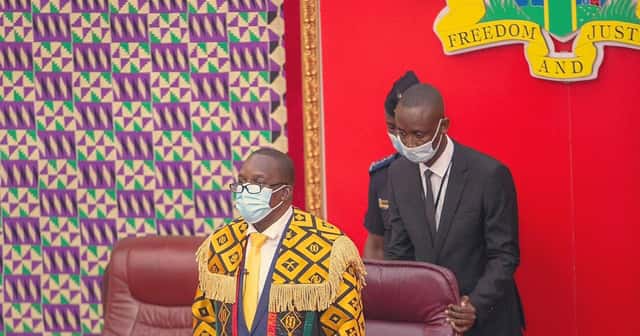
Ghana's Speaker of Parliament says a bill that would sharply expand criminal penalties for LGBTQ+ people will pass, but only after lawmakers fix errors in the version they approved in May. Speaker Alban Bagbin made the remark on Oct. 23 at a public relations conference in Koforidua. The bill is not law. No report reviewed for this story says that President John Mahama has signed it.
Bagbin's comments reopen a question that has run through Ghanaian politics for five years. This story explains what the bill would do, how it reached this point, what the dispute over the May vote is about, and what each side says. The story relies on Ghanaian outlets, the BBC and a statement from an international legal body, and it names the sources it did not use.
What the Speaker said
The bill is called the Human Sexual Rights and Family Values Bill, 2025. Some outlets use the longer title Proper Human Sexual Rights and Ghanaian Family Values Bill. Parliament passed it on Friday, May 29, 2026. Bagbin says that vote took place in his absence and was rushed.
On Oct. 23, as MyJoyOnline and Citi Newsroom reported, he said Parliament had found problems in the text. "We have identified a few mistakes, most of the last-minute amendments, and therefore the next meeting will come back for a second consideration, and we'll pass it," he said. He added: "When we are no longer there, you can do what you want to do. But so far as we continue to exist, that law will be the law of the land."
He also said the bill should be treated as a matter of national consensus and not partisan politics. Bagbin did not give a date for the second consideration. The reports do not say which amendments contain mistakes.
What the bill would do
The BBC and the International Bar Association's Human Rights Institute, known as IBAHRI, describe the same core provisions. People who identify as lesbian, gay, bisexual, transgender or queer could face up to three years in prison. The bill sets a prison term of five to ten years for "promotion of, propagation of, advocacy for, support or funding" of LGBTQ+ activity, according to IBAHRI's quotation of the text. It also creates a duty to report prohibited acts to police.
The BBC says that anyone who identifies as an "ally" could also face a prison sentence. The bill defines family values to include "respect for the sanctity of marriage as a lifelong relationship between a man and a woman, each of whose gender is determined at birth," as IBAHRI quotes it.
Same-sex relations are already a crime in Ghana. Section 104 of the Criminal Offences Act of 1960 punishes "unnatural carnal knowledge." The Ghana News Agency says that provision has long been read to cover consensual same-sex relations. Supporters of the bill argue that existing law does not address advocacy, public campaigns, funding or activism.
The May version also contains exemptions. The BBC says they cover legal, healthcare and media professionals who provide treatment or services or report on LGBTQ+ issues. In a social media post, Fordjour listed the exemptions, as ModernGhana reported. They include legal representation, court and parliamentary submissions, academic and scientific publications, public health programs, medical and counseling services, and journalism done in the ordinary course of work.
How the bill got here
A similar bill was first introduced in 2021. Samuel Nartey George, now the Communications Minister, led a group of lawmakers who brought it. It was a private members' bill, not a government bill. Parliament passed a version in February 2024. Legal challenges went to the Supreme Court. Then-President Nana Akufo-Addo did not sign it, and it lapsed when that Parliament dissolved in January 2025, Gayety reported.
The bill came back in 2025. On Nov. 18, 2025, Mahama told leaders of the Christian Council of Ghana: "If the Parliament of the people of Ghana endorses the bill, votes on it and passes it, and it comes to me as President, I will sign it." He also said "A person's gender is determined at birth, and the family is the foundation of our nation," as Citi Newsroom reported.
Parliament then approved the bill on May 29, 2026. The BBC reported that religious leaders had pressed Mahama to strengthen anti-gay measures since he took office.
The dispute over the May vote
Two arguments overlap. One is about the exemptions. The other is about process.
On the exemptions, the bill's lead sponsor, Rev. John Ntim Fordjour, opposed them during the debate. He told the House: "any attempt by this house to push any of these exceptions in, we will resist it." After the vote, he said, as the BBC quoted him, that the bill had lost its "force and the bite and the thrust" compared with the 2024 version. Majority Leader Mahama Ayariga defended the changes. He said the committee was trying "to narrowly set out those exceptions where, when you speak, you will not be considered as promoting or supporting LGBT." He said lawyers and journalists had raised free expression and professional freedom concerns.
On process, questions arose over whether Parliament had a quorum at the vote. On June 2, Mahama spoke at Chatham House in London. He said the bill still had a considerable constitutional process ahead. He said the Attorney-General and his legal advisers would "sit on it because it was a private members' motion... [and] not a government bill," as the BBC quoted him. He said the bill could go to the Council of State, his advisory body, if there were problems.
Bagbin has since said Parliament can revisit a bill after passage and before it goes to the President. In remarks reported by MyJoyOnline on June 11, he rejected the argument that Parliament became "functus officio," meaning its authority was spent, once it passed the bill. MyJoyOnline reported that George and the Majority Leader had made that argument. Bagbin described a "post-passage process" that lets the House correct errors through a "second reconsideration stage." He said the House uses a motion of rescission to do this.
What supporters say
Supporters say the bill protects Ghanaian culture and family. Fordjour told Parliament it would make existing laws "more robust, more encompassing and more stringent," as the BBC reported.
The Ghana Catholic Bishops' Conference welcomed the May vote. Its president, Most Rev. Matthew Kwasi Gyamfi, told Citi FM that "all the religious bodies in Ghana and many other Ghanaians who have advocated and have requested for this bill to be passed" would join in congratulating Parliament. "We receive it with great joy," he added. The Ghana News Agency says the Christian Council, Pentecostal and Charismatic groups and some Islamic groups also backed the bill.
Some supporters say the May exemptions went too far. That is the position of Fordjour and the minority lawmakers who prefer the 2024 text. Bagbin's view, by contrast, is that the bill should pass after review and with cross-party support.
What critics say
Critics say the bill violates constitutional and international rights. The BBC reports that Human Rights Watch urged lawmakers to drop it. It said the bill put lives at risk and encouraged "citizens to surveil and denounce one another."
IBAHRI, in a July statement, urged Ghana not to enact the bill. Co-Chair Hina Jilani said: "Presidential assent should not be given to a Bill that risks violating fundamental rights and deepening fear, discrimination and exclusion." Co-Chair Mark Stephens said the bill "transforms private identity into public suspicion" and "turns compassion into a potential crime." The institute argues the bill conflicts with Ghana's duties under the African Charter on Human and Peoples' Rights and the International Covenant on Civil and Political Rights. It names rights to privacy, expression, assembly and association.
IBAHRI also says the professional exemptions may not remove the harm. It says the wider provisions could deter LGBTQ+ people from seeking health care and legal help.
The wider picture
Ghana is one of several places where lawmakers are fighting over gender and sexuality law. The BBC notes that Senegal's parliament approved a similar bill in March, with a maximum term of 10 years for same-sex acts. In other places, the disputes are about different subjects. In Australia, Tasmania's lower house voted to ban conversion practices. In Scotland, a tribunal ruled on a nurse's claim against her union. In the United States, Kansas now voids driver's licenses that list a gender different from sex at birth, and Virginia voters decide on a marriage amendment. The legal systems and the stakes differ in each place.
What is still unknown
Several points remain open. Parliament has not set a date for the second consideration. The reports do not say whether the exemptions will stay as they are, shrink or grow. Fordjour wants fewer exemptions. IBAHRI wants the bill rejected. Bagbin says he wants consensus.
The President's position is also open. Mahama pledged in 2025 to sign a bill that Parliament passed. In June, he said it needed legal review, and the Attorney-General and his advisers would examine it first. The reports reviewed do not show whether the bill has been sent to him. They also do not show whether he will sign the version that comes out of the second consideration.
Courts may also play a role. The 2024 version drew several lawsuits at the Supreme Court. This story did not find a report on new court challenges to the 2026 version.
Reuters and The Telegraph carried reports on the bill, but their pages did not load fully, so this story does not rely on them. It also does not rely on second-hand reports from outlets that summarize other media. No statement from Ghanaian LGBTQ+ organizations on the Oct. 23 comments was found. The documents that decide the matter are the bill text Parliament approves and the President's decision.
Differing perspectives
What should Ghana's Parliament do with the Human Sexual Rights and Family Values Bill when it returns for a second consideration?
Each position is summarized as its supporters make it, with equal weight and in alphabetical order. A summary is not an endorsement; the evidence for each is weighed in the story above.
Correct the errors and pass it
Who holds it: Alban Bagbin, Speaker of Ghana's Parliament
Bagbin said on Oct. 23 that Parliament had found "a few mistakes, most of the last-minute amendments," and would return for a second consideration. "We'll pass it," he said. He said the bill should be treated as a matter of national consensus, not partisan politics, and added that "so far as we continue to exist, that law will be the law of the land."
In their words: Citi Newsroom ↗
Pass it without the exemptions
Who holds it: Rev. John Ntim Fordjour, MP for Assin South and the bill's sponsor
Fordjour, the bill's lead sponsor, opposed the exemptions during the May debate. He said: "any attempt by this house to push any of these exceptions in, we will resist it." He added that if the House used its majority numbers to push them through, he would "advise myself accordingly." He said he found the exceptions "highly problematic."
In their words: Ghana News Agency ↗
Reject the bill
Who holds it: IBAHRI, the International Bar Association's Human Rights Institute
IBAHRI urged Ghana not to enact the bill. Co-Chair Hina Jilani said "Presidential assent should not be given to a Bill that risks violating fundamental rights and deepening fear, discrimination and exclusion." The institute says the bill conflicts with Ghana's duties under the African Charter and the ICCPR, and that the professional exemptions may not remove its wider effects on expression, association and access to services.
In their words: International Bar Association ↗
Welcome the bill
Who holds it: Most Rev. Matthew Kwasi Gyamfi, president of the Ghana Catholic Bishops' Conference
Gyamfi said religious bodies and "many other Ghanaians who have advocated and have requested for this bill to be passed" would congratulate Parliament "for work well done." He said the Church and other religious bodies were pleased with Parliament's decision. "We receive it with great joy," he said.
In their words: ModernGhana ↗
READ BEYOND 567POLITICS
Alternate sources & perspectives
Independent coverage and primary evidence to help you compare arguments. A link is not an endorsement; perspective labels describe the linked material.
- primary evidence
'Anti-LGBTQ+ bill will be law of the land as long as I'm Speaker' - Bagbin ↗
Citi Newsroom
Speaker's Oct. 23 remarks, with direct quotes.
- primary evidence
Bagbin assures Ghanaians of passage of anti-LGBTQ+ bill after review ↗
MyJoyOnline
Second report of the same remarks with added context on the rushed passage.
- right argument
The anti-LGBTQ bill: Ghana's most divisive law in a decade ↗
Ghana News Agency
Background, Fordjour's and Ayariga's floor remarks on the exemptions.
- independent analysis
Ghana's parliament passes anti-LGBTQ+ bill ↗
BBC News
May 30 report on the passage, the penalties, HRW's criticism and the exemptions.
- independent analysis
Ghana's anti-LGBTQ+ bill to be scrutinised before approval, president says ↗
BBC News
June 2 report on the President's comments and the minority's objection to the exemptions.
- other perspective
Bagbin rejects 'functus officio' claim, says Parliament can still revisit passed bills before assent ↗
MyJoyOnline
June 11 report on the Speaker's account of the post-passage process.
- primary evidence
Mahama: I'll sign anti-LGBTQ+ bill if passed by Parliament ↗
Citi Newsroom
The President's Nov. 18, 2025 pledge to the Christian Council.
- right argument
'We receive it with great joy' - Catholic Bishops Conference welcomes passage of anti-LGBTQ+ bill ↗
ModernGhana
Bishops' welcome and Fordjour's list of the exemptions.
- left argument
IBAHRI condemns Ghana's passage of sweeping anti-LGBTQ+ Bill and warns of grave human rights implications ↗
International Bar Association
Legal and rights objections, with quotes from the text.
- other perspective
Ghana Anti-LGBTQ Bill Returns for Reconsideration ↗
Gayety
Secondary report used only for the 2025 lapse and the October timeline.
Reviewed 2026-11-02. The story rests on Ghanaian reports of Speaker Alban Bagbin's Oct. 23 remarks (Citi Newsroom, MyJoyOnline), the Ghana News Agency's reporting on the May 29 passage and the amendment debate, the BBC's reports of May 30 and June 2, the IBAHRI statement, ModernGhana's report of the Catholic Bishops' reaction, and Citi Newsroom's Nov. 2025 report of the President's pledge. Gayety was used only for the 2025 lapse and the October timeline and is a secondary source. The text of the bill was not read directly; provisions are described as quoted by the BBC and IBAHRI. Reuters and The Telegraph returned incomplete pages and were not used, and second-hand summaries from 76Crimes and Rightify Ghana were not relied on. Missing perspectives: no statement from a Ghanaian LGBTQ+ organization on the Oct. 23 comments, and no comment from the Presidency on the second consideration, was found. The automated source-discovery tool returned only unrelated generic pages and was not used.