Greenland's parliament approves US-Denmark defense deal 16-0, with seven abstaining
The Inatsisartut backed the amended 1951 agreement on November 3 after a day that included a leak accusation, a police report and a failed no-confidence motion. Denmark's Folketing votes November 19. Here is what the text does, what it does not do, and how each side describes it.
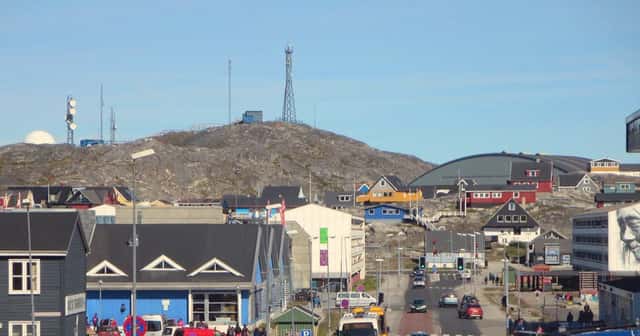
Greenland's parliament, the Inatsisartut, approved a new defense agreement with Denmark and the United States on Tuesday, November 3, 2026. The vote was 16 in favor, none against, and seven neither for nor against, according to Ritzau via Bornholms Tidende and the Associated Press. Denmark's Folketing votes November 19, Ritzau says. The deal takes effect once both parliaments act and the US receives a diplomatic note, per Article XII of the text.
The vote closes one chapter of a two-year standoff. President Trump spent much of 2025 and early 2026 saying the US should own Greenland, refusing to rule out force and threatening tariffs. On September 22, 2026, he sat beside Denmark's Mette Frederiksen and Greenland's Jens-Frederik Nielsen at the United Nations and signed a text that "reaffirms" Danish sovereignty and recognizes Greenlanders as "a people pursuant to international law." Whether that is a climbdown, a quiet win, or a bad bargain depends on who is talking.
What the agreement does
The agreement amends the April 27, 1951 Defense of Greenland agreement between Denmark and the US, the treaty behind what is now Pituffik Space Base, per the Wikipedia summary of the base. The new text, published by the Danish Prime Minister's Office, runs ten pages. Its main provisions, from the published text:
- Pituffik: the US "shall be allowed to modernize and expand its activities" at the base in northwest Greenland.
- Two new defense areas: the US may establish sites at Narsarsuaq in the south and Mestersvig in the east, with details "to be mutually agreed."
- More sites: either party can propose further defense areas. If a Permanent Committee cannot agree within 90 days, the question moves up to deputy ministers, then ministers. New areas require mutual agreement. Unmanned installations such as radar stations get "accelerated" review.
- Access: US aircraft may overfly and land. US vessels have "undersea access" in territorial waters "except as mutually agreed." The Greenland government fact sheet says US submarines may operate submerged.
- Non-NATO bar: no non-NATO state may set up military installations or a persistent presence unless the parties agree.
- Investment screening: investors from outside NATO, its partners or the EU may not gain control in "Particularly Sensitive Sectors" unless the parties find no threat.
- Contracts: work in defense areas goes to Greenlandic sources "to the maximum extent possible."
- Environment: the 1991 and 2004 environmental commitments become binding for all future US sites, per the fact sheet.
- No end date: Article XI says the agreement "does not have an end date."
- Independence clause: if Greenland becomes independent, Denmark and Greenland commit to ensuring the new state stays in NATO and takes on the agreement.
The fact sheet summarizes the sovereignty point in five words: "No territory or sovereignty is ceded."
What it does not do
The text does not transfer land, sell anything, or change who governs Greenland. Frederiksen told a press conference in New York that it is "not true that outsiders cannot enter, for example militarily," and that Golden Dome, Trump's missile defense project, has "not been decided on."
It also does not pay Greenland. Nielsen said at the October 12 first reading that the US put no "money offer on the table," per Kristeligt Dagblad's Ritzau report.
Analysts say the new access rights are smaller than the headlines. A CSIS analysis says the deal "mostly codifies what Washington could already do"; its real novelties are the open-ended duration and the investment rules. The Peterson Institute's Jacob Funk Kirkegaard calls the base rights "old wine in a new bottle" but notes they are now "permanent," where the 1951 treaty tied them to both countries staying in NATO, in a PIIE post.
The vote and the parties
| Party | Seats after March 2025 election | Stated position on the agreement | Role on November 3 |
|---|---|---|---|
| Demokraatit (Democrats) | 10 | Supports; leads the governing coalition | Voted in favor |
| Inuit Ataqatigiit (IA) | 7 | Supports; wants yearly reporting and oversight plans | Voted in favor |
| Atassut | 2 | Supports; cites NATO and jobs | Voted in favor |
| Siumut | 4 | Supports; wanted full renegotiation of 1951 deal, cleanup and payment | Did not take part, citing absences |
| Naleraq | 8 | Critical; wants a referendum | Sources do not attribute the seven abstentions by party |
Seat counts come from the Wikipedia entry on the 2025 election. Positions and the account of who voted come from Sermitsiaq's live coverage, which reports that IA, Demokraatit, Atassut and one independent voted yes and that Siumut "did not take part" because of absent members. No outlet opened for this article says who registered the seven "neither for nor against" votes.
The coalition of Demokraatit, IA and Atassut holds 19 of 31 seats. Siumut left it on March 13, 2026, in a dispute over two ministers who ran for the Danish Folketing, per ArcticToday. Speaker Kim Kielsen sits as an independent, per KNR.
The bill nearly skipped committee. On October 12 the speaker sent it straight to a second reading; a day later, after complaints, the Presidium sent it to the Foreign and Security Policy Committee instead, KNR reported. The committee majority asked for a follow-up group with all parties and a briefing at least once a year, per Sermitsiaq. Ritzau reports the government agreed to both.
A leak, a police report and a failed no-confidence motion
The session also produced a fight about secrecy. Foreign Minister Múte B. Egede of IA accused Naleraq of publishing confidential information in its minority statement, which described how Egede had told the committee that Greenland tried and failed to get the US to pay money, KNR reported. Speaker Kielsen announced that the Presidium had reported Naleraq to the police.
Naleraq's chair, Pele Broberg, said the statement had been approved by the committee and published by the Presidium itself. "Why won't you discuss the content of the agreement?" he asked. Naleraq filed a no-confidence motion against Egede. It failed; the other parties said they have "full trust" in the minister, per a second KNR report.
What Greenland's government says
The coalition's case rests on recognition and security. Nielsen, who chairs the Naalakkersuisut, said at the signing that "through the agreement, our right to self-determination as a people is recognized," per the government's press release. At the New York press conference he said: "My red lines have not been broken."
Egede, who was premier when Trump's pressure began, told parliament at the first reading: "Our country has been under threat. That is the reality," per Sermitsiaq. After the vote, he wrote on Facebook that the road had been "a difficult one for us as a people" and that "this is about all of us," as Al Jazeera reported.
Atassut's chair, Aqqalu C. Jerimiassen, said: "We have to choose NATO, and it is hard to get around the USA," per Sermitsiaq's roundup of party positions.
What the opposition says
Naleraq, which won 24.77 percent of the vote in 2025, frames the deal as a bad trade. Its minority statement, as reported by Sermitsiaq, makes five points. No direct payment reaches the Greenland treasury. Nothing guarantees that contracts go to Greenlandic-owned firms. There are no new binding commitments on cleaning up old US military contamination. The right to be consulted is not new, because the 2004 Igaliku agreement already required it. And the deal lacks broad support, so it should go to a referendum.
Broberg said at the first reading: "The agreement turns our country's importance into rights for the USA," per Kristeligt Dagblad. The statement adds that Naleraq's "criticism is directed at the agreement's concrete result for Greenland, not at the cooperation as such." The party also notes that an independent Greenland would still have to apply for NATO membership, whatever the agreement says.
What Denmark says
Denmark's government treats the agreement as a return to order. Frederiksen said it "recognizes and respects the Realm's sovereignty, territorial integrity, and Greenlanders' right to self-determination," per a Danish Foreign Ministry post. Asked whether Trump might again demand ownership, she pointed to the preamble and said: "We cannot give guarantees for what is said by others."
Foreign Minister Lars Løkke Rasmussen said before the signing that the deal "respects the red lines we have set, and respects our sovereignty. It will give peace of mind," per Kristeligt Dagblad. He presents the bill to the Folketing. Its first reading is November 12, per Sermitsiaq, with the vote on November 19.
Support in Copenhagen crosses party lines. Venstre's Troels Lund Poulsen called it "an uncommonly good agreement." Conservative chair Mona Juul said it is "unambiguously good." Inger Støjberg of the Danish Democrats said it is "an agreement we can be proud of." Trine Pertou Mach of the left-wing Red-Green Alliance said it "in no way changes Danish sovereignty," per a Ritzau roundup. No Danish party opposing the deal appeared in the sources opened here. The vote falls on the day Chancellor Friedrich Merz hosts Volodymyr Zelensky and the Coalition of the Willing in Berlin, a reminder that European governments are weighing their security ties to Washington on several fronts at once.
What the Trump administration says
The White House describes the same text in sharper language. Its release says the deal gives the US "lasting control" over its security interests and "permanent basing rights." President Trump said it "gives the United States permanent control over security and all other needs on that territory." Secretary of State Marco Rubio said it "permanently guarantees U.S. security interests in the Arctic at zero cost to the U.S. taxpayer."
Trump has gone further since. At a rally in Perry, Georgia, on October 24 he said: "Denmark was so great, they gave us Greenland. You do know that, right? We already have that," per ANI. On October 31 he posted an image of Greenland as a giant aircraft carrier under a US flag, per NordiskPost. NordiskPost adds that Rubio, speaking to DR, did not endorse the handover claim.
None of these claims matches the text, which says sovereignty is not ceded. The US footprint is modest: when Vice President JD Vance$ visited Pituffik in March 2025, the base hosted about 150 US personnel, per the Wikipedia summary of the base.
What independence advocates say
The independence debate did not start with Trump. The 2009 Self-Government Act, approved by about 75 percent of voters in 2008, recognizes Greenlanders as "a people under international law." Its Section 21 says the people of Greenland decide on independence, subject to a referendum and Folketing approval, per the Library of Congress. The agreement's preamble points to that act as the route to independence.
For independence supporters, the agreement cuts two ways. Greenland signed it as a party, and it names Greenlanders as a people. But it binds a future Greenlandic state to NATO and to the agreement itself, with no end date. Kirkegaard at PIIE argues this makes independence "less likely."
A Verian poll for Berlingske and Sermitsiaq, run online January 22 to 26, 2025, among 497 Greenland residents aged 18 and over, asked: "Do you want Greenland to leave Denmark and become part of the United States?" Eighty-five percent said no, 6 percent yes, 9 percent undecided. On independence, 56 percent would vote yes in a referendum held today, 28 percent no, 17 percent did not know. Some 45 percent did not want independence if living standards would suffer. The fact-checker TjekDet relays a researcher's caution that the sample was not fully representative and the US question bundled two issues. No 2026 poll of Greenlanders on these questions was found.
Source: Verian Group
Show the numbers
| Answer | Share |
|---|---|
| No | 85% |
| Yes | 6% |
| Undecided | 9% |
How we got here
- Denmark and the US sign the Defense of Greenland agreement under the North Atlantic Treaty
- Greenland's Home Rule Act takes effect
- Self-Government Act takes effect, recognizing Greenlanders as a people under international law
- Verian poll fieldwork ends; 85 percent oppose joining the US
- Greenland election; Demokraatit wins 10 of 31 seats, Naleraq 8
- Vice President Vance visits Pituffik Space Base
- Trump at Davos rules out force and drops tariff threat after a "framework" with NATO's Rutte
- Siumut leaves the governing coalition
- Trump, Frederiksen and Nielsen sign the amended agreement at the UN in New York
- Inatsisartut first reading
- Inatsisartut approves the agreement, 16-0 with seven neither for nor against
- Folketing vote scheduled
Source: Agreement text, Library of Congress, Sermitsiaq, Wikipedia (Davos entry, not re-verified)
What people are saying online
This story does not quote social media posts, and that is a deliberate gap. We set out to sample reactions from Greenlandic and Danish politicians and from ordinary users on X, and threads on r/worldnews, r/europe, r/geopolitics and r/Denmark. During the reporting window on the evening of November 3, our tools could not open X or Reddit pages, and our post-verification tool failed on every X permalink we tried. Search-engine previews showed posts about the vote from Danish ministers and from the US State Department, but a preview is not a verified quotation, so we have left them out rather than risk misquoting anyone.
What we can say is narrower. The documented reactions above come from parliament, government statements and the Danish and Greenlandic press. They show a government coalition that calls the deal a recognition of Greenlanders as a people, an opposition party that calls it a bad trade and wants a referendum, a Danish political class that is broadly in favor, and a US administration that describes the same text as "permanent control." None of that is a measure of what Greenlanders as a whole think. The only poll with a published method is the January 2025 Verian survey described above, and it predates the agreement by 20 months.
What remains unknown
- Who abstained. No source opened here attributes the seven "neither for nor against" votes to named members or parties.
- The terms for Narsarsuaq and Mestersvig. Modalities are "to be mutually agreed," with no published date.
- Whether the Folketing vote on November 19 will be unanimous.
- What the police will conclude about Naleraq's minority statement.
- Whether Trump's claims that the US "got" Greenland will affect implementation.
- Current Greenlandic opinion. The latest poll with a published method is from January 2025.
- How Golden Dome fits. Frederiksen said its content has not been decided.
Sources and method
This article was built from the published agreement text and fact sheet, Danish and Greenlandic government pages, the White House release, and reporting by Sermitsiaq, KNR, Ritzau (via Bornholms Tidende and Kristeligt Dagblad), the Associated Press (via ABC News), Al Jazeera and ArcticToday. Danish and Greenlandic quotations were translated by us. CSIS and Peterson Institute analyses were used for assessment, not fact. Wikipedia was used for the 2025 election results, the base's history and the Davos date, and is labeled as such. DR's report on the vote and the Washington Times page could not be opened. X and Reddit pages could not be opened or verified during reporting, so no social posts are quoted. Our sourcing and corrections approach is on our methodology page.
Differing perspectives
Does the amended 1951 defense agreement serve Greenland's interests?
Each position is summarized as its supporters make it, with equal weight and in alphabetical order. A summary is not an endorsement; the evidence for each is weighed in the story above.
Approve it as recognition of Greenlanders and a security guarantee
Who holds it: Greenland's governing coalition: Jens-Frederik Nielsen (Demokraatit), Múte B. Egede (IA), Aqqalu C. Jerimiassen (Atassut); Demokraatit, Inuit Ataqatigiit and Atassut
The coalition says the agreement recognizes Greenlanders as a people with a right to self-determination and makes Greenland a party to Arctic security for the first time, rather than a subject of a Danish-American deal. Nielsen says his red lines were not broken and that no territory or sovereignty is ceded. Egede says the country was under threat and that the agreement was Greenland's largest foreign policy effort. Coalition members point to binding contract preferences for Greenlandic firms, binding environmental rules, approval rights over new sites, and the fact that Greenland pays nothing. They accepted committee demands for a follow-up group and yearly reporting.
In their words: Naalakkersuisut (Government of Greenland) press release, September 22, 2026 ↗
Put the agreement to a referendum
Who holds it: Naleraq, led by Pele Broberg and Juno Berthelsen (8 of 31 seats)
Naleraq says the agreement converts Greenland's strategic value into rights for the United States without a matching return. It points to the absence of any direct payment to the treasury, the lack of a guarantee that contracts and profits stay with Greenlandic-owned firms, and no new binding commitments on cleaning up historical US military contamination. It says the right to consultation already existed under the 2004 Igaliku agreement. It argues the framework was accepted before the public knew the content and wants a referendum. The party says it supports continued US and NATO cooperation and directs its criticism at the concrete result, not the cooperation itself.
In their words: Sermitsiaq, committee report and Naleraq minority statement, November 3, 2026 ↗
Ratify it as a binding text that respects the Realm's sovereignty
Who holds it: Denmark's government: Mette Frederiksen (S), Lars Løkke Rasmussen (M), Troels Lund Poulsen (V); supported by Konservative, Danmarksdemokraterne and Enhedslisten spokespeople
Denmark's government says the agreement recognizes and respects the Kingdom's sovereignty and territorial integrity and Greenlanders' right to self-determination, and that it stays within the red lines set during the crisis. Frederiksen says it builds on the 1951 agreement, is legally binding and has no end date, and that it is firmly anchored in NATO. Løkke Rasmussen says it replaces a long period of uncertainty with a binding text and will give peace of mind. Party leaders across the Folketing describe it as a good agreement that upholds Danish sovereignty and strengthens NATO's presence in the Arctic. Frederiksen says she cannot guarantee what others say about it.
In their words: Danish Ministry of Foreign Affairs (Embassy in Reykjavik), September 23, 2026 ↗
See it as codifying existing rights, with permanence the real change
Who holds it: Security analysts at CSIS (Hernandez-Roy, Dalziel, Ziemer, Svendsen) and the Peterson Institute (Jacob Funk Kirkegaard)
Analysts at CSIS say the agreement mostly codifies what Washington could already do under the 1951 framework, and that its substantive changes are the open-ended duration and US influence over foreign investment screening. They describe it as a NATO-first document and say Golden Dome's role is undefined. Kirkegaard at the Peterson Institute says the base rights were already available and amount to old wine in a new bottle, but that detaching US rights from NATO membership makes them permanent under almost any scenario. He argues the permanence and investment rules would bind a future independent Greenland and make independence less likely.
In their words: CSIS analysis, September 30, 2026 ↗
Treat it as permanent US control of Arctic security interests
Who holds it: The Trump administration: President Donald Trump, Secretary of State Marco Rubio, Ambassador Ken Howery
The White House says the agreement gives the United States lasting control over its security interests in Greenland, with permanent basing rights and no end date, at zero cost to American taxpayers. It says the deal bars US adversaries from establishing a base, a military presence or sensitive investments in Greenland without US approval. Trump says the agreement gives the United States permanent control over security and all other needs on the territory and addresses all US concerns. Rubio says it permanently guarantees US security interests in the Arctic and applies whether Greenland remains Danish or becomes independent. Trump has since said Denmark gave Greenland to the United States.
In their words: White House release, September 22, 2026 ↗
READ BEYOND 567POLITICS
Alternate sources & perspectives
Independent coverage and primary evidence to help you compare arguments. A link is not an endorsement; perspective labels describe the linked material.
- primary evidence
Agreement to amend and supplement the 1951 Defense Agreement (full text, English) ↗
Arctic Portal Library (deposit of the published agreement; also at stm.dk)
Ten-page text signed September 22, 2026. Articles IV (defense areas), VI (access), IX (non-NATO bar), X (investment), XI (no end date, independence), XII (entry into force).
- primary evidence
Facts About: Agreement on Defense and Security between Greenland, Denmark and the United States ↗
Government of Greenland (Naalakkersuisut) fact sheet
Government's own one-page summary: 'No territory or sovereignty is ceded'; submarines may operate submerged; 1991 and 2004 environmental rules become binding.
- independent analysis
Greenland approves security deal with Denmark and US following months of Trump pressure ↗
Associated Press (via ABC News)
Independent wire reporting confirming the 16-0 vote with seven abstentions on November 3, 2026. The apnews.com original was blocked for fetching.
- independent analysis
Forsvarsaftalen med USA er vedtaget i Inatsisartut ↗
Sermitsiaq (Greenland)
Greenlandic live coverage; identifies IA, Demokraatit, Atassut and an independent as yes votes and says Siumut did not take part due to absences. Quotes Egede, Jensen, Broberg, Jerimiassen, Motzfeldt.
- independent analysis
Formandsskabet: Naleraq anmeldt til politiet for mindretalsudtalelse ↗
KNR (Greenlandic Broadcasting Corporation)
Greenlandic public broadcaster on the leak accusation and police report during the November 3 debate, with quotes from Egede, Kielsen and Broberg.
- right argument
President Trump Inks Historic Arctic Security Agreement ↗
The White House
US administration's framing: 'lasting control' and 'permanent basing rights' at zero taxpayer cost; quotes Trump and Rubio.
- left argument
Trump's Greenland Deal Puts His Annexation Plans on Ice ↗
Jacobin
Argues the administration 'got more or less the same deal it could have obtained by asking politely' and that the acquisition effort is shelved.
- independent analysis
What Does the Greenland Deal Mean for North American Security? ↗
Center for Strategic and International Studies
Says the deal 'mostly codifies what Washington could already do'; novelties are duration and investment screening; Golden Dome role undefined.
- other perspective
Trump's Greenland deal preserves the status quo ↗
Peterson Institute for International Economics
Economic view: base rights are 'old wine in a new bottle' but now permanent and detached from NATO membership; argues this makes independence less likely.
Reviewed 2026-11-03. Every listed page was opened before publication. Vote tally (16-0-7), date and Folketing dates are confirmed by Ritzau (via Bornholms Tidende), AP (via ABC News), Al Jazeera and Sermitsiaq. Gaps: no source attributes the seven 'neither for nor against' votes to parties; no ina.gl vote record was located; the DR vote report, Washington Times, US News, Daily Signal, ASIL and Anadolu pages could not be opened; no 2026 poll of Greenlanders was found (latest with published method is Verian, January 2025, n=497); Trump's January 2026 Davos statements rest on Wikipedia and are labeled so; the committee report and minority statement were read via Sermitsiaq's summary, not the ina.gl original. discover_politics_sources returned mostly generic Greenland pages. X and Reddit pages could not be opened or verified, so no social-media perspective is listed. No Danish party opposing the agreement was found in opened sources; Naleraq is the only parliamentary party on record against it.