Fake jobs, unpaid wages: H-1B fraud is real, and voters distrust how employers use the program
Convictions document visa abuse, while polling shows concern about wage suppression alongside majority support for skilled-worker visas.
H-1B fraud has produced criminal convictions, fake-job schemes and unpaid wages. Voters also express substantial distrust of employers’ use of the visa program. The polls point to a more precise finding. Americans can support skilled-worker visas while believing companies exploit them.
The distinction matters for enforcement. Fabricated applications call for investigation and prosecution. Wage violations call for remedies for workers. A dispute about the strength of pay rules calls for a policy debate. Treating all three as the same problem makes it harder to identify who broke the law and which changes would help.
Fake jobs and forged documents are documented misconduct#
In December 2019, Abhijit Prasad was sentenced to three years in prison after a jury convicted him of visa fraud and aggravated identity theft. According to the Justice Department’s account of the trial, he filed 19 H-1B petitions with false statements about work projects, including purported placements at Cisco Systems.
Prosecutors said the evidence showed Cisco did not expect those workers to join existing projects. Prasad submitted forged company documents and misused an employee’s digital signature. The case established misconduct by Prasad; it did not establish that Cisco participated in the scheme. Justice Department sentencing announcement, December 18, 2019.
A second case shows how a visa broker can exploit the workers being sponsored. Kishore Kumar Kavuru, who operated four staffing companies, pleaded guilty to visa fraud in May 2021 and received a 15-month prison sentence that November. He admitted submitting more than 100 applications falsely describing jobs at companies that did not have those positions.
He also admitted making workers pay thousands of dollars for preparing and filing petitions and leaving them unpaid for months while he searched for genuine placements. The government described those practices as violations of Labor Department regulations. His admitted scheme ran from 2009 through at least 2017. Justice Department announcement, November 23, 2021, hosted by the Labor Department inspector general.
These are historical convictions, not newly announced cases. They show how fraud works. The schemes involved fake jobs, false records and demands for money or unpaid work. They do not establish the percentage of current H-1B applications that are fraudulent.
More recently, the Labor Department’s inspector general announced an investigation on July 8, 2026, into H-1B and permanent labor-certification abuses. The office described fraudulent applications, coercive wage kickbacks and exploitation, and invited reports from both U.S. and foreign workers. Those are the agency’s claims. They are not court findings against each employer under scrutiny. The announcement gives no national fraud rate. Labor Department OIG announcement.
The public interest extends beyond immigration paperwork. A business that invents a job to obtain a visa can undermine the allocation process. A business that withholds earned pay can harm the sponsored worker and compete unfairly with employers that meet their obligations. Blame still requires proof about the business, its filings and its conduct.
Enforcement records show wage harm, but not its full scale#
The Labor Department’s H-1B enforcement table records 74 compliance actions with violations in fiscal 2025, alongside about $3.31 million in back wages and 152 employees receiving back wages. These are national case totals. They do not cover every employer.
| Fiscal year | Actions with violations | Employees receiving back wages | Back wages |
|---|---|---|---|
| 2023 | 50 | 187 | $3,175,526 |
| 2024 | 60 | 90 | $2,367,251 |
| 2025 | 74 | 152 | $3,306,457 |
Source: Department of Labor, Wage and Hour Division, H-1B enforcement data, retrieved November 12, 2026. Dollars are nominal; these fiscal-year administrative totals are not seasonally adjusted. The live table may be revised. Actions, employees and dollars are different measures; none is a count of criminal fraud convictions.
More detected violations can reflect enforcement choices, reporting or case timing as well as underlying misconduct. The table lacks a count of all comparable employers. It cannot show how common fraud is across the program. Nor does the absence of a violation in this table certify an employer’s conduct.
Illegal underpayment also differs from a dispute about wage rules. In a May 2020 study of fiscal 2019 certifications, the Economic Policy Institute argued that the program allowed employers to offer wages below the local occupational median. Its criticism concerned what the rules permitted, as well as whether the program adequately protected workers. EPI’s wage-level analysis.
That is a criticism of the rules. It is not proof that every job below a median involves fraud. A median is the midpoint of a distribution; workers in the same occupation can have different experience and responsibilities. Determining a violation requires the applicable rule and the facts of the job, rather than simply comparing one salary with a headline benchmark.
Voters distrust employer practices while supporting visas#
An October survey by The Honest Poll found that 58% of likely voters supported H-1B and 29% opposed it. On a separate question about large companies’ main use of the program, more chose holding down American workers’ wages than filling genuine shortages.
Source: The Honest Poll, October 4–6, 2026
Show the numbers
| Response | Share |
|---|---|
| Hold down wages | 46% |
| Fill genuine shortages | 35% |
| Not sure | 19% |
The company surveyed 939 registered voters, including 780 likely voters, October 4–6, 2026, through an online panel and SMS. It reports demographic and political weighting and a margin of error of 3.4 percentage points for the full sample, with higher uncertainty for subgroups. Its public release did not identify a named outside sponsor. Original poll and methodology.
The question asks about employer motives and wages. It does not ask whether voters saw a crime. The full toplines download was unavailable during review; the figures above come from the pollster’s public release.
A separate Rasmussen Reports survey found 62% approval and 25% disapproval. That survey covered 1,107 likely U.S. voters on June 3–4 and 7, 2026, using telephone and online interviewing. Its reported margin of error was three percentage points at 95% confidence. The release described H-1B as allowing temporary employment in specialty occupations. Rasmussen says it pays for its own polls; Pulse Opinion Research conducted the fieldwork. Rasmussen’s June findings.
These polls should not be joined into a trend line. They use different pollsters, field periods and wording. Neither supplies a comparable series showing that attitudes specifically toward fraud have changed, and neither establishes what all American adults believe.
This still matters for policy. Support for skilled immigration need not mean trust in how companies hire. An enforcement proposal and a proposal to end or sharply restrict a visa program are different choices. Polling on one cannot automatically be presented as public authorization for the other.
That separation also helps distinguish workplace concerns from wider immigration arguments. 567politics’ legal-immigration issue guide treats admission and legal status separately from border enforcement. Our earlier reporting on the H-1B fee dispute provides context on the competing claims around restrictions.
The disagreement is over which reforms protect workers#
The AFL-CIO’s Department for Professional Employees argues for stronger recruitment requirements, safeguards against displacement, higher wage standards and regular audits. Its February 2026 fact sheet also calls for workers to report violations without retaliation and for greater freedom to change jobs while awaiting permanent status. That approach treats U.S. professionals and visa holders as potential beneficiaries of stronger labor protections. DPE’s reform proposals.
That approach faces a practical test. Can rules be enforced without forcing workers to risk their jobs to complain? Audits and protection against retaliation address different parts of that problem. Immigration enforcement that overlooks unpaid workers’ evidence could miss the conduct it is supposed to uncover.
The National Foundation for American Policy offers a different warning. Its March 2025 brief argues that requiring every sponsored professional to earn the local occupational median can disadvantage recent graduates because that benchmark includes more experienced workers. It argues that excessively high requirements can push work overseas or prevent employers from hiring international graduates. These are the organization’s policy arguments and forecasts, not proof that every proposed increase would have those effects. NFAP’s wage-requirements brief.
That position faces a test too. Can pay rules reflect experience and still stop firms from mislabeling jobs? Can workers bargain fairly when firms sponsor their visas? A defense of skilled immigration does not answer a documented forged-document case. Equally, a conviction involving one staffing operator cannot establish that all employers or visa holders are dishonest.
The government’s July investigation emphasizes another route: identifying fraudulent applications, coercion and exploitation through enforcement. Its stated focus includes harms to American workers and foreign workers alike. Success will depend on proven cases and help for victims. Announcing more serious claims does not by itself show progress.
Criticism of employer conduct should also remain separate from judgments about nationality. 567politics’ reporting on views of India and online hostility distinguishes country ratings, community experiences and social-media activity. Our examination of claims about India’s online reputation explains a related measurement problem: visibility online is not a representative reading of public opinion.
For this story, no social-media engagement count is used as polling evidence. The X post that prompted the assignment could not be verified and is not relied upon. Searches for restriction-oriented Center for Immigration Studies material returned pages that could not be opened; their unverified arguments are not reconstructed here.
The evidence still leaves concrete questions for further reporting: how often employers fabricate positions, how many workers recover wages after reporting abuse, and whether repeated polling finds demand for particular reforms. Court rulings can establish guilt. Case data need clear totals for comparison. Pollsters need to repeat the same questions over time. Those records would tell us more than a collection of viral claims.
Reporting note: This article was prepared with AI assistance from the linked public records and research, reviewed November 12, 2026. It includes no original interviews. The government-data connector has no supported H-1B enforcement series; the Labor Department’s original table was reviewed directly. This review found no verified national fraud rate. It also found no set of polls tracking views on fraud with the same question over time.
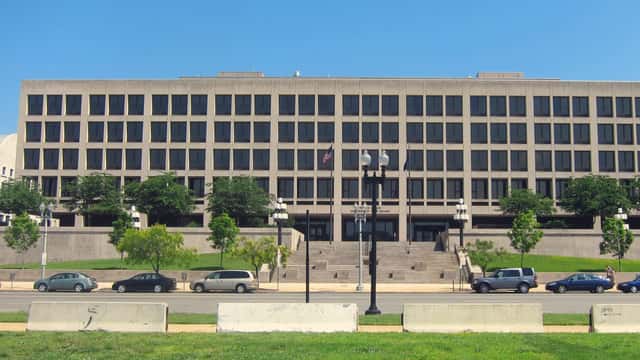
Lead photo: AgnosticPreachersKid / Wikimedia Commons, CC BY-SA 3.0. May 2010 file photograph, cropped to 16:9. The cropped photograph remains under CC BY-SA 3.0.

Differing perspectives
How should H-1B fraud and employer abuse be addressed?
Each position is summarized as its supporters make it, with equal weight and in alphabetical order. A summary is not an endorsement; the evidence for each is weighed in the story above.
Investigate fraud and exploitation
Who holds it: Department of Labor Office of Inspector General
Investigate fraudulent applications, coercive wage arrangements and exploitation, inviting evidence from both American and foreign workers harmed by abuse. Reports from affected workers can help investigators identify misconduct and protect the integrity of employment-based visa programs.
In their words: DOL OIG, July 8, 2026 ↗
Preserve access for skilled graduates
Who holds it: National Foundation for American Policy
Account for experience when setting wages and avoid requirements that price international graduates out of jobs or encourage work to move overseas. A fair benchmark should reflect the skills and experience required for each job.
In their words: NFAP, March 2025 wage brief ↗
Stronger labor safeguards
Who holds it: Department for Professional Employees, AFL-CIO
Require stronger recruitment, wage and anti-displacement protections, regular audits and protection from retaliation so U.S. professionals and visa holders can both benefit. Workers should also have greater freedom to change jobs while awaiting permanent status.
In their words: DPE, 2026 reform fact sheet ↗
Cite this article
567 Politics. “Fake jobs, unpaid wages: H-1B fraud is real, and voters distrust how employers use the program.” 567politics. Published 2026-11-12. https://567politics.com/news/h1b-fraud-public-opinion-employer-abuse-november-2026
Wikipedia citation
{{cite news |title=Fake jobs, unpaid wages: H-1B fraud is real, and voters distrust how employers use the program |url=https://567politics.com/news/h1b-fraud-public-opinion-employer-abuse-november-2026 |work=567politics |author=567 Politics |date=2026-11-12 |language=en}}CSL-JSON for reference managers
{
  "id": "https://567politics.com/news/h1b-fraud-public-opinion-employer-abuse-november-2026",
  "type": "article-newspaper",
  "title": "Fake jobs, unpaid wages: H-1B fraud is real, and voters distrust how employers use the program",
  "URL": "https://567politics.com/news/h1b-fraud-public-opinion-employer-abuse-november-2026",
  "container-title": "567politics",
  "language": "en",
  "author": [
    {
      "literal": "567 Politics"
    }
  ],
  "issued": {
    "date-parts": [
      [
        2026,
        11,
        12
      ]
    ]
  }
}Citations identify this article and its publication date. Assess the reporting and its linked sources before using it as evidence.
Read this article as Markdown or JSON. Cite the original page and retain its sources, dates and qualifications.
Embed this article summary
Paste this HTML into your page. The summary stays linked to the full story and updates with it. No account required.
<iframe src="https://567politics.com/embed/news/h1b-fraud-public-opinion-employer-abuse-november-2026?theme=auto" title="Fake jobs, unpaid wages: H-1B fraud is real, and voters distrust how employers use the program by 567politics" width="100%" height="440" style="border:0;max-width:100%" loading="lazy"></iframe>
<p style="font-size:14px">Fake jobs, unpaid wages: H-1B fraud is real, and voters distrust how employers use the program by <a href="https://567politics.com/news/h1b-fraud-public-opinion-employer-abuse-november-2026" rel="nofollow">567politics</a></p>
<script async src="https://567politics.com/embed.js"></script>
READ BEYOND 567POLITICS
Alternate sources & perspectives
Independent coverage and primary evidence to help you compare arguments. A link is not an endorsement; perspective labels describe the linked material.
- primary evidence
Documented visa fraud conviction ↗
U.S. Department of Justice
Trial findings and 2019 sentence; historical case, not a current prevalence estimate.
- primary evidence
H-1B enforcement totals ↗
U.S. Department of Labor
Fiscal-year administrative cases, back wages and employees; not criminal fraud counts.
- primary evidence
October voter views of H-1B and employer motives ↗
The Honest Poll
Public release and methods; full toplines download unavailable.
- left argument
Labor safeguards and visa reform ↗
Department for Professional Employees, AFL-CIO
Union proposals on wages, recruitment, audits and worker mobility.
- other perspective
Experience-sensitive wage requirements ↗
National Foundation for American Policy
Argues against wage requirements that disadvantage recent graduates.
- primary evidence
Federal investigation into visa abuse ↗
Department of Labor Office of Inspector General
July 2026 agency claims and reporting campaign; not final court findings.
Reviewed 2026-11-12. Reviewed primary records and original polling, plus labor and pro-immigration policy arguments. Discovery searches returned irrelevant candidates; independent web research supplied the sources. CIS restriction-oriented pages and CSIS analysis could not be opened. The initiating X post and poll toplines PDF were unavailable. No representative fraud-prevalence series or fraud-specific opinion trend was verified. No interviews were conducted.