Judge dismisses Justice Department suit seeking Harvard applicants' admissions records
Judge Myong Joun ruled the government sued before completing required Title VI steps. The dismissal is without prejudice, so the agencies can try again.
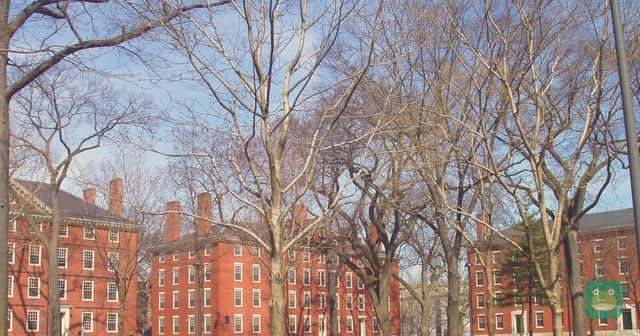
A federal judge in Boston on Monday dismissed the Trump administration's lawsuit seeking applicant-level admissions records from Harvard University. He ruled that the government sued before completing the steps federal civil rights rules require.
U.S. District Judge Myong J. Joun granted Harvard's motion to dismiss without prejudice. That means the Justice Department and the Education Department can try again if they cure the defects. His 10-page memorandum of decision stressed how narrow the ruling is.
"The ruling does not determine whether Harvard has discriminated, whether the agencies may lawfully seek appropriately defined applicant-level data, or whether Harvard may ultimately be required to provide such data," Joun wrote.
The Education Department criticized the decision. "When the government asked for admissions data to determine whether Harvard has changed its ways, the school refused and a Democrat-appointed judge is now shielding Harvard from accountability," spokesperson Ellen Keast told Courthouse News Service. Harvard and the Justice Department did not immediately respond to requests for comment from Courthouse News or The Harvard Crimson.
The case is one of several fights between the administration and the university, and part of a busy federal docket on civil rights law. The Supreme Court is hearing a Title VII case on a Georgia prosecutor's office and a religious preschool challenge to Colorado's pre-K rules this term.
What the government asked for
The suit grew out of the Supreme Court's 2023 decision in Students for Fair Admissions v. Harvard, which held that Harvard's race-conscious admissions violated Title VI of the Civil Rights Act. Title VI bars discrimination based on race, color or national origin in programs that get federal money.
In April 2025, the Justice Department opened compliance reviews of Harvard College, Harvard Medical School and Harvard Law School. It asked for applicant-level records, including academic measures, race and ethnicity, essays and admissions outcomes. Harvard produced documents in May 2025. The government said those did not include the applicant-level data it needed. After several deadlines, the department extended the final one to Oct. 10, 2025, and said no more extensions would be given.
The Education Department's Office for Civil Rights opened its own review on May 2, 2025. It sent Harvard a "Denial of Access" letter on Sept. 19, 2025, and a further letter on March 23, 2026. It referred its matter to the Justice Department on April 24, 2026.
The Justice Department sued on Feb. 13, 2026. Its complaint opened bluntly: "Harvard University is not complying with a federal investigation." It said that "at every turn, Harvard has thwarted the Department's efforts to investigate potential discrimination" and had "slow-walked the pace of production." The complaint also stressed its limits. "In this suit, the United States does not accuse Harvard of any discriminatory conduct, nor does it seek monetary damages or the revocation of federal funding," it said.
"Harvard has failed to disclose the data we need to ensure that its admissions are free of discrimination," then-Attorney General Pam Bondi said in a February statement quoted by Courthouse News. The government later amended the complaint to add the Education Department as a plaintiff.
- Education's civil rights office opens its review
- Education sends a "Denial of Access" letter
- Final Justice Department production deadline passes
- Justice Department sues Harvard
- Education sends a second enforcement letter
- Education refers its matter to the Justice Department
- Judge Joun hears argument on Harvard's motion
- Joun dismisses the case without prejudice
Harvard's case for dismissal
Harvard asked Joun to throw out the case in June. Its memorandum argued that the agencies "skipped multiple steps required by statute and their own regulations before bringing this case." It said the government is bound to "turn square corners."
Harvard described what was at stake. It said the demands sought "sensitive, identifiable records on hundreds of thousands of applicants over the last decade, including personal essays and life histories." It said a College letter asked for 51 data points about each applicant, including names, addresses, family income bracket and misconduct records. A Medical School letter sought 38 data points about every applicant over six years. Harvard said it produced about 1,000 pages on May 16, 2025, and 1,300 more on May 30.
The university also argued the suit was retaliatory. Its brief quoted Harmeet Dhillon, the assistant attorney general for civil rights, as saying the department targeted Harvard because it "sued" the government and "is defiant." It also quoted President Trump telling Dhillon, "You keep suing them. To hell with them." And it said the government added the Education Department "just 10 days after" another judge in Boston extended an injunction in a related case to cover Harvard.
In that case, Massachusetts v. Department of Education, U.S. District Judge Dennis Saylor barred the department from penalizing plaintiffs, including private universities, for not submitting new admissions data through a federal survey. Harvard asked Joun, in the alternative, to pause its case until that one ends.
Why the judge dismissed
Joun decided what he called "a limited question": whether the government showed it met the conditions for going to court. Title VI says an agency must tell a funding recipient that it is out of compliance and must determine that compliance "cannot be secured by voluntary means" before enforcing.
The government said it met that test. It pointed to repeated requests, extensions, the October deadline and warnings that legal action might follow. It also argued that the assistant attorney general's signature on the complaint showed the required determination. Joun said the government "has substantial arguments" and that the rules "do not require magic words or endlessly repeated notices."
But he found the complaint fell short. A decision to sue and the earlier determination the regulation requires "are related, yet not interchangeable," he wrote. "A deadline and a threat to sue, standing alone, do not necessarily demonstrate compliance with the regulatory voluntary-compliance process where the agency seeks to enforce disputed demands for extensive information."
The key gap was specific. "The complaint does not allege that DOJ informed Harvard of the action it would take—namely, litigation—should Harvard fail to comply, nor does the complaint allege the specific failure identified," Joun wrote. "This is required under § 42.108(d), and this failure is dispositive at this stage."
He judged the Education Department separately. Its rule requires notice, then a 10-day period with further efforts to persuade the school to comply, before referral. Joun found the government had not shown that Education took those extra steps before referring the matter. He rejected the argument that more talks would have been futile because the Justice Department had already sued. "Futility cannot be assumed merely because one department has sued on a related demand," he wrote.
He also dismissed a breach-of-contract claim. The government said Harvard broke its funding agreements by not giving the data. Joun said that claim rested on the same regulatory duty and could not be used to skip the same safeguards.
What the ruling leaves open
Joun said several questions remain undecided. He did not rule on whether the requests are overbroad, whether the government acted "for an improper or retaliatory purpose," or whether a stay would be appropriate. "Those questions remain open," he wrote. "Nothing in this decision converts the Government's request for information into an accusation of present discrimination or resolves Harvard's underlying Title VI compliance."
He stressed that the government "may be able to identify a qualifying determination or cure the procedural deficiency." The dismissal does not bar the Education Department "from proceeding after complying with those steps." His final line said, "No finding is made concerning the ultimate enforceability or permissible scope of any properly issued demand for admissions information."
The Crimson reported that at the September argument, Joun described the government's stance at one point as an "ultimatum." It also said legal experts have noted the request could raise issues under the Family Educational Rights and Privacy Act, a federal student privacy law.
Harvard's latest enrollment data
The ruling came less than a week after Harvard released demographic data for the Class of 2030. The Crimson reported that the Black share of the entering class fell for the third straight year since the Supreme Court decision, to 9.3%. The Asian American share rose to 43.2%. Hispanic or Latino students were 11.4%, largely unchanged. Harvard's own admissions statistics list the same figures.
Source: The Harvard Crimson, Harvard College
Show the numbers
| Class | Black | Asian American |
|---|---|---|
| 2027 | 18% | – |
| 2028 | 14% | 37% |
| 2029 | 11.5% | 41% |
| 2030 | 9.3% | 43.2% |
The numbers come with a caveat. Starting with the Class of 2028, Harvard began calculating racial shares using only students who reported their race. The Crimson said that change "has made it difficult to determine how demographics are changing." Nine percent of the Class of 2030 did not report a race or ethnicity.
The government says it needs applicant-level records to check whether Harvard follows the 2023 ruling. Harvard has called the demands overbroad, unduly burdensome and unnecessary to determine Title VI compliance.
The wider dispute
The suit is one of several between the administration and Harvard since early 2025. In September 2025, U.S. District Judge Allison Burroughs found that the administration's $2.6 billion in research funding cuts to Harvard were unlawfully retaliatory, according to Courthouse News. She called the cuts an "ideologically motivated assault." Courthouse News also reported that U.S. District Judge Richard Stearns dismissed a separate Justice Department suit this year that accused Harvard of tolerating antisemitism.
Joun's order closes this case for now. Any renewed suit would be judged on its own record. "Whether a later action rests on steps already taken or steps taken after this dismissal is a matter for examination on that action's record," Joun wrote. For more on U.S. policy fights heading into Election Day, see the 567 Politics guide to U.S. elections. For another recent Boston federal ruling on administration policy, see Judge Stearns' decision on Medicaid's "medically frail" test.
Differing perspectives
Should Harvard have to give federal agencies applicant-level admissions records for their Title VI reviews?
Each position is summarized as its supporters make it, with equal weight and in alphabetical order. A summary is not an endorsement; the evidence for each is weighed in the story above.
Compel Harvard to produce applicant data
Who holds it: The Justice Department and the Education Department
The Justice Department says Harvard, which the Supreme Court found used race unlawfully in admissions, has withheld the applicant-level records needed to tell whether it now follows the law. It says federal funding rules and Harvard's own contract require it to cooperate with compliance reviews, that Harvard slow-walked production past repeated deadlines, and that the suit seeks only documents. It does not accuse Harvard of discrimination or seek damages or a funding cutoff.
In their words: U.S. Department of Justice (complaint, Feb. 13, 2026) ↗
Require proper steps and a narrower demand
Who holds it: Harvard University
Harvard says the agencies skipped steps that Title VI and their own regulations require before going to court, and that the government must turn square corners. It argues the demands reach sensitive records on hundreds of thousands of applicants, including essays and life histories, after it produced thousands of pages. It contends the suit is part of a campaign of retaliation and an end-run around a related injunction.
In their words: Harvard University (memorandum supporting motion to dismiss) ↗
READ BEYOND 567POLITICS
Alternate sources & perspectives
Independent coverage and primary evidence to help you compare arguments. A link is not an endorsement; perspective labels describe the linked material.
- primary evidence
Memorandum of Decision, United States v. President and Fellows of Harvard College, No. 26-10844 (D. Mass. Nov. 2, 2026) ↗
U.S. District Court for the District of Massachusetts (via CourtListener RECAP)
Judge Joun's 10-page ruling dismissing the case without prejudice and listing the questions it leaves open.
- primary evidence
Complaint, United States v. President and Fellows of Harvard College (Feb. 13, 2026) ↗
U.S. Department of Justice
The government's original complaint and its case for compelling applicant-level records.
- primary evidence
Harvard's memorandum in support of its motion to dismiss ↗
Harvard University (via CourtListener RECAP)
Harvard's procedural, privacy and retaliation arguments, with details of the data points requested.
- primary evidence
Case docket: United States v. President and Fellows of Harvard College ↗
CourtListener (Free Law Project)
Full docket with filings and the order of dismissal.
- independent analysis
Judge tosses DOJ's suit against Harvard over race-related admissions data ↗
Courthouse News Service
Includes the Education Department's statement criticizing the ruling and background on related Harvard cases.
- independent analysis
Federal Judge Dismisses Admissions Lawsuit Against Harvard ↗
The Harvard Crimson
Student newspaper account with detail on the September argument and privacy-law questions.
- independent analysis
Black Enrollment Falls for Third Straight Year, Asian Enrollment Rises in Harvard's Class of 2030 ↗
The Harvard Crimson
Class of 2030 demographic data and Harvard's change in how it reports race.
- primary evidence
Admissions statistics ↗
Harvard College
Harvard's official profile of the Class of 2030.
Reviewed 2026-11-02. discover_politics_sources returned only dictionary and Washington state court pages, so sources were selected by hand and opened on Nov. 2, 2026. The government's opposition brief (Doc. 34) was not opened; its arguments are described from the judge's decision. The Justice Department and Harvard had not commented when the cited reports were published. Enrollment shares are Harvard's own figures, and the change in Harvard's method from the Class of 2028 is noted in the article. No outside commentary on the ruling had been published at review time.