Clinton says Vance’s defense of Ramaswamy should disqualify him from a presidential run
Her podcast remark revives the fight over an ad featuring Amy Acton’s estranged mother—and Vance’s call for Republicans to stop complaining.
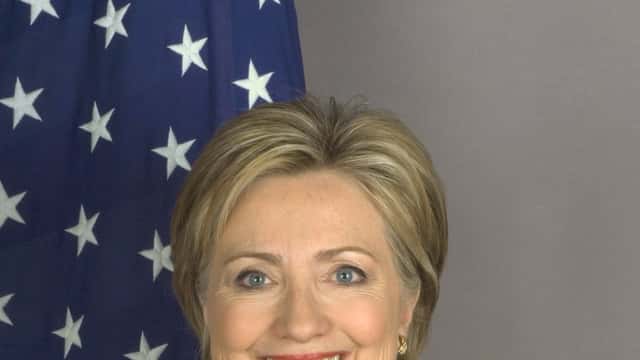
Hillary Clinton says JD Vance$’s defense of Vivek Ramaswamy should rule him out as a presidential contender. The remark, now circulating in a short X clip, follows a specific campaign fight: Vance backed Ramaswamy after his Ohio campaign ran an ad featuring Democratic opponent Amy Acton’s estranged mother.
“His defense of Ramaswamy alone should disqualify him from even running for president,” Clinton said during the November 11 edition of High Stakes with HRC, her podcast with Kara Swisher. The passage appears in the episode transcript; the release date is confirmed in Vox Media’s publisher feed.
That is a political judgment about Vance’s fitness for office. In the surrounding discussion, Clinton did not propose a legal process to remove him from a ballot. She was answering a question about the next Republican presidential field and also said it was too early to know who would emerge.
Mario Nawfal’s account shared the clip on November 12, objecting to Clinton’s judgment and invoking Benghazi to challenge her standing to make it. The post links to an earlier Clash Report upload of the same excerpt. Neither repost is the full conversation.
The dispute joins two questions that deserve separate answers: whether the Ohio ad was defensible, and whether backing it will damage Vance in a future race. The public record establishes his defense and the backlash. It does not establish what Republican primary voters will decide in 2028.
The Ohio ad behind the remark#
Ramaswamy’s campaign used Acton’s mother to challenge her honesty, including her account of her childhood. Acton said she had been estranged from her mother since age 12 and accused the campaign of exploiting her. WOSU’s October 20 report documented both the ad and Acton’s response.
The family history is central to why the ad drew objections. WOSU reported that court records supplied by Acton’s campaign confirmed a charge against her stepfather involving sexual abuse of Acton as a child. Her brother also spoke out in support of her account. That background makes the dispute more specific than an ordinary complaint about a relative criticizing a candidate.
Acton’s response was that the campaign had taken advantage of an older, vulnerable person. Ramaswamy’s spokesperson, Connie Luck, told WOSU the campaign did not know what had happened between mother and daughter, while continuing to question Acton’s truthfulness. Those competing accounts should not be collapsed into a finding that the mother’s accusations were proved.
Ramaswamy defended using the material. Speaking after a Westerville town hall, he argued that voters deserved to examine Acton’s background and record, especially because she had declined to debate him. He also said her mother was not paid, according to Ohio.news’s account of his remarks.
His stated case was that the ad raised a question of honesty and that Acton should answer criticism on a debate stage. The opposing case was that it turned childhood trauma and a broken family relationship into campaign material. A desire for a debate does not resolve that factual dispute; nor does rejecting the tactic settle every separate criticism of Acton’s public record.
Acton subsequently defeated Ramaswamy. WOSU’s November 4 election review reported her victory from unofficial returns and also reported Sherrod Brown’s defeat of Republican Jon Husted$ in the Senate race. Those two outcomes are relevant to claims about a broader Republican setback, rather than a loss attributable to one ad alone.
Our earlier report on the ad’s removal and the polling around it provides more background. The campaign’s explanation at the time was that the spot had completed its run. Stopping an ad is not, on its own, an admission that the criticism was correct.
Vance’s answer: focus on winning#
Vance addressed the controversy in Cincinnati on October 21. Asked about the ad, he said its appropriateness was not his main concern and stressed who would win Ohio’s elections. He argued that Republicans who believed Acton should not govern ought to fight for their candidate rather than dwell on the commercial.
The Roll Call Factba.se transcript records him pointing to harsh attacks on Republican candidates, including attacks involving Donald Trump’s estranged relatives. His defense rested on a claim of unequal standards and on the stakes of the election, rather than a detailed review of Acton’s family history.
C-SPAN published his response, including his call for fellow Republicans to “stop whining about an advertisement and go win the race in 13 days.”
That response explains why Clinton is directing her criticism at Vance as well as at the campaign that made the ad. Her argument treats his willingness to defend the tactic as evidence about his judgment. His argument treats party infighting over the tactic as a distraction from defeating an opponent whose policies he opposed.
Neither argument becomes a fact merely because its speaker holds or once held high office. Vance’s defense does not verify the ad’s allegations. Clinton’s condemnation does not prove that the episode will end his political prospects. Readers can assess the conduct separately from predictions about its electoral cost.
The site’s chart below places Vance’s broader policy record in context. Its coordinates are editorial estimates based on cited positions; they do not measure his popularity, forecast a nomination or rate the truth of his remarks about this ad. Comparable placements for Clinton and Ramaswamy were unavailable in the profiles checked for this story.
Polls found disapproval, but did not isolate the cause of defeat#
There is evidence that the ad failed to persuade many voters. The Suffolk University/USA TODAY Network Ohio survey found that 72% of likely voters had seen or heard about it. Fewer than 1% said it moved them from Acton to Ramaswamy.
The same release found Acton ahead 48% to 44%. That was a narrower gap than in Suffolk’s September survey. The poll therefore supplies evidence against a simple story in which every available measure showed the ad driving an ever-wider lead for Acton.
Suffolk interviewed 500 likely Ohio voters by live telephone on October 21–26. Its stated margin of error was plus or minus 4.4 percentage points. Small groups claiming to have switched votes are especially poor grounds for estimating precisely how many ballots a single commercial cost.
A separate Economist/YouGov survey tested how information about the family history shaped reactions. Respondents received one of two descriptions: a basic account of the ad, or that account plus Acton’s explanation of her estrangement.
| Information supplied | Approved of ad | Disapproved |
|---|---|---|
| Basic description | 22% | 55% |
| Description plus Acton’s account | 13% | 64% |
The second group was more critical. That is useful evidence about the importance of context, though the sample was national rather than limited to Ohio. It measured responses to descriptions of the commercial, not a controlled test of its effect on the actual election.
Source: Economist/YouGov, October 23–26, 2026
Show the numbers
| Description | Disapproved |
|---|---|
| Basic ad description | 55% |
| Plus Acton's account | 64% |
The methodology describes 1,440 registered voters surveyed October 23–26 through YouGov’s opt-in panel, with weighting and an overall margin of error of about three points. The two groups are smaller than the full sample, so that overall margin should not be treated as the uncertainty for each subgroup.
The Ohio result, the ad’s reception and Vance’s future are three different measures. None of these surveys asked whether his defense should prevent him from becoming president. Neither can establish how much the ad contributed to Ramaswamy’s defeat compared with policy, candidate appeal or the national political climate.
That distinction is also central to our reporting on competing explanations for Ramaswamy’s loss. Backlash is documented. Assigning the full result to one campaign choice would require evidence these polls do not supply.
A judgment about fitness, not a ballot ruling#
Clinton made her remark in a discussion of potential Republican contenders. The longer transcript includes her uncertainty about the field and her view that a Republican less closely tied to Trump could appeal beyond his core supporters. Her assessment is that of a Democratic political opponent, not a neutral forecast.
Nawfal’s account takes the opposite view: it challenges why defending Ramaswamy should be treated as disqualifying and attacks Clinton’s own record. That is a response to her credibility and standard of judgment. It does not answer the narrower dispute over the use of Acton’s mother or establish how future primary voters will weigh it.
The word “disqualify” can also suggest a legal claim that the exchange does not make. Presidential qualifications come from the Constitution, including Article II’s age, citizenship and residency provisions, as reproduced by the National Archives. A former candidate’s view that someone is unfit is not itself a change in eligibility.
The next evidence to watch is a direct response to Clinton’s remarks and research that actually asks voters about Vance’s conduct. His October defense is documented; it should not be described as a reply to a podcast released in November. This review did not locate a verified direct response from him to her latest statement.
Reporting note: Prepared with AI assistance from linked public statements, episode transcripts, the publisher’s feed and original poll releases. No new interviews were conducted. Automated transcripts differ on one adjective in the clip; this report quotes only the matching sentence and does not rely on that disputed transcription.
Photo: Hillary Clinton’s January 27, 2009 official portrait, U.S. Department of State, public domain, via Wikimedia Commons. Archival portrait, not an image from the podcast.

Differing perspectives
What does Vance’s defense of the Ramaswamy ad say about his fitness for a future presidential run?
Each position is summarized as its supporters make it, with equal weight and in alphabetical order. A summary is not an endorsement; the evidence for each is weighed in the story above.
The defense reflects unacceptable judgment
Who holds it: Hillary Clinton
Clinton argues that defending Ramaswamy should rule Vance out as a presidential contender. She frames his conduct during the campaign as a political liability, while acknowledging that it remains too early to know who will emerge in either party’s 2028 field.
In their words: High Stakes with HRC, November 11; transcript via WhipScribe ↗
Winning and policy stakes should take priority
Who holds it: JD Vance, defending the ad on October 21
Vance argued that Republicans should focus on winning Ohio’s elections and defeating a candidate they considered unfit. He pointed to harsh attacks on Republicans and urged party officials to fight for their nominee. This was his earlier defense, not a response to Clinton’s November statement.
In their words: Roll Call Factba.se transcript, October 21 ↗
Cite this article
567politics News Desk. “Clinton says Vance’s defense of Ramaswamy should disqualify him from a presidential run.” 567politics. Published 2026-11-12. https://567politics.com/news/hillary-clinton-jd-vance-ramaswamy-ad-disqualify-president-november-2026
Wikipedia citation
{{cite news |title=Clinton says Vance’s defense of Ramaswamy should disqualify him from a presidential run |url=https://567politics.com/news/hillary-clinton-jd-vance-ramaswamy-ad-disqualify-president-november-2026 |work=567politics |author=567politics News Desk |date=2026-11-12 |language=en}}CSL-JSON for reference managers
{
  "id": "https://567politics.com/news/hillary-clinton-jd-vance-ramaswamy-ad-disqualify-president-november-2026",
  "type": "article-newspaper",
  "title": "Clinton says Vance’s defense of Ramaswamy should disqualify him from a presidential run",
  "URL": "https://567politics.com/news/hillary-clinton-jd-vance-ramaswamy-ad-disqualify-president-november-2026",
  "container-title": "567politics",
  "language": "en",
  "author": [
    {
      "literal": "567politics News Desk"
    }
  ],
  "issued": {
    "date-parts": [
      [
        2026,
        11,
        12
      ]
    ]
  }
}Citations identify this article and its publication date. Assess the reporting and its linked sources before using it as evidence.
Read this article as Markdown or JSON. Cite the original page and retain its sources, dates and qualifications.
Embed this article summary
Paste this HTML into your page. The summary stays linked to the full story and updates with it. No account required.
<iframe src="https://567politics.com/embed/news/hillary-clinton-jd-vance-ramaswamy-ad-disqualify-president-november-2026?theme=auto" title="Clinton says Vance’s defense of Ramaswamy should disqualify him from a presidential run by 567politics" width="100%" height="440" style="border:0;max-width:100%" loading="lazy"></iframe>
<p style="font-size:14px">Clinton says Vance’s defense of Ramaswamy should disqualify him from a presidential run by <a href="https://567politics.com/news/hillary-clinton-jd-vance-ramaswamy-ad-disqualify-president-november-2026" rel="nofollow">567politics</a></p>
<script async src="https://567politics.com/embed.js"></script>
READ BEYOND 567POLITICS
Alternate sources & perspectives
Independent coverage and primary evidence to help you compare arguments. A link is not an endorsement; perspective labels describe the linked material.
- other perspective
Nawfal's November 12 post and criticism of Clinton ↗
Mario Nawfal on X
The submitted post is evidence of the reaction and excerpt, not the full podcast or a legal ruling.
- primary evidence
Publisher's original episode listing ↗
Vox Media
RSS lists the What's Next episode on November 11 and links its original audio.
- left argument
Clinton's remarks in the full episode transcript ↗
WhipScribe, transcribing High Stakes with HRC
Shows the political judgment in a wider discussion of the 2028 field; machine transcript, checked against another transcript.
- right argument
Vance's October 21 defense ↗
C-SPAN
Dated video documents his response to the ad controversy before Clinton's November remarks.
- right argument
Full transcript of Vance's Cincinnati remarks ↗
Roll Call Factba.se
Provides his argument about electoral stakes and attacks on Republican candidates.
- other perspective
Acton's response and the ad's family context ↗
WOSU Public Media
Local reporting presents Acton's objections and the campaign's response.
- right argument
Ramaswamy explains his decision to use the ad ↗
Ohio.news
Reports his stated rationale about candidate scrutiny and debates.
- primary evidence
Ohio likely-voter survey on the ad and race ↗
Suffolk University / USA TODAY Network Ohio
Original release; 500 likely voters, October 21–26, margin ±4.4 points.
- primary evidence
Randomized descriptions and national reactions to the ad ↗
YouGov
Tests the effect of added context on approval, not the ad's causal effect on Ohio's result.
- primary evidence
National survey methods ↗
YouGov
Describes panel selection, weighting and the full-sample margin; subgroup uncertainty differs.
Reviewed 2026-11-12. Checked the submitted post and its Clash Report source, Vox Media's original RSS episode listing, two full episode transcripts, C-SPAN's dated post, the Vance remarks transcript, local campaign reporting and original poll releases. Source-discovery results were irrelevant; targeted searches supplied the verified material. Automated podcast transcripts disagree on one adjective; only their matching sentence is quoted. No verified direct Vance response to the November remark was found. His October defense is clearly dated. No new interviews were conducted. Clinton and Ramaswamy lack available spectrum placements; Vance's existing placement is labeled as an editorial estimate.