Iran Rules Out Sending Uranium Abroad as Debate Over Its Nuclear Doctrine Grows at Home
Iran's foreign ministry says it will not move its 60% uranium abroad. Lawmakers and clerics debate leaving the NPT, while Russia and China urge talks.
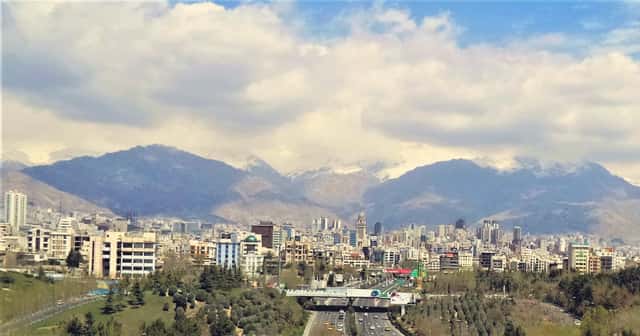
Iran's foreign ministry said on Monday, Nov. 2, that Tehran will not agree to move its enriched uranium out of the country. The spokesperson was asked about sending the material to a third country. "No, we will not agree to it," he said, according to the Tehran Times. JNS, citing the state-run ISNA agency, quoted him: "No such proposal is under consideration." The statement came as the United States presses Iran to give up its most highly enriched uranium. It also came as Iranian officials, lawmakers and clerics argue in public about whether Iran should change its nuclear doctrine or leave the Nuclear Non-Proliferation Treaty (NPT).
This article covers what Iran's government said, what is known about the uranium, and what Washington has asked for. It also covers the debate inside Iran and the roles of Russia and China. Several of the best sources are Iranian state-linked media or Iran International, a Persian-language outlet based abroad that is critical of Iran's government. Each is labeled where it is used. Iranian, Russian, Chinese and Israeli officials are identified by title in this article.
What Iran's foreign ministry said
The Tehran Times reported that the spokesperson spoke at his weekly news conference. He said Iran's nuclear program has always been peaceful. He argued that repeated allegations against it raise legitimate questions about the intentions of those making them. He pointed to the late supreme leader's religious decree against making and using nuclear weapons.
He was asked about calls for Iran to leave the NPT. He called the question a real subject of debate, but said Iran remains a party to the treaty. The Jewish Chronicle quoted him: "This issue is real, but at the decision-making level, we are still a member of the NPT and remain committed to our obligations." He also said, in the Jewish Chronicle's account, that "surrender is not in our vocabulary."
On the strait, the spokesperson said the Strait of Hormuz cannot reopen until the United States ends its naval blockade and meets Iran's demands. He said the demands rest on commitments the United States accepted under the Islamabad understanding and then, in his words, violated. He said they are not preconditions for diplomacy. He called them necessary steps to restore security and Iran's rights. He said the Islamabad memorandum was violated two to three weeks after it was signed, and he noted that Vice President JD Vance$ was the lead U.S. negotiator in that process.
Iran says its seven-stage proposal has been condensed so it could be carried out in "two days." The spokesperson said the outcome depends on Washington: "The ball is in America's court." He said messages are still passing through mediators, including Qatar. For the details of that track, see 567 Politics' report on the Doha talks and the Hormuz plan and its earlier story on Qatar's mediation and the Vance letter.
What is known about the uranium
The spokesperson did not say where the material is. Independent verification is limited. The Jewish Chronicle noted that an International Atomic Energy Agency (IAEA) report in May 2025 estimated Iran had about 9,247 kilograms of enriched uranium, including 408 kilograms enriched to 60 percent. Uranium at 60 percent is well above civilian reactor levels. It is below the roughly 90 percent usually linked to weapons.
The Jerusalem Post, summarizing an Associated Press interview with IAEA chief Rafael Grossi, reported on May 2 that most of Iran's enriched uranium is likely at the Isfahan complex. Grossi said that is a "best estimate." He said, "We haven't been able to inspect or to reject that the material is there and that the seals, the IAEA seals, remain there." That report is six months old. 567 Politics found no newer public IAEA estimate in the sources it opened.
What Washington has asked for
The Jewish Chronicle reported a claim by Israel's Channel 12 on Oct. 28. The channel said the United States had proposed that Iran transfer its highly enriched uranium to the United States. The aim, it said, was to avoid more American military action. 567 Politics has not confirmed that proposal with a U.S. source. Vance told Reuters on Oct. 7, as the Chronicle quoted him: "If you don't want a nuclear weapon, then why do you need 60 per cent enriched fuel?"
On Monday, Vance told reporters that "it requires a firm and verifiable commitment that they don't rebuild their nuclear program," according to Axios. He also said he and President Donald Trump "feel pretty good about the prospect of reaching a settlement." On Saturday, Trump said the United States still needs to "take care" of one or two Iranian nuclear sites. "We can do that in 10 minutes. We have that planned. You can look at Pickaxe Mountain," he said, according to Iran International. For how that remark was received, see 567 Politics' report on claims about a nuclear strike and Pickaxe Mountain.
The debate over Iran's nuclear doctrine
Iran International reported a statement on Saturday, Oct. 31, by the secretary of Iran's Supreme National Security Council. He said neither the government nor the wider establishment had made a new decision on changing the nuclear doctrine. He acknowledged a discussion about whether to keep the current policy if war resumes. He said attacks on nuclear sites had led to public demands for a rethink. "When people see this, they ask us why we should continue with this situation," he said. He argued that Iran had cooperated fully with IAEA inspections. He had said on Sept. 19 that U.S. and Israeli actions gave Iran grounds to leave the NPT.
The same official said on Saturday that he had read the Vance letter and had not yet answered it. "Their tone has completely changed," he said, on Iranian television.
Iran International described a growing campaign for a change in policy. Its report names several voices. They are summarized here by role.
- A hardline lawmaker told a news site in October that his reading of the new supreme leader's behavior was that "his fatwa will be different." He was speaking of the late leader's decree against nuclear weapons.
- A second hardline lawmaker said on X on Oct. 29 that he had asked the supreme leader, at a gathering in Qom, to authorize an atomic bomb. He said the crowd welcomed the request.
- Tehran's interim Friday prayer leader said calls to review the doctrine reflect national awareness, not a hasty reaction. He also said unspecified polls showed more than 70% of Iranians back a review. The report said he gave no details of the polls.
- A representative of the supreme leader in Razavi Khorasan province said that anything needed to deter the enemy, including nuclear weapons, is religiously "obligatory," according to the newspaper Khorasan.
- A member of parliament's national security committee said that if Iran changes its doctrine, it should build a bomb first and then leave the NPT. Leaving without a bomb, he said, would end the "benefits of IAEA oversight."
- The Revolutionary Guards-affiliated Tasnim agency carried a commentary saying Iran could deepen its current doctrine without formally changing it. That would mean enriching to levels suitable for a weapon, short of building one.
Tasnim also reported on Saturday that the supreme leader told senior military commanders to respond to any threat immediately and effectively, and "without geographical limitations." Iran International wrote that hardliners online had hoped he ordered a bomb. It said the published account did not announce such an order. 567 Politics' report on the Qeshm strikes notes that this directive came before Monday's strike.
Voices that urge caution
Iran International also reported opposition inside Iran to the push. A reformist politician and others have challenged the claims of broad public support and called for a referendum. A website close to the Supreme National Security Council, Nour News, warned that "the voices of crowds should not be turned into a substitute for expert assessment and national decision-making."
The moderate conservative site Asr-e Iran said hardliners are using the issue to keep their ranks together. It warned that talk of a bomb "will only become an excuse to legitimize the war-mongering scenarios of Iran's enemies." The spokesperson for the Reformist Front wrote: "Changing the nuclear doctrine and raising the issue of building an atomic bomb is not a simple decision that can be reduced to slogans. The country's security, economy, national interests and future are at stake."
Taken together, these reports show an open argument. The official line is that Iran remains in the NPT and bound by its commitments. Some officials say the question is real. Some lawmakers and clerics want a bomb, and others warn against it. No Iranian source opened by 567 Politics says a decision has been made.
Russia and China
Russia has offered to take the uranium. On Oct. 29, Iran International reported on remarks to Al Jazeera by the Kremlin spokesperson. He said Russia is "ready to play the role of mediator between Iran and the United States if we are asked to do so." He said Russia is prepared to remove enriched uranium from Iran if that helps settle the dispute. The Jerusalem Post reported in May that Trump said the Russian president had offered help, and that he replied the Russian leader should focus on ending the war in Ukraine.
On Monday, the Russian president spoke by phone with the secretary of Iran's Supreme National Security Council, according to the Revolutionary Guards-affiliated Fars agency, as reported by Iran International. Axios said the two discussed efforts to reach a diplomatic agreement. Axios also reported that Russia has offered to be part of any nuclear agreement, including by receiving the stockpile.
In Beijing, China's foreign minister met an Iranian national security official. Xinhua reported that he said the parties should pursue political solutions rather than resume fighting. He also said China supports Iran in safeguarding its sovereignty and security. China is also urging direct U.S.-Iran talks, Axios reported.
What each side says
Iran's position, as stated by its foreign ministry, is that sequence matters. It says the blockade must end and its demands must be met before security can be restored. It rejects removing the uranium. The U.S. position, as stated by Vance, is that there is a pathway to a settlement if Iran gives a "firm and verifiable commitment" not to rebuild its program. Whether a transfer abroad is the form that commitment would take is not settled in the public record. The only reports of a U.S. request for a transfer come through Israeli media.
What is established and what is not
| Question | Status | Source |
|---|---|---|
| Iran rejects moving its uranium abroad | Stated on the record on Nov. 2 | Tehran Times, JNS |
| Iran remains in the NPT | Stated by the foreign ministry | Jewish Chronicle |
| Where the 60% stockpile is held | Best estimate only; no IAEA inspection | Jerusalem Post, citing AP |
| U.S. asked for a transfer to the U.S. | Reported by Israeli media; not confirmed | Jewish Chronicle |
| Iran will change its nuclear doctrine | No decision announced | Iran International |
| More than 70% of Iranians back a review | Claim by a cleric; no data given | Iran International |
Funding and financial-interest context
567 Politics checked its Federal Election Commission-based records for the U.S. politicians named here. It has no verified FEC snapshot for Trump or for Secretary of State Marco Rubio. For Vance it has only a 2022 Senate-cycle snapshot, which says nothing about the nuclear talks. This article makes no claims about their campaign funding. Iranian, Russian, Chinese and Israeli officials are not covered by U.S. campaign-finance records.
Differing perspectives
What should happen to Iran's enriched uranium and its nuclear doctrine as it negotiates with the United States?
Each position is summarized as its supporters make it, with equal weight and in alphabetical order. A summary is not an endorsement; the evidence for each is weighed in the story above.
Avoid rushing a doctrine change
Who holds it: Reformist politicians and moderate conservative commentators in Iran
Opponents of a change say it is not a decision for slogans or crowds. The Reformist Front spokesperson writes that the country's "security, economy, national interests and future are at stake." A website close to the national security council says decision-makers should be able to weigh options without pressure. A reformist politician calls for a referendum if backers say the public supports a bomb.
In their words: Iran International ↗
Keep the uranium in Iran and stay in the NPT
Who holds it: Iran's foreign ministry
The spokesperson says Iran will not agree to move its enriched uranium abroad and that no such proposal is under consideration. He says Iran's program has always been peaceful and that, at the decision-making level, Iran is still a member of the NPT and committed to its obligations. He argues that the United States must first end its blockade and meet Iran's demands, and that repeated allegations raise legitimate questions about the intentions of those making them.
In their words: Tehran Times ↗
Move the uranium to a third country such as Russia
Who holds it: The Kremlin and the IAEA's discussions with several parties
The Kremlin spokesperson says Russia is ready to mediate between Iran and the United States if asked and is prepared to remove enriched uranium from Iran if that helps settle the dispute. The IAEA chief has said the agency discussed moving Iran's enriched uranium out of the country with several parties, including Russia. Supporters see an outside transfer as a way to ease tensions without a strike.
In their words: Iran International, reporting the Kremlin spokesperson ↗
Reconsider the nuclear doctrine
Who holds it: Hardline lawmakers, clerics and some state-linked media in Iran
Supporters argue that attacks on nuclear sites showed that ambiguity did not deter war. One lawmaker says Iran should build a bomb first and then leave the NPT. A cleric calls nuclear weapons religiously "obligatory" for deterrence. A Revolutionary Guards-affiliated commentary says Iran could enrich to weapons-suitable levels without building a weapon. The Supreme National Security Council secretary says the question is under discussion if war resumes.
In their words: Iran International ↗
Require a firm, verifiable commitment on the program
Who holds it: Vice President JD Vance and the U.S. administration
Vance says there is a pathway to a settlement, but "it requires a firm and verifiable commitment that they don't rebuild their nuclear program." He has asked why Iran needs fuel enriched to 60 percent if it does not want a weapon. Israeli media report that Washington proposed transferring the highly enriched uranium to the United States. Trump says remaining nuclear sites could be struck quickly if talks fail.
In their words: Axios ↗
READ BEYOND 567POLITICS
Alternate sources & perspectives
Independent coverage and primary evidence to help you compare arguments. A link is not an endorsement; perspective labels describe the linked material.
- other perspective
Iran rejects uranium transfer abroad, says Hormuz reopening depends on US ending blockade ↗
Tehran Times
Iranian foreign ministry spokesperson's news conference. Iranian state-aligned outlet; read in full.
- independent analysis
Iran: Moving 60% uranium abroad 'not under consideration' ↗
JNS
Same statement, citing ISNA. JNS is an Israeli-focused outlet; read in full.
- independent analysis
Iran rules out removal of enriched uranium amid fresh threat of US strikes ↗
The Jewish Chronicle
NPT remarks, IAEA May 2025 stockpile figures, Channel 12 report on a U.S. transfer proposal, Vance's Oct. 7 remark.
- independent analysis
Iran's top security official, Putin discuss Middle East developments ↗
Iran International
The page carries the Nov. 2 Putin call report and a separate Oct. 31 report on Iran's nuclear-doctrine debate. Iran International is a Persian-language outlet based abroad and critical of Iran's government.
- primary evidence
Russia ready to mediate between US and Iran, take enriched uranium - Kremlin ↗
Iran International
Kremlin spokesperson's remarks to Al Jazeera, as reported.
- independent analysis
IAEA discusses extraction of enriched uranium with Russia, US ↗
The Jerusalem Post
Summarizes an AP interview with the IAEA chief; dated May 2, 2026.
- primary evidence
Trump to Axios: "No rush" to decide on bombing Iran again ↗
Axios
Vance's remarks and the Russia and China contacts.
Reviewed 2026-11-02. Reviewed Nov. 2, 2026 (ET). The IAEA stockpile figures are from May 2025 as quoted by the Jewish Chronicle, and the location estimate is from a May 2026 AP interview as summarized by the Jerusalem Post; no newer IAEA public figure was found. The claim that Washington asked for a transfer of uranium to the United States comes from Israel's Channel 12 via the Jewish Chronicle and was not confirmed by a U.S. source. Reports on Iranian lawmakers and clerics come from Iran International, which is critical of Iran's government; the original Persian-language reports were not opened. Iranian officials and the Reformist Front are identified by title. The Reuters, AP and Xinhua originals were not opened.