Treasury Says Blockade and Sanctions Have Crippled Iran's Economy; Experts Split on Whether Pressure Works
Treasury cites a 25% rial drop, 90% inflation and no oil loaded since Aug. 25. Specialists, Iranian officials and U.S. advisers disagree on what comes next.
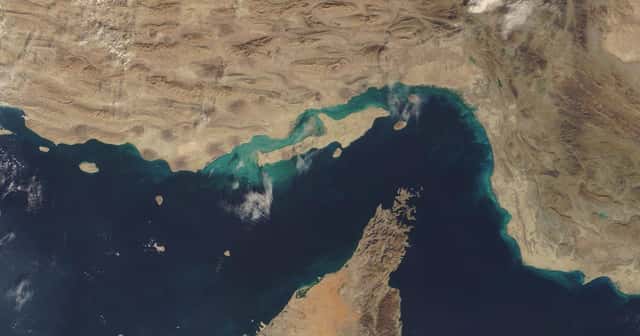
A new Treasury Department report says the U.S. naval blockade, sanctions and blocked overland routes have severely damaged Iran's economy. Axios obtained the report on Oct. 30. Treasury Secretary Scott Bessent leads the pressure campaign it describes. Axios reports that he is one of several advisers urging President Donald Trump to let the campaign run before ordering a return to major combat. Other advisers want a deal, and others want to resume strikes. Trump told Axios on Monday that he is "in no rush."
This article covers what the report says and what Bessent has said in public. It also covers what specialists and Iranian officials say about the figures, and how the administration's debate is described. The report itself is not public in the sources 567 Politics opened. Its figures come from Axios, Kurdistan24 and Iran International, which describe it in similar terms. Treasury's claims are Treasury's. Iranian officials have not published a point-by-point reply that 567 Politics could find.
What the Treasury report says
Axios wrote that the report, titled "Operation Economic Outcast: Iran's Isolation by the Numbers," says Treasury's efforts have "crippled Iran's economy and limited its ability to generate revenue." Axios added that the report does not argue the Iranian government is close to collapse.
The main figures, as reported by Axios and Iran International, are in the table below.
| Indicator | Figure in the Treasury report | Reported by |
|---|---|---|
| Value of the rial since Aug. 24 | Down about 25% | Axios, Iran International |
| Unofficial exchange rate, October | 2,687,000 rials per U.S. dollar (record low) | Axios, Iran International |
| Annual inflation, September | About 90%, versus about 35% in early 2025 | Axios |
| Oil loaded onto tankers | None since Aug. 25 | Axios |
Iran International also reported a Treasury calculation, using Kpler shipping data, of Iranian or suspected Iranian oil unloaded at known locations. The 30-day moving average fell to about 400,000 barrels per day by Oct. 19, from more than 1 million barrels per day around the launch of the campaign. Treasury attributes the drop to the blockade and targeted sanctions. Axios said Iran has also sold off its remaining oil that was stranded at sea, according to Kpler.
The report also covers trade and travel. Iran has tried to move goods overland to get around the blockade. The report says this faces "major bottlenecks" at borders with Pakistan, Turkey, Afghanistan and Turkmenistan. Axios and Iran International report that thousands of trucks are stranded at the Turkish border with delays of up to 20 days, and hundreds more wait at the Pakistani border. The United Arab Emirates, Oman, Iraq, Georgia and Azerbaijan have barred Iranian airlines and canceled flights to Iran, the report says. Iran International adds that Iraq has certain religious-travel exemptions for Najaf. Turkey has suspended all Mahan Air flights.
On finance, Axios reports that Iranian banks have faced new restrictions in Turkey, Lebanon and the UAE, and that Treasury is targeting cryptocurrency exchanges used to avoid sanctions. Iran International lists examples from the report. Turkish regulators took control of one sanctioned bank and revoked the license of another. Lebanon revoked the license of an Iranian bank branch. The UAE took enforcement steps against Iranian bank branches. Treasury said the operation will continue and warned that anyone knowingly helping Iran avoid sanctions should expect more U.S. action.
How the campaign began
Treasury announced the campaign, called Operation Economic Outcast, on Aug. 24. Its press release said the action was taken "at President Trump's direction" and was "an unprecedented, whole-of-government, economic campaign against the Islamic Republic of Iran and its enablers." The release said Treasury issued determinations against five sectors: digital assets, technology, gold, aviation and shipping. It also said the Office of Foreign Assets Control sanctioned nearly 60 entities, individuals and vessels.
Bessent said in the release: "Our objective is to sever every economic lifeline that sustains this tyrannical regime until Tehran stands alone." He added that "America is no longer managing the Iranian threat. We are ending it." The release said every country would be given a defined timeline to shut down the Iran-related activity Treasury had identified, and that Treasury would act if they failed to do so.
What Bessent has said since
Bessent spoke to the Farsi-language outlet Iran International on Oct. 26. He said Iran has "no oil on the water." He said: "There have been no loadings at Kharg Island. Production is starting to falter." He forecast that Iran's economy would shrink by more than 25 percent between March 2026 and March 2027, a figure he compared with the contraction of the Soviet economy after its collapse. He said the next eight weeks of the campaign would be "even more intense."
He also addressed Iranian households directly. "My advice to the Iranian people would be: don't pay your taxes because you're not going to get anything back from the government," he said. He told people to stock heating fuel and fill their gasoline tanks. He said the campaign is meant to pressure Iran's leaders, not its people, and that humanitarian channels remain open for food and medicine. He said Iran is running out of dollars to pay for imports, and that authorities are printing money and failing to pay salaries.
Iran International reported that many people who commented on its post questioned his advice. Some said taxes are deducted from pay automatically. Others said they had no room to store fuel. One wrote that Iranians should not be asked to "risk their families and lives" only for the United States to bomb the country. Others supported more economic non-cooperation. These comments are a small sample from one outlet's audience, not a poll.
Bessent also told Newsmax earlier in October, as Iran International reported, that the United States is working with Turkey and Pakistan to "cut off all the land routes" into Iran. "We did have a maximum pressure campaign. Now we have an absolute isolation campaign and it's working," he said. He rejected the idea that Iran could wait out the U.S. midterm elections: "Nothing will change in terms of President Trump's calculus."
What Iranian officials and specialists say
Iran's president said in August that "some say sanctions have no effect at all; to those people, I really don't know what to say," according to Iran International. A deputy labor minister, speaking to the ILNA news agency, said Iran's economy contracted 10 percent excluding oil, and 4.6 percent including oil, in the spring. He warned that up to 1.4 million people could leave the labor market this year if the economy shrinks by seven to eight percent. Those are Iranian official figures reported by Iran International.
Iran's foreign ministry spokesperson said on Monday that the Strait of Hormuz cannot reopen unless the United States ends its blockade and meets Iran's demands, according to the Tehran Times. He said the demands are steps to restore security, not preconditions. His position is that pressure has not changed Iran's priorities.
At an Iran International town hall on Oct. 11, three specialists disagreed about whether pressure will produce concessions. Kerri Bitsoff, a former senior official at Treasury's Office of Foreign Assets Control, said enforcement is what separates this campaign from earlier rounds. She said economic hardship alone is unlikely to persuade Iran's leaders, but pressure could affect security officials whose loyalty depends on salaries and privileges. Patrick Clawson of the Washington Institute said concessions are possible and suggested Iran could accept a three-year suspension of enrichment. Mohammad Machine-Chian, an Iran International economist, was more skeptical that Iran would give up its nuclear and regional goals.
Homayoun Falakshahi, head of crude oil analysis at Kpler, told Iran International that crude and condensate export revenue could fall to zero by mid-December if the blockade holds. He said sanctions evasion is harder against a physical blockade, and that he doubts Tehran is ready for major compromises on its nuclear program.
A Reuters investigation on evasion
The same Iran International page summarized a Reuters investigation that points the other way on one question. Reuters, working with the risk consultancy 240 Analytics, examined shipping records for a network of agencies that use the name of Iran's defense ministry. One agency imported $2.3 billion in military-related goods between January 2025 and June 2026, Reuters found. In 97% of the shipments reviewed, payment was recorded as settled "without currency transfer," which allows purchases with funds held outside Iran.
Reuters said imports fell 47% to $54 million in March, shortly after the war began, and recovered to $77 million by May. It said it found no evidence that the numbered agencies had been individually sanctioned by Western governments. It also said it could not confirm that all the goods were meant for weapons, since many have civilian and military uses. A Treasury spokesperson told Reuters the United States had cut off Iran's economic lifelines. "While the regime may continue its desperate attempts to evade our powerful sanctions, fund its military and weapons programs, and access foreign currency, we are always 10 steps ahead," the spokesperson said. China's foreign ministry said it was unaware of the shipments.
The debate inside the administration
Axios reported on Monday that Trump is weighing three courses, each backed by a different group of advisers.
| Course | Advocates, per Axios | Their argument |
|---|---|---|
| Make a deal | Vice President JD Vance$ and a White House envoy | A renewed war might not change the situation for the better; most Gulf countries support a deal, Axios says |
| Resume combat | Israel's prime minister and the defense secretary | Iran cannot be trusted to make or keep a deal |
| Maximum economic pain | The Treasury secretary, the CIA director and Secretary of State Marco Rubio | Keep "no war, no deal" and let pressure continue |
Axios quoted a U.S. official on Oct. 30: "Bessent is telling the President the economic pressure campaign is working and that things are getting worse in Iran and that this could further destabilize the regime and push the Supreme Leader to agree to a deal." On Monday, Axios reported that the CIA director told Trump prolonged economic pain would either bring more concessions or create enough instability for citizens to revolt, per a source with direct knowledge. The CIA declined to comment.
Israel's UN ambassador denied that his country is pressing Trump. "Prime Minister Netanyahu is not pressing President Trump," he told Al Arabiya English, according to Iran International. Axios had reported on Sunday, citing one Israeli and one U.S. source, that the prime minister urged an immediate strike after the Nov. 3 midterms. On Saturday, Rubio said Trump would "prefer to solve it diplomatically" and has "incredible confidence" in military action if needed, the Jerusalem Post reported.
Trump described the same approach to Axios: "We crippled them financially. They have no money, no gasoline and their people are getting very tired of it." He also said: "One way or the other, we will do something, but there is no rush." On Monday evening, U.S. officials told reporters the military had carried out limited strikes on Iran's Qeshm Island, as 567 Politics reported in its story on the Qeshm strikes and Vance's remarks on progress. For the diplomatic track in the same week, see 567 Politics' report on the Doha talks and the Hormuz plan.
CENTCOM said on X on Oct. 31 that U.S. forces had redirected 144 commercial vessels to ensure compliance with the blockade.
Ravid posted the Axios account of the Treasury report on Oct. 30:
What is established and what is not
Established: the Treasury report exists, Axios obtained it, and its headline figures are reported consistently by Axios, Kurdistan24 and Iran International. Iranian officials themselves acknowledge economic damage. A deputy labor minister gave contraction figures, and the president said sanctions have an effect.
Not established: that the pressure will lead to concessions. Specialists disagree. Treasury says it needs more time. Iran's foreign ministry says pressure has not changed its priorities. The report does not claim the government is near collapse. The figures are Treasury's and have not been independently audited in the sources opened. The Reuters investigation shows that some military-related trade continued during the war.
Also open is how the costs fall on ordinary Iranians. Bessent says humanitarian channels remain open. Iranian officials and some residents describe rising costs and job losses. No independent humanitarian assessment was among the sources 567 Politics opened.
Funding and financial-interest context
567 Politics checked its Federal Election Commission-based records for the U.S. politicians named in this story. The platform has no verified FEC snapshot for Bessent, Trump or Rubio. For Vance it has only a 2022 Senate-cycle snapshot (candidate S2OH00436), which says nothing about the policies discussed here. This article makes no claims about their campaign funding. Bessent's profile notes his earlier career in investment management, drawn from Treasury's official biography, and this article does not assess any financial-disclosure question.
Differing perspectives
Should economic pressure remain the main U.S. tool toward Iran, rather than a deal now or a return to major combat?
Each position is summarized as its supporters make it, with equal weight and in alphabetical order. A summary is not an endorsement; the evidence for each is weighed in the story above.
End the blockade first, then negotiate
Who holds it: Iran's foreign ministry and foreign minister
Iran's foreign minister says Tehran has presented its conditions and its proposal and that everything depends on Washington. He says that if the United States accepts Iran's conditions for reopening the Strait of Hormuz, "negotiations will resume." The foreign ministry spokesperson says the strait cannot reopen unless the blockade ends. He says Iran's proposal can be carried out in two days and that "the ball is in America's court."
In their words: Tehran Times ↗
Let the economic pressure campaign run
Who holds it: The Treasury secretary, the CIA director and the secretary of state, per Axios sources
Treasury says its campaign aims to "sever every economic lifeline" that sustains Iran's government. Supporters point to the rial's fall of about 25%, inflation near 90% and no oil loaded since Aug. 25. A U.S. official says the Treasury secretary tells Trump that things are getting worse in Iran and that the pressure could push the supreme leader toward a deal. Axios reports that the CIA director expects more concessions or instability.
In their words: U.S. Department of the Treasury ↗
Move toward a deal now
Who holds it: Vice President JD Vance, a White House envoy and most Gulf governments, per Axios
Axios reports that Vance and the envoy urge a deal because a renewed war might not change the situation for the better. Vance says he and Trump "feel pretty good about the prospect of reaching a settlement" and that "we made some progress." He says the pathway requires "a firm and verifiable commitment" that Iran will not rebuild its nuclear program. Axios says most Gulf countries have told Trump they support a deal.
In their words: Axios ↗
Resume major combat operations
Who holds it: Israel's prime minister and the U.S. defense secretary, as described by Axios
Axios reports that both argue Iran cannot be trusted to make a deal, let alone abide by one, and that Trump should finish the job militarily. Axios also reports, citing one Israeli and one U.S. source, that the prime minister urged an immediate strike after the Nov. 3 midterms. Israel's UN ambassador denies this, telling Al Arabiya English that the prime minister "is not pressing President Trump" and that Israel will support the U.S. decision.
In their words: Iran International, reporting Axios and Israel's UN ambassador ↗
READ BEYOND 567POLITICS
Alternate sources & perspectives
Independent coverage and primary evidence to help you compare arguments. A link is not an endorsement; perspective labels describe the linked material.
- primary evidence
U.S. blockade, sanctions crippling Iran's economy, Treasury report says ↗
Axios
First account of the Treasury report, obtained by Axios. Read in full. The report itself was not opened.
- independent analysis
US Treasury says Iran's oil revenue, trade hit hard by pressure campaign ↗
Iran International
More detail on the report, Bessent's Oct. 26 interview, Iranian official figures and a Reuters investigation into evasion. Iran International is a Persian-language outlet based abroad that is critical of Iran's government.
- primary evidence
Treasury Launches Unprecedented Campaign Against Iranian Regime on Economic D-Day ↗
U.S. Department of the Treasury
Aug. 24 launch statement with Bessent's quotes and the list of five sectors and nearly 60 sanctions targets.
- independent analysis
US pressure threatens Iran's political survival but may not bring concessions ↗
Iran International
Oct. 11 panel with a former OFAC official, a Washington Institute fellow and an economist, plus Kpler's view on oil revenue.
- primary evidence
Trump to Axios: "No rush" to decide on bombing Iran again ↗
Axios
Trump interview, three camps among advisers, Vance's remarks, Araghchi's and Pezeshkian's responses.
- other perspective
Iran rejects uranium transfer abroad, says Hormuz reopening depends on US ending blockade ↗
Tehran Times
Iranian foreign ministry spokesperson's position on the blockade and Iran's demands.
Reviewed 2026-11-02. Reviewed Nov. 2, 2026 (ET). The Treasury report itself was not publicly available to 567 Politics; its figures come from Axios and Iran International and are Treasury's own claims, not independent audits. The Reuters investigation on evasion is described only through Iran International's summary; the Reuters original was not opened. Iranian officials had not published a point-by-point reply to the report as of this review. Iran International is critical of Iran's government and Tehran Times reflects Iranian state positions; both are identified in the text. Quotations were checked against the pages listed.