Who is moving to cut Iran war funding: the bills, votes and promises
Khanna and Van Hollen seek leverage in December. Hoyle, Larson and Sanders propose restrictions; Massie and Davidson voted against a funding framework.
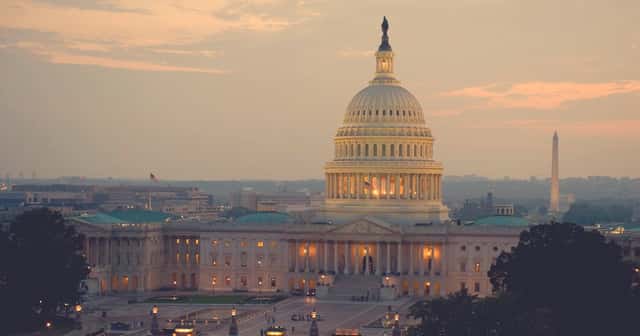
The effort to stop financing the Iran war has identifiable sponsors, votes and proposals. It also has an important limit: opposing the war, voting against a spending package and passing an enforceable funding cutoff are different acts.
On the Democratic side, Ro Khanna$ and Chris Van Hollen are pushing to use the December government-funding deadline as leverage. Val Hoyle$ and John Larson$ have introduced distinct funding restrictions. Independent Sen. Bernie Sanders$ introduced a broader ban on financing unauthorized force against Iran, backed by seven Democratic senators.
On the Republican side, Reps. Thomas Massie$ and Warren Davidson$ cast the two Republican votes against the July budget framework designed to unlock new war funding. That is a concrete spending-related action. It is not evidence that either has enacted a cutoff or signed onto every Democratic proposal.
This guide separates those records so readers can judge what lawmakers have done and what remains a promise. It builds on our report on the funding test facing Schumer and Jeffries$, which distinguishes their stated opposition to the war from a settled strategy to end it.
The names and the actions#
| Lawmaker or group | Documented action | What it would establish |
|---|---|---|
| Ro Khanna, D-Calif.; Chris Van Hollen, D-Md. | Pushing to condition the December funding deal on restrictions for Iran operations | A negotiating strategy and spending commitment, not an enacted ban |
| Val Hoyle, D-Ore.; Brendan Boyle$, D-Pa.; additional Democratic cosponsors | H.R. 8592, the No WAR Act | A procedural obstacle to funding unauthorized Iran hostilities through reconciliation |
| John Larson, D-Conn. | H.R. 9964, described by his office as the No Funds for Illegal Wars Act | A broader spending prohibition tied to war-powers requirements, with exceptions |
| Bernie Sanders, I-Vt., and seven Democratic senators | S. 2087, the No War Against Iran Act | A proposed ban on funding unauthorized military force against Iran |
| Thomas Massie, R-Ky.; Warren Davidson, R-Ohio | Voted against H. Con. Res. 113 on July 22 | Opposition to a budget framework for new spending; it did not stop existing funding |
| House Democrats voting on that framework | All 211 participating Democrats voted no | A recorded vote against the package, not agreement on every cutoff strategy |
The bill texts and voting record are linked below. These are verified examples and a guide to the records, rather than a claim that this list captures every antiwar effort in Congress.
Khanna and Van Hollen: use the December deadline#
Ro Khanna and Chris Van Hollen are pressing Democrats to withhold support for a government-funding measure unless it restricts money for the conflict, The Washington Sun reported November 6. Van Hollen's proposed approach would cover money already approved, as well as future appropriations. Khanna endorsed risking a shutdown to force the issue. The Sun's original reporting.
That makes their position more specific than a general demand to bring the war to an end. They are identifying a legislative moment when their votes could matter and a condition they want attached to an agreement.
In a November 4 post from his congressional account, Khanna included a demand for no new Iran-war funding among the policies Democrats should deliver.
The distinction between new money and already available money matters. Refusing an additional appropriation can deny the administration resources it wants. A prohibition on spending previously approved funds could reach resources it already has. The effect depends on the final language, its coverage and its exceptions.
The current funding deadline is December 11. The Sun also reported that Rosa DeLauro$, the leading Democrat on House Appropriations, opposes war funding in the regular 2027 defense spending bill. That is a stated position on a funding vehicle; it should not be mistaken for a completed agreement to force a shutdown.
There is a real tradeoff. A confrontation can create leverage, but it can also disrupt government services without securing the desired restriction. A credible strategy needs both the votes to block an unacceptable bill and an explanation of how that pressure produces an agreement. Public commitment is one part of that effort, not its conclusion.
Hoyle and Boyle: block a fast-track funding route#
Rep. Val Hoyle introduced H.R. 8592 on April 30, with Rep. Brendan Boyle as an original cosponsor. Its formal title is the No War Appropriations through Reconciliation Act. The official bill-status file retrieved November 6 lists 61 cosponsors, all Democrats; its latest listed action remains referral to the Rules and Budget committees. Official bill text; the sponsorship and action record.
The proposal would create a point of order—a procedural objection—against reconciliation measures providing budget authority for hostilities against Iran without a declaration of war or specific authorization. It includes hostilities conducted through proxy forces. The operative provisions.
Reconciliation is a budget process that can move qualifying legislation through the Senate without the usual 60-vote hurdle. Hoyle's bill targets that route. Her office says the aim is to prevent a procedural shortcut from supplying money for a war Congress has not authorized. Her announcement.
This is a funding-related legislative action with a defined mechanism. Its limits are equally important. Blocking one route to additional resources is different from prohibiting every expenditure on the conflict. The bill would need to pass before its proposed objection could operate; introduction and cosponsorship alone do not create a new rule.
The support also reaches beyond the two sponsors named here. Readers looking for their own representative can consult the official cosponsor list rather than infer a position from party membership. Conversely, absence from this particular bill is not proof of support for the war: lawmakers can pursue other restrictions.
Larson: a broader ban with explicit exceptions#
Rep. John Larson introduced H.R. 9964 on July 27 and announced it the next day as the No Funds for Illegal Wars Act. The official text would prohibit federal departments and agencies from spending or obligating money to introduce or keep U.S. forces in hostilities in violation of the War Powers Resolution. It covers situations where imminent involvement in hostilities is clearly indicated. Introduced bill text.
The proposal contains exceptions for responding to imminent attacks involving the United States, its territories or armed forces, or an ally or partner. That qualification matters when assessing a headline promise to cut off all war funding: the operative text leaves specified uses of force outside the prohibition.
Larson presents it as a way to enforce Congress's demands to end the Iran war and constrain future unauthorized conflicts. The official status record lists committee referral, rather than passage. His explanation; official actions.
A broad restriction can have reach beyond one conflict. It also raises questions about how an administration interprets its exceptions. Those questions are reasons to read the language closely, rather than treat a bill's name as a complete account of its effect.
Sanders and seven Democrats: an existing funding-ban proposal#
Bernie Sanders, an independent, formally introduced S. 2087 on June 17, 2025. That date places it before the current war, within the same 119th Congress. The seven listed Democratic cosponsors are Peter Welch$, Elizabeth Warren$, Jeff Merkley$, Chris Van Hollen, Ed Markey$, Tammy Baldwin$ and Tina Smith$. Congress.gov's record.
The No War Against Iran Act would bar federal funds for military force in or against Iran without a declaration of war or specific congressional authorization. It includes a War Powers Resolution exception; Sanders's office describes that as preserving self-defense. Bill text; the announcement.
The official status file reviewed still lists referral to Senate Foreign Relations, with no later action. Its underlying update is dated July 2025. That is evidence of sponsorship of a funding restriction, not a fresh post-election commitment by each cosponsor. The official status file.
No Republican appears on that bill's seven-member cosponsor list. That is a fact about this proposal, not a finding that every Republican supports every form of war spending.
Massie and Davidson: the Republican no votes#
On July 22, Thomas Massie and Warren Davidson were the only Republicans voting against H. Con. Res. 113. The House passed the budget resolution 216–214. All 211 Democrats who voted opposed it; independent Kevin Kiley also voted no. The House clerk's roll call.
The Texas Tribune reported that the framework opened a path toward a $95 billion package, including $73 billion for Iran-war and other national-security costs. It also covered farm aid and election-related spending. The Tribune's reporting.
A budget framework starts a process. It is not itself the final appropriation handing that entire sum to the military. A no vote can impede that process, but voting against a package with several purposes cannot establish opposition to every item in isolation.
Massie also opposed that day's separate defense authorization bill. In this July 22 post, he objected to its U.S.-Israel military technology and supply-chain provisions and wanted the Senate to reject that version. This post concerns the authorization bill, not the budget-framework roll call above.
The post establishes his stated objection; its characterization of the provisions is his argument. It should not be relabeled as a standalone amendment to end all Iran-war spending. The official defense-bill roll call.
Massie and Davidson therefore belong in an account of lawmakers resisting a funding path. The evidence here supports that narrower description. It does not establish that they have joined the December negotiating strategy or cosponsored the three bills reviewed above.
A caucus commitment and the argument for continued funding#
The Congressional Progressive Caucus adopted a position on March 25 opposing supplemental Iran-war funding while the conflict remains unauthorized and, in its view, unconstitutional. The caucus says a supermajority approved the position. That is a collective commitment, not proof of how every member will vote on every future package. The caucus statement.
Supporters of more funding offer a different case. House Budget chair Jodey Arrington$ presented the reconciliation effort as support for troops and national security. The administration argues that military flexibility is needed to protect personnel and allies, counter attacks and prevent an Iranian nuclear weapon. The committee's statement; the White House's policy argument.
That makes the design of a cutoff central to the dispute. Opponents of the war can seek to preserve money for personnel protection and withdrawal while denying resources for offensive operations. Supporters can argue that restrictions would impair deterrence or create uncertainty. The claims need to be assessed against the actual text and available evidence, rather than slogans about either abandoning troops or issuing blank checks.
The records show differences within both the Democratic Party and the Republican Party. The immediate tests are whether the proposed restrictions advance, whether leaders attach enforceable conditions to spending, and whether lawmakers hold their positions when the votes become decisive. None of the three bills reviewed is shown as enacted in the official records retrieved for this report.
Reporting note: Reviewed November 6, 2026. The two embedded X posts were checked against public embed records for author, wording and date. They illustrate lawmakers' stated positions and are not a measure of public opinion. Bill-status files have different underlying update dates; the Sanders proposal is from 2025. This guide evaluates policy actions and does not infer lawmakers' motives from campaign donations.
Photo: Architect of the Capitol, east front of the U.S. Capitol, December 2011. Public-domain U.S. government photograph; archival image, cropped for display. Source and rights.

Differing perspectives
How should Congress use its spending powers in the Iran conflict?
Each position is summarized as its supporters make it, with equal weight and in alphabetical order. A summary is not an endorsement; the evidence for each is weighed in the story above.
Bar funding for unauthorized military force
Who holds it: Sen. Bernie Sanders and the seven Democratic cosponsors of S. 2087
They argue that Congress must reclaim its authority over war and spending by prohibiting federal funds for military force against Iran without a declaration of war or specific authorization. They see a funding restriction as a practical limit on presidential action and a safeguard against another regional conflict. Their proposal preserves an exception under the War Powers Resolution rather than treating every use of defensive force as prohibited.
In their words: Sanders's No War Against Iran Act and announcement ↗
Preserve resources and military flexibility
Who holds it: The Trump administration and congressional supporters of the war budget
They argue that the government must retain the resources and flexibility needed to defend U.S. forces, allies and interests against continuing Iranian threats. They see military readiness and credible deterrence as supports for diplomacy, and warn that withdrawal demands can create uncertainty or encourage adversaries. The administration also argues that restrictions must respect presidential authority to respond to attacks and prevent Iran from obtaining a nuclear weapon.
In their words: White House statement of administration policy, September 15 ↗
Prevent fast-track funding without authorization
Who holds it: Rep. Val Hoyle and supporters of H.R. 8592
They argue that Congress should not use reconciliation to supply resources for hostilities it has not authorized. A procedural objection would prevent a budget shortcut from replacing a direct debate over war. Their proposal also reaches funding for proxy operations. They see this as an enforceable congressional rule that protects the role of lawmakers and requires a declaration of war or specific authorization before that funding route is used.
In their words: Hoyle's No WAR Act ↗
Cite this article
567 Politics staff. “Who is moving to cut Iran war funding: the bills, votes and promises.” 567politics. Published 2026-11-06. https://567politics.com/news/iran-war-funding-cutoff-lawmakers-khanna-van-hollen-massie-davidson-bills-votes-2026
Wikipedia citation
{{cite news |title=Who is moving to cut Iran war funding: the bills, votes and promises |url=https://567politics.com/news/iran-war-funding-cutoff-lawmakers-khanna-van-hollen-massie-davidson-bills-votes-2026 |work=567politics |author=567 Politics staff |date=2026-11-06 |language=en}}CSL-JSON for reference managers
{
  "id": "https://567politics.com/news/iran-war-funding-cutoff-lawmakers-khanna-van-hollen-massie-davidson-bills-votes-2026",
  "type": "article-newspaper",
  "title": "Who is moving to cut Iran war funding: the bills, votes and promises",
  "URL": "https://567politics.com/news/iran-war-funding-cutoff-lawmakers-khanna-van-hollen-massie-davidson-bills-votes-2026",
  "container-title": "567politics",
  "language": "en",
  "author": [
    {
      "literal": "567 Politics staff"
    }
  ],
  "issued": {
    "date-parts": [
      [
        2026,
        11,
        6
      ]
    ]
  }
}Citations identify this article and its publication date. Assess the reporting and its linked sources before using it as evidence.
Read this article as Markdown or JSON. Cite the original page and retain its sources, dates and qualifications.
Embed this article summary
Paste this HTML into your page. The summary stays linked to the full story and updates with it. No account required.
<iframe src="https://567politics.com/embed/news/iran-war-funding-cutoff-lawmakers-khanna-van-hollen-massie-davidson-bills-votes-2026?theme=auto" title="Who is moving to cut Iran war funding: the bills, votes and promises by 567politics" width="100%" height="440" style="border:0;max-width:100%" loading="lazy"></iframe>
<p style="font-size:14px">Who is moving to cut Iran war funding: the bills, votes and promises by <a href="https://567politics.com/news/iran-war-funding-cutoff-lawmakers-khanna-van-hollen-massie-davidson-bills-votes-2026" rel="nofollow">567politics</a></p>
<script async src="https://567politics.com/embed.js"></script>
READ BEYOND 567POLITICS
Alternate sources & perspectives
Independent coverage and primary evidence to help you compare arguments. A link is not an endorsement; perspective labels describe the linked material.
- primary evidence
Hoyle's No WAR Act: the introduced text ↗
U.S. Government Publishing Office
H.R. 8592 targets reconciliation funding for unauthorized Iran hostilities; it is not a universal prohibition on all war spending.
- primary evidence
Hoyle bill sponsorship and latest listed action ↗
U.S. Government Publishing Office
The retrieved record lists 61 Democratic cosponsors and committee referral. Its underlying update is October 20, 2026.
- primary evidence
Larson's proposed limitation on federal funding ↗
U.S. Government Publishing Office
H.R. 9964 would bar spending that violates War Powers Resolution requirements, with imminent-attack exceptions.
- primary evidence
Sanders's 2025 Iran funding-ban bill ↗
Library of Congress
S. 2087 is from June 2025 in the current Congress. The article distinguishes that sponsorship from new post-election pledges.
- primary evidence
The July 22 budget-framework roll call ↗
Clerk of the U.S. House of Representatives
Massie and Davidson were the two Republican no votes; all 211 participating Democrats and independent Kiley also opposed the framework.
- primary evidence
The separate July 22 defense-authorization roll call ↗
Clerk of the U.S. House of Representatives
Verifies Massie's no vote on H.R. 8800, the bill discussed in his embedded post. This was distinct from the budget framework.
- primary evidence
Khanna's post-election no-new-funding demand ↗
Rep. Ro Khanna on X
November 4 post states his demand. A post alone does not establish a passed funding restriction.
- primary evidence
Massie's objection to the defense authorization bill ↗
Rep. Thomas Massie on X
July 22 post explains his objection to military integration provisions. The article attributes his characterization and does not relabel it as a standalone Iran cutoff.
- independent analysis
Khanna and Van Hollen press for December funding leverage ↗
The Washington Sun
November 6 original interviews distinguish the proposed spending confrontation from leadership's unresolved negotiating strategy.
- independent analysis
What the July budget framework sought to unlock ↗
The Texas Tribune
Original reporting on the planned package and its multiple components. The framework was not the final appropriation.
- right argument
The administration's case for military flexibility ↗
White House Office of Management and Budget
September 15 statement presents the executive's security and authority arguments against withdrawal demands; these are attributed positions.
- left argument
Progressive Caucus commits to opposing supplemental war funding ↗
Congressional Progressive Caucus
March 25 caucus position adopted by a supermajority; this does not prove how every member will vote on future packages.
Reviewed 2026-11-06. Reviewed official bill text, sponsorship and action files, House roll calls, lawmakers' own statements and two independent reporting outlets. The three bills have different scopes; no enactment is listed in the retrieved records. GovInfo's underlying H.R. 8592 status update is October 20, 2026; S. 2087's is July 17, 2025, so its sponsorship is explicitly historical. The two X posts were checked through public embed metadata; the Massie post concerns the defense authorization bill, not the separate budget resolution. Social searches and FMEP roundups supplied leads, not proof of legislative effects. Some pages blocked web retrieval; public originals were retrieved separately where possible. Required campaign-funding checks were reviewed for the named lawmakers. FEC image pages for flagged Larson and Boyle entries were blocked, so the authored body states no donor totals or influence claims. Van Hollen and Kiley lack verified site snapshots; a Van Hollen refresh found no verified mapping. Missing data is not zero. Party profiles and the U.S. spectrum were reviewed; the economic/social chart does not measure war-funding positions and was not inserted.