Ben Gvir petitions High Court to lift police curbs, accusing commissioner Levy over Haredi protest force
The minister says Levy ordered harsh force and "wants to see bloodshed"; Levy calls the claims delusional. Haredi and opposition critics seek a separate probe.
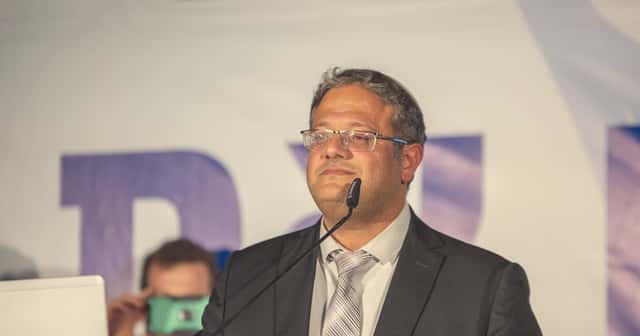
National Security Minister Itamar Ben Gvir asked Israel's High Court of Justice on Monday to lift a court order that limits his role over the police. In the petition he accused Police Commissioner Danny Levy of ordering harsh force against ultra-Orthodox protesters and of wanting "to see bloodshed." Levy called the accusations "serious, delusional and shameful" and asked the minister to take them back. Ben Gvir's office said later in the day that he stood by his accusations.
The clash pits the minister who oversees the police against the officer who commands it, a week after an election that cost Netanyahu's bloc its majority. It also turns on a court ruling from April that was meant to keep politics away from police operations. And it comes amid street protests by ultra-Orthodox, or Haredi, groups against the arrest of yeshiva students who have not reported for military service.
What the petition says
The petition was filed by Ben Gvir's lawyer, Ze'ev Wolf, and asks the court to cancel an interim order from April, Israel National News reported. It alleges that Levy told officers to use batons and stun grenades before Haredi protests, and that he "wants to see bloodshed." The filing describes the request as urgent. "This conduct by the police commissioner also endangers human lives, and we are only a step away from an incident in which someone could, God forbid, be killed," it says.
The petition makes other claims as well. According to Israel National News, it says Levy moved a senior officer, Chief Superintendent Elad Klein, from the Dan subdistrict to the Ayalon subdistrict without the minister's approval. It says Levy skipped situation assessments and traveled abroad without telling the minister. It also accuses the police of selective enforcement. It contrasts their handling of Haredi road blockages with protests on the anniversary of the October 7, 2023, attack, when demonstrators blocked the Ayalon Highway in Tel Aviv. Ben Gvir presents himself in the filing as the "responsible adult" who must be able to step in.
The petition is not the first time Ben Gvir has tied Levy's conduct to the election result. "For several days now, the police commissioner has been behaving as though he wants to please the next government, thinking he will win favor with Yair Golan," he said after a protest on October 29, according to The Jerusalem Post. "It is regrettable that Levy, who spent a year and a half doing everything I asked of him, is now, the day after the elections, acting unlawfully against the haredim and turning them into his punching bag."
No evidence for the remark attributed to Levy has been made public. Israel.com, which tracked the story through the day, noted that none of the reports identify who heard Levy say it or how it reached the minister. It also noted that the minister's later reply did not include supporting evidence. The claim is an allegation in a court filing, not a finding.
How the police answered
The police issued two responses. An institutional statement, published by Ynet, said: "The claim that Police Commissioner Chief Superintendent Dany Levy instructed the use of violence against Haredi protesters from improper motives or in violation of the law and procedures is a false claim, completely baseless and outrageous."
Levy spoke for himself as well. "These are serious, delusional and shameful accusations that cross every boundary, particularly from the minister in charge of the police, who instead of backing his officers and commanders, chooses to defame them, cast aspersions on their professionalism and undermine public trust in those responsible for its security," he said, according to Ynet. He called on Ben Gvir to retract the remarks. In a version of the statement carried by Israel.com, he said the force "is not a tool for political attacks" and would keep acting in a professional and nonpartisan way.
The police statements address the core accusation. In the portions published, they do not respond to the claims about the officer's transfer, the trip abroad or missed meetings.
Ben Gvir did not back down. By 9:07 p.m. Israel time (2:07 p.m. ET), Israel.com reported that his office said he stands behind his accusations.
The protests behind the dispute
The fight grew out of a series of Haredi protests against the arrest of yeshiva students by military police. The protests have taken place in Jerusalem, Beit Shemesh and at the Geha Junction near Bnei Brak, east of Tel Aviv.
The largest clash came on the evening of October 29, when protesters blocked Highway 4 at Geha. The Jerusalem Post reported that police used batons, stun grenades and a water cannon. Three people were arrested and three officers were wounded. Israel National News reported that one officer was hit in the head by a rock and another suffered broken ribs. Ynet reported that a local journalist, David Keshet, was arrested at the scene. Matzav, a Haredi news site, reported at least 25 people hurt and 10 taken to hospital. Those figures could not be independently confirmed.
The protest followed the arrest of a yeshiva student, Alon Smadja, by military police, Matzav reported. The Jerusalem Faction, a Haredi group that opposes enlistment, protested the arrest. Police said they recognize the right to protest but would not allow roads to be blocked.
Criticism of the police from several directions
Criticism of the police response did not come only from Ben Gvir. It came from Haredi parties and from the opposition left, though for different reasons and with different demands.
United Torah Judaism chairman Yaakov Asher condemned road blockages but criticized the officers. "Although we oppose blocking roads, we cannot remain silent in the face of the disturbing footage," he said, according to Matzav. "Such conduct crosses a red line." He asked Levy to summon officers who acted unlawfully for disciplinary hearings. Shas said the police violence against Haredi protesters that evening was "extremely serious and requires an immediate and thorough investigation."
Gaby Lasky of the Democrats, a former Meretz lawmaker, wrote to Levy demanding an inquiry, JFeed reported. "Regardless of the content of the protest, police violence damages public trust in the police," she wrote. "Throwing stun grenades into a concentration of protesters is illegal." She pointed to injuries caused by stun grenades at protests against the judicial overhaul in March 2023 and asked the police to stop throwing them into crowds.
That overlap matters for reading the dispute. Lasky and the Haredi parties asked for an investigation into specific officers and tactics. Ben Gvir's petition asks for something else: that the court restore his own power to direct the police on the use of force.
The April ruling at the center of the case
The order Ben Gvir wants lifted dates from April 16, 2026. Ruling on petitions that sought his dismissal over alleged interference in police work, an expanded panel of nine justices let him stay in office but imposed two interim orders, Ynet reported at the time.
The first order said senior police appointments, at the rank of superintendent and above, could be made only on the commissioner's recommendation and with seven days' notice to the attorney general. The second barred the minister from making public statements about police use of force against civilians, including in ongoing investigations. Of the four orders the attorney general requested, Ynet reported, the court adopted only the restriction on public statements, alongside its rule on appointments. It also told Netanyahu, Ben Gvir and Attorney General Gali Baharav-Miara to report back on talks over agreed ground rules. The Jerusalem Post described the ruling as stopping short of ousting Ben Gvir while limiting his influence over the police.
Ben Gvir opposed the orders then. Through his lawyer, he told the court that if restrictions were imposed there was no point in negotiating and the court should issue a final ruling. At a police event that week he called the effort to remove him "absurd" and denied encouraging unlawful force.
Two points in the new petition bear on that ruling. The claim about Klein's transfer concerns appointments, the subject of the first order. And the minister's public accusations about force at the protests touch the subject of the second. Whether either amounts to a breach is a question for the court. The attorney general had not publicly responded to the petition in the reports reviewed.
- April 16High Court keeps Ben Gvir in office but issues two interim orders on appointments and public statements
- October 27Israel holds its Knesset election
- October 29Police clash with Haredi protesters at Geha Junction; Ben Gvir accuses Levy of courting the next government
- October 31Democrats' Gaby Lasky asks Levy to investigate the use of stun grenades
- November 2Ben Gvir petitions the High Court; Levy calls his claims "delusional and shameful"
Source: Ynet, The Jerusalem Post, JFeed, Israel National News
What each side argues
Ben Gvir's case is that he is the elected official responsible for the police, and that the commissioner is using force in a way that endangers lives. He argues that the April order leaves him unable to intervene, and that Levy is treating Haredi protesters more harshly than other demonstrators, in his view to please a possible new government.
The police case is that officers acted under the law and procedures and that the minister's claims are false. Levy argues that a minister should back his officers in public, and that attacking them undermines public trust.
Haredi parties are in an awkward position. They are Ben Gvir's partners in Netanyahu's bloc and share his criticism of the police response. But they also oppose the arrests that set off the protests. Their demand is for discipline of officers, not for a change in who controls the police.
The opposition critics, including Lasky, argue against both men in different ways. Lasky's letter asks the police to review their crowd-control tactics and stop throwing stun grenades into crowds. It does not ask for the minister to have more say over operations.
What we don't know
Several points remain open. It is not known whether the High Court will hold an urgent hearing. Neither the government nor the attorney general had filed a response in the reports reviewed. No one has publicly identified the source of the remark attributed to Levy. And the injury counts from October 29 vary by outlet. For background on the election that set the stage, see our final count report and our coverage of the certification dispute.
The outcome may also depend on politics. If the opposition forms the next government, a new minister would take over the portfolio, as explained in our guide to Herzog's coalition timetable. Our latest coalition report covers where those talks stand.
What comes next
The court must decide whether to schedule a hearing on the petition. Herzog begins coalition consultations on Wednesday, and the new Knesset is sworn in on November 10.
Differing perspectives
How should police use of force at Haredi draft protests be overseen?
Each position is summarized as its supporters make it, with equal weight and in alphabetical order. A summary is not an endorsement; the evidence for each is weighed in the story above.
Hold disciplinary hearings for the officers involved
Who holds it: United Torah Judaism chairman Yaakov Asher and Shas
The Haredi parties say they oppose blocking roads, but that footage from Geha Junction shows officers beating protesters, some of whom were taken away in ambulances. Asher says the conduct crosses a red line and asks the commissioner to summon the officers involved for disciplinary hearings. Shas calls for an immediate and thorough investigation and warns against incitement against the Haredi public.
In their words: Matzav ↗
Keep operational decisions with the police
Who holds it: Police Commissioner Danny Levy and the Israel Police
Levy and the police say officers acted within the law and procedures, and that the claim he ordered violence for improper motives is false. Levy says a minister should back his officers and commanders in public rather than cast doubt on their professionalism. He argues that such attacks undermine public trust and says the force will keep acting in a professional, nonpartisan way.
In their words: Ynet (police and commissioner statements) ↗
Let the minister step in on use of force
Who holds it: National Security Minister Itamar Ben Gvir, in his High Court petition
Ben Gvir argues that as the minister responsible for the police he must be able to act when, in his view, the commissioner endangers lives. His petition says Levy ordered batons and stun grenades against Haredi protesters, treated them more harshly than other demonstrators, and acted without consulting him. He says the April court order leaves him unable to intervene and asks the court to lift it urgently.
In their words: Israel National News (report on the petition) ↗
Review crowd-control tactics and end stun grenades in crowds
Who holds it: Gaby Lasky of the Democrats
Lasky argues that, whatever a protest is about, police violence damages public trust. She says throwing stun grenades into groups of protesters is illegal and points to injuries from the same tactic at judicial-overhaul protests in March 2023. She asks the commissioner to investigate the Geha Junction dispersal, stop using stun grenades against crowds, and re-examine dispersal methods to protect both citizens and officers.
In their words: JFeed (Lasky's letter to the commissioner) ↗
READ BEYOND 567POLITICS
Alternate sources & perspectives
Independent coverage and primary evidence to help you compare arguments. A link is not an endorsement; perspective labels describe the linked material.
- primary evidence
"Wants to see bloodshed": Ben Gvir levels serious accusations against Police Commissioner ↗
Israel National News
Most detailed account of the petition's claims, quoting the filing by lawyer Ze'ev Wolf.
- primary evidence
Police Chief on Ben-Gvir's Claims: 'Serious, Delusional and Shameful Accusations' ↗
Ynet
Carries the police statement and Levy's personal response calling the claims delusional and shameful.
- independent analysis
Ben Gvir stands by claim police chief Danny Levy 'wants to see blood' ↗
Israel.com
Running account through the day; notes that no evidence for the attributed remark has been made public.
- independent analysis
Three arrested after haredi protest clashes wound protesters, police ↗
The Jerusalem Post
Reports the October 29 clash, arrests and injuries, and Ben Gvir's claim that Levy was courting Yair Golan.
- primary evidence
High Court blocks Ben-Gvir firing, imposes limits pending talks ↗
Ynet
April 2026 report on the interim orders on appointments and public statements that the petition seeks to lift.
- independent analysis
High Court stops short of ousting Itamar Ben-Gvir, limits police influence ↗
The Jerusalem Post
Second account of the April ruling and its limits on the minister's influence.
- other perspective
POLICE BRUTALITY OUTRAGE: Ben Gvir Blasts Police Chief Over Violent Crackdown on Chareidi Protesters as Shas Demands Immediate Investigation ↗
Matzav
Haredi news site; carries statements from UTJ chairman Yaakov Asher and Shas, and its own injury count. The headline's characterizations are the site's own.
- left argument
Yesh Atid MK demands probe into police violence at protest ↗
JFeed
Reports the letter from Gaby Lasky of the Democrats asking for an inquiry and an end to stun grenades in crowds. The headline calls Lasky a Yesh Atid MK; the article body identifies her with the Democrats.
- other perspective
Haredi draft riots: Officer hit in head with rock, police use stun grenades ↗
Israel National News
Reports police injuries, including a rock to the head and broken ribs.
- independent analysis
Violent clashes between police and ultra-Orthodox protesters at Geha Junction, local journalist arrested ↗
Ynet
Reports the arrest of local journalist David Keshet during the protest.
Reviewed 2026-11-02. Sources were picked by hand because automated discovery returned unrelated results. The Times of Israel blocked our fetches, so it is not listed. The petition text itself is not public; Israel National News is the fullest account of it. The police statements were published in full by Ynet. No public record supports or refutes the remark the petition attributes to Commissioner Levy. Injury counts for the October 29 protest come from outlets with differing access and could not be independently confirmed.