Eisenkot's bloc files first bills: an Oct. 7 state inquiry, PM term limits and repeal of the judicial overhaul
Likud says the package would give the attorney general immense power, while UTJ's terms on religion and state collide with Lapid's and the Democrats' bills.
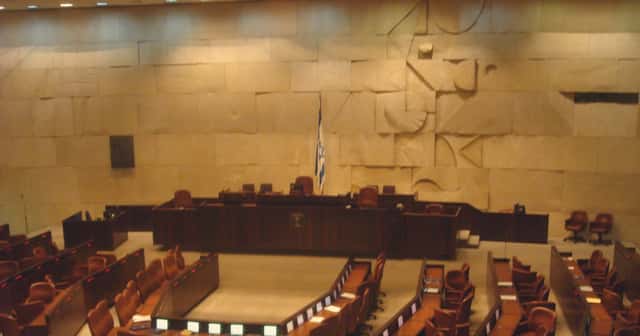
On the day Israel's 26th Knesset was sworn in, the parties backing Gadi Eisenkot filed a package of bills that sets out what their new majority wants to do first. The bills would create a state commission of inquiry into the October 7, 2023, Hamas-led attack. They would cap how long a prime minister can serve. And they would repeal several laws passed by Benjamin Netanyahu's outgoing government as part of its judicial overhaul.
The package is the clearest statement so far of the bloc's legislative agenda. It also shows the bloc's tensions. Some of the bills filed by its liberal partners touch religion and state, which a possible Haredi coalition partner says is a red line. Likud says the agenda would hand too much power to the attorney general.
None of the bills is close to becoming law. They were filed as private members' bills, which must pass several votes in the Knesset plenum and committee. Eisenkot has not yet formed a government.
What was filed on Tuesday#
Eisenkot's Yashar! party filed the bills "together with other factions," according to Ynet. The Hebrew news site Walla reported that the core package has eight bills. Two would set up the October 7 inquiry and limit the prime minister's term. Six would repeal laws passed by the outgoing government.
The Times of Israel reported that Yashar! and Yair Golan's Democrats said they had submitted proposals to repeal what the paper described as "controversial laws" passed by Netanyahu's government. These include the law on the attorney general's powers, the judicial selection committee law and Communications Minister Shlomo Karhi's media overhaul.
Yair Lapid, the outgoing opposition leader and No. 2 in Naftali Bennett's Beyachad party, filed three bills of his own. The Democrats filed a separate set.
The main bills, as described by Ynet, i24NEWS, Walla and The Times of Israel:
| Bill | Filed by | What it would do |
|---|---|---|
| State commission of inquiry | Yashar! and partners | Set up an inquiry into Oct. 7 in law |
| PM term limit | Yashar!; Lapid | Cap a PM's tenure; Lapid's bill sets 8 years |
| Attorney general law repeal | Yashar!, Democrats | Restore the AG's prior powers |
| Judiciary repeals | Yashar!, Democrats | Undo judicial selection and courts changes |
| Incapacity law repeal | Yashar! | Revisit when a PM can be declared unfit |
| Broadcasting law repeal | Yashar!, Democrats | Undo the media regulator overhaul |
| Police Ordinance repeal | Yashar! | Undo Amendment 45 on police investigations |
| Declaration of Independence | Lapid | Make it a Basic Law |
| Civil partnership | Lapid | Civil registration for all couples |
| Bar indicted officials | Democrats | Bar people under indictment from office |
The Democrats also filed bills to allow public transportation on Shabbat and to allow civil marriage, according to The Times of Israel. Others would regulate the status of Haredi schools, anchor equality in a Basic Law and expand LGBTQ rights.
The October 7 inquiry#
The inquiry bill is the centerpiece. Yashar! has made a state commission of inquiry into the October 7 failures one of its central priorities, Ynet reported.
Under Israeli law, a state commission of inquiry is a formal investigative body. Its chair and members are appointed by the president of the Supreme Court, i24NEWS reported. Today it can be created by the government. It can also be created by the Knesset's State Control Committee in limited cases tied to a state comptroller's report.
The anti-Netanyahu bloc is weighing legislation that would let the Knesset itself set up such a commission without a government decision, Ynet reported. One option under discussion would require the support of at least 61 lawmakers. Ynet said the bloc is also considering six to eight special Knesset committees to speed up legislation while coalition talks continue.
At the opening ceremony, President Isaac Herzog called for an October 7 inquiry, The Times of Israel reported.
Netanyahu has long rejected a state commission appointed under the existing system. He has called for what he describes as a balanced or national commission instead. In a November 2025 Knesset debate he said: "The question is not only what is investigated. The decisive question is who investigates the truth," Ynet reported. He has proposed a panel with 50% of members named by the coalition and 50% by the opposition. He has also said: "I will be the first to appear and answer every question."
In July 2026, a bill for a "state-national" commission of inquiry passed its first reading with 59 votes, while the opposition boycotted the vote. It was not completed before the Knesset was dissolved, Ynet reported.
Term limits#
Yashar!'s term-limit bill would amend Basic Law: The Government to set a maximum tenure for the prime minister. i24NEWS reported that the party's announcement did not say how many years or terms would be allowed. It also did not say whether past time in office would count.
Lapid's version sets a cap of eight years, according to Ynet and Walla. A similar eight-year limit passed its first reading during the Bennett-Lapid government but was never completed, Ynet reported.
Netanyahu is now caretaker prime minister while Eisenkot tries to form a government, The Times of Israel reported.
Rolling back the judicial overhaul#
Six of the bills target laws passed by the outgoing coalition, according to Walla.
The first would repeal the law on the attorney general. i24NEWS reported that the law lets the government reject the attorney general's legal position in certain cases. It also widens the government's ability to hire separate lawyers in court.
Two more would repeal an amendment to Basic Law: The Judiciary and Amendment 105 to the Courts Law. These cover judicial selection. i24NEWS reported that changes approved in 2025 replaced the Israel Bar Association's representatives on the selection committee with members chosen by the coalition and opposition.
Another would revisit the 2023 "incapacity law." That amendment limited the grounds for declaring a prime minister unable to serve to physical or mental inability. It also gave the decision to the prime minister, government and Knesset under set procedures, i24NEWS reported.
The broadcasting bill would undo a 2026 law that created a new regulator to replace existing oversight bodies. The final bill would repeal Amendment 45 to the Police Ordinance. That amendment made the unit that investigates police officers an independent body within the Justice Ministry, i24NEWS reported.
The judicial overhaul drew mass protests in 2023 over concerns about judicial independence and checks on government power, i24NEWS reported.
Likud's response#
Likud did not issue a detailed response to the bills on Tuesday. But outgoing Knesset Speaker Amir Ohana, a Likud member, addressed the bloc's agenda when he scheduled a vote on his successor.
The bloc had submitted 67 signatures asking for a vote to replace him with Yashar!'s Matan Kahana. Ohana set the vote for Tuesday, Nov. 17. The Times of Israel quoted him as saying the request "is intended to advance legislation that would grant immense power to the attorney general, further deepening the imbalance between the elected leadership and the bureaucratic echelon." He said that despite his "strong opposition" to the bloc's agenda, "I will act as promised: I will respect the will of the majority of Knesset members."
The speakership matters for the bills, because the speaker schedules plenum debates, as Ohana's announcement showed. The dispute over the speaker, and Eisenkot's cancellation of coalition talks with Likud after Netanyahu's opening speech, are covered in 567 Politics' earlier report.
Religion and state#
Lapid's civil partnership bill would create a new civil framework. Couples could register their relationship regardless of sexual orientation, outside the existing religious marriage system, Ynet reported.
"We will continue to be the voice of Israel's liberal public in the Knesset and work to repair the State of Israel," Lapid said.
Those bills, and the Democrats' bills on Shabbat transport and civil marriage, run into a demand from United Torah Judaism (UTJ). Eisenkot's camp has held early contacts with the Haredi party about joining a coalition.
UTJ head Yaakov Asher told the Haredi news site Kikar Hashabbat that his party will not join any coalition that does not meet three demands, The Times of Israel reported. The first is draft exemptions for yeshiva students. The second is funding for Haredi schools without core curriculum conditions. The third is keeping "the status quo between religion and state," such as rules that bar commerce on Shabbat.
"It's our responsibility to preserve the image of the entire state, not just Bnei Brak or the Haredi neighborhoods of Jerusalem, but… everything," Asher said. UTJ lawmaker Yitzhak Goldknopf told Channel 12 that "there is room for negotiations" with Eisenkot.
Eisenkot has said he will not give up on his pledge of national service for all, The Times of Israel reported.
How a private member's bill becomes law#
Filing a bill is only the first step. Ynet reported that private members' bills must pass a preliminary reading. They then need three more readings and committee debates. Opponents can use procedures to slow them down.
- Filinga lawmaker or faction submits the bill
- Preliminary readingthe plenum votes on whether to advance it
- First readingthe plenum votes on the bill after committee work
- Committee debatesa Knesset committee reviews and may amend it
- Second and third readingsfinal plenum votes make it law
Source: Ynet
Some of the outgoing government's measures have already taken effect, while others are due to take effect later, Ynet reported. That means the bloc is racing the calendar on some of them.
The next steps#
The first test is next Tuesday's speaker vote. If Kahana is elected, the bloc would control the Knesset presidium while coalition talks go on. Eisenkot has 28 days from Sunday to form a government, with a possible extension of up to 14 days.
Sixty-seven lawmakers signed the speaker petition. But the bloc does not yet have a governing coalition. Its partners range from Lapid's liberal camp and Golan's Democrats to Avigdor Liberman's Yisrael Beytenu, with possible talks with UTJ and the Arab parties still unresolved.
Differing perspectives
What should Israel's new Knesset majority do first: an Oct. 7 state inquiry, PM term limits and repeal of the judicial overhaul laws?
Each position is summarized as its supporters make it, with equal weight and in alphabetical order. A summary is not an endorsement; the evidence for each is weighed in the story above.
A balanced national commission
Who holds it: Benjamin Netanyahu and supporters of a state-national commission
Benjamin Netanyahu says October 7 must be investigated thoroughly, but that the decisive question is who investigates. He argues that large parts of the public would not trust a commission appointed under the existing system and proposes a panel split equally between coalition and opposition appointees, citing the US 9/11 commission as a model. He says such a commission should be objective, balanced and independent, and pledges to be the first to appear and answer every question.
In their words: Ynet ↗
Add liberal and constitutional bills
Who holds it: Yair Lapid and Beyachad
Yair Lapid says the bloc should go further with bills that reflect Israel's liberal public. His package would make the Declaration of Independence a Basic Law, as the first chapter of a future constitution, and limit a prime minister to eight years in office. It would also create a civil partnership framework so couples can register their relationship regardless of sexual orientation, outside the religious marriage system. He says his faction will keep working to repair the State of Israel.
In their words: Ynet ↗
Keep the religion-state status quo
Who holds it: Yaakov Asher and United Torah Judaism
United Torah Judaism head Yaakov Asher says his party will not join any coalition unless it keeps the status quo between religion and state, such as rules that bar commerce on Shabbat. He also demands draft exemptions for yeshiva students and untouched funding for Haredi schools without core curriculum conditions. He says the party is responsible for preserving the character of the entire state, not only Haredi neighborhoods, and presents all three demands as nonnegotiable.
In their words: The Times of Israel ↗
Oppose more power for the attorney general
Who holds it: Amir Ohana and Likud
Outgoing Knesset Speaker Amir Ohana of Likud says the bloc's push to replace him is meant to advance legislation that would grant immense power to the attorney general. He argues this would deepen the imbalance between the elected leadership and the bureaucratic echelon. He states his strong opposition to the bloc's agenda but says he will respect the will of the Knesset majority and has scheduled the vote.
In their words: The Times of Israel ↗
Pass the inquiry and repeal package
Who holds it: Gadi Eisenkot's Yashar! and Yair Golan's Democrats
Yashar! and the Democrats say the new majority should use its first days to set up a state commission of inquiry into the October 7 failures, cap the prime minister's tenure and repeal laws from the outgoing government. Those laws include the one on the attorney general's powers, the judicial selection committee law and the media overhaul. They argue an independent inquiry and restored legal oversight are needed for accountability, and want to move the bills even before a government is formed.
In their words: The Times of Israel ↗
Cite this article
567 Politics staff. “Eisenkot's bloc files first bills: an Oct. 7 state inquiry, PM term limits and repeal of the judicial overhaul.” 567politics. Published 2026-11-10. https://567politics.com/news/israel-eisenkot-bloc-bills-october-7-state-inquiry-pm-term-limits-judicial-overhaul-repeal-lapid-november-2026
Wikipedia citation
{{cite news |title=Eisenkot's bloc files first bills: an Oct. 7 state inquiry, PM term limits and repeal of the judicial overhaul |url=https://567politics.com/news/israel-eisenkot-bloc-bills-october-7-state-inquiry-pm-term-limits-judicial-overhaul-repeal-lapid-november-2026 |work=567politics |author=567 Politics staff |date=2026-11-10 |language=en}}CSL-JSON for reference managers
{
  "id": "https://567politics.com/news/israel-eisenkot-bloc-bills-october-7-state-inquiry-pm-term-limits-judicial-overhaul-repeal-lapid-november-2026",
  "type": "article-newspaper",
  "title": "Eisenkot's bloc files first bills: an Oct. 7 state inquiry, PM term limits and repeal of the judicial overhaul",
  "URL": "https://567politics.com/news/israel-eisenkot-bloc-bills-october-7-state-inquiry-pm-term-limits-judicial-overhaul-repeal-lapid-november-2026",
  "container-title": "567politics",
  "language": "en",
  "author": [
    {
      "literal": "567 Politics staff"
    }
  ],
  "issued": {
    "date-parts": [
      [
        2026,
        11,
        10
      ]
    ]
  }
}Citations identify this article and its publication date. Assess the reporting and its linked sources before using it as evidence.
Read this article as Markdown or JSON. Cite the original page and retain its sources, dates and qualifications.
Embed this article summary
Paste this HTML into your page. The summary stays linked to the full story and updates with it. No account required.
<iframe src="https://567politics.com/embed/news/israel-eisenkot-bloc-bills-october-7-state-inquiry-pm-term-limits-judicial-overhaul-repeal-lapid-november-2026?theme=auto" title="Eisenkot's bloc files first bills: an Oct. 7 state inquiry, PM term limits and repeal of the judicial overhaul by 567politics" width="100%" height="440" style="border:0;max-width:100%" loading="lazy"></iframe>
<p style="font-size:14px">Eisenkot's bloc files first bills: an Oct. 7 state inquiry, PM term limits and repeal of the judicial overhaul by <a href="https://567politics.com/news/israel-eisenkot-bloc-bills-october-7-state-inquiry-pm-term-limits-judicial-overhaul-repeal-lapid-november-2026" rel="nofollow">567politics</a></p>
<script async src="https://567politics.com/embed.js"></script>
READ BEYOND 567POLITICS
Alternate sources & perspectives
Independent coverage and primary evidence to help you compare arguments. A link is not an endorsement; perspective labels describe the linked material.
- independent analysis
Eisenkot and Lapid launch legislative blitz: 'We will work to repair Israel' ↗
Ynet
Full list of Yashar! and Lapid bills, the 61-MK inquiry option and the legislative steps.
- independent analysis
Oct. 7 inquiry, PM term limits and judicial overhaul rollback: Here are the new bills put forth by Yashar ↗
i24NEWS
Explains each law the package would repeal.
- independent analysis
הגבלת כהונה לרה"מ וההפיכה המשטרית: הצעות החוק ש"ישר" הגישה עם פתיחת מושב הכנסת ↗
Walla News
Hebrew report counting eight bills in the core package, with Lapid's statement.
- right argument
המהלך הראשון של איזנקוט: ביטול כל חוקי הרפורמה המשפטית ↗
Channel 14 (C14)
Right-leaning channel's report framing the package as Eisenkot setting facts on the ground before a government is formed.
- primary evidence
Eisenkot-led bloc submits bills to establish Oct. 7 state inquiry, limit PM terms, repeal judicial overhaul ↗
The Times of Israel
Yashar! and Democrats statements on the bills they filed, including the Democrats' separate package.
- right argument
Ohana says vote to elect new Knesset speaker to be held next Tuesday ↗
The Times of Israel
Likud's Amir Ohana on the bloc's agenda and the attorney general.
- independent analysis
Netanyahu promised answers after Oct. 7. Three years later, Israel is still waiting ↗
Ynet
History of Netanyahu's statements on the inquiry and the state-national commission bill.
- other perspective
UTJ head sets price of support: Draft exemptions, school funding and religion-state status quo ↗
The Times of Israel
Yaakov Asher's three coalition demands.
- independent analysis
Eisenkot's party submits bill for state inquiry into October 2023 events ↗
Anadolu Agency
Turkish state agency report; recommendation tallies for Eisenkot and Netanyahu.
Reviewed 2026-11-10. Sources opened in full on Nov. 10, 2026. The bill texts themselves were not yet posted on the Knesset website, and the Knesset press-release site could not be retrieved, so bill contents rely on Yashar!'s statement as reported by Ynet, i24NEWS, Walla, Channel 14 and The Times of Israel. Likud issued no detailed response to the bills on the day; Amir Ohana's statement is the closest party-side reaction. Netanyahu's position on the inquiry is taken from Ynet's review of his past public statements. The source-discovery tool returned only general background pages for this story.