Israel has already committed $31.5 billion to U.S. arms buys that rely on aid Trump says will end
Finance Ministry officials told the Knesset's new Finance Committee they had no warning of the aid cut-off and still do not know when it takes effect.
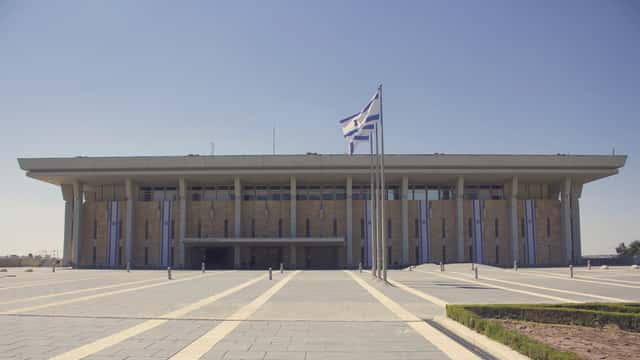
Israel has already signed up for about $31.5 billion in American weapons purchases that assume U.S. military aid will keep flowing, Finance Ministry officials told the Knesset's new Finance Committee on Monday. They also said they still do not know whether the aid ends this year, in 2028 or on some other schedule. If the money stops, a senior budget official said, the government will have to cut defense spending, raise taxes or borrow more.
The hearing was the first close look by lawmakers at the budget effect of President Donald Trump's November 3 statement that Washington would stop its roughly $4 billion a year in aid. 567 Politics reported at the time that Israeli ministries said they had not been told in advance. On Monday, budget officials confirmed that under questioning, on the record.
What the Finance Ministry told lawmakers#
Shira Amiel Ben Abba, the deputy budget director in charge of defense, said the current aid deal is fully committed. She also said Israel has signed about $24 billion in dollar commitments from 2029 onward, beyond the current deal, on the assumption that a new agreement would follow, according to The Jerusalem Post. Walla reported the post-2029 figure as about $24.8 billion. N12 reported that she cited $7.6 billion for the next two years and put the total forward commitments at $31.5 billion.
Source: N12, The Jerusalem Post
Show the numbers
| Commitment | Billions of dollars |
|---|---|
| Next two years, under the current deal | $7.6bn |
| From 2029, beyond the current deal | $24bn |
"Ultimately, we can either reduce defense spending, raise taxes, or increase debt," Ben Abba said, the Post reported. "If these funds do not arrive, the government will have to decide on the balance between these options. When the 2027 budget is prepared, the government will have to decide how to implement these measures."
She told the committee the ministry had no warning. "We did not know about the announcement," she said, according to Walla's account of the session. "Before the President of the United States announced it, there was no staff work in this context that we knew of." She said a Defense Ministry team is preparing for the next aid agreement, including the mix between cash aid and joint programs. "Even now we are still trying to understand what the announcement means," she said. "I cannot say with confidence whether the aid stops at the end of this year or at the end of the agreement in 2028."
Globes reported that officials put the cost of losing the aid at about half a percent of economic output a year. Ben Abba gave a comparison. "It is, for example, like adding one and a half percent to VAT," she said, according to Globes. "It does not have to be VAT, and it will probably be a mix of sources, but that is the order of magnitude." N12 reported that the yearly loss was presented as about 12 billion shekels.
What the current aid deal provides#
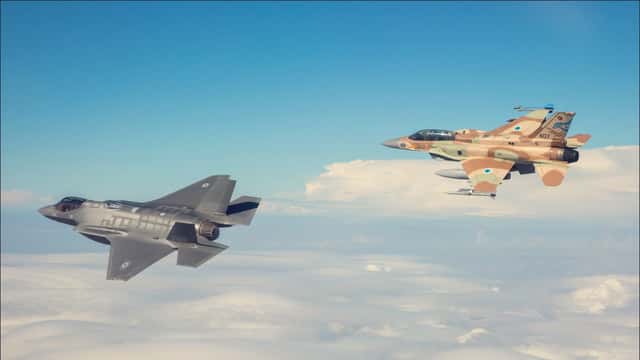
U.S. military aid runs under a 10-year memorandum of understanding covering 2019 through 2028. Under it, the United States provides $3.3 billion a year in Foreign Military Financing and $500 million for joint missile defense programs, according to the U.S. State Department. The department says that since 1948 the United States has provided Israel with over $130 billion in bilateral aid. It also lists 751 active Foreign Military Sales cases worth $39.2 billion as of April 2025, including F-35 fighter jets, KC-46A refueling tankers and precision-guided munitions.
The $500 million missile defense line pays for joint research, development and production of Iron Dome, David's Sling and the Arrow system, Ynet reported.
Foreign Military Financing must largely be spent on American-made equipment. That is why Israel's long-term arms contracts are tied so closely to the aid. Budget officials told the committee that the deal requires buying in the United States and in dollars, Globes reported, and that without it Israel might find better terms elsewhere over time.
The wider budget picture#
Tamar Levy Boneh, the deputy budget director for macroeconomics, set out how the wars have changed the books. She said defense spending rose to 8% of economic output in 2026, from 4.4% in 2022. She said the average deficit in the war years was 5.1% and that government debt rose to about 69% of output from 60% in 2022, Walla reported.
Source: Walla
Show the numbers
| Year | Defense spending |
|---|---|
| 2022 | 4.4% |
| 2026 | 8% |
"What the defense budget will be, and how it will look, will affect either the State of Israel's debt or its standard of living," Levy Boneh said. She said tax changes had already raised the tax burden by a full percentage point of output. "That is part of the price we paid for the need to finance security," she said.
Ben Abba said the defense budget already stands at about 161 billion shekels. She said the Defense Ministry says it needs about 25 billion shekels more, a request the committee is due to take up on Tuesday. Globes reported that the possible gap comes as Israel heads into 2027 without an approved budget. Under a continuing budget, monthly spending is capped at one-twelfth of the previous year's budget.
How lawmakers reacted#
The committee is chaired by Liran Avishar Ben Horin of Beyachad, the joint list led by Naftali Bennett and Yair Lapid. She was elected to the post earlier on Monday. She said whether Israel should wean itself off aid is a fair question. Her concern, she said, was how the decision was made.
"Regardless of the question, which is a worthy question, of whether it is right to wean ourselves off the aid money, what really troubles me as a citizen is that senior Finance Ministry officials say: we did not know," she said, according to Walla. "We behaved as if we had the money that we were told a week ago we do not have. So even if we think it is right to wean ourselves off, staff work has to be done."
Members of Otzma Yehudit welcomed the direction. "I think that in the end, in the long view, this is a blessing," said MK Hanamel Dorfman. "This dependence is not right. In the end we are a sovereign state, and in security too we have our own priorities." MK Yitzhak Kroizer said cutting dependence made sense but that the system had to be ready for it, Walla reported.
Opposition members attacked the process. MK Shaul Meridor of Yashar!, a former head of the Finance Ministry's budget department, blamed Prime Minister Benjamin Netanyahu. "The Israeli public is going to pay 12 billion shekels more every year, not because it is necessary, but because Netanyahu decided he felt like giving up existing rights of the State of Israel," he said. MK Noam Tibon of Beyachad said it was not clear what deal Netanyahu had made with Trump. "There are very large shortages in the IDF today. Not everything can be made in Israel and not everything can be bought abroad," he said.
What the government says#
The Prime Minister's Office has presented the change as a planned shift. "In 1996, Prime Minister Netanyahu said that Israel would gradually end U.S. financial support of $1.2 billion. He did just that," the office said on November 11, as quoted by Ynet. "Today, Israel has a strong and stable economy, and Israel and the United States are making the important move from aid to partnership."
Ynet reported that the statement meant aid would be phased out gradually over five years rather than end this year. It also reported that talks could raise joint missile defense funding even as direct financing shrinks. Secretary of State Marco Rubio called the move "something the Israelis themselves have offered us," The Jerusalem Post reported.
The office also pointed to a May interview with CBS's "60 Minutes," in which Netanyahu said, "I want to draw down to zero the American financial support." Rubio has made a similar case. "On the question of financing, I think Israel has clearly graduated beyond that," he said, according to the Post.
- The United States and Israel sign a 10-year aid memorandum for 2019 through 2028
- Netanyahu tells CBS he wants to draw U.S. financial support down to zero
- Trump says U.S. aid to Israel will stop
- Netanyahu's office says aid will end gradually, "from aid to partnership"
- Finance Ministry tells the Knesset that $31.5 billion in purchases rely on aid
- Finance Committee due to discuss the Defense Ministry's request for more money
Source: U.S. State Department, Ynet, Walla
Trump has described the aid as flexible until it ends. "You can look at it as barter, and you can look at it as military aid or cash. They're fine with it. They don't need us," he told Fox News, according to Ynet.
The two accounts leave the timeline open. Trump said aid would stop by the end of 2026. The Prime Minister's Office speaks of a gradual end. Budget officials told lawmakers on Monday they could not say which applies. No written U.S.-Israeli agreement on the change has been published, and 567 Politics found no statement from the U.S. government setting out a schedule.
The budget fight ahead#
The Finance Committee is due to discuss the Defense Ministry's request for 25 billion shekels more on Tuesday. Any decision on how to cover a loss of aid would fall to the next government's 2027 budget. That government has not yet been formed. Coalition talks continue after the October 27 election, in which no bloc won a clear majority.
Some officials have argued the change was already part of talks on the next aid deal, the Post reported. In those talks, the earliest cut-off had been expected at the end of 2028, possibly phased in between 2028 and 2038. Monday's hearing showed that Israel's long-term arms contracts were signed on that older timeline.
Quotations from Hebrew-language reports by Walla, Globes and N12 are 567 Politics translations.
Differing perspectives
Should Israel give up U.S. military aid on the schedule Trump and Netanyahu have described, and how should the gap be covered?
Each position is summarized as its supporters make it, with equal weight and in alphabetical order. A summary is not an endorsement; the evidence for each is weighed in the story above.
Debate weaning, but plan it first
Who holds it: Finance Committee chair Liran Avishar Ben Horin (Beyachad)
The committee chair says whether Israel should wean itself off aid is a legitimate question. Her objection is to process: senior Finance Ministry officials learned of the decision from the U.S. president's announcement, cannot say when aid ends, and have already committed future aid money. She argues that any weaning from sums this large needs staff work, an assessment of costs and a plan for replacing the money before it is decided.
In their words: N12 (Finance Committee hearing report, Hebrew) ↗
End dependence, with the system prepared
Who holds it: Otzma Yehudit MKs Hanamel Dorfman and Yitzhak Kroizer
These lawmakers argue that relying on American aid does not fit a sovereign state with its own security priorities, and that ending it will prove a blessing in the long run. Dorfman says Israel should set its own defense choices rather than shape them around U.S. funding. Kroizer agrees that reducing dependence makes sense but says the defense system must be ready for the change before the money stops.
In their words: Emess (Finance Committee hearing report, Hebrew) ↗
Move from aid to partnership now
Who holds it: Prime Minister Benjamin Netanyahu's office; U.S. Secretary of State Marco Rubio
Netanyahu's office argues that Israel now has a strong and stable economy and can gradually end U.S. military support, as Netanyahu says he did with $1.2 billion in economic aid after 1996. It describes the change as a move from aid to partnership that shows the strength of the alliance. Rubio says Israel has graduated beyond financing, and spokesman Doron Spielman describes the goal as a transition toward partnership and mutual investment.
In their words: The Jerusalem Post (Prime Minister's Office statement and Rubio remarks) ↗
Oppose a decision made without staff work
Who holds it: Opposition MKs Shaul Meridor (Yashar!) and Noam Tibon (Beyachad)
Meridor, a former budget director, argues that the public will pay about 12 billion shekels more each year because Netanyahu gave up existing rights without consulting professionals. Tibon says it is unclear what deal Netanyahu made with Trump, that the army faces large shortages, and that not everything can be produced in Israel or bought abroad. Both say ordinary citizens should not bear the cost of the budget hole.
In their words: Walla (Finance Committee hearing report, Hebrew) ↗
Cite this article
567 Politics staff. “Israel has already committed $31.5 billion to U.S. arms buys that rely on aid Trump says will end.” 567politics. Published 2026-11-16. https://567politics.com/news/israel-finance-ministry-31-5-billion-us-arms-commitments-aid-knesset-finance-committee-november-2026
Wikipedia citation
{{cite news |title=Israel has already committed $31.5 billion to U.S. arms buys that rely on aid Trump says will end |url=https://567politics.com/news/israel-finance-ministry-31-5-billion-us-arms-commitments-aid-knesset-finance-committee-november-2026 |work=567politics |author=567 Politics staff |date=2026-11-16 |language=en}}CSL-JSON for reference managers
{
  "id": "https://567politics.com/news/israel-finance-ministry-31-5-billion-us-arms-commitments-aid-knesset-finance-committee-november-2026",
  "type": "article-newspaper",
  "title": "Israel has already committed $31.5 billion to U.S. arms buys that rely on aid Trump says will end",
  "URL": "https://567politics.com/news/israel-finance-ministry-31-5-billion-us-arms-commitments-aid-knesset-finance-committee-november-2026",
  "container-title": "567politics",
  "language": "en",
  "author": [
    {
      "literal": "567 Politics staff"
    }
  ],
  "issued": {
    "date-parts": [
      [
        2026,
        11,
        16
      ]
    ]
  }
}Citations identify this article and its publication date. Assess the reporting and its linked sources before using it as evidence.
Read this article as Markdown or JSON. Cite the original page and retain its sources, dates and qualifications.
Embed this article summary
Paste this HTML into your page. The summary stays linked to the full story and updates with it. No account required.
<iframe src="https://567politics.com/embed/news/israel-finance-ministry-31-5-billion-us-arms-commitments-aid-knesset-finance-committee-november-2026?theme=auto" title="Israel has already committed $31.5 billion to U.S. arms buys that rely on aid Trump says will end by 567politics" width="100%" height="440" style="border:0;max-width:100%" loading="lazy"></iframe>
<p style="font-size:14px">Israel has already committed $31.5 billion to U.S. arms buys that rely on aid Trump says will end by <a href="https://567politics.com/news/israel-finance-ministry-31-5-billion-us-arms-commitments-aid-knesset-finance-committee-november-2026" rel="nofollow">567politics</a></p>
<script async src="https://567politics.com/embed.js"></script>
READ BEYOND 567POLITICS
Alternate sources & perspectives
Independent coverage and primary evidence to help you compare arguments. A link is not an endorsement; perspective labels describe the linked material.
- independent analysis
Israel already committed to buying over $31b. in weapons from US, FM representative tells committee ↗
The Jerusalem Post
English report on the hearing: the $3.8 billion annual aid, about $24 billion committed from 2029 and Shira Amiel Ben Abba's three budget options.
- primary evidence
Treasury officials admitted: we did not know in advance about the end of U.S. aid (Hebrew) ↗
Walla
Fullest account of the hearing, with the officials' figures on defense spending, deficits and debt, and quotes from MKs on all sides.
- independent analysis
The Treasury reveals: a $31 billion hole in defense procurement from the U.S. (Hebrew) ↗
Globes
Business-press account: $7.6 billion committed under the current deal, the VAT comparison and the continuing-budget constraint.
- independent analysis
The new Finance Committee demanded answers, and $31.5 billion in commitments were revealed (Hebrew) ↗
N12
Reports the $31.5 billion total, the 12 billion shekel annual figure and the Defense Ministry's request for 25 billion shekels more.
- independent analysis
'This should trouble every citizen': sharp criticism in the Finance Committee (Hebrew) ↗
Emess
Haredi-press report of the hearing including the Otzma Yehudit MKs' support for ending dependence on aid.
- independent analysis
A huge gap in the defense budget emerged at the first meeting of the 26th Knesset's Finance Committee (Russian) ↗
Israelinfo
Russian-language report on the same hearing.
- primary evidence
U.S. Security Cooperation with Israel ↗
U.S. Department of State
Official fact sheet: the 2019-2028 memorandum, $3.3 billion FMF and $500 million for missile defense a year, and 751 active arms sales cases worth $39.2 billion.
- independent analysis
US military aid to Israel to be phased out over five years, Netanyahu's office confirms ↗
Ynetnews
Reports the November 11 statement and how current aid is split between FMF and missile defense.
- other perspective
Netanyahu's 1996 promise to end US aid to Israel fulfilled after 30 years, PMO says ↗
The Jerusalem Post
The Prime Minister's Office case for moving 'from aid to partnership,' with Rubio's and spokesman Doron Spielman's remarks.
- other perspective
Netanyahu's Office: Israel to gradually phase out U.S. military aid and shift from assistance to partnership ↗
VINnews
Separate account of the same statement and of Netanyahu's May 60 Minutes remarks.
- primary evidence
U.S. will stop $4B in aid to Israel at the end of the year, Trump says ↗
NBC News
Trump's November 3 remarks that the aid would be 'cut off at the end of the year.'
- independent analysis
Trump: Netanyahu agreed to end $4 billion in US aid to Israel by end of 2026 ↗
The Jerusalem Post
Report on Trump's announcement with Israeli defense officials' surprise and the 2028 end date of the current deal.
Reviewed 2026-11-16. Compiled 2026-11-16 from pages opened and read; the site's discovery tool returned only generic country pages, so every source was chosen by hand. No official Knesset protocol or Finance Ministry presentation from the November 16 hearing had been published when this list was compiled, so the officials' figures are cited through Hebrew and English press reports, which differ slightly on the post-2029 commitment ($24 billion vs. $24.8 billion). The Times of Israel live blog and Israel Hayom blocked automated access and were not used. No written U.S.-Israeli agreement on ending aid has been published. Hebrew- and Russian-language sources are labeled.