Trump says U.S. will end $4 billion in yearly aid to Israel; Israeli officials say they were not told
Trump said he and Netanyahu agreed to stop about $4 billion a year in U.S. aid. Israeli ministries said they were not told, and opposition leaders attacked Netanyahu.
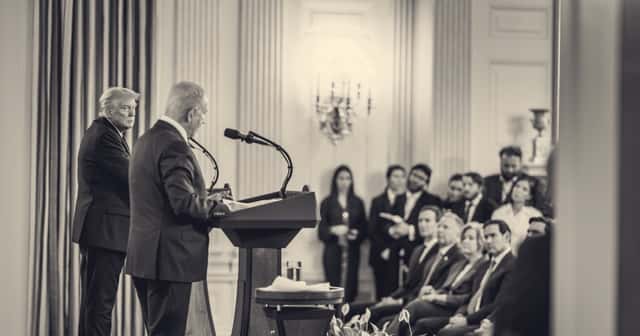
President Donald Trump said on Tuesday that the United States and Israel have agreed to stop the roughly $4 billion a year in American aid to Israel, and that Prime Minister Benjamin Netanyahu raised the idea himself. Israeli officials said they had not been told in advance, and opposition leaders in Jerusalem attacked Netanyahu over the news.
"Bibi Netanyahu and I have made a deal that we give Israel $4 billion a year, and we made a deal months ago that we're stopping," Trump said in an interview with Fox & Friends on Election Day, according to The Jerusalem Post. "Can I be honest with you? He brought it up." NBC News reported that Trump said the aid would stop by the end of 2026.
The remarks land in the middle of two political fights. In Israel, Netanyahu is trying to hold on to power after an October 28 election in which his bloc fell short of a majority, and President Isaac Herzog begins consultations on a new government on Wednesday. In the United States, aid to Israel has been a live issue in several midterm races, including the Michigan Senate contest. This report sets out what Trump said, what the current aid deal says, how Israeli officials and politicians responded, and what remains unclear.
What Trump said
Trump described the change as a joint decision. He said Netanyahu had told him, "I think it would be appropriate if we do not receive aid," according to the Jerusalem Post's account of the interview.
He also suggested the money could take other forms before it ends. "I'm giving four in any way you want to define it," he said. He added that it could be barter, military aid or cash, and that "they can buy whatever they want." The Post reported that Trump called the aid "the best talking point that these lunatics have on the left," and linked the issue to Democratic Senate nominee Abdul El-Sayed in Michigan.
Trump did not give details on how the end of aid would work, which programs it would cover, or whether Congress would be asked to change laws or spending bills.
What the current aid deal says
American military aid to Israel runs under a 10-year memorandum of understanding (MOU) signed in 2016. It covers fiscal years 2019 through 2028. Under it, the United States pledged $38 billion: $33 billion in Foreign Military Financing (FMF) grants and $5 billion for missile defense. That works out to $3.3 billion in FMF and $500 million in missile defense funding each year, or $3.8 billion in total, according to the Congressional Research Service. Trump's "$4 billion" figure appears to be a rounded version of that total.
The CRS notes that such MOUs "are not legally binding agreements like treaties, and do not require Senate ratification." Congress sets the actual amounts each year through appropriations. A 2020 law authorizes "not less than" $3.3 billion a year in FMF for Israel through 2028, and the CRS says appropriators have matched or exceeded that level each year.
That means a sitting president cannot simply cancel money that Congress has already appropriated, though an administration can stop requesting it and Congress can decline to fund it. The CRS also warns that ending FMF suddenly could complicate payments on weapons Israel has already ordered. Israel uses "cash flow financing" to spread payments for big purchases, such as F-35 jets, over future years of U.S. aid. If FMF stopped, the CRS says, Israel "would either have to pay for existing contracts with national funds, arrange other sources of external financing, or terminate ongoing contracts."
Annual totals have jumped in war years, because Congress passed extra funding on top of the MOU. The figures below are the CRS totals for military aid and missile defense obligations.
Source: Congressional Research Service, RL33222, Table 1
Show the numbers
| Year | Total aid ($ millions) |
|---|---|
| 2021 | 3,800 |
| 2022 | 4,800 |
| 2023 | 3,800 |
| 2024 | 12,500 |
| 2025 | 3,800 |
Analysts cited by PolitiFact put total U.S. spending on Israel's wars since October 7, 2023, at between $16.3 billion and $21.7 billion. Those estimates include supplemental funding beyond the MOU.
Netanyahu's earlier comments on phasing out aid
The idea of ending aid is not new for Netanyahu. In January, he told The Economist that he wanted to "taper off the military aid within the next 10 years," according to the Jewish Telegraphic Agency. Asked whether he meant down to zero, he said, "Yes." He said Israel deeply appreciated the aid but had "come of age."
"And that's not saying that I don't want to fight for the allegiance and support of the American people, I do, you'd have to be crazy not to," he said at the time.
Then-Senator Lindsey Graham, a South Carolina Republican and close Trump ally who died in July, backed the idea and said it should happen faster. "We need not wait ten years," Graham wrote on X. He said the savings "will and should be plowed back into the U.S. military."
The difference now is timing. Netanyahu spoke of a decade. Trump's remarks suggest a far shorter path, and the end of the current MOU in 2028 is still two years away.
Israeli officials say they were not told
Israeli officials appeared caught off guard. Ynet reported that the Finance Ministry, the Israel Defense Forces (IDF) and the Defense Ministry were not informed in advance and were surprised by the remarks. The outlet said the Israeli assessment was that Trump had been imprecise.
According to Ynet's Hebrew-language report, senior economic officials raised the budget cost. "Giving up two years of aid is essentially $8 billion. Where will we take it from? From citizens' taxes," one official said, in a 567politics translation. Ynet also reported that the two governments have been negotiating a post-2028 "cooperation agreement" focused on joint research and development.
NBC News reported that a spokesman for Netanyahu said he was not aware of the remarks and would look into them. The Jerusalem Post said an IDF source was surprised, and that the Defense Ministry did not respond to a request for comment. 567politics did not find a statement from the Prime Minister's Office or Likud responding directly to Trump's account as of Tuesday afternoon.
Opposition leaders attack Netanyahu
Gadi Eisenkot, the Yashar party leader whom most opposition parties are recommending for prime minister, said the news showed Netanyahu should be replaced. "Israel's special relationship with the United States is a central component of its national security," he wrote on X, as quoted in Haaretz's live coverage. He said that learning about the decision "through the media shows just how much Benjamin Netanyahu's conduct is a real danger."
Yair Golan, leader of The Democrats, focused on the cost to Israelis. "Ending American aid is a heavy blow to Israel's security and the quality of life," he said, according to Haaretz. He added that the financing "will fall solely on the Israeli public." He also said, "A responsible prime minister would fight to increase American aid, not eliminate it." Eisenkot's comments were also reported by Breaking The News.
The timing matters for coalition politics. Our earlier reports covered the final count, the certification fight and Netanyahu's call for a broad government. Aid now joins the list of issues the opposition is using against him as Herzog's talks begin.
The U.S. debate
In the United States, aid to Israel has divided both parties in new ways. On the left, El-Sayed has made opposition to unconditional military aid a central part of his Michigan Senate campaign. He has argued that the United States has been "offering unconditional foreign military aid to Israel independent of the circumstances for years and years and years," the Forward reported. He has said his objection covers other countries too, including Egypt and Saudi Arabia.
"The money that we are spending to subsidize apartheid in the West Bank is money that should be used on the West Side (of Detroit)," El-Sayed said in an October interview, according to PolitiFact. His defeated primary rival, Representative Haley Stevens, has criticized his statements on Israel, and on November 1 she endorsed his Republican opponent, Mike Rogers, Al Jazeera reported. See our final preview of the Michigan race for the polling.$$
Trump framed ending aid as a way to take the issue away from critics like El-Sayed. On the right, Graham's January comments show that some strong supporters of Israel also favor ending grant aid, though they frame it as a sign of Israel's strength and a saving for the U.S. military.
PolitiFact noted that money cut from aid to Israel would not automatically go to any domestic program. "None of the money came out of any program that supports Michigan," Mark Cancian of the Center for Strategic and International Studies told the outlet.
What remains unclear
Several questions are open after Tuesday's remarks:
- Timing. Trump suggested aid would end by the end of 2026. The current MOU runs through September 2028, and the CRS describes FMF for Israel as paid in a lump sum early in each fiscal year.
- Scope. It is not clear whether the change would cover only FMF grants or also the $500 million a year in joint missile defense programs such as Iron Dome, David's Sling and Arrow.
- Congress. Lawmakers set aid levels through appropriations, and a 2020 law authorizes at least $3.3 billion a year in FMF through 2028.
- Israel's position. Netanyahu has not publicly confirmed Trump's account of a deal. His office said only that it would check.
For a side-by-side look at the two countries, see our Israel vs. United States comparison. Our methodology page explains how we attribute claims and handle translated quotes.
About this report
This report draws on the Congressional Research Service's report on U.S. aid to Israel; interviews and statements reported by The Jerusalem Post, NBC News, Ynet, Haaretz, the Jewish Telegraphic Agency, the Forward and PolitiFact. Quotes from Hebrew-language sources are 567politics translations. Times are Eastern.
Differing perspectives
Should U.S. military aid to Israel end, and if so, how quickly?
Each position is summarized as its supporters make it, with equal weight and in alphabetical order. A summary is not an endorsement; the evidence for each is weighed in the story above.
End the aid soon, by agreement
Who holds it: President Donald Trump
Trump says he and Netanyahu agreed months ago to stop the roughly $4 billion a year, and that Netanyahu raised it. He argues Israel can now buy what it needs, that the money could take other forms such as barter in the meantime, and that ending it removes what he calls the strongest talking point of critics on the left.
In their words: The Jerusalem Post (interview quotes) ↗
Keep the aid and the alliance strong
Who holds it: Yashar leader Gadi Eisenkot; Democrats leader Yair Golan
Eisenkot says the special relationship with the United States is a central part of Israel's national security, and that learning of the decision through the media shows Netanyahu's conduct is a danger. Golan says ending aid is a heavy blow to security and living standards, shifts the cost to Israeli taxpayers, and that a responsible leader would fight to increase it.
In their words: Haaretz ↗
Stop unconditional military aid
Who holds it: Michigan Democratic Senate nominee Abdul El-Sayed
El-Sayed says the United States has given Israel unconditional military aid for years regardless of circumstances, unlike aid to Ukraine, which responds to a violation of international law. He says the same standard should apply to Egypt, Saudi Arabia and others, and that he could consider aid again under a deal giving Israelis and Palestinians equal rights.
In their words: The Forward ↗
Taper it to zero over a decade
Who holds it: Prime Minister Benjamin Netanyahu (January 2026)
Netanyahu told The Economist he wants to taper military aid off within 10 years, down to zero. He says Israel deeply appreciates past American aid but has come of age and built strong capacities of its own, while still wanting to fight for the support of the American people.
In their words: Jewish Telegraphic Agency ↗
READ BEYOND 567POLITICS
Alternate sources & perspectives
Independent coverage and primary evidence to help you compare arguments. A link is not an endorsement; perspective labels describe the linked material.
- primary evidence
U.S. Foreign Aid to Israel: Overview and Developments since October 7, 2023 ↗
Congressional Research Service
Terms of the 2016 memorandum of understanding and annual U.S. aid obligations to Israel (Table 1).
- independent analysis
Jerusalem Post report on Trump's aid remarks ↗
The Jerusalem Post
Trump's Fox & Friends remarks on stopping $4 billion a year in aid.
- independent analysis
NBC News report on Trump's aid remarks ↗
NBC News
Reports Trump said the aid would stop by the end of 2026.
- independent analysis
Ynet report on Israeli ministries' reaction ↗
Ynet
Israeli reporting that the Finance Ministry, IDF and Defense Ministry were not told in advance.
- independent analysis
Ynet Hebrew report on aid budget concerns ↗
Ynet (Hebrew)
Senior Israeli economic officials on the budget cost of losing two years of aid.
- other perspective
Israel election live updates, November 3 ↗
Haaretz
Live coverage quoting opposition leaders Gadi Eisenkot and Yair Golan on the aid remarks.
- right argument
Lindsey Graham embraces Netanyahu's desire to taper off U.S. military aid ↗
Jewish Telegraphic Agency
Netanyahu's January comments to The Economist about tapering aid to zero within 10 years, and Lindsey Graham's call to move faster.
- left argument
Forward report on El-Sayed and Israel aid ↗
The Forward
Abdul El-Sayed's case against unconditional military aid to Israel and other countries.
- independent analysis
PolitiFact on El-Sayed, Stevens and Israel ↗
PolitiFact
Fact-check of El-Sayed's claims and analysts' estimates of U.S. spending on Israel's wars since October 2023.
Reviewed 2026-11-03. Discovery search returned only generic Trump pages, so sources were chosen by hand and each was opened in full. No statement from Israel's Prime Minister's Office or Likud responding to Trump's account was found by early afternoon Eastern time. AP, Reuters and The Times of Israel pages could not be opened from our tools and are not cited. No written White House policy document was found.