High Court finds Ohana breached comptroller ruling but leaves the new vote to the next Knesset
Justices rejected a petition to force the Knesset speaker to hold a repeat state comptroller vote, citing the October election, but ordered NIS 10,000 in costs.
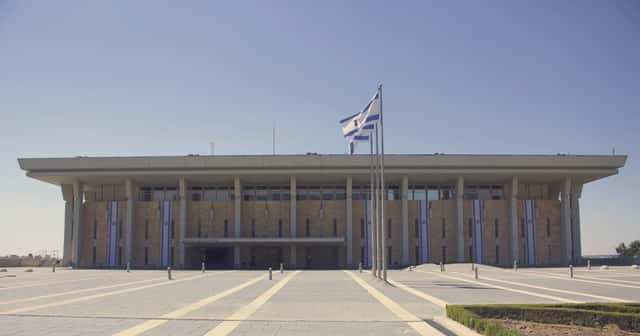
Israel's High Court of Justice on Tuesday rejected a petition that asked it to order Knesset Speaker Amir Ohana to hold a new vote for state comptroller. In the same ruling, the court found that Ohana's months-long failure to schedule the vote amounted to a breach of its July judgment, and it ordered him to pay NIS 10,000 in legal costs.
The court said it turned down the petition only because Israelis elected a new Knesset on October 27. The decision on how and when to fill the post now passes to the 26th Knesset, which will choose its own speaker. The ruling lands as rival blocs prepare for coalition talks and as opposition leaders discuss replacing Ohana as speaker.
Israel has had no state comptroller since early July. This report explains what the court decided, how the dispute began, what Ohana and his critics have said, and the questions left for the new Knesset.
What the court ruled
The panel was made up of Supreme Court President Yitzhak Amit and Justices Khaled Kabub and Ruth Ronen. Ronen wrote the main opinion, and the other two agreed, according to Walla.
The petition was filed by Yaron Gadot, Israel Hayom reported. He asked the court to require the speaker to set a date for the second round of the comptroller vote and to convene the Knesset to hold it.
Ronen wrote that the October election had changed the situation in a significant way. "The elections to the Knesset took place on October 27, and by virtue of them a new Knesset was elected, the 26th Knesset, whose members are of course different from those of the 25th Knesset," she wrote, according to Ynet. "This includes the 26th Knesset choosing a new speaker for itself, who will not necessarily be the person who served as speaker of the previous Knesset."
She called the idea of restarting the vote in the new Knesset from where it stopped in the old one "problematic," since there is no rule of continuity for it and new members have been elected. But she declined to decide the point. She wrote that she would express no view on how the comptroller should be elected, and that any dispute could be heard in a separate case once the new Knesset and its speaker make decisions.
According to Bizportal, Ronen also wrote that there is "a clear anomaly" in the outgoing Knesset, which voters have replaced, continuing to make major decisions, including the choice of a comptroller who serves a seven-year term.
The court's criticism of the speaker
The court did not let the matter end there. "The rejection of the petition is not approval of the speaker's serious conduct," Ronen wrote, according to Ynet. "The serious harm that this conduct causes to the public interest in protecting the rule of law cannot be accepted, especially by a governmental body."
She listed other harms: to the standing of the Knesset and the court; to the two candidates who ran in the first round; "and above all, harm to the public, because of the continued vacancy in the post of state comptroller."
The court found that the long failure to carry out its July ruling was the same as breaching it. "The duty to obey court rulings and to respect them is a basic condition in a democratic regime that operates under the rule of law," Ronen wrote, as quoted by Bizportal and Walla. "This duty applies to the whole public, and all the more so to the authorities of government, which are not above the law."
She also rejected the argument that the timing was simply up to the speaker. His power to set the date is not optional, she wrote, but a power he must use "with appropriate speed in the circumstances."
The court noted that the Knesset's legal adviser, Sagit Afik, had told Ohana on several occasions that the July ruling should be carried out. In her response to this petition, Afik backed its demand in principle, while pointing to possible difficulties in carrying it out, Israel Hayom reported.
Outlets described the costs order in slightly different ways. Ynet and Israel Hayom said Ohana was ordered to pay NIS 10,000. Walla said the speaker and the Knesset would bear the petitioner's costs. Bizportal described the order as personal costs against Ohana.
What Ohana told the court
Ohana argued that the power to set the date of the vote was his to use at his discretion, according to Walla. He said that, with the Knesset election approaching, it made more sense for the next Knesset to choose a comptroller, who serves for seven years. He also argued that the comptroller's office kept working, so there was no need for the court to step in.
The court said he had not given a satisfactory explanation. "The pleadings before us reveal a worrying picture regarding the reasons behind the speaker's failure," Ronen wrote, according to Walla.
No public response from Ohana to Tuesday's ruling was found in the sources reviewed for this report by Tuesday afternoon Eastern time.
How the dispute began
The Knesset elected the comptroller on June 3. In the first round, retired Supreme Court Justice Yosef Elron won 60 votes and attorney Michael Rabello won 57, leaving both short of the 61 votes needed, The Jerusalem Post reported. Rabello is Prime Minister Benjamin Netanyahu's personal lawyer. Ynet's English edition spells his name Ravivo.
In a second round, Rabello won 61 votes to Elron's 57, according to Hidabroot.
| Round | Yosef Elron | Michael Rabello |
|---|---|---|
| First round, June 3 | 60 | 57 |
| Second round, June 3 | 57 | 61 |
Opposition lawmakers said coalition members had been asked to photograph or film their ballots behind the voting curtain, even though the law requires a secret ballot. Petitions followed, including from Yesh Atid and the Movement for Quality Government in Israel.
On July 2, a five-justice panel ruled unanimously that "a fundamental defect occurred in the secrecy of the ballot," the Post reported. The court voided the vote and ordered a new one. The ruling came days before Rabello was due to take office. Former comptroller Matanyahu Englman's term then ended, leaving the post empty.
Rabello has rejected claims that his ties to Netanyahu and Likud should disqualify him. He has said he is "not a political player" but a professional lawyer, and that any conflict of interest would be handled through a public arrangement, according to Hidabroot.
After the vote was voided, Israel First chair Sharren Haskel signed a sworn statement and later testified to police that members of the New Hope-United Right faction were required to film themselves voting for Rabello and show the footage to Netanyahu, the Post reported in August.
- June 3Knesset elects Michael Rabello in a second-round vote
- July 2High Court voids the vote over ballot secrecy and orders a new one
- August 19Recording of Ohana saying the Knesset drew "a red line" for the court
- October 27Israelis elect the 26th Knesset
- November 3High Court rejects petition but finds Ohana breached its ruling
Source: The Jerusalem Post, Ynet
What Ohana has said about the ruling
Ohana has argued from the start that the court lacked the power to order a new vote. Before the July ruling, when the court proposed that the Knesset vote again, he rejected the idea. "The Knesset has already said its word," he said in a formal response to the court, according to Hidabroot. The Knesset argued there was no defect in the vote.
In August, KAN radio aired a recording of Ohana speaking to Likud activists. "We succeeded in drawing a red line for the High Court," he said, according to the Post. "The High Court ruled: The Knesset will hold repeat elections for the position of state comptroller. There is a ruling! And what is the answer to a ruling issued without authority and contrary to the law? Enough!"
"I am glad and proud that this Knesset did so," he added. His office told KAN: "It is unclear to us what is new about the Knesset speaker's consistent position that the Knesset will not meekly accept being trampled."
This dispute is one of several between the courts and the outgoing coalition over the past year. Our report on the certification of the election results covers another.
What critics of the speaker have said
The Movement for Quality Government, one of the groups that challenged the June vote, said in July that "ballot secrecy is not a technical detail, but the heart of free elections." It said it was "unacceptable" for the official in charge of oversight to be chosen through a process that broke the law, according to the Post.
Opposition leader Yair Lapid said in July that his party's petition "saved not only the dignity of the Knesset, but also the institution of the state comptroller." Naftali Bennett called the disruption of the process "outright criminal conduct," the Post reported.
The new Knesset and the speaker's post
The ruling now shifts the issue to the incoming Knesset, which is due to be sworn in next week. Yashar leader Gadi Eisenkot has said he intends to set a new date for the comptroller vote, according to Ynet.
Eisenkot has also said the bloc that recommended him to the president would move quickly to elect a new Knesset speaker. "We have two goals ahead of us: establishing a national emergency government and carrying out parliamentary measures – electing a new Knesset speaker, passing important legislation, and repealing laws that threaten democracy," he said, according to the Post.
Kikar HaShabbat reported that Eisenkot, Bennett and Avigdor Liberman agreed at a meeting on Tuesday to work to replace Ohana, but had not agreed on who should succeed him. The site said the plan rests on a 2020 High Court ruling that a vote on a new speaker must be held if 61 lawmakers demand it, even before a government is formed. Likud and the haredi and religious parties won 53 seats, so the opposition bloc would need the Arab parties to reach 61, Kikar reported. Our report on the final election count sets out the seat totals.
Israel Hayom reported that a consensus is forming in the opposition bloc to move ahead with the comptroller choice, with a focus on Elron, who ran against Rabello.
Questions the ruling leaves open
The ruling does not decide how the new Knesset should proceed. Israel Hayom listed the main open question: whether the Knesset can go straight to a second round between the two original candidates, where a simple majority is enough, or must restart the process and allow new candidates.
It is also unclear who will be speaker when the issue comes up. Under the 2020 precedent reported by Kikar, that depends on whether 61 lawmakers back a replacement. Ronen said any dispute over the process could return to the court in a separate case.
For how 567politics handles disputed claims and court rulings, see our methodology.
About this report
This report draws on Ynet, Walla, Israel Hayom, Bizportal, Kikar HaShabbat and Hidabroot coverage of the ruling and the court record, and on The Jerusalem Post's reporting on the July ruling and Ohana's August remarks. The full text of the ruling was not available to us. Quotes from Hebrew-language sources are 567politics translations. Times are Eastern.
Differing perspectives
Was the Knesset speaker required to hold the repeat state comptroller vote, and which Knesset should hold it?
Each position is summarized as its supporters make it, with equal weight and in alphabetical order. A summary is not an endorsement; the evidence for each is weighed in the story above.
Hold a clean secret-ballot vote
Who holds it: Movement for Quality Government; Yesh Atid and other opposition parties that petitioned in June
These groups say ballot secrecy is the heart of free elections, because it lets each lawmaker vote by conscience without pressure. They argue that filming ballots turned the vote into a loyalty test, and that the official who oversees government cannot be chosen by a process that broke the law. They welcomed the order for a new vote and want it carried out.
In their words: The Jerusalem Post ↗
Leave the vote to the 26th Knesset, but rulings must be obeyed
Who holds it: High Court panel: President Yitzhak Amit and Justices Khaled Kabub and Ruth Ronen
The panel says the speaker's long failure to carry out the July ruling amounted to a breach and seriously harmed the rule of law, the candidates and the public. But it says the October election changed the situation. A new Knesset, with new members and possibly a new speaker, should decide how to proceed, and any dispute over the process can be heard separately.
In their words: Ynet ↗
Let the June result stand
Who holds it: Attorney Michael Rabello, elected in the June vote
Rabello says he is not a political player but a professional lawyer who has represented a range of clients. He says any possible conflict of interest can be handled through a detailed conflict-of-interest arrangement that would be published to the public. He says he accepted the post with a deep sense of responsibility and full commitment to all citizens of the state.
In their words: Hidabroot ↗
The court lacked authority to order a new vote
Who holds it: Knesset Speaker Amir Ohana (Likud)
Ohana says the July ruling was issued without authority and contrary to the law, and that the Knesset had already spoken and would hold no further vote. He told Likud activists that the Knesset drew a red line for the court and that he is glad and proud it did so. His office says his consistent position is that the Knesset will not meekly accept being trampled.
In their words: The Jerusalem Post ↗
READ BEYOND 567POLITICS
Alternate sources & perspectives
Independent coverage and primary evidence to help you compare arguments. A link is not an endorsement; perspective labels describe the linked material.
- primary evidence
High Court orders Ohana to pay costs and sharply criticizes him, but sets no new date for comptroller vote (Hebrew) ↗
Ynet
Quotes Justice Ruth Ronen's opinion at length, including the reasons for rejecting the petition and the criticism of the speaker.
- independent analysis
High Court: Knesset speaker breached ruling on state comptroller vote (Hebrew) ↗
Walla
Names petitioner Yaron Gadot and summarizes Ohana's arguments to the court and the panel's response.
- independent analysis
High Court orders Ohana to pay costs: 'serious harm to the order of government' (Hebrew) ↗
Israel Hayom
Sets out the open questions for the new Knesset and reports the opposition bloc's focus on Yosef Elron.
- right argument
Knesset Speaker Ohana says he's 'glad, proud' Likud defied High Court on repeating comptroller vote ↗
The Jerusalem Post
Ohana's own words on why he refused to hold a repeat vote, and his office's response.
- left argument
High Court ruling orders Knesset to hold new vote on state comptroller after filming scandal ↗
The Jerusalem Post
The July ruling, the June vote totals and statements from the Movement for Quality Government, Yair Lapid and Naftali Bennett.
- other perspective
Knesset speaker to High Court: 'There will be no repeat vote for state comptroller' (Hebrew) ↗
Hidabroot
Ohana's June response to the court, the second-round vote totals and Michael Rabello's response to the petitions.
- independent analysis
High Court: Ohana breached ruling on state comptroller (Hebrew) ↗
Kikar HaShabbat
Reports opposition talks on replacing Ohana as speaker and the 2020 precedent on a 61-member demand.
Reviewed 2026-11-03. Discovery search returned unrelated pages (dictionary and high-school sites), so sources were chosen by hand and each was opened in full. The full text of the ruling was not available; quotes come from Hebrew outlets that quoted it. No public response from Speaker Ohana or Michael Rabello to Tuesday's ruling was found by mid-afternoon Eastern time. The Times of Israel could not be opened from our tools (HTTP 403) and is not cited.