Israel's opposition leaders back Eisenkot for first mandate, split over Arab parties' role
Five opposition leaders agreed on Nov. 3 to back Gadi Eisenkot for the first mandate. Their 48 seats fall short of 61, and they disagree over relying on Arab-led lists.
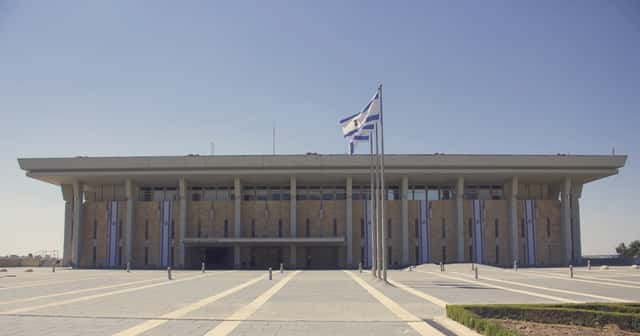
Israel's five opposition party leaders agreed on Tuesday, Nov. 3, to recommend Gadi Eisenkot as the first lawmaker tasked with forming a government. They met for about 70 minutes in Herzliya, one day before President Isaac Herzog opens formal consultations with the 11 factions elected on Oct. 27. The leaders said they would move "immediately" to replace Prime Minister Benjamin Netanyahu's government. But they left the hardest question open: where a 61-seat majority would come from.
The leaders' joint statement, published by Israel National News and summarized by Anadolu, said: "The party leaders are coordinating and will act immediately to replace the October 7 government with a national emergency government and translate the clear parliamentary majority in the Knesset into action." The phrase "October 7 government" is the opposition's term for the outgoing coalition. Likud answered the same afternoon that the opposition was "endangering Israel's future," according to the party statement reported by Israel National News.
This story follows our earlier reports on the final count of 53 seats for Netanyahu's bloc and 48 for Eisenkot's, on Netanyahu's call for a "broad national government", and on Herzog's timetable for coalition talks.
What the opposition leaders agreed
The meeting brought together outgoing opposition leader Yair Lapid and the heads of the four parties in the bloc: Eisenkot of Yashar, Naftali Bennett of B'Yachad (Together), Yair Golan of the Democrats and Avigdor Liberman of Yisrael Beytenu, according to Ynet. Those four parties won 48 seats between them.
Their joint statement made four commitments, as reported by Ynet and Israel National News:
- Every party in the bloc will recommend Eisenkot to Herzog for the first mandate.
- The government they seek will rest on the "four principles" Eisenkot set out on Oct. 31.
- Negotiating teams will start drafting the government's basic guidelines and coalition agreements at once.
- The parties will coordinate parliamentary moves from the first days of the 26th Knesset, which is due to be sworn in on Nov. 10.
The statement also condemned what it called Likud's "dangerous and unhinged delegitimization campaign" against the election results and the Central Elections Committee. Likud figures have alleged fraud and foreign funding in the Arab vote. The election committee's chair, Justice Noam Sohlberg, said on Nov. 1 that the inquiry into suspected foreign funding was serious and ongoing but would not change the result. "Our position is that even if the suspicions are substantiated, this would not undermine the integrity of the electoral process or the election results as a whole," he said, the Jewish Telegraphic Agency reported. We covered that briefing in our story on the certification dispute.
Speaking on arrival, Lapid said: "We are facing an extreme and dangerous attempt to invalidate the election. I have been shown all the intelligence material. The election was conducted properly, and there is absolutely no reason to overturn it," Ynet reported. Bennett said in a separate statement: "We have no time. We need to act with great urgency."
Eisenkot's four principles
Eisenkot first listed his conditions on Oct. 31, the Jerusalem Post reported. Any lawmaker who joins his government, he said, must accept:
- Israel as a "Jewish, democratic, liberal, and egalitarian state."
- The values of Israel's Declaration of Independence.
- Mandatory military, national or civilian service for all citizens.
- Hamas as a terrorist group, and the duty to destroy its military and governing power in Gaza.
"Any MK willing to sign on to these principles is a potential partner," Eisenkot said at the time. Critics of any alliance with the Arab-led parties point to the fourth condition. "None of them will designate Hamas as a terror organization, even after Oct. 7," Hebrew University professor Gadi Taub told JTA.
The question the meeting did not settle
The numbers explain why the meeting drew so much attention. Netanyahu's bloc holds 53 of the Knesset's 120 seats. Eisenkot's bloc holds 48. The two Arab-led lists, the Joint List and Ra'am, hold 19, a record. A government needs the support of 61 lawmakers to win a confidence vote.
Source: TRT World, The Guardian
Show the numbers
| Party | Seats |
|---|---|
| Likud (Netanyahu bloc) | 27 |
| Yashar (opposition bloc) | 21 |
| B'Yachad (opposition bloc) | 12 |
| Joint List (Arab-led) | 11 |
| Ra'am (Arab-led) | 8 |
| Democrats (opposition bloc) | 8 |
| United Torah Judaism (Netanyahu bloc) | 7 |
| Otzma Yehudit (Netanyahu bloc) | 7 |
| Yisrael Beytenu (opposition bloc) | 7 |
| Shas (Netanyahu bloc) | 6 |
| Religious Zionism (Netanyahu bloc) | 6 |
The opposition plus the Arab-led lists would total 67 seats. But Ynet's account of the meeting says Golan asked whether the decision not to work with the Arab parties was final. Liberman answered "yes," and Eisenkot and Bennett nodded. Golan's Democrats said they would leave the bloc if it moved toward a unity government with Netanyahu: "If this heads toward a unity government, we're out," party officials told Ynet.
Ynet also reported that Eisenkot is determined to form a minority government and has decided to focus, among other things, on the ultra-Orthodox (Haredi) parties, but has not publicly ruled out relying on Arab parties for support. Bennett, by the same account, believes a government that depends on Arab votes would not survive and would lead to another election. Liberman wrote on social media: "We must prevent another election." He added that "with the right navigation, we can quickly establish a functioning, stable government without Ra'am or the Joint List." Israel National News reported that the leaders agreed to put a government without the Arab parties first, while Golan asked to leave "the door open."
These accounts rely on people in the room, and they differ in tone. No participant has released minutes. Readers should treat the details of who nodded and who objected as reported, not confirmed.
How the Arab-led parties describe their role
The two Arab-led lists do not hold one view.
Yousef Jabareen, who leads the Joint List and its Hadash party, told The Guardian on Nov. 2 that his list would not join a coalition. "As long as the occupation of our people in the West Bank continues, we cannot be part of a government," he said. But he added that the list would "consider the possibility of supporting from outside" in order to "get rid of the extreme Netanyahu government." He called Eisenkot's conditions "more relevant for parties who would be in the coalition."
Jabareen set out what Arab voters expect in return. "We have suffered from systemic discrimination for years, so if Eisenkot speaks of change, I believe that the change should come also for our community. We need to be treated equally," he said. He also asked for "a political horizon," meaning an end to the war and renewed talks with the Palestinian leadership.
Ra'am's leader, Mansour Abbas, has signaled more openness. Israel's Channel 12 reported on Oct. 30 that Abbas sees Eisenkot's conditions as no obstacle, but rates the chance of a minority government as slim unless the anti-Netanyahu parties "show flexibility," according to a summary of the Channel 12 reports by Mereja. Ra'am sat in the Bennett-Lapid coalition in 2021 and 2022.
The Jewish Telegraphic Agency reported that Hadash and Ta'al, two of the Joint List's three parties, have shown a willingness to set parts of their agenda aside to change the government. The third party, Balad, holds a pan-Arab nationalist platform. Ynet reported that Golan met Joint List leaders Jabareen and Ahmad Tibi earlier on Tuesday before the opposition meeting.
The Jerusalem Post reported on Nov. 1, citing a senior Joint List official speaking to Walla, that both Arab-led lists are expected to recommend Eisenkot to Herzog. If they do, Eisenkot could receive 67 recommendations against 53 for Netanyahu.
How Netanyahu and Likud responded
Netanyahu has framed the contest around the Arab-led parties. In a post on Monday night, quoted by the Jerusalem Post, he wrote: "The Israeli public does not want a government that depends on Ra'am and the Joint List, parties that support terrorism and reject the existence of the Jewish state." He said Likud would form "a broad government with our partners and with any other party that wishes to join, provided they do not support terrorism."
On Tuesday, after reports that the opposition would court the Haredi parties, Netanyahu accused his rivals of hypocrisy. "Suddenly, they are no longer 'parasites,' 'draft dodgers,' or 'destroyers of the state,' but are being given a completely clean slate. It's all about the left's lust for power," he said, according to Israel National News. The quoted insults are terms that opposition figures used about Haredi parties during the campaign, the outlet reported.
Likud's party statement asked: "What will the 'emergency government' do on the active fronts in Gaza, Lebanon, and Iran when key members of that government are unwilling to call Hamas and Hezbollah terrorist organizations?"
Two points in these statements deserve scrutiny by the same standard applied to every side. Netanyahu's claim that a "clear majority of the Jewish public" chose Likud is his reading of the vote; Likud won 27 of 120 seats, the largest single party but well short of a majority. And the statement that both Arab-led lists "support terrorism" is a contested political charge. Israel's Supreme Court blocked attempts to bar Arab parties from this election, JTA reported, and Ra'am served in a government in 2021-22. AFP reported that Arab party leaders have condemned the Oct. 7 attack without calling Hamas a terrorist group, and that Ra'am's leader has recognized Israel as a "Jewish state" while other Arab leaders reject that definition. Arab leaders call such charges incitement; Jabareen described the Qatari-funding allegations as "a dangerous incitement" in his Guardian interview.
The opposition's framing has its own gaps. Its statement speaks of a "clear parliamentary majority," but the bloc's own leaders, by Ynet's account, ruled out relying on the 19 Arab-led seats that would make that majority. Without those seats, or without defections from Netanyahu's side, the bloc has 48.
Herzog's consultation schedule and the speaker vote
Herzog will receive the certified results from Sohlberg on Wednesday, Nov. 4, the Jerusalem Post reported. The President's Office said consultations will run in ascending order of seats, "to encourage thinking outside the box," the Jerusalem Post reported. Herzog said he wants to "exhaust every possibility" and widen the talks to "explore any avenue that could advance the process."
| Day | Factions (in order) |
|---|---|
| Wed., Nov. 4 | Religious Zionism-Zehut, Shas, Yisrael Beytenu |
| Thu., Nov. 5, morning | United Torah Judaism, Otzma Yehudit, Democrats, Ra'am |
| Thu., Nov. 5, evening | Joint List, B'Yachad, Yashar, Likud |
Under Basic Law: The Government, the lawmaker Herzog picks gets 28 days to form a coalition, with up to 14 more. The president is not bound to pick the candidate with the most recommendations. He must judge who has the best chance of winning a confidence vote. If the first candidate fails, a second can get 28 days. Further failure can lead to a new election, TRT World noted.
The opposition also plans to replace Knesset Speaker Amir Ohana of Likud after the swearing-in. That vote needs 61 lawmakers. Ynet reported that Bennett and Liberman want Lapid as speaker, while Eisenkot asked to delay the choice until Sunday or Monday. Jabareen told The Guardian that the 67 lawmakers opposed to Netanyahu could use their numbers to change the speaker and take control of the committee that sets the Knesset's agenda.
Open questions
Several points remain unresolved and could not be confirmed from public sources by Tuesday afternoon in Israel:
- Whether Ra'am and the Joint List will formally recommend Eisenkot on Thursday, and on what terms.
- Whether the Haredi parties, United Torah Judaism and Shas, would negotiate with Eisenkot over a military service law. Neither had issued a public response to the Herzliya meeting by the time of writing.
- Whether a minority government, backed from outside by Arab-led lists, is a real option for Eisenkot, given Liberman's and Bennett's stated opposition.
- Who the bloc will back for Knesset speaker on Nov. 10.
Families of victims of the Oct. 7, 2023, attack protested outside the meeting. "You have a mandate. Do not help legitimize leaders who were at the wheel during the massacre. Form a government of change," they said. "The people cast a vote of no confidence in the government of October 7," they added, Ynet reported, and called for a state commission of inquiry into the attack.
For how 567politics weighs sources and handles contested claims, see our methodology. For a side-by-side look at Israel's parliamentary system, see our Israel and United States comparison.
Differing perspectives
How should a new Israeli government be formed after the Oct. 27, 2026 election left no bloc with 61 seats?
Each position is summarized as its supporters make it, with equal weight and in alphabetical order. A summary is not an endorsement; the evidence for each is weighed in the story above.
Back a change government from outside
Who holds it: Joint List leader Yousef Jabareen (Hadash)
Arab citizens voted in record numbers to end the Netanyahu government. The Joint List will not join a coalition while the occupation of the West Bank continues, but it will consider supporting a new government from outside. In return, Arab citizens should be treated equally, and the government should offer a political horizon: an end to the war and renewed talks with the Palestinian leadership.
In their words: The Guardian (interview with Yousef Jabareen) ↗
Bring Ra'am into a change coalition
Who holds it: Ra'am leader Mansour Abbas; Democrats leader Yair Golan
Ra'am turned a sharp rise in Arab turnout into eight seats and says it intends to be an influential force, not a bystander. It has served in government before, in the 2021-22 Bennett-Lapid coalition. Golan, the only Jewish-led opposition leader openly backing such a partnership, argues that the votes of Arab citizens cannot be ignored when no bloc has a majority on its own.
In their words: Jewish Telegraphic Agency ↗
Broad national government led by Likud
Who holds it: Prime Minister Benjamin Netanyahu and Likud
Likud won the most seats and, Netanyahu says, the backing of a clear majority of Jewish voters, so he should lead the next government. He offers a broad national government with his partners and any party that does not, in his view, support terrorism. He argues the public does not want a government that depends on Ra'am and the Joint List, which he accuses of supporting terrorism.
In their words: The Jerusalem Post (Netanyahu post) ↗
Zionist emergency government without Arab-led lists
Who holds it: Gadi Eisenkot (Yashar), Naftali Bennett (B'Yachad), Avigdor Liberman (Yisrael Beytenu)
The opposition won enough support to replace what it calls the October 7 government and should act fast to avoid another election. A new government should rest on Eisenkot's four principles, including service for all and a commitment to defeat Hamas. Liberman and Bennett say there is enough room to build a stable government without Ra'am or the Joint List, and Bennett argues a coalition that depends on Arab votes would not last.
In their words: Ynet News ↗
READ BEYOND 567POLITICS
Alternate sources & perspectives
Independent coverage and primary evidence to help you compare arguments. A link is not an endorsement; perspective labels describe the linked material.
- primary evidence
Eisenkot's bloc backs first mandate bid, rules out Arab-party cooperation ↗
Ynet News
Most detailed account of the Nov. 3 meeting, with quotes from Lapid, Bennett and Liberman, the speaker dispute and the exchange over Arab parties.
- primary evidence
Opposition parties unite behind Eisenkot for prime minister ↗
Israel National News
Carries the text of the opposition leaders' joint statement on a national emergency government.
- right argument
"All about their lust for power": Netanyahu slams Opposition talks with Haredi parties ↗
Israel National News
Netanyahu's and Likud's same-day responses to the meeting, in their own words.
- right argument
Benjamin Netanyahu calls for 'broad national government' made up of anti-terror parties ↗
The Jerusalem Post
Netanyahu's Nov. 2 post setting out his case for a Likud-led broad government without Ra'am or the Joint List.
- left argument
Israel has 'historic' opportunity to change direction, says leader of Arab coalition ↗
The Guardian
Interview with Joint List leader Yousef Jabareen on outside support for a change government and his conditions.
- independent analysis
Arab parties are kingmakers, but will Israel's Jewish leaders accept them? ↗
Jewish Telegraphic Agency
Sets Ra'am, Joint List, critics such as Gadi Taub and analysts side by side, and cites an Israel Democracy Institute snap poll.
- primary evidence
Israel election: Isaac Herzog to begin coalition consultations with smallest parties ↗
The Jerusalem Post
Full schedule of the President's Office consultations on Nov. 4-5 and the legal timeline for forming a government.
- other perspective
Israeli opposition leaders recommend Eisenkot for prime minister, vow to form 'national emergency government' ↗
Anadolu Agency
Turkish state news agency account of the joint statement and the seat arithmetic.
- independent analysis
Israeli opposition leaders vow to remove Netanyahu quickly but path unclear ↗
AFP
Wire report on the meeting that stresses the unclear path to a majority and the positions of Arab party leaders on Hamas and a Jewish state.
- primary evidence
Joint List, Ra'am to back Gadi Eisenkot for premiership as Isaac Herzog opens negotiations ↗
The Jerusalem Post
Herzog's Nov. 1 remarks urging flexibility, and a Joint List official's report that both Arab-led lists expect to recommend Eisenkot.
- other perspective
Israeli opposition rallies behind Eisenkot as Herzog opens consultations on next government ↗
TRT World
Party-by-party seat totals used in our chart and the consultation order; published by Turkey's state broadcaster.
Reviewed 2026-11-03. Sources were picked by hand because automated discovery returned only general reference pages. The Times of Israel blocked our fetches, so it is not listed. The opposition's joint statement was not found on a party website; Israel National News and Anadolu carry its text. Accounts of what was said inside the Herzliya meeting come from Ynet's unnamed participants and could not be independently confirmed. Shas and United Torah Judaism had issued no public response to the meeting at the time of review. Ra'am's position is drawn from Channel 12 reports summarized by a secondary outlet and from JTA; we did not find a fresh Ra'am statement dated Nov. 3.