Somalia rejects Israel's first ambassador to Somaliland as 'null and void' after Hargeisa ceremony
Israeli envoy Michael Lotem presented credentials in Hargeisa. Somalia says the move needs its consent under the Vienna Convention; the African Union rejects recognition.
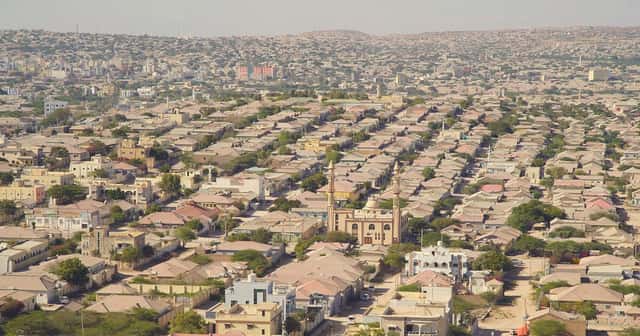
Somalia's federal government on Tuesday rejected Israel's accreditation of an ambassador to Somaliland as "null and void." Days earlier, Israeli envoy Michael Lotem presented his credentials to Somaliland President Abdirahman Mohamed Abdullahi in Hargeisa, and officials laid a cornerstone for an Israeli embassy there. Somaliland broke away from Somalia in 1991. Mogadishu still claims it, and no other United Nations member state recognizes it.
Israel's Foreign Ministry announced the ceremony on Sunday, Nov. 1. The step carries out an agreement the two sides reached on Dec. 26, 2025, when Israel became the first UN member state to recognize Somaliland. Foreign Minister Gideon Sa'ar called the exchange of ambassadors "another important step in deepening the ties between us." Somalia's Foreign Ministry said the moves were taken without its consent and broke the rules for setting up diplomatic missions.
The dispute comes as Israel's caretaker government waits for coalition talks after the Oct. 27 election. It also comes as war in Yemen returns to the far side of the Gulf of Aden. This report sets out what each government said, how the relationship has developed since December, and where regional bodies stand.
What happened in Hargeisa
Lotem presented his credentials at the Presidential Palace in Hargeisa, The Jerusalem Post reported. The Post dated the ceremony to Sunday. Al Jazeera reported that officials also laid the cornerstone for an Israeli embassy during the visit.
Abdullahi, widely known as Cirro, called it a "historical day," according to Al Jazeera. He said it was the first time a Somaliland president had received the credentials of an ambassador from a UN member state that recognizes the territory's independence.
Lotem said Israel's recognition acknowledged what Somaliland had built over 35 years. He said it was more than a diplomatic formality, Al Jazeera reported.
The Post said Lotem will at first serve as a non-resident ambassador. That means he will not be based full time in Hargeisa during the early phase of ties.
What Israel and Somaliland said
Sa'ar issued a statement on Sunday. "Israel is determined to develop and strengthen its relations with Somaliland," he said, according to the Post. "The appointment of ambassadors, in accordance with the agreement reached when our countries established mutual recognition, is another important step in deepening the ties between us."
Somaliland's president tied the relationship to geography. "Given our strategic position around the Red Sea and the Gulf of Aden, our cooperation carries important regional and international significance," he said, according to Al Jazeera. "Let me reaffirm that Somaliland approaches this relationship with genuine strategic commitment and a long-term perspective."
A statement from Somaliland's presidency, carried by the Hargeisa-based outlet HornPost, said Cirro wants lasting relations with Israel "based on mutual respect, shared interests and long-term cooperation." The statement said closer ties could support regional peace, stability and maritime security. HornPost said the two sides are seeking closer economic, security and diplomatic cooperation.
What Somalia said
Somalia's Foreign Ministry responded on Tuesday, Nov. 3. Its statement was carried by the state news agency SONNA and reported by Anadolu Agency.
The ministry condemned what it called Israel's "purported accreditation" of an ambassador in Hargeisa. SONNA said it also condemned the laying of a cornerstone for what the ministry described as a "so-called embassy" on Somali territory. The ministry said the steps violate Somalia's sovereignty, territorial integrity and unity, and that it rejects them as null and void and without legal effect.
"The establishment of diplomatic relations and permanent diplomatic missions requires the consent of the sovereign State, as provided for in the Vienna Convention on Diplomatic Relations," the ministry said, according to Anadolu.
The statement called Israel's December recognition "unlawful." It said the recognition had already been rejected by the African Union, the regional bloc IGAD, the Arab League and the Organization of Islamic Cooperation.
The ministry also linked the issue to security at sea. It said that with tension high in the Red Sea and the Gulf of Aden, steps that encourage fragmentation and ignore recognized borders risk deepening tensions in a fragile region. It demanded that Israel "immediately" reverse the measures. It urged all states and international bodies to reject them and avoid any contact that would lend them legitimacy. It said Mogadishu reserves the right to use all diplomatic, political and legal avenues under international law.
Somalia's president, Hassan Sheikh Mohamud, questioned Israel's motives in a Sky News interview last week, Al Jazeera reported. "Israel wants the Red Sea, that is the only reason," he said. He also alleged that Israel wants a naval base in the territory. Al Jazeera noted that Somaliland officials have signaled openness to hosting an Israeli base, but that Somaliland's president recently said no talks on one had been held.
How the relationship developed
Israel's recognition came on Dec. 26, 2025. Prime Minister Benjamin Netanyahu's office said the declaration was "in the spirit of the Abraham Accords," the Post reported at the time. Those are the normalization deals with Arab states that began under President Donald Trump in 2020. Netanyahu thanked Sa'ar and the Mossad intelligence agency for their role. Abdullahi said Somaliland would join the accords.
Since then, ties have moved step by step, according to the Post, HornPost and Al Jazeera.
- Dec. 26, 2025Israel recognizes Somaliland
- January 2026Sa'ar visits Hargeisa
- February 2026Somaliland names Dr. Mohamed Haji its first ambassador to Israel
- May 2026Israel receives the Somaliland ambassador's credentials
- June 2026Somaliland opens an embassy in Jerusalem; Cirro visits Israel
- Nov. 1, 2026Lotem presents his credentials in Hargeisa
Source: The Jerusalem Post, HornPost, Al Jazeera
During Cirro's June visit, Defense Minister Israel Katz said the two sides had cooperated on secret operations for years and wanted to expand security ties, Al Jazeera reported.
In March 2025, the Post reported, Somalia and Somaliland both denied receiving any proposal from the United States or Israel to resettle Palestinians from Gaza.
Where regional bodies stand
The African Union rejected the recognition on the day it was announced. In a Dec. 26, 2025, statement, AU Commission Chairperson Mahmoud Ali Youssouf "firmly" rejected any move to recognize Somaliland as independent. He cited the AU principle of respect for "the intangibility of borders inherited at independence," set by the Organization of African Unity in 1964. He said any attempt to undermine Somalia's unity risks "setting a dangerous precedent with far-reaching implications for peace and stability across the continent."
The foreign ministers of Egypt, Turkey, Somalia and Djibouti also issued a joint rejection at the time, the BBC reported. The Gulf Cooperation Council's secretary-general, Jasem Mohamed Albudaiwi, said the recognition "represents a dangerous precedent that will undermine the foundations of stability in the Horn of Africa region," ABC News (Australia) reported. Turkey said the move "aligns with its expansionist policy," ABC reported.
Supporters of Somaliland's claim point to its own institutions. The BBC noted that the territory has its own currency, passports and police. It has a population of almost six million. Somaliland says it has governed itself since 1991.
Why the Red Sea matters here
Somaliland sits on the Gulf of Aden, across from Yemen and near the Bab al-Mandeb strait. That strait links the Red Sea to the Indian Ocean and carries a large share of shipping between Asia and Europe.
On Oct. 9, UN envoy Hans Grundberg warned that Yemen had returned to full-scale war, Al Jazeera reported. Fighting involves the Iran-aligned Houthi movement and forces of the internationally recognized government. Our recent report covers fighting in al-Jawf and Taiz and Houthi claims of strikes on Saudi airports.
The Horn of Africa has seen other shifts in recent weeks. Uganda has begun pulling troops out of Somalia from the African Union mission there. Somaliland itself has been at the center of earlier disputes. In 2024, a deal under which landlocked Ethiopia would lease a stretch of Somaliland's coast for a port and military base angered Mogadishu, the BBC reported.
Israel's ties in the wider region are also in flux. Syria is weighing a regional defense pact with Saudi Arabia, Turkey and Pakistan. Turkey's opposition to the Somaliland move adds to its disputes with Israel.
How each side frames the dispute
The two sides describe the same events in different terms.
Israel and Somaliland present the exchange of ambassadors as the routine next step in a relationship between two governments. In their telling, it follows from the mutual recognition agreed last December. They stress shared interests in trade, security and stability at sea.
Somalia presents the same steps as a breach of its sovereignty. In its view, an ambassador cannot be accredited and an embassy cannot be founded on its territory without its consent. It says the moves encourage the breakup of states in a region that is already tense.
The African Union frames the issue around the principle of fixed borders. It warns that recognizing a breakaway region could encourage similar claims across the continent.
What to watch
Somalia said it may use legal avenues under international law but did not say which ones. It did not say whether it would bring the matter to the UN Security Council or the AU Peace and Security Council.
Israel has not said when Lotem might take up residence in Hargeisa, or when an embassy building would open. Any decisions may fall to the next Israeli government. Netanyahu's bloc and the opposition led by Gadi Eisenkot are still maneuvering after a close final count.
The United States has not followed Israel in recognizing Somaliland. U.S.-Israel ties are also under strain after Trump said Washington would end $4 billion in yearly aid to Israel.
For how 567politics handles sources and disputed claims, see our methodology.
About this report
This report draws on statements by Somalia's Foreign Ministry as carried by SONNA and Anadolu Agency; Israeli Foreign Minister Gideon Sa'ar's statement as reported by The Jerusalem Post; a Somaliland presidency statement as carried by HornPost; Al Jazeera's report on the ceremony; and the African Union Commission's December 2025 statement. Background on regional reactions comes from the BBC and ABC News. Israel's Foreign Ministry website could not be reached for this report. Times are Eastern.
Differing perspectives
Should Israel's ambassador and embassy in Somaliland go ahead without Somalia's consent?
Each position is summarized as its supporters make it, with equal weight and in alphabetical order. A summary is not an endorsement; the evidence for each is weighed in the story above.
Build a lasting partnership with Israel
Who holds it: Somaliland's presidency under Abdirahman Mohamed Abdullahi (Cirro)
Somaliland's presidency says it wants lasting relations with Israel based on mutual respect, shared interests and long-term cooperation. It argues that Somaliland's location on the Gulf of Aden gives the partnership regional weight, and that closer ties can support peace, stability and maritime security. It says stronger ties open room for cooperation across several fields.
In their words: HornPost (Somaliland presidency statement) ↗
Keep Africa's inherited borders intact
Who holds it: African Union Commission Chairperson Mahmoud Ali Youssouf
The African Union Commission rejects any move to recognize Somaliland as independent. It says Somaliland remains part of the Federal Republic of Somalia and cites the AU principle that borders inherited at independence should not be changed, set in 1964. It argues that undermining Somalia's unity risks a dangerous precedent with wide effects on peace and stability across the continent.
In their words: African Union ↗
Proceed with full diplomatic ties
Who holds it: Israel's government, led by Foreign Minister Gideon Sa'ar
Israel's government says it is determined to develop and strengthen relations with Somaliland. It says naming ambassadors follows directly from the agreement both sides reached when they established mutual recognition in December 2025. In its view, the exchange of envoys is a normal next step between two governments and deepens ties that already include a ministerial visit and Somaliland's own ambassador to Israel.
In their words: The Jerusalem Post (Sa'ar statement) ↗
Reverse the steps as null and void
Who holds it: Somalia's federal government and Foreign Ministry
Somalia's Foreign Ministry says diplomatic relations and permanent missions require the consent of the sovereign state under the Vienna Convention. It says Israel's accreditation of an envoy and the embassy cornerstone violate Somalia's sovereignty, unity and territorial integrity and have no legal effect. It warns that steps encouraging fragmentation risk raising tensions in the Red Sea and urges states to reject them.
In their words: SONNA (Somali National News Agency) ↗
READ BEYOND 567POLITICS
Alternate sources & perspectives
Independent coverage and primary evidence to help you compare arguments. A link is not an endorsement; perspective labels describe the linked material.
- primary evidence
Israeli Ambassador to Somaliland Michael Lotem presents credentials ↗
The Jerusalem Post
Reports the Hargeisa ceremony and Foreign Minister Gideon Sa'ar's statement on developing relations.
- primary evidence
Somaliland president receives credentials of Israeli ambassador Michael Lotem ↗
HornPost
Carries the Somaliland presidency's account of the ceremony and its case for the partnership.
- primary evidence
Somalia rejects Israel's purported appointment of ambassador in Hargeisa ↗
SONNA (Somali National News Agency)
Somalia's Foreign Ministry statement calling the accreditation and embassy cornerstone null and void.
- other perspective
AUC Chairperson rejects any recognition of Somaliland ↗
African Union
The AU Commission's December 2025 statement citing the principle of inherited borders.
- independent analysis
Israel's first ambassador to Somaliland presents credentials in Hargeisa ↗
Al Jazeera
Background on the December 2025 recognition, regional reaction and the envoy's remarks.
- other perspective
Somalia condemns Israeli envoy's accreditation in breakaway Somaliland ↗
Anadolu Agency
Turkish state agency report on Somalia's condemnation.
- independent analysis
Israel recognises Somaliland as independent state, Netanyahu says ↗
BBC News
Explains the December 2025 recognition and the background to Somaliland's claim.
- independent analysis
Somalia, Arab nations denounce Israeli recognition of Somaliland ↗
ABC News (Australia)
Collects reactions from Somalia and Arab governments to the recognition.
Reviewed 2026-11-03. Discovery search returned only generic Israel pages, so sources were chosen by hand and each was opened in full. Israel's Foreign Ministry site (gov.il), AP, Africanews and The Times of Israel could not be opened from our tools and are not cited. No left/right split maps neatly onto this dispute; the main argued positions come from the Israeli and Somaliland governments, Somalia and the African Union.