Syria Weighs Joining Saudi-Turkey-Pakistan Defense Pact as Israel Dispute Over South Persists
Syria's foreign minister says talks are under way on the Mecca pact. An analyst calls it early-stage; Damascus and Israel still differ over southern Syria.
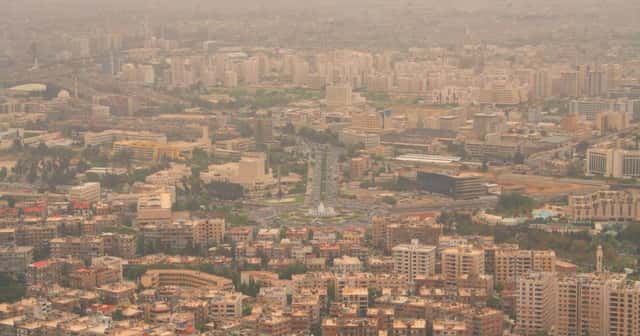
Syria's foreign minister said on Saturday that his government is weighing whether to join the Mecca Joint Defense Agreement. The pact binds Saudi Arabia, Turkey and Pakistan. "Discussions are currently under way to evaluate Syria's entry into the Mecca alliance," the minister said at the Manama Dialogue conference in Bahrain, according to Al Jazeera and Anadolu Agency. No decision has been announced. An analyst told Middle East Eye that the talks are at an early stage. The remarks came as Saudi Arabia faces Houthi missile and drone fire, and as Syria and Israel remain divided over southern Syria.
This article covers what Syria's foreign minister said and what the pact is. It also covers the dispute with Israel over southern Syria and the Druze-majority province of Suwayda, which is also spelled Sweida. Syrian, Israeli, Saudi and Turkish officials are identified by title here. Where a party's view is not in the sources 567 Politics opened, the article says so.
What the pact says
The Mecca Joint Defense Agreement was signed by Saudi Arabia, Turkey and Pakistan in Mecca on Aug. 7, Middle East Eye reported. Under it, an attack on one of the three counts as an attack on all three. Al Jazeera said it has been compared to the NATO alliance. Turkey's ratification process is still under way. Middle East Eye said the foreign affairs committee of Turkey's parliament has approved a bill to ratify the pact.
Pakistan and Turkey have pledged military support to Riyadh, according to Al Jazeera. Neither has announced operations against the Houthis. Turkish officials have said any future support would not include sending Turkish troops to fight in Yemen. For the Saudi-Houthi fighting, see 567 Politics' report on the Yemen front.
What Syria's foreign minister said
The foreign minister described Syria as an "integral" part of regional security. He said Damascus would support any framework aimed at protecting stability. He said the region is "in greater need than ever" of joint deterrence and defense systems. He also said Syria backs the Saudi-backed Yemeni government's efforts to restore its sovereignty and stability.
In a separate interview with Asharq Bloomberg, reported by Türkiye Today, he said Syria is discussing taking part either in the Mecca pact or in another arrangement serving the same purpose. "We do not accept attacks on Gulf states while Syria stands by as a spectator," he said. He said Syria would contribute within international law and according to its capabilities. He noted that the country is still recovering from a 14-year war.
Middle East Eye reported that Syria has voiced solidarity with Saudi Arabia over Houthi attacks. It also reported that Damascus denied reports that Riyadh had asked it to send ground troops to fight the Houthis. A media adviser to Syria's president called those reports "a lie" that has "no basis in truth." Syria's foreign ministry said its regional policy focuses on stability, peace and cooperation and not on opening new fronts.
The Saudi-led coalition said on Friday that it had intercepted Houthi drones over the Mecca and Medina regions, Middle East Eye reported. The report added that the Houthis later denied carrying out those attacks.
How an analyst reads the move
Samy Akil, a senior adviser at the Syria Report, told Middle East Eye that the talks are in a "speculation phase." He described the move as partly a show of strength by Syrian authorities. He said Syria is unlikely to become the fourth member soon. "It will take some time, but the intent is there. It's being tested," he said. "It will all come down, at the end of the day, to the fine print."
He said Damascus may also want a "bargaining chip" for future talks with Israel, since Israeli forces hold positions in the south. In his view, any Syrian role would more likely be a small force giving logistics support than combat troops. That is his opinion. The report said it remains unclear what concrete commitments would follow or what role Syria would play.
Syria's position on Israel
The foreign minister said Israel has carried out more than 1,000 attacks on Syria in less than two years, killing dozens of people. "How can calls for border control and placing weapons exclusively under state control be justified while Syrian sovereignty is violated and targeted on a daily basis?" he asked. He renewed Syria's demand that Israeli forces return to the lines held before Dec. 8, 2024, and that the 1974 disengagement agreement be enforced. He said the Golan Heights is Syrian territory and cited UN Security Council Resolution 497.
Anadolu noted that since Assad's government fell, Israel has occupied the buffer zone set up under the 1974 agreement. It also noted that the UN has described Israel's presence there as a violation of that agreement.
Türkiye Today reported that the minister told Asharq Bloomberg that Israel's demands are blocking a peace agreement. He said Israeli control of additional Syrian territory after Dec. 8, 2024, is "illegitimate." He thanked the U.S. special envoy for Syria for what he called a positive position, and said Syria has not reached a state of exhaustion. He said Damascus is willing to keep negotiating.
Israel's stated concerns
567 Politics did not find a response from Israeli officials to these remarks in the sources it opened. The most recent Israeli position in those sources comes from a January analysis in the Jerusalem Post, which described U.S.-mediated talks in Paris. It said Israel wants southern Syria demilitarized, with strong enforcement. It also listed protections for minorities, especially the Druze in Sweida, and continued freedom of action against emerging threats. The analyst wrote that Israel sees the risk of armed groups massing at the Golan border, as in the period before Oct. 7.
The same analysis said the United States and Israel differ on what "demilitarization" means. It described the U.S. view as limits on heavy weapons and forces, with international monitors. It described Israel's view as a buffer zone under effective Israeli control. The January report said the three governments had agreed to a joint "fusion mechanism" for coordination. It also said Israel holds that it has a "moral and strategic obligation" to ensure the security of the Druze after the violence of July 2025. It said Damascus sees that as an infringement on its sovereignty.
Those are positions as of January. 567 Politics did not confirm whether they have changed. For Israel's current politics, see its report on the government talks after the election.
Suwayda
Al Jazeera reported on Oct. 26 that Suwayda is one of the last places where the Syrian government does not have full control. A U.S. special envoy gave an interview in which he referred to "a particular Druze sheikh." Al Jazeera said that was thought to mean Hikmat al-Hijri, a leading religious and political figure in the province. A Druze armed group called the National Guard, which is linked to al-Hijri, has been accused of receiving Israeli support and of separatist ambitions. Al Jazeera did not report a response from the group in that article.
Analysts quoted by Al Jazeera read the envoy's remarks as a sign that Washington backs Damascus over Suwayda more than it backs al-Hijri. One said, "Washington is building a partner in Damascus while Israel appears to prefer a Damascus that is too weak to assert itself in the south." Another said a lasting settlement needs "credible accountability for what happened in 2025." That refers to the killings of July 2025, which began as fighting between Bedouin tribes and Druze. Al Jazeera said the casualties were overwhelmingly Druze and that forces linked to the government joined on the Bedouin side. It said Israel struck what it said were Syrian government forces entering Suwayda.
A trilateral agreement signed in Amman in September 2025 said Syria would invite an independent international commission to look into the events. Al Jazeera reported that major fighting has not resumed but that distrust remains deep. Al Jazeera's account says President Donald Trump has built a strong relationship with Syria's president. The article describes Israel's prime minister as holding a very different view of Syria. The outlet's analysts also cast Israel's role as a lever against Damascus. Israel's stated rationale is the protection of the Druze, as set out above.
Other neighbors
Türkiye Today reported that the foreign minister said Jordan's leadership understands the need to settle recent disagreements after Jordanian air strikes in Daraa province. He said ties are "deeper than skirmishes and temporary disagreements." On Monday, Syria's foreign minister received a Lebanese delegation in Damascus, Asharq Al-Awsat reported. The talks focused on border control, security cooperation and Syrian refugees in Lebanon.
Why it matters for the wider region
For Saudi Arabia, adding a fourth member would widen the pact while it faces repeated strikes. For Syria, the minister framed it as joint deterrence. Al Jazeera describes Saudi Arabia as a key backer of Syria's government. Skeptics, including the analyst above, say the talks are at an early stage and may be partly a signal to Israel. The U.S. response to a Syrian bid is not in the sources 567 Politics opened. Washington's role in the Iran talks is covered in the report on the Qeshm Island strikes.
What is established and what is not
| Question | Status | Source |
|---|---|---|
| Syria is weighing joining the Mecca pact | Stated by the foreign minister | Al Jazeera, Anadolu |
| Syria has applied or been invited | Not stated in opened sources | Middle East Eye |
| Syria agreed to send troops to Saudi Arabia | Denied by Damascus | Middle East Eye |
| Houthi drones over Mecca and Medina | Coalition claim; Houthis denied | Middle East Eye |
| Israel's current response | Not found in opened sources | None |
| Israeli presence in the buffer zone | UN calls it a violation | Anadolu |
Funding and financial-interest context
567 Politics has no verified Federal Election Commission snapshot for Donald Trump. This article makes no claims about his campaign funding or financial interests. Syrian, Israeli, Saudi, Turkish, Pakistani and Jordanian officials are outside U.S. campaign-finance records.
Differing perspectives
How should Syria balance new defense ties with Gulf states against its dispute with Israel over the south?
Each position is summarized as its supporters make it, with equal weight and in alphabetical order. A summary is not an endorsement; the evidence for each is weighed in the story above.
Build joint deterrence with Gulf states
Who holds it: Syria's foreign minister
The minister says Syria is an integral part of regional security and is evaluating entry into the Mecca alliance or a similar arrangement. He says Syria does not accept attacks on Gulf states while it stands by as a spectator and would contribute within international law and its capabilities. He argues that Israeli attacks and occupation violate Syrian sovereignty, and that Israeli demands are blocking a peace agreement.
In their words: Türkiye Today ↗
Keep a controlled buffer and protect the Druze
Who holds it: Israel, as described in a Jerusalem Post analysis
The analysis describes Israel's position as wanting southern Syria demilitarized, strong enforcement, protection for minorities including the Druze in Sweida, and freedom to act against emerging threats. It says Israel favors a buffer zone under effective Israeli control and holds a moral and strategic obligation to protect the Druze. It also says Damascus sees this as an infringement on its sovereignty. The analysis dates from January.
In their words: The Jerusalem Post ↗
Pair state authority in Suwayda with accountability
Who holds it: Syrian analysts quoted by Al Jazeera
Analysts say a lasting settlement in Suwayda needs credible accountability for the killings of July 2025 and guarantees for Druze movement, education and security. They say pressure from Damascus can strengthen the leadership it aims to weaken, and that trust returns through what the state delivers. They also say Israel's backing for a local sheikh does not equal American backing, and that Washington prioritizes an agreement with Damascus.
In their words: Al Jazeera ↗
Treat the talks as early and partly a bargaining move
Who holds it: Samy Akil, Syria Report
The analyst says the talks are in a speculation phase and Syria is unlikely to become the fourth member soon. He sees the move as partly a show of strength and a possible bargaining chip with Israel, since Israeli forces hold positions in the south. In his view, any Syrian contribution would more likely be logistical support than combat troops, and the outcome depends on the fine print.
In their words: Middle East Eye ↗
READ BEYOND 567POLITICS
Alternate sources & perspectives
Independent coverage and primary evidence to help you compare arguments. A link is not an endorsement; perspective labels describe the linked material.
- primary evidence
Syria considering entry into Mecca defence pact, says foreign minister ↗
Al Jazeera (AFP and Anadolu)
Foreign minister's remarks at the Manama Dialogue; pact background.
- primary evidence
Syria says discussions underway on joining Mecca pact ↗
Anadolu Agency
Turkish state-run agency; remarks, Israeli attacks, UN view of the buffer zone.
- independent analysis
Why is Syria considering joining the Saudi-Turkey-Pakistan defence pact? ↗
Middle East Eye
Analyst Samy Akil; Damascus denial on ground troops; Houthi denial of Mecca and Medina attacks.
- other perspective
Israeli demands stand in way of peace agreement, Syria says ↗
Türkiye Today
Foreign minister's interview with Asharq Bloomberg; Jordan remarks.
- independent analysis
Key security questions remain as Israel-Syria talks advance ↗
The Jerusalem Post
January 6, 2026 analysis of Israel's stated position; may be outdated.
- independent analysis
Suwayda remains in stasis as US signals differences with Israel on Syria ↗
Al Jazeera
Analysts on Suwayda; accusations against a Druze armed group; July 2025 killings.
- other perspective
Fighting Against Houthis Resumes on Bab Al-Mandab Front ↗
Asharq Al-Awsat
Reports the Lebanese delegation's visit to Damascus on Nov. 2.
Reviewed 2026-11-02. Reviewed Nov. 2, 2026 (ET). No Israeli official response to the foreign minister's remarks, and no U.S. response to a possible Syrian bid, was found in the sources opened. Israel's stated position comes from a January 2026 analysis and may have changed. The Asharq Bloomberg interview was read only through Turkiye Today's summary. Syrian, Israeli, Saudi, Turkish, Pakistani and Jordanian officials are named by title.