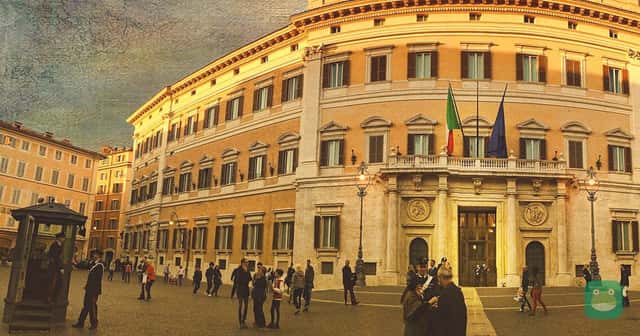
Italy’s Chamber of Deputies has heard business representatives as it examines a proposal on coastal and lake communities affected by tourism. The Chamber's official account says its productive activities committee held the Confcommercio hearing on October 27.
The proposal concerns recognition of a coastal or lake-community designation and support for public services in municipalities facing large population changes linked to tourism. The political issue is how to match local services with the number of people using them at different times of year.
At a glance
| Parliamentary step | Date |
|---|---|
| Notice published | October 26 |
| Confcommercio hearing | October 27, 1 p.m. |
What happened in Parliament
The notice, published on October 26 and updated to describe the hearing as held, lists a 1 p.m. session on October 27. The Chamber also provides an official video record.
This is a committee hearing during examination of a bill. The source reviewed for this brief does not show a final vote adopting the proposal or a new funding amount. It would be premature to describe the designation as a law already in force on the strength of the hearing notice alone.
The distinction matters for readers following local policy. A proposal's stated goal, a witness's evidence and the text eventually approved by Parliament may differ. The video and legislative record are the places to check those stages.
Analysis: the denominator is central to the debate
A service designed for permanent residents may face a different demand pattern when visitors arrive. A useful funding formula would need to specify which population it counts, over what period, and for which service. A peak-day measure and an annual average answer different questions.
There is a potential case for extra support where seasonal demand raises costs. There is also a fairness question for places that experience pressure without qualifying for a special designation. The strength of either argument depends on the eligibility rules and on evidence about actual costs.
A label alone would not settle the choice. Readers should examine whether support is tied to documented demand, whether municipalities must publish their assumptions, and whether the scheme would account for places with limited administrative capacity. Those are questions for scrutiny, not claims that the current draft contains or omits particular safeguards.
The business community's evidence can inform the debate, but it is one perspective. Residents, service workers, municipal officials and visitors may experience the same pressure differently. This brief does not invent testimony from groups whose statements have not been reviewed.
What to watch next
The next useful evidence is the bill text, the hearing record and any amendments or committee report. An assessment of cost should separate ongoing services from one-time investment. It should also explain which level of government would raise and spend the money.
For claims about tourism benefits, compare the period used for revenue with the period used for costs. A busy month does not establish a full-year balance. Without those details, a precise claim about winners and losers would be hard to support.
Read our Italy guide and Italy policy scales for background. This AI-assisted report was prepared on October 27, 2026, from the Chamber's notice and video listing. It reports a parliamentary step and provides an analytical checklist; it does not claim the proposal has become law or forecast its fiscal effect.
Photo and reporting note
File image for institutional context, not a photograph of the event reported here. Photo: Nick Kenrick from Victoria BC, Canada, original file, CC BY 2.0. Cropped for publication.
