Japan’s anti-mosque protests test religious freedom and neighborhood trust
Fujisawa’s mosque dispute pits calls for cancellation against worshippers’ needs and proposals for binding rules on traffic and noise.
Anti-mosque protests in Japan have put a proposed prayer facility in Fujisawa at the center of a local dispute. It concerns neighborhood change, religious freedom and trust in the planning process. The conflict is real. It should not be mistaken for either a national ban on Islam or a representative verdict by the Japanese public.
Fujisawa, in Kanagawa Prefecture, offers a concrete case. Muslim organizers want a place of worship closer to people already living nearby. Opponents question traffic, consultation and the effect on their surroundings. Some want cancellation; others have sought a negotiated operating agreement. The organizers’ official explanation, a cancellation petition and Sankei reporting published by Japan Forward document those different positions.
This article examines the dispute through November 6, 2026. It does not report a newly verified November protest. The records document protests on both sides. They leave gaps about the current building schedule and the breadth of public support.
The protests and the people caught between them#
Mainichi reporters described confrontation at Tsujido Station on February 6 and at a February 21 residents’ meeting. Their April 6 report describes a woman with an anti-hate placard facing verbal abuse at the station. Police separated the two sides. It also describes anti-discrimination demonstrators insulting opponents outside the meeting. Some residents came away disturbed by the behavior on both sides. Mainichi report, carried by KINGSOFT.
The same report says the neighborhood association visited Ebina’s mosque before the controversy escalated and found no major disputes with its neighbors. It later rejected an appeal for cancellation as unsupported by facts. That is the association’s view as reported by Mainichi. It is not a broad study of mosque impacts.
These details matter because the disagreement cannot be reduced to Muslims on one side and a uniformly opposed Japanese neighborhood on the other. Local institutions, demonstrators and residents have taken different approaches. Opposition to a building’s operation, categorical opposition to Muslim worship and criticism of confrontational protest are separate positions.
What the city has actually approved#
Fujisawa’s December 15, 2025 statement says the project is privately undertaken on private land. The city says it neither invited the development nor provided subsidies or other expenditure for it. It says the plan met City Planning Act rules for the area, so it granted development permission. City statement.
Land-development permission and building confirmation are separate steps. The city says required notice was given and compliant approvals cannot be revoked arbitrarily.
That answers the city’s legal and administrative position. It does not establish that every neighbor understood the proposal or felt adequately consulted. Equally, dissatisfaction with consultation does not itself identify a lawful basis to withdraw permission.
The strongest case for stopping the project#
The cancellation petition says residents need better answers about traffic, safety, their surroundings and future management. Its organizer says formal procedures need to be backed by neighborhood understanding. Stopping the project would avoid deeper division, the petition argues. The petition expressly says its request does not reject religious belief itself. These are the organizer’s stated reasons, not verified findings of danger. Original petition.
The strongest version of this argument asks who will bear a development’s costs. Neighbors cannot move a congested road or an entrance simply because an operator promises consideration. They can reasonably ask for clear plans, a named contact and a way to resolve problems.
But cancellation is a stronger remedy than requesting better information. It requires its own justification. A concern about traffic can be assessed through traffic evidence; an objection based on worshippers’ religion raises a different question.
The petition page also contains comments opposing mosques or Muslims in general. Those selected comments show that broader religious hostility appears alongside planning objections. They do not establish the motivations of every opponent, and the commenters’ residence has not been verified.
The strongest case for allowing worship nearby#
Fujisawa Masjid says the facility is for Muslims who already live in and around the city. They have been traveling farther to pray. Its website accepts that earlier communication fell short. It apologizes for the anxiety caused and promises more dialog. These are the organization’s commitments. Fujisawa Masjid statement.
This position starts with an interest easily lost in an argument about newcomers: people already living in a community need places for ordinary communal life. A mosque’s users are participants in the neighborhood, with their own interests in safety, predictable rules and peaceful relations.
Demanding universal consent could make a minority’s ability to worship depend on its neighbors’ approval. Those neighbors might not face the same demand themselves. Yet a permit alone cannot settle every issue. Lawful operation still needs workable arrangements with people nearby. Neither concern disappears by declaring the other illegitimate.
Traffic, noise and burial are different questions#
The organization’s published Q&A envisages roughly 250 people as the facility’s capacity. It describes six parking spaces on the building site and plans to use land next door for more parking. An initial limit of about 50 vehicles would apply during busy Friday prayers. These are plans and forecasts. They are not measured results. Organizer’s Q&A.
The document says excess arrivals would be turned away without waiting on the road. Security staff would direct vehicles when needed. An assessment should check the entrance layout and peak arrivals. It should ask how a limit would be enforced. Parking capacity alone cannot establish the effect on a through-road.
For noise, the organizer says the call to prayer will stay inside. It plans no outward-facing speakers and describes windows designed to reduce sound. It says no burial ground is planned on the site or nearby. Those statements identify what the proposal includes; they do not independently prove future compliance. Official website.
Burial also has a separate regulatory framework. Fujisawa’s guidance was updated January 7, 2026. It says burial requires an authorized cemetery. No cemetery within the city permits burial of bodies. New cemetery operations require permission and must satisfy location and operator criteria. A prayer facility’s development permission is therefore not permission to open a cemetery. City cemetery guidance.
Conflating these questions makes resolution harder. A noise complaint needs evidence about sound. A burial proposal needs its own application and rules. A forecast of criminal danger needs evidence of conduct and risk, rather than an assumption drawn from faith.
Why some opponents turned toward an agreement#
Sankei journalist Ikki Tokumitsu reported on a new residents’ group in Japan Forward on July 15. The group launched July 11 to seek a binding community agreement. The report says some participants still preferred cancellation but saw negotiation as the realistic option. A mosque officer said the organization was willing to consider discussions with its lawyer. That account documents an initiative, not a signed settlement. Japan Forward report.
An agreement could make assurances easier to evaluate. Its value would depend on who signs and which duties can be enforced. It would need rules for recording complaints and resolving disputes. It should also distinguish measurable operating effects from demands that worshippers prove their cultural acceptability.
No executed agreement was verified for this article. Describing the negotiation initiative as a completed reconciliation would run ahead of the evidence.
The practical challenge resembles the one examined in 567politics’ reporting on local integration and public services: shared expectations require institutions capable of handling problems after a public meeting ends.
Religious freedom and protest both have protection#
Article 20 of Japan’s Constitution guarantees religious freedom and bars religious privileges from the state. Article 21 protects assembly and expression; Article 16 protects peaceful petition. These provisions protect both worship and protest. A planning dispute still requires a review of the rules that apply. House of Representatives’ English constitutional text.
The key distinction concerns the grounds for objection. A review under shared planning rules differs from rejecting a project simply because of its religion. Protection of worship still leaves a building subject to ordinary rules.
Our coverage of Japan’s enforcement-and-coexistence debate explores the related challenge of applying rules to specific conduct without turning an entire population into a suspect category.
The national-ban claim does not follow#
The Japan Fact-Check Center investigated claims in March and again in August that Japan had banned mosques, burqas and other Islamic practices. It rated them false. The Agency for Cultural Affairs’ Religious Affairs Division denied those claims in response to its March inquiry. The August follow-up reported no change in that policy as of August 26. March investigation; August follow-up.
Those dated findings should not be turned into a claim that every local dispute has been resolved. They do show why protest footage cannot establish that parliament enacted a national religious ban. This review found no verified national mosque prohibition.
What this says about Japan—and what remains unknown#
Japan’s foreign-worker population provides relevant context, although religion and nationality are different categories. The labor ministry recorded 2,571,037 foreign workers at the end of October 2025, up 11.7 percent year over year. The January 30, 2026 release covers employer notifications and excludes special permanent residents and diplomatic or official categories. It is neither a count of Muslims nor a current November population total. MHLW release; our analysis of the employment figures.
Fujisawa shows a conflict over how existing residents share space. It does not, by itself, measure a nationwide rise in hostility. No representative survey specific to mosque construction was located for this review. Signatures, attendance and online comments cannot replace one. Our guide to assessing hostility and crime claims explains those evidentiary differences.
A local chronology was updated November 5. It says land-preparation inspection was completed in May. It could not establish a building-work schedule from the public material it reviewed. That is a useful limit, not proof that no later application exists. This article gives no opening date. It does not treat July’s building-application status as current. Local chronology and its linked records.
The next useful evidence would be a verified building milestone and any signed operating agreement. Records of how the rules work would also matter. Those records would help establish whether safeguards work and whether the disagreement is moving toward resolution.
Sources reviewed November 6, 2026. Japanese statements are paraphrased in English. This article synthesizes public records and attributed reporting; it does not claim interviews by 567politics. Crowd estimates, a national sentiment trend and a completed community agreement were not independently established.
Photo credit#
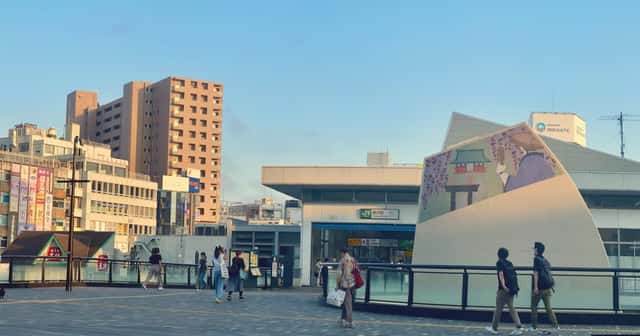
Fujisawa Station’s north entrance, July 26, 2023: a file photograph of the city, not a photograph of a protest or the mosque site. Photo by Nesnad, Wikimedia Commons, CC BY 4.0. Display may be resized or cropped.

Differing perspectives
How should Fujisawa resolve the dispute over its proposed mosque?
Each position is summarized as its supporters make it, with equal weight and in alphabetical order. A summary is not an endorsement; the evidence for each is weighed in the story above.
Apply planning rules consistently
Who holds it: Fujisawa city government
The city argues that it must administer the statutory process consistently. A privately funded project that meets the relevant criteria receives permission, and compliant approvals cannot be withdrawn arbitrarily. Separate building requirements still apply, and the city will respond with relevant agencies if operation creates problems affecting residents’ lives.
In their words: Fujisawa city statement, December 15, 2025 ↗
Cancel the project
Who holds it: Organizer of the Voice cancellation petition
The organizer argues that residents have not received adequate answers about traffic, safety and future operation. Formal approval should be accompanied by neighborhood understanding and reassurance. Stopping this project would prevent deeper division and protect the living environment while preserving the possibility of peaceful relations with Muslim residents.
In their words: Voice: original cancellation petition ↗
Negotiate binding operating commitments
Who holds it: Residents’ association pursuing a community agreement, quoted by Sankei
Residents pursuing an agreement argue that enforceable commitments offer a practical response to an approved project. Even neighbors who would prefer cancellation need reliable rules about operation and a way to address problems after opening. Dialog should convert assurances into obligations that the operator and residents can understand and use.
In their words: Sankei interviews published by Japan Forward, July 15, 2026 ↗
Proceed with safeguards and dialog
Who holds it: Fujisawa Masjid, the project organizer
The organization argues that Muslims already living nearby need a convenient place to worship and participate in community life. It acknowledges shortcomings in earlier communication and proposes traffic management, indoor prayer announcements and continued consultation. Lawful development and practical safeguards can allow worship while respecting the surrounding neighborhood.
In their words: Fujisawa Masjid official website ↗
Cite this article
567 Politics staff. “Japan’s anti-mosque protests test religious freedom and neighborhood trust.” 567politics. Published 2026-11-07. https://567politics.com/news/japan-anti-mosque-protests-fujisawa-religious-freedom-neighborhood-rules
Wikipedia citation
{{cite news |title=Japan’s anti-mosque protests test religious freedom and neighborhood trust |url=https://567politics.com/news/japan-anti-mosque-protests-fujisawa-religious-freedom-neighborhood-rules |work=567politics |author=567 Politics staff |date=2026-11-07 |language=en}}CSL-JSON for reference managers
{
  "id": "https://567politics.com/news/japan-anti-mosque-protests-fujisawa-religious-freedom-neighborhood-rules",
  "type": "article-newspaper",
  "title": "Japan’s anti-mosque protests test religious freedom and neighborhood trust",
  "URL": "https://567politics.com/news/japan-anti-mosque-protests-fujisawa-religious-freedom-neighborhood-rules",
  "container-title": "567politics",
  "language": "en",
  "author": [
    {
      "literal": "567 Politics staff"
    }
  ],
  "issued": {
    "date-parts": [
      [
        2026,
        11,
        7
      ]
    ]
  }
}Citations identify this article and its publication date. Assess the reporting and its linked sources before using it as evidence.
Read this article as Markdown or JSON. Cite the original page and retain its sources, dates and qualifications.
Embed this article summary
Paste this HTML into your page. The summary stays linked to the full story and updates with it. No account required.
<iframe src="https://567politics.com/embed/news/japan-anti-mosque-protests-fujisawa-religious-freedom-neighborhood-rules?theme=auto" title="Japan’s anti-mosque protests test religious freedom and neighborhood trust by 567politics" width="100%" height="440" style="border:0;max-width:100%" loading="lazy"></iframe>
<p style="font-size:14px">Japan’s anti-mosque protests test religious freedom and neighborhood trust by <a href="https://567politics.com/news/japan-anti-mosque-protests-fujisawa-religious-freedom-neighborhood-rules" rel="nofollow">567politics</a></p>
<script async src="https://567politics.com/embed.js"></script>
READ BEYOND 567POLITICS
Alternate sources & perspectives
Independent coverage and primary evidence to help you compare arguments. A link is not an endorsement; perspective labels describe the linked material.
- primary evidence
Fujisawa’s official explanation of the mosque proposal ↗
Fujisawa city government
December 15, 2025 statement on private funding, development permission, separate building procedures and the city’s position on revocation.
- primary evidence
Fujisawa Masjid: project purpose and neighborhood commitments ↗
Fujisawa Masjid
Organizer’s own position, including its communication apology and promises concerning traffic, indoor prayer announcements and burial. Statements of intent, not independent operating evidence.
- primary evidence
Organizer’s published questions and answers ↗
Fujisawa Masjid
Linked from the official Q&A page; contains capacity, vehicle-limit and overflow-management proposals. Forecasts are not measured impacts.
- other perspective
Petition seeking cancellation of the Miyahara mosque plan ↗
Voice / cancellation-petition organizer
Direct statement of the cancellation case concerning consultation, safety and the living environment. Selected comments include broader religious opposition; neither the petition nor comments are a representative survey.
- other perspective
Residents pursue a binding agreement with the mosque developer ↗
Japan Forward / Ikki Tokumitsu, The Sankei Shimbun
July 15, 2026 reporting gives residents’ arguments for enforceable operating commitments and the developer’s response. It establishes a negotiation initiative, not a completed agreement.
- independent analysis
Mainichi’s account of confrontation around the mosque plan ↗
Mainichi Shimbun, syndicated by KINGSOFT
April 6, 2026 reporting by Sumire Kunieda and Daiki Yano on protest, counter-protest and the neighborhood association. Original Mainichi access was blocked; this attributed full syndication was reviewed.
- primary evidence
Constitution of Japan: religion, assembly and petition ↗
House of Representatives of Japan
Official English text, particularly Articles 16, 20 and 21. Constitutional context does not decide each site-specific planning issue.
- primary evidence
Fujisawa’s cemetery and burial-permission guidance ↗
Fujisawa city government
Guidance updated January 7, 2026 explains separate permission requirements and the absence of city cemeteries permitting burial of bodies.
- independent analysis
Fact check: renewed claims of a national anti-Islam law ↗
Japan Fact-Check Center
August 28, 2026 follow-up cites its earlier government inquiry and reports no policy change as of August 26. Its dates and scope are retained in the article.
- primary evidence
Foreign-worker notifications at the end of October 2025 ↗
Japan Ministry of Health, Labour and Welfare
January 30, 2026 release: 2,571,037 workers, up 11.7 percent. Employer-notification coverage excludes special permanent residents and diplomatic or official categories; it does not measure religion.
- other perspective
Miyahara mosque chronology and unresolved building schedule ↗
Fujisawa Hokubu Machizukuri Lab
Local explainer updated November 5, 2026 links official and organizer records. Its inability to establish a building timetable is reported as a limitation, not proof of no later application.
Reviewed 2026-11-06. Reviewed original city and national records, the mosque organizer’s statements and linked Q&A, a cancellation petition, and reporting with contrasting local arguments. Mainichi’s original page returned 403; its full attributed KINGSOFT syndication was reviewed and is not counted as a second publisher. Sankei’s report was read on Japan Forward. The discovery tool returned mostly generic city/travel links; targeted searches supplied the relevant records. BBC, Asahi and the November 2 Asia-Pacific Journal originals could not be retrieved and are not used as verified article evidence. No representative mosque-opinion survey, current building timetable, independently verified crowd total or signed operating agreement was found. Petition comments are a selected qualitative illustration with unverified residence. No interviews were conducted by 567politics.