Jared Kushner's controversies: a record of the documented matters
From Russia contacts to Saudi-backed fees and his unpaid envoy role, each dispute is sorted into allegation, finding and response.
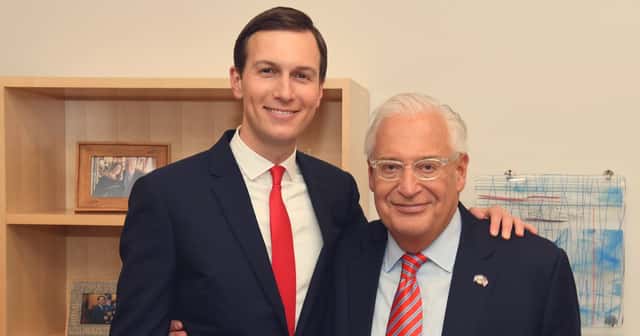
Jared Kushner is President Donald Trump's son-in-law. He was a senior White House adviser in the first term. He later started a private investment firm, Affinity Partners. Since May 2025 he has also worked on Middle East and Ukraine diplomacy as an unpaid volunteer, according to CNN. Over those years he has been the subject of congressional reports, press investigations, state and city enforcement actions, a federal special counsel report and, this fall, a federal lawsuit.
This article lists the major matters I could document from sources I opened myself. For each one it says what was alleged, who made the claim, how Kushner or his defenders responded, and how the matter ended or where it stands. Two points apply to the whole record. First, I found no criminal charge against Kushner in any matter below. Second, "controversy" covers very different things here: a court finding, a settlement, a press report, a letter from lawmakers and a lawsuit are not the same kind of evidence. I label each one.
How to read this record
An allegation is a claim made by someone, such as a lawmaker, a newspaper or a plaintiff. A finding is a conclusion by a body with authority to reach one, such as a court, a judge, a special counsel or an inspector general. A settlement resolves a dispute and may or may not include an admission. When a source relied on anonymous people, I say so. Where I could not confirm something, I write "I found no public record of" it.
The timeline below shows the dated events covered in the article.
- Trump Tower meeting with a Russian lawyer
- Meeting with the head of Russia's VEB bank
- Security clearance form filed without foreign contacts
- Charles Kushner meets Qatar's finance minister
- Kushner holds a permanent Top Secret clearance
- Kushner Companies leases 666 Fifth Avenue to Brookfield
- House Oversight chairman questions Kushner's use of WhatsApp
- Maryland settlement over rental practices
- Raskin and Wyden ask for a special counsel on foreign-agent rules
- Gaza ceasefire; Kushner works as unpaid envoy
- Affinity exits Belgrade project and Paramount bid
- Trump calls Kushner an "envoy of peace"
- Garcia and Wyden letter on Affinity fees
- Electronic Arts buyout closes
- CREW sues; Senate Democrats issue report
Russia contacts, 2016 to 2017
What was alleged. During the 2016 campaign and the transition, Kushner met Russian figures. Critics asked whether those contacts reflected coordination with Russia. The Justice Department's special counsel, Robert Mueller, examined three of them.
What the record shows. The special counsel report, Volume I, describes each meeting.
- June 9, 2016, Trump Tower. Kushner attended with Donald Trump Jr. and campaign chairman Paul Manafort. The meeting had been proposed in an email that offered "official documents and information that would incriminate Hillary." The report says the Russian lawyer's presentation "did not provide such information." It also records that Kushner texted Manafort that the meeting was a waste of time and emailed his assistants asking them to call him so he could leave. Kushner's written statement to Congress in July 2017 said he had no follow-up and did not discuss campaign matters there.
- November 30, 2016, Russian Embassy. Kushner met Russian Ambassador Sergey Kislyak and Michael Flynn. The report says Kushner asked Kislyak whether they could communicate using secure facilities at the Russian Embassy, and that Kislyak "quickly rejected that idea." Kushner's 2017 statement said he did not propose a secret back channel and that the talk centered on Syria.
- December 13, 2016, Sergey Gorkov. Kushner met the head of Vnesheconombank (VEB), a state bank under U.S. sanctions. Kushner told investigators the meeting was diplomatic. VEB said afterward that it was part of "roadshow meetings" with U.S. business figures. The report says the investigation "did not resolve the apparent conflict in the accounts" and found no evidence of "substantive follow-up." At the time, Kushner Companies had debt coming due on 666 Fifth Avenue in Manhattan, a point the report notes.
Kushner's response. In his July 2017 statement to congressional committees he said he had "perhaps four contacts" with Russian representatives during the campaign and transition, that he "did not collude," and that he had "no improper contacts." He also said he had not relied on Russian funds for his business.
Outcome. Mueller's report concluded that the investigation "did not establish that members of the Trump Campaign conspired or coordinated with the Russian government in its election interference activities." Kushner was not charged. The report did not settle every factual question, including the purpose of the Gorkov meeting.
The security clearance form
What was alleged. Kushner's first application for a national security clearance, the SF-86 form, left out foreign contacts.
What the record shows. According to Kushner's own 2017 statement, the form was submitted prematurely on January 18, 2017, with no foreign contacts listed. He said a miscommunication led his assistant to treat an email as a signal that the form was complete. A supplement followed the next day, and he later expanded it to "over one hundred contacts from more than twenty countries." The June 2016 Trump Tower meeting was added in a later supplement.
Kushner's response. He described the first filing as an error that he corrected, not a concealment.
Outcome. I found no charge, finding of intent or penalty tied to the form.
The clearance decision
What was alleged. Reporters and a White House security specialist alleged that career staff wanted to deny Kushner a high-level clearance and were overruled.
What was reported.
- NBC News reported in January 2019, citing anonymous sources, that two career specialists had recommended rejecting Kushner for Top Secret access because of foreign-influence concerns flagged by the FBI. It said a supervisor, Carl Kline, overruled them, and that this was one of at least 30 such cases. It also reported that the CIA had withheld access to the most sensitive compartmented information. Kushner's lawyer, Abbe Lowell, had no comment in that report.
- The Washington Post reported on February 28, 2019 that Trump directed then–chief of staff John Kelly to grant the clearance, and that Kelly documented the request. Kushner had a permanent Top Secret clearance by May 2018, without the highest compartmented access. The Post also reported that officials in four countries (the United Arab Emirates, China, Israel and Mexico) had discussed how to manipulate Kushner.
- In April 2019, Tricia Newbold, a White House security specialist, told the House Oversight Committee that at least 25 denials had been overruled. Committee Republicans, including Rep. Jim Jordan, said Chairman Elijah Cummings had "cherry-picked" her claims and that she had provided little direct knowledge of individual cases. The White House said clearances are an executive branch matter.$
Responses. Lowell's spokesman, Peter Mirijanian, said the clearance was handled "in the regular process with no pressure from anyone." Trump and Ivanka Trump denied that Trump had directed it. In May 2019, Kline was interviewed behind closed doors. Democrats said he would not discuss individual cases. Republicans, including Rep. Mark Meadows, said he told them the president had not directed him. The White House counsel withheld some documents from the committee.
In an October 2026 post on his own site, Kushner wrote that Kline "testified under oath that he was not pressured or directed" and that he "ultimately received my permanent Top-Secret clearance." He also wrote that press reports of foreign officials discussing how to manipulate him were "very different from U.S. intelligence agencies concluding that I was susceptible to blackmail."
Outcome. A president has legal authority to grant clearances. I found no charge or formal finding of wrongdoing. The dispute ended in the political record: critics call it evidence of favoritism, and defenders call it a routine executive decision.
666 Fifth Avenue and Qatar
What was alleged. Kushner Companies bought 666 Fifth Avenue for about $1.8 billion in 2007, and the debt grew hard to refinance. The Intercept reported in March 2018 that Kushner's father, Charles Kushner, met Qatar's finance minister, Ali Sharif Al Emadi, in April 2017 to seek financing, weeks before the blockade of Qatar by neighboring states began on June 5. A follow-up meeting was held the next day. No deal resulted. The concern was a possible conflict while Jared Kushner worked in the White House.
Responses. A company spokesman initially said, "We don't comment on who Charlie meets with." The company later acknowledged the meeting. Charles Kushner told the Washington Post, "Even if they were there ready to wire the money, we would not have taken it." Lowell's spokesman said Jared Kushner had no role in Kushner Companies after joining the government, and that ethics officials and the White House counsel reviewed his arrangements.
Outcome. The Qatari money never arrived. In 2018, Fortune reported, Brookfield took a 99-year lease on the tower for about $1.1 billion. The Qatar Investment Authority said it had "no involvement whatsoever in this deal," and Brookfield said the Qataris had no knowledge of it. I found no charges or official findings about the April 2017 meetings.
Private messaging
What was alleged. In March 2019, House Oversight Chairman Elijah Cummings wrote that Kushner used WhatsApp to communicate with foreign figures, and that this might violate the Presidential Records Act. That law requires officials to forward official messages sent from private accounts to government accounts within 20 days.
Responses. Lowell confirmed that Kushner used WhatsApp for some official duties. He said Kushner sent screenshots to his White House email or the National Security Council. He said he could not say whether classified information was discussed, disputed that Kushner messaged foreign "leaders," and said Kushner "follows the protocols." A White House lawyer said the letter would be reviewed. Trump said he knew nothing about it.
Outcome. I found no charge or formal finding. A December 2020 lawsuit, National Security Archive v. Trump (No. 20-cv-3500), sought to preserve Kushner's non-official messages. I did not open its outcome.
Tenants and housing
What was alleged. Several enforcement matters involved Kushner Companies during the years Jared Kushner ran it.
New York City. The city's Department of Buildings said in August 2018 that it had fined Kushner Companies $210,000 for 42 false-filing violations at 12 addresses between January 2013 and September 2016. The violations involved filings that understated the number of rent-regulated tenants. Jared Kushner was chief executive then. A company spokesperson said no fines had been assessed that day, acknowledged "paperwork errors" and said the company relied on third-party consultants. CBS and the Associated Press reported in September 2018 that the company had more than $500,000 in unpaid city fines. The company called that tally misleading and said fines tied to Airbnb listings were about $110,000 and that it had paid about $600,000 in other fines. I did not find the final resolution of the $210,000 matter.
Maryland. In 2019, Maryland Attorney General Brian Frosh sued Westminster Management, a Kushner Companies unit. An administrative law judge found violations in April 2021 after a 31-day hearing, including "spurious" fees and failures to show units. In September 2022, ProPublica reported, the company settled. It agreed to a $3.25 million fine, with $800,000 counted as a down payment on restitution, plus further restitution through a special master. The matter involved about 17 complexes, 9,000 units and 30,000 tenants.
Responses. The company said it settled "with no admission of liability or wrongdoing" and had earlier called the suit politically motivated. Frosh said, "You don't pay three million two hundred and fifty thousand bucks if you're not liable."
Outcome. The Maryland case ended in a settlement. A separate class action was pending when ProPublica reported.
Affinity Partners and Saudi Arabia
What was alleged. Kushner left the White House in January 2021 and founded Affinity Partners. Saudi Arabia's Public Investment Fund (PIF) committed $2 billion. The New York Times reported in 2022, citing PIF documents, that a PIF review panel objected to the deal, including "the inexperience of the Affinity Fund management." Senator Ron Wyden, then chairman of the Senate Finance Committee, later released minutes in which the panel called due diligence "unsatisfactory in all aspects" and said the fee "seems excessive."$
Wyden's staff estimated in September 2024 that Affinity had earned about $157 million in fees through that year, including about $87 million tied to Saudi Arabia. The New York Times reported at least $112 million in fees since 2021, that at least 99 percent of about $3 billion came from overseas, including $2 billion from PIF, and that no profits had been returned by July 2024.
In October 2024, Rep. Jamie Raskin$ and Wyden asked Attorney General Merrick Garland to appoint a special counsel to examine possible violations of the Foreign Agents Registration Act. FARA requires people who act for foreign principals in certain ways to register. A request for an investigation is not a finding. I found no public record of Justice Department action on it.
In March 2026, Rep. Robert Garcia$ and Wyden wrote that Affinity earned more than $60 million in fees in 2025, including $39 million from Saudi Arabia, and more than $110 million from Saudi Arabia since 2021. They asked for answers by April 2. I found no public record of a response.
| Estimate | Source | Fees | Of which Saudi |
|---|---|---|---|
| Through 2024 | Senate Finance staff, Sep 2024 | $157 million | $87 million |
| Calendar 2025 | Garcia and Wyden letter, Mar 2026 | More than $60 million | $39 million |
| Since 2021 | Garcia and Wyden letter, Mar 2026 | Not stated | More than $110 million |
These are estimates by lawmakers' staff. They cover different periods and should not be added together. Kushner has called the $157 million figure "inaccurate" and said it "does not reflect the actual amount of fees earned." He gave no alternative figure.
Responses. Chad Mizelle, Affinity's chief legal officer at the time, told the New York Times: "Partisan politics aside, Affinity Partners is an SEC-registered investment firm that has always acted appropriately and any suggestion to the contrary is false." Affinity has said it did not need to file under FARA because it was never asked to represent investors before the U.S. government. In his October 2026 post, Kushner wrote that PIF's investment came after he left government, on commercial terms, and that there was "no understanding, promise, expectation, or arrangement" linking it to anything he did in office. He cited investor Bill Ackman as defending the private equity fee structure.
On performance, Axios reported in March 2026 that Affinity had committed about 80 percent of its first fund and that the fund showed a 36 percent gross and 25 percent net internal rate of return, mostly unrealized. Affinity's filings, as cited by Bloomberg and the CREW complaint discussed below, show about $6.2 billion in assets, almost all from foreign investors. Kushner said in October 2026 that Affinity does not intend to take in additional capital while he is volunteering and that he has "raised no additional funds… Zero."
Outcome. No court or agency has found a violation. The questions are open: whether the arrangement is a conflict, and whether FARA applies.
Electronic Arts and other Affinity deals
Affinity is a partner in a $55 billion buyout of the video game maker Electronic Arts, with PIF and Silver Lake. The deal was announced in September 2025, approved by shareholders in December and closed on August 4, 2026, according to EA. Shareholders received $210 per share. This is a lawful transaction, not a finding of wrongdoing. It matters to this record because it ties Kushner's private firm to the same Saudi fund that is Affinity's largest investor.
In December 2025, Affinity also dropped out of Paramount Skydance's hostile bid for Warner Bros. Discovery. Its spokesperson said, "Affinity has decided no longer to pursue the opportunity," and that the investment dynamics "have changed significantly." CNBC noted that Paramount's filing listed a $24 billion commitment from three Gulf sovereign wealth funds.
Serbia and Albania
Serbia. Affinity planned a roughly $500 million hotel and mixed-use project on the former General Staff complex in Belgrade. Radio Free Europe/Radio Liberty and the BBC reported that the contract required Serbia to strip the site's cultural-heritage status and lease the land free for 99 years, with no tender. Serbian prosecutors indicted Culture Minister Nikola Selaković and other officials over the removal of the status. An official at a cultural institute admitted forging an expert's opinion, and Affinity denied any involvement in forgery. President Aleksandar Vučić rejected corruption claims. In December 2025, Affinity withdrew, saying "meaningful projects should unite rather than divide." Kushner is not charged. The BBC reported in February 2026 that Selaković was on trial, that prosecutors sought three years, and that Vučić promised a pardon.
Albania. Kushner's partnership plans a resort on land at Zvërnec and a related airport that he says was pre-approved. In October 2026 he wrote that the partnership bought the land privately for €230 million and that it "was not awarded to us by the Albanian government." He described himself as a minority partner. The project must still pass regulatory and environmental review. bne IntelliNews reported in June 2026 that the government suspended construction pending an environmental assessment amid protests and an EU warning. bne also said the anti-corruption prosecutor was investigating. Albanian outlets quoting that office reported the opposite: no investigation into Kushner or his projects, only a preliminary inquiry into land transfers in the village. Because these accounts conflict and I could not confirm either firsthand, I make no claim about an investigation.
The envoy role, 2025 to 2026
What was alleged. Since May 2025, Kushner has worked on Middle East and Ukraine negotiations with envoy Steve Witkoff, without a government salary. Critics allege that his firm's Gulf investors and his diplomacy overlap, and that he operates without the disclosure rules that apply to officials.
Gaza and the Board of Peace. The Guardian reported in October 2025 on Kushner's role, with Witkoff, in the Gaza ceasefire talks and on questions about his firm's Gulf funding. Matt Duss told the Guardian, "Of course there's an enormous conflict of interest here." Karoline Leavitt, speaking for the White House, called such criticism "frankly despicable" and said Kushner was donating his energy and time. Kushner later presented a "New Gaza" plan at Davos in January 2026 and became an executive member of the Board of Peace. Our report on Gaza diplomacy stalling after UN findings on the Yellow Line covers where talks stand now.
Phoenix and defense suppliers. CNN reported on October 1, 2026, that Affinity is the largest shareholder of Israel's Phoenix Financial, which holds stakes in Elbit Systems and eight other defense suppliers. CNN said Affinity sold about a quarter of its stake in July for more than $340 million. CNN found "no indication that Kushner's actions as a diplomat directly affected the investments reviewed." Kushner's attorney denied that he took part in Phoenix's decisions. In his own response, Kushner wrote that Affinity owns none of the nine defense firms and that he has "never participated in or directed Phoenix's decisions." White House spokesperson Anna Kelly called the CNN story a "tired narrative." On 60 Minutes, Kushner said, "What people call conflicts of interests, Steve and I call experience and trusted relationships."
Iran and Ukraine. Kushner has also taken part in Iran and Ukraine talks, according to the CREW complaint described below. 567politics covers that track in its reports on Qatar mediating over a Vance letter to Iran and on the Doha talks and a draft proposal.
The lawsuit. On October 14, 2026, Citizens for Responsibility and Ethics in Washington (CREW) sued in the U.S. District Court for the District of Columbia (No. 26-cv-3580). The defendants include Kushner, the White House Office for Special Peace Missions, Witkoff, chief of staff Susie Wiles, and the State and Defense departments and their secretaries. The complaint alleges that Kushner exercises the authority of an officer without Senate confirmation, in violation of the Appointments Clause, and without the public financial disclosure the Ethics in Government Act requires. It also pleads a nondelegation claim. These are allegations, and I know of no ruling. In March 2026, CREW had asked the White House counsel to require a disclosure within 30 days. The complaint says the White House and State Department told CREW in July that they had no such disclosures. Witkoff, also unpaid, filed one.
Kushner's response. In "My Response to The New Yorker," posted on October 8, 2026, he wrote: "I have never taken a diplomatic action to benefit Affinity, myself, or any investor," and "Affinity's investors have never influenced my diplomatic positions." He said he receives no government pay and covers his own expenses, and that his outside ethics counsel and the White House Counsel's Office "confirmed that [he is] complying with all applicable ethics rules." On Gaza, he wrote that he has "never pursued any business opportunity in Gaza, sought to acquire property there or sought to profit from its reconstruction." He pointed to the Abraham Accords and the ceasefire as results of his work. Trump said on February 19, 2026, "we're making Jared an envoy also, envoy of peace," as the CREW complaint quotes him. CNN and the White House describe him as a volunteer, and the CREW complaint notes he calls himself "just a volunteer like other businessmen."
Congress. Sen. Thom Tillis said on February 26, 2026, as the Garcia and Wyden letter quotes him, "they're not subject to Senate confirmation, and they're not subject to oversight." On October 29, 2026, Democrats on the Senate Foreign Relations Committee released a minority staff report, "Whose Interests? The Costs and Conflicts of Trump's Foreign Policy." It alleges $22 billion in taxpayer cost and says about $1.25 billion was diverted toward the Board of Peace. The Jewish News Syndicate quoted its Kushner passage as saying he "participated in dozens of sensitive U.S. negotiations involving Gaza, Iran…" That is a minority report, not a committee finding.$
Outcome. No court, inspector general or agency has found a violation. The lawsuit is pending, and the Senate report is a minority staff report, not a committee finding. The picture may change in the new Congress. 567politics reported on Democrats winning the House majority and on the Senate majority result. Committee control shapes who can issue subpoenas. I did not find any announced investigation of Kushner by incoming committee leaders.
What is established and what is open
Established by an official record.
- The special counsel found no established conspiracy between the Trump campaign and Russia, and did not charge Kushner. It left the Gorkov meeting's purpose unresolved.
- A Maryland judge found violations by a Kushner Companies unit, and the company settled for $3.25 million without admitting liability.
- New York City's buildings department said it fined Kushner Companies $210,000 over false filings; the company disputed how that was described.
- Kushner's own statement confirms the first security form omitted foreign contacts and was later supplemented.
Alleged but not decided.
- That career staff were wrongly overruled on his clearance.
- That Affinity's fees and its foreign backers create a conflict, or a foreign-agent registration problem.
- That his unpaid role requires Senate confirmation and financial disclosure.
Open questions. I found no public record of Justice Department action on the 2024 FARA request, of responses to the Garcia and Wyden letters, or of any ruling in the CREW case.
What this article leaves out
I did not include other matters often raised about Kushner or his family, including his father's pardon and later ambassadorship, the EB-5 visa pitches in China, and his 2020 coronavirus task force role. I could not confirm them from sources I opened myself, so I dropped them. Readers can compare perspectives below on how the current role should be overseen.
Differing perspectives
How should Jared Kushner's private investment firm and his unpaid diplomatic role be overseen?
Each position is summarized as its supporters make it, with equal weight and in alphabetical order. A summary is not an endorsement; the evidence for each is weighed in the story above.
Investigate fees and require disclosure
Who holds it: Rep. Robert Garcia and Sen. Ron Wyden, Democrats on congressional oversight and finance panels
Garcia and Wyden say Kushner takes part in sensitive Middle East negotiations while Affinity Partners collects large fees from governments in that region. They point to their estimates of more than $60 million in fees in 2025, including $39 million from Saudi Arabia. They argue that Congress and the public cannot judge whether his firm's interests and his diplomacy overlap without records of the fees, investor communications and his role. They ask Kushner and the White House to provide records and to answer their questions by a set date.
In their words: House Oversight Committee Democrats (Garcia and Wyden letter, March 19, 2026) ↗
Require Senate confirmation and public disclosure
Who holds it: Citizens for Responsibility and Ethics in Washington (CREW), the plaintiff in a federal suit
CREW argues that Kushner exercises significant authority on behalf of the United States in talks on Gaza, Ukraine and Iran, and so acts as an officer who needs Senate confirmation under the Appointments Clause. It also says he must file a public financial disclosure under the Ethics in Government Act. CREW notes that Steve Witkoff, who is also unpaid, filed one. It asks the court to declare his service unlawful, to bar him from exercising an officer's powers, and to direct him to file the disclosures.
In their words: CREW (complaint, No. 26-cv-3580, D.D.C., October 14, 2026) ↗
Treat the role as compliant volunteer service
Who holds it: Jared Kushner and White House spokespeople
Kushner says he has never taken a diplomatic action to benefit Affinity, himself or any investor, and that investors have never influenced his positions. He says he receives no government pay, covers his own expenses, and that his outside ethics counsel and the White House Counsel's Office have confirmed he complies with all applicable ethics rules. He says the Saudi fund invested after he left government, on commercial terms. He points to the Gaza ceasefire and the Abraham Accords as results of his work.
In their words: Jared Kushner ("My Response to The New Yorker," October 8, 2026) ↗
READ BEYOND 567POLITICS
Alternate sources & perspectives
Independent coverage and primary evidence to help you compare arguments. A link is not an endorsement; perspective labels describe the linked material.
- primary evidence
Report on the Investigation into Russian Interference in the 2016 Presidential Election, Volume I ↗
U.S. Department of Justice, Special Counsel's Office
Describes Kushner's June 2016, November 2016 and December 2016 contacts and states that the investigation did not establish a conspiracy or coordination with the Russian government.
- independent analysis
White House whistleblower says Trump administration overturned 25 security clearance denials ↗
NBC News
Reports Tricia Newbold's House Oversight testimony and the Republican response that it was cherry-picked.
- independent analysis
Trump sought top-secret security clearance for Jared Kushner despite concerns from Kelly and intelligence officials ↗
The Washington Post
Reports that Trump directed Kelly to grant the clearance; includes denials from Trump, Ivanka Trump and Kushner's lawyer's spokesman.
- independent analysis
Jared Kushner's real estate firm sought money directly from Qatar government weeks before blockade ↗
The Intercept
Reports the April 2017 meeting between Charles Kushner and Qatar's finance minister and the company's comment.
- independent analysis
Kushner Company to Pay $3.25M to Settle Maryland State Lawsuit ↗
ProPublica
Covers the 2022 settlement, the administrative judge's 2021 findings, the company's statement of no admission and Frosh's comment.
- independent analysis
Jared Kushner's Saudi-backed fund paid millions in fees, makes no profit ↗
The Seattle Times (New York Times report)
Reports Affinity's fees, the share of foreign capital and Affinity's response, including its FARA position.
- left argument
Garcia and Wyden letter on Affinity Partners fees and Kushner's role, March 19, 2026 ↗
House Oversight Committee Democrats
Congressional Democrats' fee estimates and requests for records; the letter's own wording is stronger than this article's paraphrase and is attributed to its authors.
- other perspective
My Response to The New Yorker ↗
Jared Kushner
Kushner's own statement denying conflicts, disputing the fee estimate and describing his ethics review; this is his account, not an independent finding.
- independent analysis
Jared Kushner's company has large stake in firm with Israeli military links ↗
CNN
Reports Affinity's Phoenix Financial stake, Kushner's attorney's denial and CNN's finding of no indication that his diplomacy directly affected the investments reviewed.
- primary evidence
CREW v. Kushner complaint, No. 26-cv-3580 (D.D.C.), October 14, 2026 ↗
Citizens for Responsibility and Ethics in Washington
Court filing with allegations on the Appointments Clause and financial disclosure; allegations only, with no ruling known.
- left argument
Ranking Member Shaheen and Senate Foreign Relations Committee Democrats release report on the Trump administration's foreign policy ↗
U.S. Senate Foreign Relations Committee Democrats
Press release for the minority staff report 'Whose Interests?'; a minority staff report, not a committee finding.
- independent analysis
Kushner-linked firm reportedly drops Belgrade project amid controversy over site ↗
Radio Free Europe/Radio Liberty
Reports Affinity's withdrawal from the Belgrade project, the indictments of Serbian officials and Affinity's denial of any involvement in forgery.
Reviewed 2026-11-04. Sources were chosen by hand from pages opened during research. The discover_politics_sources tool was not used because it is reported to return unrelated results. Several pages could not be opened (Reuters, New York Times, The Hill, Politico, AP, The Atlantic, Senate Finance and Blumenthal pages), so claims that rested only on search-result snippets were dropped or attributed to the document that quotes them. CREW's complaint contains allegations, not findings, and no ruling was found. Kushner's own post is his account. No criminal charge against Kushner was found in any matter covered.