Gaza Diplomacy Stalls as UN Office Reports Israeli Advances Past Yellow Line
Israeli reports say talks on the next phase are at a standstill. The UN says displacement is deepening; Israel says it is targeting Hamas rebuilding.
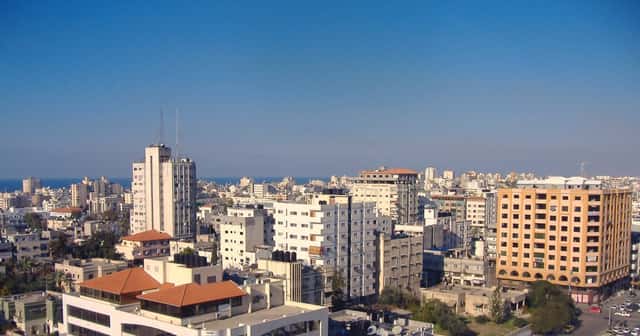
Diplomacy over the next phase of the Gaza ceasefire has stalled, according to Israeli reporting, even as the United Nations human rights office says Israeli forces are pushing deeper past the ceasefire line and displacing more people. Israel's military says it keeps striking Hamas operatives who it says are rebuilding. Gaza's authorities say strikes keep killing civilians and police.
The ceasefire took effect in October 2025. More than a year on, this report sets out what the main parties and monitors say, what the weekly aid and casualty data show, and what cannot be confirmed. It draws on the UN, Al Jazeera, Ynet, the International Crisis Group and the Next Century Foundation's weekly index. Casualty and aid figures from Gaza come from Gaza-based authorities and have not been independently verified.
What the UN office reported
On Friday, Oct. 30, the UN human rights office, known as OHCHR, said Israeli forces "continue to push Palestinians into ever-smaller areas" of Gaza. It said Israel has stated an aim of expanding its military deployment area to 70 percent of Gaza's territory. We did not find an Israeli government statement confirming that figure in the sources reviewed.
OHCHR said it documented a westward expansion of Israeli deployment areas over the past two weeks. The areas it named were Al Shujaiyeh in Gaza City, and eastern Al Bureij, eastern Deir al-Balah and eastern Al Maghazi in the middle of the territory.
The office also said it received reports that on Oct. 25 an Israeli drone dropped munitions on tents at the Al Shujaiyeh junction near the "yellow line." A fire burned for five hours. Gaza's Ministry of Public Works and Housing said it displaced 200 families, or 800 people.
"Israeli forces appear to treat the yellow line as a kill zone," OHCHR said, according to Al Jazeera. Its head in the Palestinian territories said, "The nightmare of displacement in Gaza is both acute and chronic." OHCHR said Israel must stop the forcible transfer of Palestinians within Gaza, which it said is a war crime that may also amount to a crime against humanity.
The UN News account did not include an Israeli response. Israel's military has said, in comments relayed by Ynet, that it keeps its forces deployed in line with the agreement and acts to remove threats.
The Israeli account of the ceasefire
Ynet reported this week that talks over Gaza's future have reached a standstill, citing sources familiar with the talks. It said there has been no meaningful progress toward the next phase of the US framework. Ynet is an Israeli outlet and relied on Israeli officials.
According to Ynet, Hamas remains armed and is trying to rebuild its ranks. The Israeli military says the Hamas operatives it has targeted in recent weeks were involved in rebuilding military capabilities and planning attacks on Israeli troops and civilians. The military calls this a systematic violation of the ceasefire. Hamas has not been quoted in that report.
Ynet also said Israeli security officials believe Hamas is preparing an international public relations effort about winter conditions in Gaza. That is an Israeli assessment. We could not verify it.
Ynet said the political deadlock after Israel's Oct. 27 election makes it harder to set a long-term Gaza policy. Official results are due to be certified on Wednesday. For more on that process, see our reports on the final count, the certification dispute and coalition talks.
The Rafah pilot
One part of the US plan is moving ahead, Ynet reported. Over the past month the Israeli military has focused on sealing tunnels in the Tel al-Sultan area of Rafah ahead of a pilot project called "Green Rafah." Within two weeks, an Israeli project management company is expected to take over management of the tunnel-sealing work from the military, under an agreement with the Board of Peace, the US-backed body overseeing parts of Gaza's reconstruction.
The International Crisis Group reported in August that Palestinian commissioners had some reservations about starting work in Rafah. It said some feared that doing so could appear to legitimize Israeli control of the area. This is an older report, and we did not find a more recent Palestinian statement on the pilot.
Aid and crossings
The Next Century Foundation, a London-based advocacy group, published weekly figures from the Gaza Crossings and Borders Authority. The authority is a Gaza-side body, and the figures are single-source. For the week of Oct. 23 to 29:
- 746 trucks entered Gaza, down 10 percent from the week before.
- Of those, 400 were commercial trucks, 296 carried aid and 50 carried fuel.
- Commercial trucks rose 80 percent after a halt ended. Aid trucks fell 46 percent.
- Rafah was open for passengers on two days. A total of 387 people left Gaza, including 214 recorded as evacuations.
Gaza's Health Ministry says 21,468 patients need treatment abroad, the same publication reported. The ceasefire plan calls for about 600 trucks a day, according to the Crisis Group. That would be about 4,200 trucks a week, far above the 746 reported. The foundation noted that the bulletin's truck totals should be read as a minimum, because a note in the Arabic text says they exclude a day of bombardment.
COGAT, the Israeli body that coordinates civilian affairs in the Palestinian territories, has claimed that the 600-truck target is being met, Crisis Group reported. Crisis Group said data from UN agencies and the Gaza Chamber of Commerce suggest less than half that. The Next Century Foundation says COGAT's data are not usable as a current source. OHCHR separately said Israel has restricted entry of shelter-related aid.
Casualties
Gaza's Health Ministry reported 74,594 people killed since October 2023 as of Oct. 31, and 1,580 killed since the ceasefire began. The figures come from the ministry in Gaza, which is run by the Hamas-led authorities. The Next Century Foundation said the ministry's weekly total includes retroactive additions.
On Sunday, Nov. 1, Gaza's Interior Ministry said an Israeli drone strike in al-Mawasi killed five police officers who were performing "routine duties." It said at least 75 police and security personnel have been killed since the ceasefire. Hamas called the attacks a "deliberate war crime." The Israeli military said it was targeting "a terrorist," according to the foundation's summary of the day.
The foundation reported that Israel has lost seven soldiers since the ceasefire, plus one civilian contractor. It said no new Israeli deaths in Gaza were reported in the latest week.
Why the roadmap stalled
The Crisis Group's August report traces the current impasse. On July 30, the Board of Peace announced a 15-point roadmap that Hamas and other factions accepted. It would have tied the handover of heavy weapons to a Palestinian technocratic committee with gradual Israeli withdrawals, according to the report.
After a meeting with Israel's prime minister on Aug. 3, the Board posted that Israeli withdrawal would come only once decommissioning was complete, Crisis Group said. On Aug. 9, Israel's prime minister told his cabinet that Israel rejects the roadmap and that the army will not withdraw until there is "genuine disarmament, not a fictitious one."
On Aug. 17, a US envoy said Gaza would not be rebuilt before Hamas is demilitarized. He said that if Hamas did not begin surrendering weapons and tunnels within 60 to 90 days, the United States would back Israel to "finish the job," Crisis Group reported. By our calculation, that window closes between mid-October and mid-November.
Crisis Group, an independent conflict-prevention organization, argued that the Board had deferred to Israel and that the United States bears much of the responsibility for the impasse. The report's authors also said Israel's refusal to ease aid limits keeps phase one incomplete. The Ynet report frames the impasse around Hamas's refusal to disarm. Both views are published here as the positions of their holders.
The International Stabilization Force, meant to let Israeli troops withdraw as Hamas disarms, has not deployed at scale. As of August it reportedly consisted of only 150 to 500 Moroccan troops and a few US army officers, the Crisis Group said, citing the Wall Street Journal and Middle East Eye. We did not open those originals.
For earlier coverage of governance in Gaza, see our report on the police strike and the stalled technocratic committee. For the West Bank, see our report on the Hebron withdrawal.
What is established and what is not
| Claim | Status | Source |
|---|---|---|
| Phase two of the ceasefire has started | No; both reports say it has not | Crisis Group; Ynet |
| Israeli forces moved westward past the yellow line | OHCHR documented; Israel's response not found | UN News; Al Jazeera |
| Israel aims for 70 percent deployment | Attributed by OHCHR; not confirmed by Israel here | UN News |
| 746 trucks entered in one week | Single-source Gaza authority; a minimum | Next Century Foundation |
| Hamas is rebuilding its forces | Israeli military claim; not independently verified | Ynet |
| 1,580 killed since the ceasefire | Gaza Health Ministry figure | Next Century Foundation |
What to watch
- Whether Israel's next government keeps its Gaza policy unchanged, since the current one serves as a caretaker.
- Whether the US 60 to 90 day window, as described by Crisis Group, produces new pressure on Hamas or on Israel.
- Whether the Rafah pilot starts and who is allowed to enter Gaza.
- Whether aid truck volumes recover as winter nears.
Funding and financial-interest context
President Donald Trump is named in this article only as the author of the US plan for Gaza. No verified campaign-finance snapshot is on file for him, so this report makes no claims about his funding or financial interests. No other U.S. politician is quoted.
This report reflects information available through the evening of Monday, Nov. 2, Eastern time. Israeli, Palestinian and other officials are cited by title. Claims that could not be confirmed are flagged as such.
Differing perspectives
What is blocking progress on the next phase of the Gaza ceasefire?
Each position is summarized as its supporters make it, with equal weight and in alphabetical order. A summary is not an endorsement; the evidence for each is weighed in the story above.
Hamas has not disarmed and is rebuilding
Who holds it: Israel's military and Israeli officials
Ynet reports that talks are at a standstill, that Hamas remains armed and is trying to rebuild its ranks. The Israeli military says the Hamas operatives it has targeted were rebuilding capabilities and planning attacks on troops and civilians, which it calls systematic ceasefire violations. It says its forces remain deployed in line with the agreement and that operations against threats will continue. Israeli officials also say the political deadlock after the election complicates Gaza policy.
In their words: Ynetnews ↗
Israel is expanding its deployment and displacing civilians
Who holds it: UN human rights office (OHCHR)
OHCHR says Israeli forces are pushing Palestinians into ever-smaller areas, has documented westward expansion past the yellow line in Gaza City and central Gaza, and says Israel has stated an aim of deploying across 70 percent of the territory. It says forces appear to treat the yellow line as a kill zone and that Israel has restricted shelter-related aid. It calls forcible transfer a war crime that may amount to a crime against humanity.
In their words: UN News ↗
Israel must complete phase one and withdraw in step with disarmament
Who holds it: Hamas and other Palestinian factions, per Crisis Group
Crisis Group reports that Hamas and other factions accepted the July roadmap, which tied handover of heavy weapons to gradual Israeli withdrawal. They insist phase one, including aid quotas and a halt to military operations, be completed first, and that decommissioning proceed in lockstep with withdrawals. Hamas says it signed after the Board accepted some amendments, and says it has an internal committee to facilitate handover to the technocratic committee.
In their words: International Crisis Group ↗
Strikes and aid limits breach the ceasefire
Who holds it: Gaza's authorities, as relayed by the Next Century Foundation
Gaza's Interior Ministry says five police officers were killed on routine duties on Nov. 1 and that at least 75 police and security personnel have died since the ceasefire. Hamas calls such attacks a deliberate war crime. Gaza's Health Ministry reports 1,580 killed since the ceasefire and says 21,468 patients need treatment abroad. A Gaza authority reports that aid trucks fell 46 percent last week while commercial trucks rose. These figures come from Gaza-based authorities and are not independently verified.
In their words: Next Century Foundation ↗
READ BEYOND 567POLITICS
Alternate sources & perspectives
Independent coverage and primary evidence to help you compare arguments. A link is not an endorsement; perspective labels describe the linked material.
- primary evidence
UN rights office warns of deepening displacement 'nightmare' in Gaza ↗
UN News
Oct. 30 report of the OHCHR statement.
- other perspective
Ethnic cleansing fears rise as Israel squeezes space in Gaza: UN ↗
Al Jazeera
Qatar-funded outlet; relays OHCHR statement and Gaza Health Ministry totals.
- other perspective
Trump's Gaza plan stalls as Israel's political deadlock deepens ↗
Ynetnews
Israeli outlet; Israeli officials' and military view, Rafah pilot.
- independent analysis
Hollow Promises: Resetting Gaza's Ceasefire ↗
International Crisis Group
Aug. 24 report on the July roadmap and the disarmament deadlock; read through the first sections.
- independent analysis
Gaza Information Index 2 November 2026 ↗
Next Century Foundation
Weekly index of casualties, crossings and developments; advocacy-oriented, single-source for Gaza crossing data.
Reviewed 2026-11-02. Reviewed Nov. 2, 2026 (ET). Casualty and aid figures come from Gaza-based authorities and are not independently verified. The Crisis Group report was read in part (the text was truncated after the disarmament section); its Wall Street Journal and Middle East Eye citations on the stabilization force were not opened. No Israeli government statement on the 70 percent deployment aim was found. The Israeli military's Nov. 1 comment on the al-Mawasi strike is from the foundation's summary, not the original. Kushner is referred to as a US envoy and other foreign officials by title. Trump is the only politician named; his profile exists.