Democrats projected to win the Senate after flipping six seats, including Kansas and Iowa
Decision Desk HQ called the chamber at 11:18 p.m. ET after Iowa and Ohio fell; ABC followed after midnight. Kansas elected its first Democratic senator since 1932. Trump told the Times he is "absolutely willing to accept those results."
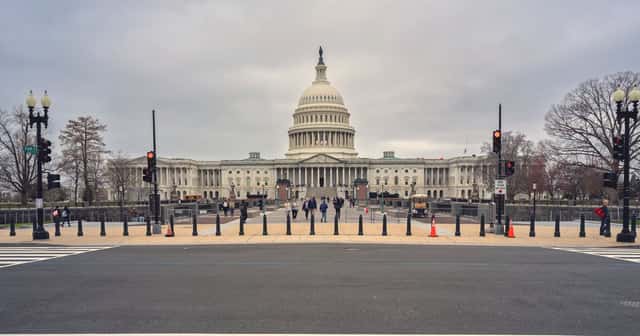
Democrats will hold a majority in the U.S. Senate when the new Congress meets in January 2027, Decision Desk HQ projected at 11:18 p.m. Eastern on Tuesday, Nov. 3, 2026. "Decision Desk HQ projects that the Democrats win the Senate," the firm posted on Bluesky, stamping the call "#DecisionMade: 11:18 PM EST." The projection came two minutes after the same desk called Iowa's open seat for Democrat Josh Turek over Republican Rep. Ashley Hinson, and three minutes after it projected Sherrod Brown the winner of Ohio's special election.$
ABC News projected Democratic control of the Senate shortly after midnight Eastern, according to the network's live blog as republished by its Los Angeles station, which stamped the entry 5:03 a.m. GMT, or 12:03 a.m. Eastern. NBC News projected Democrats would reach 51 seats on the strength of six flipped Republican seats, South Korea's SBS reported, citing NBC; we could not open NBC's own results pages on Tuesday night. The Associated Press had not called chamber control in any report we were able to read before 1 a.m. Eastern.
Republicans entered the night holding 53 seats to 47 for Democrats and the two independents who caucus with them, per CBS News. Democrats needed a net gain of four. By the time of the Decision Desk HQ call, they had flipped six Republican-held seats and lost none that had been called.
Six flips, two of them in states that last elected a Democrat decades ago
The night began with North Carolina, where former Gov. Roy Cooper defeated Michael Whatley for the seat Thom Tillis$ vacated; 567politics reported that call as it landed at 8:24 p.m. Eastern in Sinclair's account. South Carolina followed, where Democrat Annie Andrews defeated Sen. Darline Graham, and Texas, where Decision Desk HQ projected at 10:14 p.m. that James Talarico had beaten Ken Paxton, the first Democratic Senate win in the state since 1988. Both are covered in our report on the South Carolina and Texas results.
The three later flips made the majority. In Ohio, Brown defeated Sen. Jon Husted$ in the special election for the remainder of JD Vance$'s term, as we reported. In Iowa, Turek led Hinson by just over 51% to 45% with 78% of the vote counted at 11:20 p.m., The Hill reported, for a seat Joni Ernst$ is leaving; it is the first Democratic Senate win in Iowa since Tom Harkin's in 2008. In Kansas, NBC News projected that Adam Hamilton, the founding pastor of the United Methodist Church of the Resurrection in the Kansas City area, had defeated Sen. Roger Marshall. With 89.4% counted at 11:23 p.m., Hamilton had 52.1% to Marshall's 44.9%, SBS reported. The AP also reported the Kansas result, according to WGME. Kansas last sent a Democrat to the Senate in 1932.
| State | Democrat (winner) | Republican (loser) | Count at the call |
|---|---|---|---|
| North Carolina (open) | Roy Cooper | Michael Whatley | not reported |
| South Carolina | Annie Andrews | Darline Graham (inc.) | not reported |
| Texas (open) | James Talarico | Ken Paxton | 57.4% to 41.1%, about 60% in |
| Ohio (special) | Sherrod Brown | Jon Husted (inc.) | 48.6% to 46.5% |
| Iowa (open) | Josh Turek | Ashley Hinson | 51% to 45%, 78% in |
| Kansas | Adam Hamilton | Roger Marshall (inc.) | 52.1% to 44.9%, 89.4% in |
Sources: the 567politics reports linked above for North Carolina, South Carolina, Texas and Ohio; The Hill for Iowa; SBS, citing NBC News for Kansas. Every figure is a partial, unofficial count that will change as counting finishes. Official results come from each state's chief election officer after the canvass.
Democrats also held the three seats of their own that CBS had rated competitive. Jon Ossoff$ won reelection in Georgia, as we reported, and Chris Pappas$ held New Hampshire for the party, per our report. Michigan, the third, had not been called in the sources we could open; the Detroit News reported that Abdul El-Sayed led Mike Rogers$ in early returns.
What the polls said, and what the count says
The Kansas result was the night's largest surprise by historical standards but not by polling standards. Five of the six public polls taken in the last three weeks of the race had Hamilton ahead, according to the compilation on Wikipedia's race page, which cites each pollster's release. A YouGov survey of 2,092 likely voters fielded Oct. 26 to 29 had Hamilton 50% to Marshall 49%; Emerson College's poll of 800 likely voters on Oct. 26 to 28 had it 50% to 47%; and a Washington Post survey of 801 likely voters on Oct. 22 to 26 had Hamilton ahead 52% to 43%. Only InsiderAdvantage, polling 1,200 likely voters on Oct. 13 and 14, had Marshall ahead, by one point. 567politics reviewed the final New York Times/Siena poll of Kansas on Sunday.
Source: Wikipedia compilation of pollster releases, SBS, citing NBC News
Show the numbers
| Measure | Hamilton (D) | Marshall (R) |
|---|---|---|
| YouGov, Oct. 26-29 | 50% | 49% |
| Emerson, Oct. 26-28 | 50% | 47% |
| Washington Post, Oct. 22-26 | 52% | 43% |
| InsiderAdvantage, Oct. 13-14 | 47% | 48% |
| Count at 89.4% reported | 52.1% | 44.9% |
Iowa was a different story. The public polling there was thin and old. The most recent surveys on the same compilation site for the Iowa race dated from early September, when YouGov had Turek ahead 47% to 43% among 2,041 likely voters and Emerson had Hinson ahead 50% to 45% among 750 likely voters, per Wikipedia's Iowa page. Decision Desk HQ's own pre-election forecast gave Hinson a 53% chance of winning, according to its race page as of Nov. 2. Our final-poll report on Iowa covered the Siena survey released on the last weekend. A forecast probability is a model's estimate, not a prediction of a margin, and a 53% favorite losing is not evidence that the model was wrong.
Money did not decide either race. In Kansas, Hamilton's campaign reported raising $19.2 million through Oct. 14 to Marshall's $7.5 million, per Federal Election Commission summaries cited on the race page. In Iowa, Hinson had raised $10.2 million through June 30 to Turek's $6.3 million on the same basis; later reports were not in the compilation we read. The two figures cover different dates and are candidate committees only, excluding party and outside spending. Fundraising shows who had resources; it does not show why voters chose as they did.
What voters told the exit pollsters
The networks' Voter Poll, conducted by SSRS for ABC, CBS, NBC, CNN and the AP, surveyed about 100,000 voters online, by phone and in person between Oct. 19 and Nov. 3, Fox News said in describing the survey. Preliminary findings reported by ABC's affiliates before the Senate calls said Iowa voters were "down on Trump" and blamed his tariffs and policies for the state of the economy, while Kansas voters were split on whether the economy or the state of democracy mattered most and also blamed Trump for the economy, according to the ABC7 live blog. In Ohio, about a third of Senate voters said they were angry about the country's direction and roughly 7 in 10 rated the national economy negatively, ABC News reported. 567politics has a fuller account of the early national exit polls.
These are preliminary figures that are reweighted as the count comes in. We could not open the SSRS methodology statement, so sample sizes and error margins for the state subsamples are not given here.
Trump: "I am absolutely willing to accept those results"
President Trump's reaction came in two registers. In an interview with The New York Times late Tuesday, as early counts pointed to a Democratic sweep, he said, "I am absolutely willing to accept those results," and added that he would "work with the Democrats," Investing.com reported. Reuters quoted him from the same interview saying, "We'll work with the Democrats, and we'll, you know, look forward to working with them," and "We'll probably work something out," per the Times of Israel's live blog. Earlier in the campaign, he had told NBC he would accept the results only if they were "honest," according to the Investing.com account.
On Truth Social he struck a different note. ABC News reported that he posted that Republicans "would have won IN A LANDSLIDE" had he been on the ballot, in a headline on its live blog; a Lebanese outlet quoted the post as "If my name had been on the ballot, we would have won in a landslide," in its account. We could not open Truth Social to verify the exact wording.
Before polls closed, Trump had told CBS News how he expected to govern alongside a Democratic Congress. "I have the ultimate power — it's called 'veto,'" he said, and "Historically, you veto for a couple of months and then they come and say, 'We've got to make a deal.'" He also pointed to the Supreme Court's 6-3 ruling in Trump v. Slaughter, which let him remove a Federal Trade Commission member: "We won the Slaughter case and the Slaughter case gives the president tremendous powers that it never had before," CBS reported. Two people close to the president told CBS the White House had discussed executive actions on immigration and trade for next year. Our story on the House result has more on what a Democratic Congress can and cannot do against a veto.
Chuck Schumer, who led the Senate majority from 2021 to 2025 and is in line to do so again, had predicted the outcome Tuesday morning. "Nauseously optimistic," he told ABC News after voting in Brooklyn, saying that whether Democrats work with Trump "will be up to him" and that "we're going to fight Trump tooth and nail and focus on the issues no matter what he does," per the network's live blog. We found no post-call statement from Schumer, Senate Majority Leader John Thune or the National Republican Senatorial Committee in the sources we could open before 1 a.m. Eastern. Republican leaders' response is the main missing voice in this article.$$
Hamilton's first public words were on X. "Thank you, Kansas. Thank you for your faith in me and for the opportunity to fight for you in Washington," he wrote late Tuesday, adding that voters "will hear more from me soon," WGME reported. We were unable to load X during this run to confirm the post against its permalink, so the quotation rests on WGME's report. Neither Marshall nor Hinson had conceded in the reports we read.
What a 51-seat majority can and cannot do
A Senate majority controls the floor calendar, committee chairs and, most consequentially, the confirmation of judges and executive nominees. It does not change the arithmetic of a veto override, which needs two-thirds of both chambers, nor the 60-vote threshold for most legislation. With roughly 51 to 53 seats, depending on Michigan, Maine and Alaska, Democrats will be able to decline to take up nominations and to hold hearings with subpoena power, but they will need Republican votes to pass anything Trump has not agreed to.
The practical questions for the next two months are who chairs Judiciary and Finance, whether any Supreme Court vacancy arises before January, and how the lame-duck Republican majority handles pending nominations. Thune's office had not said how it would use the remaining weeks of its majority in anything we could read on Tuesday night.
The Alaska wrinkle
Alaska's Senate race between Sen. Dan Sullivan$ and former Rep. Mary Peltola is counted under ranked-choice rules, and polls closed at 1 a.m. Eastern. Before the vote, the Justice Department sued to block certification of a Peltola win and widened a criminal investigation into her campaign over the recruitment of a second candidate named Dan Sullivan; a federal judge dismissed the suit on Sunday, and the department appealed. 567politics covered the target letters and the two Sullivans on Election Day. If the Decision Desk HQ and ABC projections hold, the Alaska result will affect the size of the majority rather than its existence.
Online reaction: what we could not verify
This article contains no characterization of public opinion drawn from social media. The Voter Poll figures above are its only measure of what voters think. We attempted to read Reddit's r/politics, r/worldnews, r/Conservative, r/neoliberal, r/moderatepolitics and r/PoliticalDiscussion listings and X's trending pages during this run; every request to Reddit was refused, and X's pages could not be read. Our post-verification tool, which checks a post's text and author against its permalink, could not retrieve X posts tonight. The one Bluesky account we could verify was Decision Desk HQ's, whose race calls are cited above. Because of that, we cannot say what posts were most shared about the Senate result, and we have not quoted ordinary users. The gap is a limit of our access, not evidence that there was no reaction.
What remains unknown
The size of the majority. Michigan, Maine and Alaska had not been called by any desk we could read at 1 a.m. Eastern. Decision Desk HQ's Maine page showed Troy Jackson ahead of Sen. Susan Collins$ 53.0% to 45.8% with an estimated 67% reported at 12:18 a.m., per the race page, though the same page displayed a smaller margin in its header; Maine also uses ranked-choice tabulation if no candidate passes 50%. Michigan's count was early. Alaska's will take days.
Whether any losing candidate or the Justice Department contests a Senate result. Trump's statement that he accepts the results is the most direct answer so far from the administration; the Alaska litigation is the open question.
The final margins in Kansas and Iowa, and whether the Senate count tracks the House, where Democrats gained at least nine Republican-held seats by 10:40 p.m. Eastern. The official canvasses in all six flipped states will take weeks.
Differing perspectives
How should President Trump and the incoming Democratic Congress deal with each other after the 2026 midterms?
Each position is summarized as its supporters make it, with equal weight and in alphabetical order. A summary is not an endorsement; the evidence for each is weighed in the story above.
Fight Trump on every front and keep the focus on voters' issues
Who holds it: Senate Democratic leader Chuck Schumer and Senate Democrats
Schumer argues that voters rejected the president's record and that Democrats owe them resistance paired with results. He says whether cooperation happens "will be up to" Trump, and that regardless, "we're going to fight Trump tooth and nail and focus on the issues no matter what he does." He says Democrats are "listening" to the public on costs and health care while "Trump is not," and that a Senate majority gives Democrats the tools, including control of confirmations and committee agendas, to hold the administration to account while pressing their own priorities.
In their words: ABC News live blog, quoting Chuck Schumer ↗
Look for common ground and treat the office as service
Who holds it: Sen.-elect Adam Hamilton of Kansas and Democrats elected in Republican-leaning states
Hamilton argues that his win in a state that had not elected a Democratic senator since 1932 came from a campaign built on service and on finding common ground with people who disagree, drawing on his experience leading a large congregation. His first message after the result was gratitude and a promise to "fight for you in Washington," addressed to all Kansans rather than to one party. In this view, new senators from Republican-leaning states should spend their majority on bipartisan work that can pass and be signed, not on confrontation for its own sake.
In their words: WGME, quoting Adam Hamilton's post on X ↗
Pass an affordability agenda from day one and dare the president to veto it
Who holds it: House Democratic leader Hakeem Jeffries and the House Democratic leadership
Jeffries argues that the new majority should legislate at once rather than wait for the president. He says Democrats will be united "right out of the gate" around "Fighting for an affordable America," starting with "lower the cost of groceries and gas," then making "healthcare affordable for every single American," and holding "the crooks accountable who've visited unprecedented corruption on the American people," all "beginning on day one." In this view, forcing votes on health subsidies, Medicaid, tariffs and the Iran war puts the choice before the president and the public, whatever he decides to sign.
In their words: Associated Press, as published by The Philadelphia Inquirer ↗
Veto Democratic bills, govern by executive power, then strike deals
Who holds it: President Donald Trump and the White House
Trump argues that a Democratic Congress changes less than it appears to. He says he holds "the ultimate power — it's called 'veto,'" and that history shows the pattern: "you veto for a couple of months and then they come and say, 'We've got to make a deal.'" He points to the Supreme Court's Slaughter decision, which he says "gives the president tremendous powers that it never had before" over agencies and commissions, so his agenda continues whichever party runs Congress. He also told The New York Times he is willing to accept the results and expects to "work something out" with Democrats.
In their words: CBS News interview with President Trump ↗
READ BEYOND 567POLITICS
Alternate sources & perspectives
Independent coverage and primary evidence to help you compare arguments. A link is not an endorsement; perspective labels describe the linked material.
- primary evidence
Decision Desk HQ projects that the Democrats win the Senate (11:18 PM EST) ↗
Decision Desk HQ (Bluesky)
The time-stamped chamber call that this article leads with; links to DDHQ's live Senate balance-of-power page.
- primary evidence
Decision Desk HQ projects Josh Turek wins the IA US Senate General Election (11:16 PM EST) ↗
Decision Desk HQ (Bluesky)
The Iowa call that preceded the chamber call by two minutes.
- right argument
Trump says he is prepared to use "tremendous powers" if Democrats take control ↗
CBS News
Robert Costa's Election Day phone interview; the president's own account of how he would govern with a Democratic Congress through vetoes and the Slaughter ruling.
- left argument
Schumer sees Democrats taking Senate, his return as majority leader ↗
ABC News (via KGO-TV)
Schumer's Election Day remarks to ABC: "fight Trump tooth and nail and focus on the issues."
- independent analysis
Democrat Josh Turek projected to win Iowa Senate over Ashley Hinson ↗
The Hill
Vote shares at 78% counted, candidate backgrounds and the campaign's themes on both sides.
- independent analysis
'Battleground' Kansas nears electing first Democratic senator in 94 years ↗
SBS (South Korea), citing NBC News
Carries NBC's Kansas and Iowa counts and its 51-seat projection; an AI-translated report, so figures should be checked against NBC when its pages are reachable.
- other perspective
Adam Hamilton becomes first Democratic senator from Kansas in nearly 100 years ↗
WGME (Sinclair)
Hamilton's first statement on X and his campaign's framing of service and common ground; cites the AP for the result.
- independent analysis
Trump tells NYT he will accept election results ↗
Investing.com, via Yahoo News Singapore
Reports Trump's "absolutely willing to accept those results" remark and his earlier "honest" condition to NBC; contains an unverified detail about the Graham family that we did not use.
- independent analysis
2026 United States Senate election in Kansas ↗
Wikipedia
Compilation of final polls with field dates, samples and margins of error, and FEC fundraising totals through Oct. 14; each entry cites the pollster's release.
Reviewed 2026-11-04. Reviewed overnight Nov. 3-4, 2026 (Eastern). Decision Desk HQ's Bluesky posts are the primary record of the call times. NBC News, CNN, Axios, NPR and the Associated Press' own pages could not be opened during this review, so NBC's 51-seat projection is cited through SBS and the AP's Kansas call through WGME. X and Reddit were unreachable, so no post-level online reaction is listed. Republican leaders (Thune, NRSC) had issued no post-call statement we could find; that view is represented only by President Trump's pre-result CBS interview. Official state canvasses were not available.