King Charles voices 'profound personal sorrow' over slavery at Commonwealth summit but does not apologize
In Antigua, the King called the slave trade a shameful chapter. Caribbean leaders said apology and repair must follow; Badenoch called apology talk a distraction
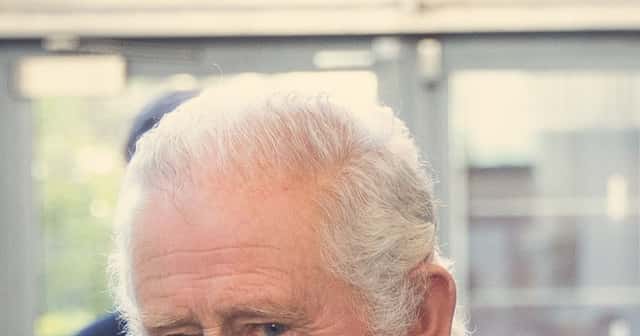
King Charles III told Commonwealth leaders in Antigua and Barbuda on Tuesday, Nov. 3, that the transatlantic trade in enslaved people "still casts a shadow over these islands." He said the "shameful chapter of history" fills his heart "with horror" and his soul "with the most profound personal sorrow." He did not apologize, and he announced no reparations.
The speech opened the 28th Commonwealth Heads of Government Meeting (CHOGM) in St John's, the capital of Antigua and Barbuda. Caribbean leaders and campaigners had pressed the King and the British government for a formal apology, and many want reparations. Several said the speech fell short. In Britain, Conservative leader Kemi Badenoch had argued before the summit that the focus on apologies is a distraction.
This story sets out what the King said, what the British government has offered, how Caribbean leaders, campaigners and British politicians responded in their own words, and what polling shows. It follows our Oct. 31 report on Prime Minister Andy Burnham's offer of talks on a formal apology.
What the King said
The full text of the speech is published on the royal family's website. The passage on slavery came near the middle.
"We cannot change the actions of those who came before us. We can, however, learn from the past," the King said. "The transatlantic trade in enslaved persons still casts a shadow over these islands and other Members of our Commonwealth. As I have said before, that shameful chapter of history is one that fills my heart with horror and my soul with the most profound personal sorrow."
He also noted the Royal Navy's "leading role" in ending the trade. He then turned to what he called the task now: "to work in modern partnership to address the wrongs of the past with action for the future." He listed education, jobs, trade among Commonwealth members and resilience to climate change as areas for that work.
Most of the speech dealt with the summit's theme, "Accelerating Partnerships and Investment for a Prosperous Commonwealth." The King said doing business between Commonwealth members is 21% cheaper than between other countries. He welcomed proposals from the Commonwealth secretary-general for a Commonwealth Nature Initiative, a mutual insurance mechanism and a Net Zero Fund. He closed with a sailing image: "we cannot command the winds... but we can choose how we set our sails."
Why the King did not go further
The King is a constitutional monarch. He acts on the advice of ministers and does not set government policy. Before the speech, a Palace spokesperson said he would speak with "unflinching honesty" and "sincere sorrow," the BBC reported. The Palace said it would "not be appropriate" for him to address government policy, the BBC reported. The British state has never formally apologized for its role in the slave trade.
The Independent reported that the Palace described the King's role at the summit as "inspiring and convening, rather than policy-making."
The King signaled that the words were not new, introducing them with "As I have said before." He also noted that the Commonwealth had met in Kigali, Rwanda; Apia, Samoa; and now St John's within four years.
What the British government has offered
The apology question sits with the government, led by Burnham since July. In a Guardian opinion article published Oct. 30, Burnham wrote that he wanted "to express my sorrow and regret for the pain and suffering of so many millions of people." He said he was open to calls for a formal apology on behalf of the British state, as part of structured talks. He ruled out financial reparations.
Ahead of the summit, Downing Street announced a package for the region, the Independent reported. It includes £40 million in aid over three years for critical infrastructure in the Caribbean, including green energy. It also includes a push for a "debt reset" that would bring in donors outside the G7 and the private sector. And it promises two task forces, one on critical minerals and one on trade and investment, to be set up by the end of the year.
"In today's more divided, unpredictable world, the Commonwealth has the potential to be a powerful force for good," Burnham said, according to the Independent. "Britain is bringing a new approach to this meeting, as we look to reshape a new era for the Commonwealth, as well as being open to discussions about the past," he said.
Al Jazeera, citing the Associated Press, reported that Burnham has also proposed debt restructuring for Caribbean nations.
What Caribbean leaders said
Antigua and Barbuda's prime minister, Gaston Browne, hosted the summit. He said the consequences of slavery "have not disappeared with the passage of time," the BBC reported, and that the question of reparatory justice deserves "seriousness, sensitivity and sustained international engagement." He also spoke about debt. "No nation should be forced to mortgage its future simply to survive its present," he said, according to Al Jazeera. The Guardian reported that Browne called for "honest engagement with our shared history."
The chair of the Caribbean Community (CARICOM), Saint Lucia's Prime Minister Philip J. Pierre, said an apology is an "essential first step," according to the Guardian. "Apology without repair is incomplete," he said.
Guyana's President Irfaan Ali said an apology should be the next step, Al Jazeera reported. Ralph Gonsalves, a longtime advocate of reparations from St Vincent and the Grenadines, told the Guardian: "The apology hasn't come... this speech to me was a disappointment."
Reparations are not on the summit's formal agenda, the Guardian reported. At the last summit, in Samoa in 2024, leaders of all 56 member states signed a communique that backed holding talks on reparatory justice. Al Jazeera reported that they did so despite the British government's opposition at the time, under Keir Starmer.
What campaigners said
Outside the meeting, protesters held signs reading "Acknowledge the wrong. Commit to repair," Al Jazeera reported. "You have to apologize, yes. That is where we start with the repair," protester Shana Michelle told the agency.
Dorbrene O'Marde, chair of the Antigua and Barbuda Reparations Support Commission, told the Guardian the King "has again failed the people who recognize him as king."
Labour MP Bell Ribeiro-Addy, who chairs the House of Commons all-party parliamentary group for Afrikan Reparations, welcomed debt relief but warned against presenting it as reparations. "Aid is not reparations, because aid leaves the power with the giver," she said, according to the Guardian. "Agency was the crime. Agency has to be the remedy."
What opponents of an apology said
Kemi Badenoch, the Conservative leader, argues that the summit should look ahead. On the BBC's Sunday with Laura Kuenssberg program, she called "endless talk about apologies" a "distraction," the BBC reported. "The transatlantic slave trade happened centuries ago. It is time for the Commonwealth to start looking forwards, not endlessly backwards," she said.
She also rejected payments and Burnham's openness to an apology. "I don't think we should be giving any money to compensate people for the slave trade, and I don't think that Andy Burnham needs to be apologizing because it is a lever to wedge open the door to ask for cash," she said, according to the Independent.
Our earlier report noted that Reform UK, led by Nigel Farage, has proposed visa penalties for countries that demand reparations.
What polling shows
The most detailed recent poll on the question is from YouGov. It surveyed 3,023 adults in Great Britain online through its own panel on April 11–17, 2025. YouGov published the results itself. The published results asked: "Would you support or oppose the United Kingdom paying reparations to countries affected by Britain's transatlantic slave trade between 1662 and 1807?"
Overall, 24% supported paying reparations, 60% opposed and 16% did not know. Views split sharply by how people voted in the 2024 general election.
Source: YouGov
Show the numbers
| Group | Support | Oppose |
|---|---|---|
| All adults | 24% | 60% |
| Conservative voters | 7% | 82% |
| Labour voters | 34% | 48% |
| Lib Dem voters | 28% | 57% |
| Reform UK voters | 4% | 90% |
| Green voters | 53% | 35% |
Age mattered too. Among 18- to 24-year-olds, 43% supported and 41% opposed. Among those 65 and older, 8% supported and 81% opposed. Black adults supported reparations 71% to 15%, and ethnic minority adults as a whole supported them 50% to 32%, according to YouGov's tables.
The poll was taken in 2025, before Burnham became prime minister and before the King's speech. It asked about payments, not about an apology. It measures British opinion only; we found no comparable recent poll of Caribbean publics. Social media reaction to the speech is not a measure of opinion, and this story does not treat it as one.
Who attended and the open questions
Among the leaders in St John's were Australian Prime Minister Anthony Albanese and Canadian Prime Minister Mark Carney, Al Jazeera reported. The Commonwealth has 56 member states, and CHOGM meets every two years. Reparations are not on the formal agenda, but the 2024 communique committed members to talks on reparatory justice.
For Britain, the open question is the one Burnham raised: whether talks with Caribbean governments lead to a formal apology on behalf of the state. That would be a government decision, not the King's.
Related coverage
For background on the British politicians in this story, see our pages on Andy Burnham, Kemi Badenoch and Keir Starmer. Our United Kingdom elections page and United Kingdom issues guide cover the wider political picture. Britain's ties with Europe feature in our report on Starmer's Dublin speech on European security. How we weigh sources and polls is set out in our methodology.
Key facts
| Item | Detail |
|---|---|
| Event | 28th Commonwealth Heads of Government Meeting, St John's, Antigua and Barbuda |
| King's words | "Profound personal sorrow"; no apology, no reparations |
| UK offer | £40m Caribbean infrastructure aid over 3 years; debt reset push; 2 task forces |
| UK position on money | Burnham rules out financial reparations |
| CARICOM position | Apology is an "essential first step"; "apology without repair is incomplete" |
| British opinion (YouGov, 2025) | 24% support reparations, 60% oppose |
Differing perspectives
How should Britain address its role in the transatlantic slave trade?
Each position is summarized as its supporters make it, with equal weight and in alphabetical order. A summary is not an endorsement; the evidence for each is weighed in the story above.
Formal apology followed by reparatory justice
Who holds it: CARICOM leaders, Caribbean reparations commissions and campaigners, some Labour MPs
Supporters say an apology from the British state is an essential first step, but that an apology without repair is incomplete. They welcome debt relief but argue that aid is not reparations, because aid leaves the power with the giver, and that reparations concern the responsibility of states and institutions that still stand. They say the King's expressions of sorrow, repeated without an apology, have again failed the people who recognize him as king.
In their words: The Guardian, quoting Philip J. Pierre, Dorbrene O'Marde and Bell Ribeiro-Addy ↗
No apology and no payments
Who holds it: Conservative leader Kemi Badenoch
Opponents say endless talk about apologies is a distraction from solving the problems the Commonwealth faces now. They point out that the transatlantic slave trade happened centuries ago, and argue that it is time for the Commonwealth to start looking forwards rather than endlessly backwards. They say the summit's attention belongs on present-day challenges, not on demands rooted in the distant past.
In their words: BBC News, quoting Kemi Badenoch on Sunday with Laura Kuenssberg ↗
Talks on an apology plus investment, not reparations
Who holds it: Prime Minister Andy Burnham and the UK government
The government is open to calls for a formal apology through structured talks, and says Britain is bringing a new approach to the Commonwealth while staying open to discussions about the past. It rules out financial reparations. Instead it offers £40 million for Caribbean infrastructure and green energy, a debt reset for the poorest Commonwealth countries and new task forces on trade and critical minerals.
In their words: The Independent, quoting Andy Burnham and Downing Street ↗
READ BEYOND 567POLITICS
Alternate sources & perspectives
Independent coverage and primary evidence to help you compare arguments. A link is not an endorsement; perspective labels describe the linked material.
- primary evidence
A speech by The King at the CHOGM Opening Ceremony in St John's, Antigua ↗
The Royal Family
Full text of the King's Nov. 3 speech, including the passage on the slave trade.
- primary evidence
Do Britons support reparations for the slave trade in principle? ↗
YouGov
Survey of 3,023 GB adults, April 11-17, 2025, with results by vote, age and ethnicity.
- primary evidence
YouGov reparations survey tables ↗
YouGov
Full crosstabs and question wording for the 2025 poll.
- left argument
King Charles addresses summit as demands for slavery apology grow ↗
The Guardian
CARICOM chair Philip J. Pierre, Dorbrene O'Marde, Bell Ribeiro-Addy and Ralph Gonsalves argue that apology and repair must follow.
- independent analysis
Burnham pledges £40m in aid for Caribbean amid calls for reparations over UK's role in the slave trade ↗
The Independent
The government's aid, debt and task-force package, Burnham's comments and Badenoch's opposition to payments and an apology.
- right argument
King to address slavery in Antigua as PM says he is open to possible UK apology ↗
BBC News
Includes Kemi Badenoch's argument that apology talk is a distraction, plus Palace and Gaston Browne comments.
- independent analysis
UK's King Charles expresses 'profound sorrow' over transatlantic slave era ↗
Al Jazeera (AP)
Reaction from Guyana's president, protesters and Antigua's prime minister; 2024 Samoa background.
Reviewed 2026-11-03. Automated discovery returned unrelated results (TV stations, games, dictionaries), so these sources were picked by hand from pages opened while reporting. The King's speech is linked as primary evidence. The reparations-campaign view is represented through the Guardian's report quoting CARICOM's chair and campaigners; the Conservative view through the BBC and Independent reports quoting Kemi Badenoch. No recent poll of Caribbean publics was found.