The Labour Party said on Monday, November 2, that it will end power-sharing arrangements with the Green Party on 11 councils in England. Local Green groups in those areas had not disowned a Green policy motion stating that "Zionism is racism," passed at the party's conference in October.
The decision affects councils including Sheffield, Warwick and Lewes, where Labour and the Greens governed in direct coalition, and several others where the two parties worked together in broader arrangements. Labour said cooperation would continue in seven areas where local Greens met its conditions. The move followed a seven-day ultimatum Labour issued on October 15.
Labour Party chair Bridget Phillipson said the policy "crosses a line and we cannot work with any party that supports it – at any level of government," the BBC reported. The Greens said they were "hugely disappointed" and accused national parties of forcing local leaders to jeopardize "successful progressive partnerships that are delivering benefits for residents." [Funding: local campaign funding not researched; FEC does not cover this country]
Which councils are affected
Labour said it had local agreements with the Greens in 18 authorities and that 11 had not met its criteria, according to the BBC. The party listed these areas:
- Arun District Council
- Derbyshire Dales District Council
- Havant Borough Council
- Lewes District Council, where the Greens announced last week that they were "mutually" ending their alliance with Labour
- Runnymede Borough Council, where Labour said local cooperation had already stopped
- Sheffield City Council
- Stafford Borough Council
- Warwick District Council
- Wealden District Council
- West Devon Borough Council
- West Suffolk Council
Labour said its conditions had been met in Broadland, Monmouthshire, North Somerset, Rother, West Oxfordshire and West Sussex. It will also keep working with the Greens in the West of England mayoralty, where the mayor is from Labour and the deputy mayor is a Green, the Guardian reported. Labour said Coventry City Council has no formal arrangement with the Greens and that none will be made in future.
Councillors in the affected areas will now have to find other partners or try to govern as minority administrations. The BBC reported that the breakdown could slow budget and policy decisions that affect hundreds of thousands of residents.
Sheffield, the largest council affected
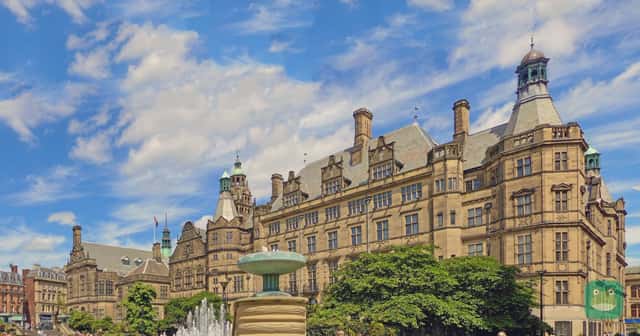
Sheffield is the biggest authority on the list. After the May 2026 local elections, 25 Labour councillors formed a power-sharing agreement with 20 Green councillors to run the city of about 550,000 people, according to the BBC.
Council leader Fran Belbin, a Labour councillor, said her party would propose on Wednesday, November 4, that it continue as a Labour minority administration. "We now feel we are at the end of the road with the joint administration," she said. "Our trust in Sheffield Greens is completely broken," she added, accusing them of a "refusal to stand up for Jewish citizens."
Sheffield Greens leader Angela Argenzio did not address the motion in her written reply to Labour's ultimatum. She said local Green councillors "are not antisemitic," the BBC reported. She told local Labour representatives they were being "directed by your national party leader" rather than acting on local concerns.
What the Green motion says
Green Party members in England and Wales backed the motion, titled "Zionism is racism," at their conference in early October. It describes Zionism as an ideology supporting "an ethnonationalist Jewish State in historic Palestine," according to the BBC, and backs a "single democratic Palestinian State," including the territory of modern-day Israel. The Guardian reported that it rejects a two-state solution and calls for a single Palestinian state "with equal rights for all."
Under Green Party rules, members decide policy directly. The motion won just over 1,000 votes, about 0.4% of total membership, the Guardian reported. Four of the party's five MPs have criticized it, along with former leader Caroline Lucas [Funding: local campaign funding not researched; FEC does not cover this country], according to the same report. The BBC reported that Green leader Zack Polanski [Funding: local campaign funding not researched; FEC does not cover this country], who is Jewish, did not take part in the vote. He had left the conference early to campaign in the Holborn and St Pancras by-election, which Labour won.
Polanski has called the motion "imperfect" but defended what he sees as its central point. He argues that Israel's actions toward Palestinians are "clearly underpinned by racist ideology," the BBC reported. He has said he would not overturn the motion, which will remain party policy until 2028. Israel has denied committing genocide in Gaza.
The Equality and Human Rights Commission, the UK's equality regulator, has written to the Greens to ask for more information about the motion "and assess its practical implications and potential impact," the Guardian reported.
How Labour got here
Prime Minister Andy Burnham told MPs on October 14 that Labour would not partner with the Greens because of what he called the "antisemitic" policy, the BBC reported at the time. He was answering Conservative MP Harriett Baldwin, who urged him to rule out cooperating with the Greens. "It is wrong, it is antisemitic, and this side of the House will have nothing to do with it," Burnham said, according to GB News. The next day, Labour told its local groups to write to their Green counterparts and demand "clear and unambiguous" statements rejecting the policy. Green groups were also asked to call on their national leadership to reconsider it. [Funding: local campaign funding not researched; FEC does not cover this country]
"Where they are unable to provide that assurance, Labour will bring any such local arrangement to an end," Phillipson said then.
The two parties handle local deals in different ways. Labour councillors need approval from the party's National Executive Committee before entering local tie-ups. Under Labour's rulebook, local groups must also "stand down" from power-sharing arrangements when their regional office asks them to, the BBC reported. The Green Party of England and Wales lets local groups make the final decision on whether to share power.
On Monday, Phillipson said: "Any local power-sharing arrangement cannot come at the expense of upholding the moral obligation we have to stand up for everyone in our communities and the values we share." She said Labour was "pleased that some local Green parties have rightly opted to disavow this policy." She added that it was "disappointing that some local Green parties have not met the conditions Labour has set out." She also said: "The Labour party fought hard to root out antisemitism within our own party and ensure it had no place in our politics."
The case for Labour's decision
Supporters of the move, including Jewish community groups and parties on the right, argue that the motion is antisemitic and that mainstream parties should not share power with any group that will not reject it.
The Board of Deputies of British Jews, the UK's largest cross-community Jewish body, welcomed Labour's ultimatum on October 15. Vice President Karen Newman said Labour's position "that it cannot work with Greens while this racist motion is in place – is the correct one." She added: "This is a commitment we have been pressing for, and we are urging other mainstream parties to take the same clear and principled stand."
The Board went further on October 25. Its members voted 118 to 1 to declare that the Greens had, "by adopting an antisemitic platform, become a racist party," the BBC reported. Board president Phil Rosenberg said: "No political party has the right to tell Jews that a central part of our identity, rooted in thousands of years of history, faith and peoplehood, is racist." The Board's motion urged other parties not to do deals with the Greens unless local leaders reject the policy and commit to overturning it.
Conservative leader Kemi Badenoch condemned the vote in an ITV News interview on October 6. She said she was "appalled" and "embarrassed that a political party in this country would actually do something like that." "This is disgusting. These are not people whose opinions we should be respecting," she said. A Green Party spokesperson replied that her words "perfectly" described the Conservative Party, ITV reported. [Funding: local campaign funding not researched; FEC does not cover this country]
Reform UK has taken similar steps at the local level. In Southampton, Reform deputy group leader Philip Crook told other council group leaders that Reform "will no longer support" the Greens "until this abhorrent motion is withdrawn," the Daily Echo reported on October 30. He called it "an antisemitic racist policy."
We did not find new statements from the Conservatives or Reform UK on Labour's Monday announcement before publication.
The case against Labour's decision
Greens and their defenders argue that Labour is using a national foreign-policy dispute to break up working local governments, and that the motion criticizes the Israeli state rather than Jewish people.
In their joint statement, the Green Party and the Local Government Association Green Group said those who issued ultimatums had often ignored the views of their own local leaders and "failed to respect the choices made by local voters, and are disrupting successful partnerships." They added: "We trust local communities, local councillors and local leaders to know what is best for them. We ask that others do the same." The statement said "the range of responses to the ultimatums reflects the diversity and anti racist nature of our Party." It also said the party's internal democracy "must be updated," including by "giving leaders more responsibility to set the party's strategic direction," work it said had been under way for months. The Guardian noted the statement did not address the motion itself.
Rachel Millward, a senior Green who leads Wealden District Council, voted against the motion at conference, the BBC reported in October. On Monday she criticized Labour's decision. "It is ironic that a Labour prime minister who made a promise to solve problems, not score points, has now shown he is willing to disrupt well-run councils for fear of Green success," she said. "It is utterly irresponsible to conflate criticism of the actions of the state of Israel with antisemitism. Many Jewish people strongly reject the illegal actions of the current Israeli government."
In Warwick, the local Green party said: "We refuse to condemn a democratically decided policy because of political intimidation." It urged Burnham to "allow local Labour groups to decide for themselves," the BBC reported.
Netty Shepherd, Green group leader in Havant, told BBC Radio 4's Today that Labour was engaged in "performative politics" and that the end of the coalition would be a "complete disaster for residents." "I am a local government councillor, I worry about people's bins… foreign policy is nothing to do with my remit," she said.
Earlier, the Greens' national response to Labour's ultimatum was that they would "not take lectures" from a Labour government that supplies arms to Israel, the Guardian reported. Polanski responded to Burnham in October: "I'm the only Jewish leader of a political party. I'm a victim of antisemitism every day and I've made it clear Jewish people are welcome in my party."
A split inside the Greens
Monday's decision adds to pressure on Polanski from within his own party. Former co-leader Adrian Ramsay had urged local Green groups to renounce the policy, putting him at odds with Polanski, the Guardian reported. On Sunday, Ramsay said the party must fix its internal democracy to avoid a takeover by the hard left.
The local picture shows that split. Green groups in six councils condemned the motion and kept their deals with Labour. In 10 others, Labour said, local Greens had not met its demands, and cooperation had already ended in Runnymede.
Why it matters
Local power-sharing deals decide who leads councils and how budgets and policies pass. Labour's rulebook gives its national leadership the power to end such deals, while Green rules leave the choice to local groups.
Phillipson tied the decision to Labour's own past efforts to "root out antisemitism." Millward argued that Labour acted "for fear of Green success." For the Greens, the immediate question is how many council roles the motion will cost them. More coverage of British politics is on our UK issues page.
About this report
This report draws on reporting by the BBC, the Guardian, ITV News, GB News and the Daily Echo, and on statements published by the Green Party and the Board of Deputies. We did not review Labour's full statement and relied on quotes reported by the BBC and the Guardian. Councillor quotes are as reported by the BBC. We did not independently verify each council's arrangement with Labour. Our methodology and editorial standards explain how we report on contested claims. US Federal Election Commission funding data does not apply to the UK politicians in this report, and this story does not discuss their personal finances.
Photo: Sheffield Town Hall, by Tim Green, via Wikimedia Commons, CC BY 2.0. Cropped for publication.
