Israeli forces leave Hebron after 10-day operation as Palestinian Authority security forces take over
Families return home. Israel calls it a counterterror raid on a Hamas-linked clan; Palestinian officials and the UN rights chief call it punitive.
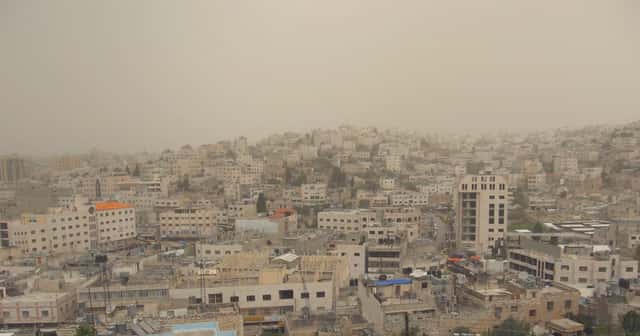
Israeli forces withdrew from the West Bank city of Hebron on Monday morning, ending an operation of about 10 days that began after two Israeli soldiers were killed at a checkpoint near the city. Displaced families began returning to the Al-Jalda and Ein Deir Bahha neighborhoods, and schools reopened. The Palestinian Authority's governor of Hebron said Palestinian security forces had taken control of the area.
The two sides describe the operation in very different ways. An Israeli military official called it a counterterrorism operation against a Hamas-linked clan. Palestinian officials called it a siege, and the UN human rights chief warned last week that it raised concerns of collective punishment. The withdrawal came six days after an Israeli election in which senior ministers had promised harsh measures in Hebron.
What happened on Monday
"This morning, following the completion of all operational activities, the soldiers withdrew from the area of operation in Hebron," a military official said, according to AFP via France 24. "Counterterrorism activities throughout Judea and Samaria continue." Judea and Samaria is the biblical name Israel's government uses for the West Bank.
The official said soldiers "conducted thorough searches of multiple locations, detained and questioned suspects, and located and confiscated four weapons, several vests, and additional military equipment." The military also said it had demolished the homes of the two attackers and sealed an underground space next to one of them.
Hebron Governor Khaled Dudin, who is appointed by the Palestinian Authority, announced the pullout. "Palestinian security forces have taken full control of the area following the Israeli withdrawal," he said, Anadolu reported. "Relevant authorities and Palestinian security forces are monitoring developments on the ground and working to provide the necessary conditions for residents to return safely."
Hebron Mayor Youssef al-Jaabari told Al Jazeera that the municipality was officially told of the withdrawal at 6 a.m. local time (11 p.m. Sunday ET). "For the first time in 10 days, schoolchildren are going to their schools; university students are now on their way to their universities," he said. He told Arab News that movement restrictions remained at the entrances to the city.
The Palestinian Civil Defense warned returning residents not to enter damaged buildings or touch suspicious objects before inspection, WAFA reported.
How it began
On October 23, two Palestinian gunmen opened fire at a temporary checkpoint near Hebron. They killed two Israeli soldiers, Staff Sgt. Ron Yonatan Roytman and Sgt. Yuval Shai Svilem, and wounded three others, according to JNS and Anadolu. Both gunmen were killed.
Senior ministers, then campaigning ahead of the October 27 election, responded within hours. Defense Minister Israel Katz said: "The Jenin refugee camp model arrives in Hebron. Every clan neighborhood in Hebron from which the terrorists emerged today will be evacuated of its residents. Just like in Gaza, just like in Lebanon," The Guardian reported.
Finance Minister Bezalel Smotrich posted a video in front of a bulldozer demolishing a Palestinian home built without a permit near the site. He said the demolition aimed to "create deterrence and exact a price," the Guardian reported. The newspaper said there was no claim of a link between that building's owners and the attackers. National Security Minister Itamar Ben-Gvir traveled to Hebron and demanded that the Palestinian Authority be dismantled.
Prime Minister Benjamin Netanyahu said on October 24 that he had told the army and the Shin Bet security service to draw up a "daring and comprehensive" plan against militancy in the West Bank, JNS reported. In that Channel 14 interview he said the Palestinian Authority "is a body hostile to the State of Israel that seeks to eliminate us in various ways."
Overnight on October 23 and 24, troops ordered families in Ein Deir Bahha and Al-Jalda to leave, using loudspeakers at around 12:30 to 1 a.m. That account comes from a petition filed by the legal rights group Adalah, as summarized by The Jerusalem Post. Residents told Al Jazeera they were given five minutes to collect medicine, phones and documents.
How many people were displaced
The numbers vary by source and by what each one counts. Some count only people ordered out of their homes; others count everyone affected by closures in the two neighborhoods.
| Source | Date | Estimate |
|---|---|---|
| The Jerusalem Post | Nov. 2 | About 2,000 evacuated |
| Hebron Governor Khaled Dudin (WAFA) | Oct. 26 | 450 families, more than 2,300 people |
| UN aid office OCHA (UN News) | Oct. 26 | More than 3,000 evacuated |
| Hebron Municipality (Arab News) | Nov. 2 | 491 families, 3,189 people |
| Hebron Governorate (Anadolu, WAFA) | Nov. 2 | More than 3,300 displaced or otherwise affected |
| Adalah lawyer Muna Haddad (The Jerusalem Post) | Nov. 2 | About 5,000 forced from their homes |
The municipality also said Israeli forces demolished 15 homes and other structures and forced 327 shops to close, WAFA reported. It put direct economic losses at more than 12 million shekels, about $3.8 million, a day. It estimated damage to infrastructure at more than 6 million shekels, about $1.9 million. About 80,000 students in the city could not attend school, the municipality said. None of these figures have been independently verified.
The Israeli government's case
Israeli officials say the operation targeted the network behind the October 23 attack. According to JNS, a military official said soldiers carried out "a targeted operation in a neighborhood belonging to a Hamas-affiliated clan." They searched buildings and detained suspects, the official said, and also confiscated 25 vehicles similar to the one used in the attack.
The official told JNS that soldiers demolished "illegal infrastructure" near the junction where the soldiers were killed, and carried out engineering work "to improve security conditions and strengthen defensive measures." The army's Judea Brigade is now focused on defense ahead of this weekend, when tens of thousands of Jewish visitors are expected in Hebron for the Torah portion Chayei Sarah.
In its response to the court on Monday, the state said that "there is no longer a security or humanitarian need that justifies preventing the return of the residents to their homes," according to The Jerusalem Post. It asked the court to dismiss the petition as moot.
The Palestinian and UN case
Palestinian officials describe the operation as a punitive siege of the whole governorate. On October 26, Dudin told reporters that troops had searched more than 500 homes, arrested more than 70 people and set up field interrogation centers, WAFA reported. He said 128 closed gates and 120 checkpoints had cut the governorate into pieces.
On the same day, UN High Commissioner for Human Rights Volker Türk said the steps raised "grave concerns of unnecessary and disproportionate use of force." "Declarations by senior Israeli Government officials indicate that the measures implemented are punitive in nature and designed to instil fear. This is unacceptable," he said, according to UN News. "Collective punishment is a grave violation of international law," he added. "Threats to empty and erase entire neighborhoods also raise serious concerns of ethnic cleansing." He called for the displaced to be allowed home and for reparations for unlawful evictions and demolitions.
Adalah's Muna Haddad said Monday that "these acts constitute collective punishment and forcible transfer – both war crimes," according to The Jerusalem Post. She also faulted Israel's Supreme Court. "Rather than intervening to stop the violations, the court gave the state days to respond, allowing the military to continue its 'operation,'" she said.
In the statements reviewed, Israeli officials did not respond directly to the collective punishment charge. On the same day, Israel rejected a separate report by UN investigators. Its mission in Geneva called it part of a "misinformation campaign to demonize the State of Israel," UN News reported.
Questions raised in Israel
The operation also drew scrutiny inside Israel's own security establishment, according to The Jerusalem Post. The newspaper reported that, until the election, Netanyahu rejected a recommendation by army chief of staff Lt. Gen. Eyal Zamir to leave the area and let residents return. It said the army was recommending a return as early as October 25. The Post reported that army sources did not appear to have specific information on how many of the evacuees had records linking them to attacks. In its own analysis, the paper described the operation as "apparently a collective punishment measure." In the reports reviewed, the prime minister's office did not address the reported disagreement.
Mohamed Helles, described by Al Jazeera as an expert on Israeli affairs, called the operation partly "an attempt to harvest electoral points at the ballot box" for Netanyahu and his allies. That is an opinion. The government has said the operation was a response to the killing of two soldiers.
- October 23Two soldiers are killed at a checkpoint near Hebron; Katz promises to evacuate the attackers' clan neighborhoods
- October 24Residents of Al-Jalda and Ein Deir Bahha are ordered out overnight
- October 26UN rights chief Volker Türk warns of collective punishment
- October 27Israel holds its Knesset election
- October 29Adalah petitions the High Court for the residents' return
- November 2Israeli forces withdraw; Palestinian security forces take control and families return
Source: The Guardian, UN News, The Jerusalem Post, Anadolu
Why it matters for Palestinian politics
The episode puts the Palestinian Authority's limited role in sharp relief. The PA-appointed governor and the mayor handled the displaced and the damage. The reports reviewed describe no role for them in decisions about the operation, and Palestinian security forces took control only after the Israeli withdrawal. At the same time, senior Israeli figures used the attack to question the PA's future. Netanyahu called it a hostile body, and Ben-Gvir called for it to be dismantled.
How Israel's next government treats the PA is an open question. Netanyahu's bloc fell short of a majority, as our final count report shows. Coalition talks are only beginning; see our latest coalition report and our guide to Herzog's timetable. Ben-Gvir is also fighting a separate battle over his powers, covered in our report on his petition against the police commissioner.
What we don't know
Several things remain unclear. The full scale of the demolitions is not known; Reuters said it was unclear. It is not known how many of those detained remain in custody. The Israeli military has not said what, if anything, it found linking most evacuees to the attack. It is also unclear whether the court will rule on the petition now that the state says it is moot. Mayor al-Jaabari said: "Everything damaged we will rebuild." The municipality has not given a full damage estimate.
What comes next
Tens of thousands of visitors are expected in Hebron for Chayei Sarah this weekend, which will bring a large Israeli security presence back to parts of the city. The High Court must decide what to do with Adalah's petition. For how we weigh competing figures, see our methodology.
Differing perspectives
How should Israel's 10-day operation in Hebron be understood?
Each position is summarized as its supporters make it, with equal weight and in alphabetical order. A summary is not an endorsement; the evidence for each is weighed in the story above.
A siege that punished a whole governorate
Who holds it: Hebron Governor Khaled Dudin and Palestinian Authority officials
Dudin says troops forced hundreds of families from Al-Jalda and Ein Deir Bahha, searched more than 500 homes, arrested more than 70 people and set up field interrogation centers. He says 128 closed gates and 120 checkpoints cut the governorate into pieces, with damage to homes, livelihoods and property. He says the measures subjected the governorate's nearly one million residents to abuse.
In their words: WAFA (Palestinian news agency) ↗
A targeted counterterrorism operation
Who holds it: The Israeli military and Prime Minister Benjamin Netanyahu
Israeli officials say the operation answered the killing of two soldiers and targeted a neighborhood tied to a Hamas-affiliated clan. A military official says troops searched buildings, questioned suspects, seized four weapons, vests and 25 vehicles, demolished the attackers' homes and sealed an underground shaft. Netanyahu says the Palestinian Authority is hostile to Israel and has ordered a broad plan against militancy in the West Bank.
In their words: JNS (military official and Netanyahu remarks) ↗
Measures that raise collective punishment concerns
Who holds it: UN High Commissioner for Human Rights Volker Türk
Türk says the sweeping steps raise grave concerns of unnecessary and disproportionate force. He points to statements by senior Israeli officials as evidence that the measures were punitive and meant to instill fear, and says collective punishment is a grave violation of international law. He calls for the displaced to be allowed home and for compensation for unlawful evictions and demolitions.
In their words: UN News ↗
Violations the courts should have stopped
Who holds it: The legal rights group Adalah, for Hebron's municipality and residents
Adalah argues that the evacuations, demolitions and seizure of homes as military posts amounted to collective punishment and forcible transfer under international law. Its lawyer Muna Haddad says the return of families does not erase responsibility. She faults Israel's Supreme Court for giving the state days to respond while the operation continued, which she says let the state call the petition moot.
In their words: The Jerusalem Post (Adalah statement and state response) ↗
READ BEYOND 567POLITICS
Alternate sources & perspectives
Independent coverage and primary evidence to help you compare arguments. A link is not an endorsement; perspective labels describe the linked material.
- right argument
Hebron: IDF ends 10-day counterterrorism operation, official tells JNS ↗
JNS
Israeli military official's account of searches, seizures and demolitions, plus Netanyahu's remarks on the Palestinian Authority.
- primary evidence
West Bank's Hebron governor announces Israeli forces' withdrawal from city ↗
Anadolu Agency
Governor Khaled Dudin's statement that Palestinian security forces took control, with governorate figures.
- other perspective
Hebron: Occupation forces withdraw following an 11-day offensive ↗
WAFA
Official Palestinian news agency; municipality damage and economic loss figures and Civil Defense guidance.
- other perspective
Israel continues aggression against Hebron for the 4th consecutive day ↗
WAFA
October 26 account of Dudin's figures on searches, arrests, gates and checkpoints.
- primary evidence
West Bank: Hebron crackdown displaces thousands, Türk warns of ethnic cleansing ↗
UN News
UN human rights chief Volker Türk's statement and OCHA displacement figure.
- independent analysis
IDF withdraws from Hebron neighborhood following terror probe, legal petition ↗
The Jerusalem Post
State's court response, Adalah's statement and reporting on the Netanyahu-Zamir disagreement.
- left argument
Israel launches collective punishment campaign in Hebron after two soldiers killed ↗
The Guardian
October 23 statements by Katz, Smotrich and Ben-Gvir; the headline's characterization is the paper's own.
- other perspective
Hebron governor says Israeli forces withdraw from city after 10-day siege ↗
Al Jazeera
Mayor Youssef al-Jaabari's remarks and on-the-ground reporting from returning residents.
- independent analysis
Displaced Palestinians return to their homes in Hebron after Israeli military withdrawal ↗
Arab News
Municipality count of 491 families and 3,189 people; Adalah petition background.
- independent analysis
Israeli army withdraws from Hebron after operation displaces thousands of Palestinians ↗
France 24 (AFP)
Wire account with the military official's withdrawal statement.
- independent analysis
Displaced Palestinians return to damaged Hebron quarter as Israeli troops withdraw ↗
Reuters (via Internazionale)
Reuters wire report; notes the scale of demolitions is unclear.
Reviewed 2026-11-02. Sources were picked by hand because automated discovery returned generic pages. The Times of Israel blocked our fetches, so its report on the withdrawal is not listed. Israeli military statements came through an unnamed official quoted by JNS, AFP and Reuters; no full IDF statement was available. Displacement and damage figures come from the Hebron municipality and governorate, the UN and Adalah, and could not be independently verified. We did not find a statement from the Palestinian presidency specific to the withdrawal.