Poland sends police and special forces to the Kaliningrad border; Tusk reports "individuals with flashlights"
A security operation along the Russian border runs through at least November 8 after intelligence warnings of sabotage. The Border Guard says the people seen overnight stayed on the Russian side; critics call the alarm a distraction from the court crisis.
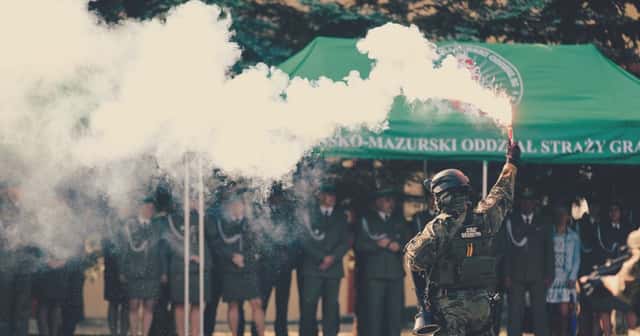
Poland has placed police, counter-terrorism units, Border Guard reinforcements and, by several accounts, soldiers from the GROM special forces unit along its 232-kilometer border with Russia's Kaliningrad region. The deployment began on Monday, November 2, and is scheduled to run until at least November 8. Early on Tuesday, Prime Minister Donald Tusk said the Border Guard had spotted "individuals with flashlights" on the frontier just after midnight and that Poland had "prevented a provocation, if such were the intentions." The Border Guard's own account was more modest: a few people with flashlights on the Russian side, and no attempt to cross.
The episode comes as Warsaw's government and its opposition-aligned president are locked in a bitter fight over the Constitutional Tribunal, which 567politics covered in its report on Tuesday's National Security Council meeting. Tusk says Russia is exploiting that dispute. His critics say the government is using the Russian threat to change the subject. Russia's government has said nothing official about the operation; a Russian senator mocked it as "Europaranoia."
What happened, in order
The sequence began before the operation was public. On October 29, a deputy national police commander sent voivodeship commanders a letter ordering officers to be at "full readiness" from November 2 to 8, TVN24 reported. The letter leaked, and some commentators tied it to protests over the Constitutional Tribunal in Warsaw. On November 1, police chief Gen. Marek Boroń wrote to officers that the timing was a coincidence and that the order responded to "attempts to destabilise our country by foreign intelligence services from the east," according to Notes from Poland.
On Monday, November 2, the broadcaster RMF FM reported that police headquarters had set up a special operations staff covering the Warmia-Masuria and Podlaskie regions, which border Kaliningrad and Belarus. Boroń confirmed it. "The police are securing the Kaliningrad district with a view to possible events that could lead to acts of sabotage," he told Polsat News, in 567politics' translation. He said the operation drew on "information that we also have from external services." Police spokeswoman Katarzyna Nowak said the operation was confidential and gave no further details.
Wirtualna Polska reported on Tuesday that soldiers from GROM, the army's special forces unit, had been sent to the northeast. CBS News also reported the GROM deployment and said the operation would run "until at least Nov. 8."
Just after midnight on Tuesday, according to Tusk, the Border Guard reported movement on the Polish-Russian border. Speaking before a cabinet meeting, he said: "Just after midnight I received information from the Border Guard that disturbing movement had been observed on the Polish-Russian border. Individuals with flashlights," the state news agency PAP reported. "We very quickly mobilized appropriate forces and resources there," he said, and prevented a provocation, "if such were the intentions, because we will not be able to fully confirm that."
RMF FM's reporter Krzysztof Zasada reported that the intervention took place near Sępopol in Warmia-Masuria, that no one crossed into Poland and that the people seen withdrew into Kaliningrad. That location comes from RMF's reporting, not from an official statement.
The Border Guard's spokeswoman for the region, Lt. Col. Mirosława Aleksandrowicz, told PAP that "during the night, several people with flashlights were observed on the Russian side, but there was no attempt to cross the border." She said the sighting was on a stretch of the "green border," the unfenced forest frontier, and did not name the place.
- Police letter orders "full readiness" for November 2 to 8
- Police chief Boroń says the order answers threats from "the east"
- Special operations staff confirmed; reinforcements reach Warmia-Masuria and Podlaskie
- Tusk reports "individuals with flashlights" seen just after midnight; Border Guard says no crossing attempt
- National Security Council meets in Warsaw
- Earliest scheduled end of the operation
What the warnings were
Tusk said Polish and allied intelligence had warned for weeks that "acts of sabotage or more serious provocations on the border with the Russian Federation" could occur, and that the information became "more precise" about the first half of November, PAP reported. He said NATO's Supreme Allied Commander Europe, Gen. Alexus Grynkewich, had given him further warnings during an October visit to Warsaw, the Associated Press reported. The AP said Tusk's warnings became more specific after intelligence from NATO, Ukrainian and U.S. services, including the CIA.
RMF FM, citing unnamed sources, reported that the warnings came from Poland's military intelligence service, the SWW, and allied services, and that they included the possibility of armed groups crossing the border. The content of those warnings has not been published. CBS News noted on Tuesday afternoon that Polish authorities "had not published any evidence of specific plans" for sabotage or an attack from Kaliningrad.
Tusk said the threat would not end with one night. "Tension and escalation from Russia may continue, so Poland must remain mobilized all the time," he said, per PAP.
The pattern of incidents Poland cites
Poland's case rests on a record of incidents it attributes to Russian services. The most serious was the November 2025 railway sabotage near Mika, about 100 kilometers southeast of Warsaw, on a line used to carry aid to Ukraine. Military-grade explosive was detonated by cable as a freight train passed; a second device damaged a passenger train carrying 473 people near Puławy. Tusk told parliament that two Ukrainian citizens working for Russian intelligence were responsible and that "a certain boundary has been crossed," Polish Radio reported. Poland then closed Russia's last consulate, in Gdańsk, leaving only the embassy in Warsaw, according to Notes from Poland.
In October 2025, the spokesman for the minister coordinating Poland's special services said 55 people had been detained "in recent months" for acting on Russia's orders, the news site naTemat reported. The period covered was not precisely defined, and 567politics found no single official running total for 2026. CBS News listed an August 2026 fire at a Polish factory making drones and military components and a September arson attack on a Starlink ground station that Polish officials blamed on Russia.
The border itself has been hardening for years. Poland began laying razor wire along the 210-kilometer land frontier with Kaliningrad in November 2022, the AP reported at the time. The East Shield program, a 10 billion zloty plan for fortifications along the eastern borders due for completion in 2028, started with a 2.3-kilometer section at Dąbrówka on the Kaliningrad border, according to the prime minister's office. Only two road crossings remain open and all rail traffic across the border is suspended.
Russia's response, and the silence from Moscow
As of Wednesday morning, 567politics found no statement from the Kremlin, the Russian Foreign Ministry or the Russian embassy in Warsaw about the operation or the overnight sighting. The Moscow Times, an independent outlet now based outside Russia, also reported no official Russian response.
The only reaction from a Russian official came from Sen. Alexei Pushkov, a member of the upper house of parliament, on Telegram. Whether the people "existed at all" or "were imagined in the Polish November night, God only knows," he wrote, according to Rambler's summary of the post, in 567politics' translation. He called the episode "Europaranoia." Russian state media framed the story around Tusk's admission that he could not confirm the intruders' intent.
Earlier Russian statements set the backdrop. On October 2 the Russian embassy in Warsaw said it had noted "a sharp increase in the level of militarist rhetoric" in Poland and called talk of Russian false-flag provocations on NATO's eastern flank "rumors based on nothing," per a TASS report carried by Rambler. In September, Lithuania's government dismissed as "completely baseless" a Russian embassy warning that Russia would use its "entire available arsenal" if NATO tried to cut off Kaliningrad, LRT reported.
The politics inside Poland
The operation overlaps with a serious constitutional confrontation. President Karol Nawrocki, who is aligned with the opposition Law and Justice party (PiS), has refused to accept the suspension of the tribunal's president and accused Tusk on Tuesday of an illegal takeover of the Constitutional Tribunal and gave him until November 11 to back down. The two men agreed to meet one-on-one this week. Three ambassadors have resigned over the dispute, as 567politics reported on Monday.
Tusk has tied the two stories together. After Tuesday's security council, he said that political destabilization of this kind is "exploited and fueled above all by Russian services," in 567politics' translation of remarks carried by Polish media; the Moscow Times reported that he accused Russia of seeking to fuel "instability" in Poland through the court dispute. In a post on X the same day, he wrote that "Russian provocations will not break our vigilance" and that politicians who "thoughtlessly play into the Kremlin's actions" must understand that Poland's security "is not the subject of a political game." That post, at x.com/donaldtusk, was quoted in Polish media; 567politics could not open X directly during this run.
The president's camp accepts the threat but questions the framing. Marcin Przydacz, a presidential minister, said after the council meeting: "Russia was, is and will be a threat. This is not a subject for political quarrels," Polsat News reported. He also suggested that the government sharpens its security language when it is in political trouble. The presidential spokesman, Rafał Leśkiewicz, told RMF FM that the president was being briefed "on an ongoing basis" and referred detailed questions to the Defense Ministry, per Wirtualna Polska.
Wirtualna Polska raised a legal question: deploying soldiers to support the police normally requires a presidential decision at the prime minister's request, or a state of emergency, and the site reported that neither had been formally invoked. It cited workarounds such as assigning soldiers to the police command. The government has not addressed that point publicly.
Further right, the libertarian-conservative outlet nczas.info, edited by Tomasz Sommer, called the alarm "the construction of a threat that objectively does not exist" and wrote: "The prime minister warns of people with flashlights in the forest. That has never happened before, you must admit," in a piece published Tuesday. 567politics found no statement on the border operation from PiS leader Jarosław Kaczyński or from the leaders of Konfederacja.
Independent security analysts were split. Lt. Col. (ret.) Maciej Korowaj, a former military intelligence officer, wrote that "on the basis of available information I cannot determine whether it is real" and that "one of the possibilities under consideration is a deliberate alarm after which nothing happens," a tactic he described as Russian "reflexive control," as quoted by nczas.info. Gen. Piotr Patalong, a former GROM commander, told Wirtualna Polska that special forces "are a tool the state has and should not be afraid to use." Lt. Col. (ret.) Tomasz Białek told the same outlet that "it is hard to imagine a few hundred soldiers being responsible for securing the entire border with the Kaliningrad district."
Lithuania and NATO
Lithuania, which shares the rest of Kaliningrad's land border, said it did not need to add forces. Defense Minister Robertas Kaunas said Lithuanian and Polish intelligence had exchanged information and that Lithuania had already reinforced its border weeks earlier, the Ukrainian outlet UNN reported. UNN also reported that the German brigade stationed in Lithuania had stepped up electronic and drone surveillance toward Belarus and Russia. That report is a secondary source; 567politics did not find a Lithuanian government release on the point.
NATO's Eastern Sentry mission, launched in September 2025 after Russian drones were shot down over Poland, continues to rotate allied aircraft and ships through the region. NATO has made no public statement on the Polish operation. German Chancellor Friedrich Merz hosted Ukraine's president in Berlin this week and announced a summit of the Coalition of the Willing for November 19, as 567politics reported.
What Poles think about the threat
Two representative surveys give context, though neither measured reaction to this week's events.
| Survey | Fieldwork | Sample | Finding |
|---|---|---|---|
| IBRiS for Rzeczpospolita | Oct. 16–17, 2026 | 1,068 | Threat from Russia: 44.8% stable, 31.1% growing, 8.8% decreasing, 12.6% none |
| CBOS | Sept. 11–22, 2025 | 969 adults | 63% say a threat to Poland's independence exists; 68% expect allies to defend Poland |
Sources: Polsat News for the IBRiS telephone poll, whose exact question wording was not published; CBOS report 89/2025, a mixed-mode survey of a representative sample of adult residents drawn from the national population register.
The CBOS figure of 63% was the highest since the question was first asked in 1991; it stood at 42% in May 2022. The IBRiS poll showed sharp partisan splits: among voters for Grzegorz Braun, the Confederation of the Polish Crown leader who ran for president in 2025, 64.4% said the threat was decreasing and none said it was growing, while 60% of Nawrocki's voters called it stable. Those subgroups are small and carry wide margins of error.
What people are saying online
567politics reviewed the hot listing of r/worldnews on the morning of November 4 through a read-only mirror; Reddit itself and comment threads were not reachable. Three threads on the Polish operation were among the most upvoted posts on the forum: "Poland launches operation along Russian border in response to reports of planned sabotage" (29,711 points, 102 comments), "Tusk Reports 'Disturbing Movement' Near Kaliningrad Border as Poland Deploys Additional Forces" (16,576 points, 400 comments) and "Polish Prime Minister Donald Tusk accuses Russia of seeking to fuel 'instability' in Poland" (8,253 points, 29 comments). On r/Conservative, a post framing the security council as Nawrocki confronting Tusk over an "attempted coup" drew 105 points. These counts were read at about 7 a.m. ET and change constantly; r/worldnews is an English-language, largely non-Polish forum, so its reaction says little about opinion in Poland.
X could not be opened during this run, so posts are described as reported by Polish outlets. Polish accounts that drew attention included RMF FM's reporting of the special operations staff, the OSINT account WarNewsPL reporting the GROM deployment, and Korowaj's skeptical analysis, which nczas.info and Wirtualna Polska both quoted. An anonymous account posting photos of police vehicles in Bartoszyce claimed, "unofficially," that 550 officers had been sent; 567politics could not verify that number and no official has confirmed it. None of these posts, from either side, establish what happened at the border overnight.
What remains unknown
The central facts are still unverified. No official source has said who the people with flashlights were, how many there were or what they intended. The Border Guard says they stayed on the Russian side. The intelligence that prompted the operation has not been published, and CBS News and Polish analysts alike note the absence of public evidence. Russia's government has not responded. Whether the operation ends on November 8, is extended or produces arrests will be the first test of the government's account. For how 567politics treats unverified claims, see the methodology.
Differing perspectives
Was Poland right to mount a large security operation on the Kaliningrad border, and how should it describe the threat to the public?
Each position is summarized as its supporters make it, with equal weight and in alphabetical order. A summary is not an endorsement; the evidence for each is weighed in the story above.
Mobilize early and say so publicly
Who holds it: Prime Minister Donald Tusk, the governing coalition, national police chief Marek Boroń
The government argues that Polish and allied intelligence, including warnings from NATO's top commander, pointed to possible sabotage or armed provocations in the first half of November, and that the only responsible course was to move police, counter-terrorism units and the Border Guard into place before anything happened. Tusk says the overnight sighting shows the forces were needed and that "tension and escalation from Russia may continue," so Poland must stay mobilized. He argues that telling the public openly denies Russia the element of surprise and that politicians who play down the threat serve the Kremlin's aims.
In their words: PAP, quoting Tusk's November 3 remarks ↗
Poland is inventing a threat
Who holds it: Russian officials including Sen. Alexei Pushkov and the Russian embassy in Warsaw
Russian officials say the Polish alarm is "Europaranoia" and part of a sharp rise in "militarist rhetoric" in Poland. They argue that talk of Russian false-flag operations on NATO's eastern flank is based on nothing, that Kaliningrad is an integral part of Russia whose defense is a matter of Russian sovereignty, and that it is Western discussion of isolating the region that is irresponsible. Pushkov says no one can show the people with flashlights even existed.
In their words: Rambler News, quoting Sen. Alexei Pushkov's Telegram post ↗
Publish evidence or stop raising alarms
Who holds it: Libertarian-conservative commentators such as nczas.info editor Tomasz Sommer and some independent security analysts including Lt. Col. (ret.) Maciej Korowaj
Skeptics argue that the public has been given no evidence beyond a report of people with flashlights who, by the Border Guard's own account, never tried to cross. They say an alarm that cannot be confirmed may itself be a Russian aim, a form of reflexive control that drains police resources and credibility, and that a few hundred soldiers cannot secure a 200-kilometer border in any case. They want the government either to publish what it knows or to stop presenting unverified reports as foiled provocations, and they note the timing beside the court crisis.
In their words: nczas.info, quoting Tomasz Sommer and Maciej Korowaj ↗
Treat the threat seriously but keep it out of politics
Who holds it: President Karol Nawrocki's office, presidential minister Marcin Przydacz and opposition figures aligned with PiS
The president's camp says Russia "was, is and will be a threat" and that the National Security Council should coordinate the response across institutions. It argues, though, that security should not be "a subject for political quarrels," and suggests the government sharpens its security rhetoric when it is in political trouble over the Constitutional Tribunal. It wants the president kept fully informed, questions whether soldiers were deployed to support police through the proper legal channel, and says internal stability is a condition of external security.
In their words: Polsat News, quoting Marcin Przydacz ↗
READ BEYOND 567POLITICS
Alternate sources & perspectives
Independent coverage and primary evidence to help you compare arguments. A link is not an endorsement; perspective labels describe the linked material.
- primary evidence
Premier: w nocy zaobserwowano niepokojące ruchy na granicy polsko-rosyjskiej ↗
PAP (Polish Press Agency)
State news agency record of Tusk's November 3 remarks and the Border Guard spokeswoman's statement that the people stayed on the Russian side and made no crossing attempt.
- independent analysis
Premier dostał meldunek o ruchach przy naszej granicy z Rosją. "Osobnicy z latarkami" ↗
RMF24
The broadcaster that broke the story of the special operations staff; reports the Sępopol location and that the people withdrew into Kaliningrad.
- independent analysis
Tusk says Poland thwarted possible provocation on Kaliningrad border overnight ↗
Associated Press (via ABC News)
Wire account with the NATO, CIA and Ukrainian intelligence context and Gen. Grynkewich's October warnings.
- independent analysis
Poland launches major border operation with Russia's Kaliningrad over sabotage fears ↗
CBS News
Reports the GROM deployment and the November 8 end date, and notes that Polish authorities had published no evidence of specific plans.
- independent analysis
Poland launches operation along Russian border in response to reports of planned sabotage ↗
Notes from Poland
English-language Polish outlet; the police chief's letter attributing the readiness order to foreign intelligence services 'from the east'.
- independent analysis
Specjalsi przy granicy z obwodem królewieckim. "Może dojść do wtargnięcia uzbrojonych ludzi" ↗
Wirtualna Polska
GROM deployment scoop and expert debate on the legal basis and usefulness of sending special forces to the border.
- right argument
Przydacz uderza w Tuska po posiedzeniu RBN ↗
Polsat News
The presidential camp's position in Marcin Przydacz's words: Russia is a threat, but security should not be a political quarrel.
- right argument
Maciej Korowaj i Tomasz Sommer o dywersji i obwodzie królewieckim ↗
nczas.info
Libertarian-conservative outlet; Sommer's argument that the threat is constructed and Korowaj's 'reflexive control' hypothesis.
- independent analysis
Poland Accuses Russia of 'Flashlight' Provocation Along Kaliningrad Border ↗
The Moscow Times
Independent Russia-focused outlet; confirms no official Russian response and reports Tusk's accusation that Russia is fueling instability.
- other perspective
Сенатор Пушков обвинил премьера Туска в паранойе из-за слов о людях с фонарями ↗
Rambler News
Russian aggregator carrying the only reaction from a Russian official, Sen. Pushkov's 'Europaranoia' post.
- primary evidence
Bezpieczeństwo Polski i pewność reakcji NATO (Komunikat 89/2025) ↗
CBOS
Representative September 2025 survey: 63% of adult Poles see a threat to Poland's independence, the highest since 1991.
Reviewed 2026-11-04. Sources reviewed November 3–4, 2026. The discover_politics_sources search returned only generic Poland reference pages for this topic, so candidates were found through direct searches of Polish and international outlets. Polish-language quotes were translated by 567politics. No official statement from the Kremlin, the Russian Foreign Ministry or the Russian embassy in Warsaw on the November 2–3 events was found; the Russian view is represented by Sen. Alexei Pushkov's Telegram post as summarized by Rambler and by the embassy's October 2 statement via TASS. No statement from PiS leader Jaroslaw Kaczynski or Konfederacja leaders on the operation was found. The Polish Border Guard's regional website could not be opened; its spokeswoman's account comes through PAP. Reddit comment threads and X could not be opened directly.